The International Food Policy Research Institute (IFPRI), a @CGIAR Research Center, seeks sustainable solutions for ending poverty, hunger, and malnutrition.
In recognition of the @UN International Day for the Elimination of Violence against Women, new research highlights how economic programs can help reduce intimate partner violence—but simply expanding women's economic opportunities is not enough. What works, for whom, and why?
🔗Learn more in this new blog by @LoriHeise5, Tia Palermo, @a_peterman, Meghna Ranganathan, Shalini Roy, and Melissa Hidrobo: https://t.co/pHHOxnlwkn https://t.co/pHHOxnlwkn
@CGIAR #EndViolenceAgainstWomen
📚 ☕ Weekly reads is now online on LinkedIn!
This week, new publications from IFPRI researchers and partners explore women's empowerment in agrifood policy processes in India and Nigeria, agricultural commodity market concentration, agricultural recovery and food security in conflict-affected regions, the transformation of rice value chains in Myanmar, and the true costs of food production in Kenya and Viet Nam: https://t.co/6qWlG0rbYx
@CGIAR
Join us on Nov. 25 for Session 4 of the Better Diets and Nutrition Webinar Series: "End-to-End Solutions for Healthier Diets: Insights from Sri Lanka."
9:00-10:30 am EST | 7:30-9:00 pm Sri Lanka
Register: https://t.co/ovZi4XsjME
@CGIAR@IFPRISAO@IWMI_@GAINalliance@WYBofficial@Sydney_uni@UPeradeniya
#NowReading Climate Disasters, Gender, and Poverty: Toward Inclusive Disaster Response in Bolivia
🖊️ By Luis E. Escalante
🔗 https://t.co/GkME2hZVRf
@CGIAR
🔬 Science knows no borders!
Read the new interview with GIZ 📰 Ruth Hill of @IFPRI explains how international research collaboration is strengthening food systems and creating economic opportunities worldwide 👉 https://t.co/GvRLgVe34L
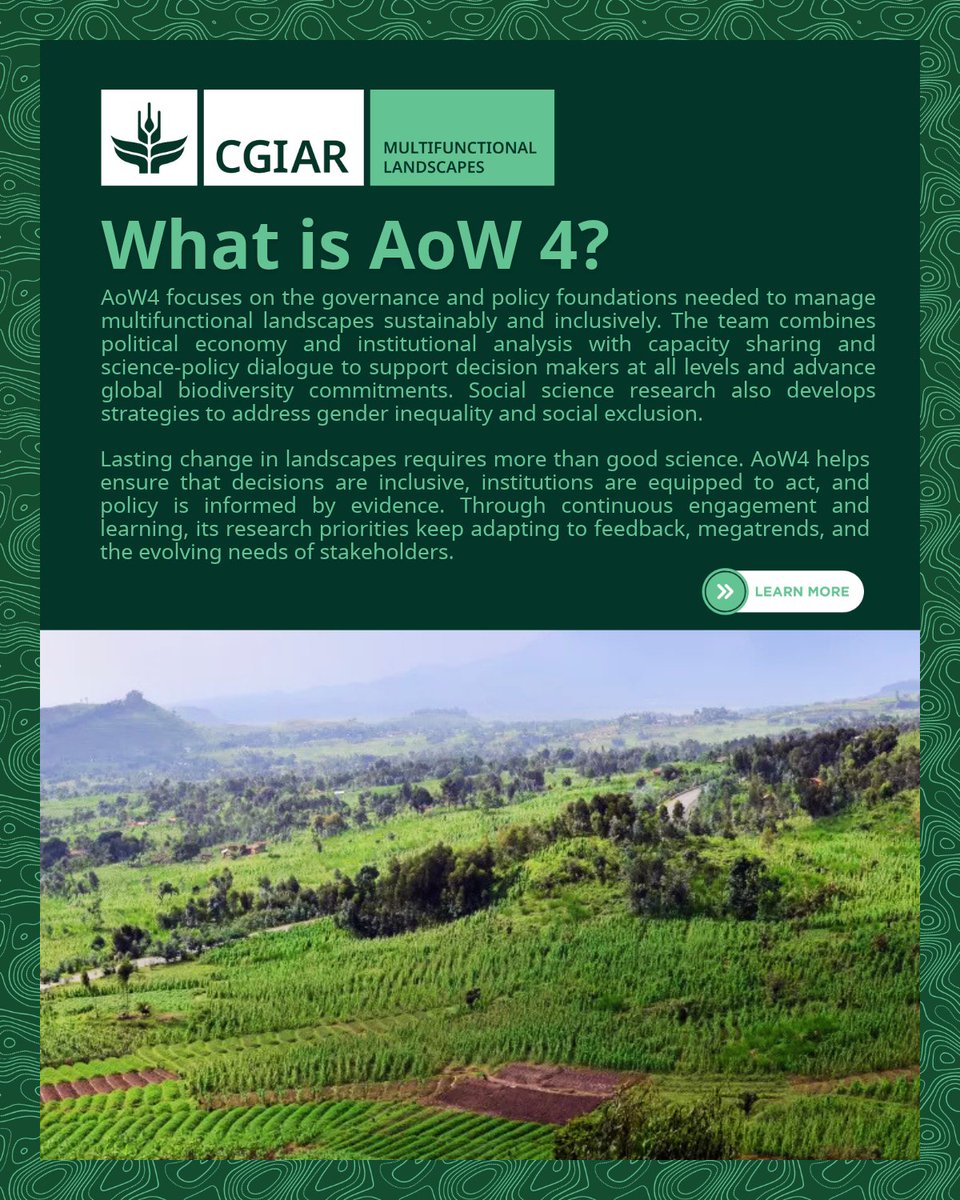
🔬 Scientist Spotlight: Wei Zhang @IFPRI leads research on ecosystem health & biodiversity and brings her expertise in governance, participatory research & science-policy to AoW4 of @CGIARenviro, helping make landscape decisions inclusive & evidence-based. 🌍
#ScientistSpotlight
🌍 #Ethiopia is facing overlapping shocks from El Niño and higher fuel and fertilizer prices.
🔍 What are the likely impacts on Ethiopia’s economy and the well-being of its population in the coming year?
Learn more in this recent blog by Emerta Aragie and Chris Hillbruner: https://t.co/1QCFVpjfNQ
@CGIAR@IFPRI_Africa
🌾🌽🌾How can domestic agricultural trade contribute to more sustainable food systems?
A new study co-authored by IFPRI’s @DrTimThomas examines the carbon and nitrogen footprints of interprovincial trade in rice, wheat, and maize across China. The findings show that moving grain between provinces can reduce the environmental burdens associated with production: https://t.co/cTzTcJrQOn
@CGIAR
IFPRI's Rural Investment and Policy Analysis (RIAPA) modeling system uses country-level computable general equilibrium (CGE) models to simulate how producers, workers, households, government, and the rest of the world interact across an economy, casting light on these complex dynamics.
The new artificial intelligence platform https://t.co/1MpkOYAXBb adds a conversational and agent-based workflow around the economic model: https://t.co/JaRxGiuF7C
@CGIAR #IFPRIonAI
🌳 Brazil’s Amazon and Cerrado are ecologically interconnected, but conservation policies have often treated them separately.
A recent study co-authored by IFPRI’s Ryan Nehring examines the risks of this divide for biodiversity, climate, and environmental governance.
🔗 https://t.co/22FpMGjkeA
@CGIAR #OpenAccess
A new analysis shows that rising inflation has pushed as many as 2.7 million Afghans into poverty and worsened the country’s humanitarian crisis.
This recent blog by Sediqa Zaki examines how shocks have moved through Afghanistan’s food import system, how far they pushed up consumer prices, and what the resulting price increases mean for poverty: https://t.co/rlu2OVUluJ
@CGIAR
🆕#IFPRIBlog Selling more rather than growing more: What farmers value from digital advice
🖊️ By @crragasa and Opeyemi Olanrewaju
An IFPRI study in Nigeria found that farmers using a digital advisory platform sold more than similar non-users, although they did not grow more.
Those using @Crop2Cash earned more from crop sales by selling a larger share of their harvest, despite seeing little change in yields: https://t.co/WbvO0E0Dwm
@CGIAR@IFPRI_Africa@IFPRI_Nigeria
Introducing tricycles, dehusking machines, and protective equipment to women’s shea cooperatives cut processing time from days to minutes and eased transport burdens, an IFPRI study shows.
The study found that women gained time and improved well-being, as less physical strain and faster processing freed up time for farming, family responsibilities, and community activities, as well as new income opportunities: https://t.co/bMpvdDwr5A
@CGIAR@IFPRI_Africa@YamauchiFutoshi@HMalapit
#NowReading Perceptions, quality, and uncertainty in Ghanaian fertiliser markets
🖊️ By Seth Asante, Kwaw Andam, and Andrew M. Simons.
🔗 https://t.co/w0eIfiaApv
@CGIAR@IFPRI_Africa
🆕 #Blog From evidence to action: Strengthening women’s voice and resilience in Nigeria
🖋️ By @kkosec, Lucia Carrillo, and @oliverkirui.
An IFPRI-led dialogue highlighted evidence that women in northern Nigeria need real influence over decisions, not just participation, to help communities prepare for and recover from crises: https://t.co/TOUuN3dTt7
@CGIAR@IFPRI_Africa
🔔 HAPPENING NOW! 🔔
📌Rapid Assessment of the 2026 El Niño in Papua New Guinea: Observations during a fresh produce value chain study.
📆November 19, 2026, 10:00 – 11:00 am (Pacific/Port Moresby)
🗨️Speakers include Belinda Monoi (NARI), Emily Schmidt, and Kwaw Andam
🎫 https://t.co/eWv5Towdqc
@CGIAR@dfat@ACIARAustralia
No single intervention will end obesity, says a new JAMA report coauthored by @PMenonIFPRI. Also this week: new studies on disaster #resilience and #AI for dietary assessment. Read the latest Weekly Reads from IFPRI! 📰 https://t.co/55oKn8Yr5c
@CGIAR
A recent IFPRI event explored how overlapping shocks are raising food security risks. Conflict-driven disruptions and a strong El Niño could increase food, energy, and fertilizer prices, putting additional pressure on vulnerable countries.
Learn more in this recent blog by Catherine Gavin: https://t.co/J8lxRY4tyY
@CGIAR