This woman reports that her little niece was kidnapped last night. She has been appealing to the public to help her share this video incase someone may have seen the little girl.
Please help share this video.
Let’s help find this innocent little baby.
Circulate this video of Peter Obi’s address at the European Union across all platforms. Share it on WhatsApp groups! Let Nigerians see what it means to represent their country abroad.
Not Tinubu, whose every outing abroad brings us embarrassment and shame!✍️
The abduction of the Chibok girls in 2014 triggered a global movement. One school abduction was enough to unite Nigerians, attract international attention, and place enormous pressure on the government through the #BringBackOurGirls campaign.
Yet, what has happened since then should trouble every Nigerian.
Under President Buhari's eight years in office, Nigeria witnessed about ten school abductions. Under President Tinubu's administration, in just three years, we have already recorded over ten school abductions.
Despite these repeated tragedies, there has been neither sustained national outrage nor significant international attention comparable to what followed Chibok.
This raises an important question: have we become so accustomed to insecurity that what once shocked our national conscience is now treated as normal?
At a time when millions of Nigerians are grappling with insecurity, poverty, and hardship, it is deeply troubling that those in power appear more focused on political calculations and preparations for the next election than on addressing the urgent challenges confronting our people.
It is, therefore, no surprise that some observers have labelled us a "Now Disgraced Nation". While we do not agree with any attempt to define our great country by its present difficulties, we must acknowledge that persistent insecurity, economic hardship, and leadership failure have damaged our reputation and standing among nations.
The answer is not denial, propaganda, or political distraction. The answer is leadership that is competent, compassionate, accountable, and genuinely committed to the welfare and security of the Nigerian people.
The Nigerian youth must not become indifferent. We must all refuse to normalise failure.
Young Nigerians - Take back your country!
A New Nigeria is Possible. -PO
July 26, 2020. A beach near Collingwood, Ontario.
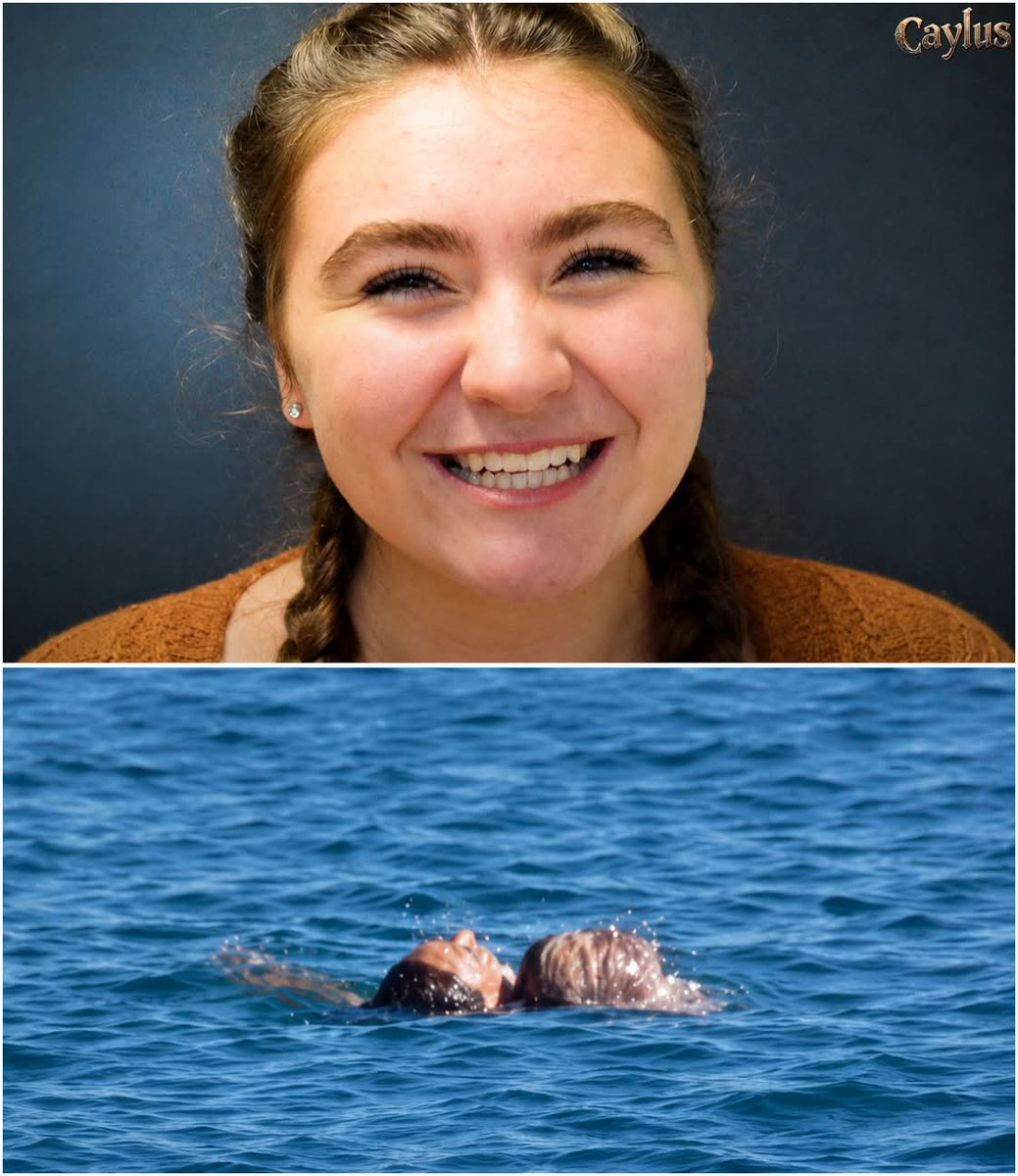
Sixteen-year-old Jamey Ruth Klassen was supposed to be enjoying a quiet family vacation beside the icy blue waters of Georgian Bay.
Farther out on the lake, a man named Christopher Robertson had taken his kayak out alone for a peaceful paddle. Then the kayak filled with water and flipped.
Suddenly, he was stranded in the freezing bay, clinging desperately to the overturned hull while shouting for help.
Jamey didn’t hear him directly.
What she heard instead were strangers nearby calling 911, panicking about a kayaker who had disappeared beneath the surface and wasn���t coming back up.
Most teenagers would’ve stayed on shore.
The water was brutally cold. The distance looked impossible. Lifeguards and paramedics were already being called. Waiting would’ve been understandable.
Jamey never waited.
She ran toward the water and dove in.
Alone, she swam nearly 600 feet through Georgian Bay — the distance of two football fields — pushing herself farther and farther from shore toward the empty kayak floating in the distance.
By the time she reached it, Christopher Robertson was gone.
Then Jamey looked down.
Through the clear Canadian water, she could see him lying motionless twelve feet below on the lake floor.
She took one breath.
And dove.
The cold tightened around her body instantly as she reached the bottom. She grabbed Robertson beneath both arms and forced herself upward, dragging his unconscious body back toward the surface.
He wasn’t breathing.
His body hung limp in the water.
Jamey refused to let go.
She turned him onto his back, balanced his head against her shoulder, wrapped one arm across his chest, and began swimming him toward shore using only one arm and her legs.
Every second became harder.
Her muscles burned violently. Her lungs screamed. She had no formal lifeguard certification because the pandemic had canceled the courses she planned to take that summer.
Still, she kept kicking.
Then fear hit her.
Jamey realized she might drown beside him before reaching shore.
Exhausted and losing strength, she used the last thing she still had left:
Her voice.
She screamed for help.
A nearby paddleboarder heard her cries and rushed across the water. Together, they lifted Robertson onto the board while Jamey, shivering and exhausted, swam the remaining distance alone.
Onshore, police officers and paramedics immediately began CPR.
Moments later, Christopher Robertson started breathing again.
He survived.
Nearly a year later, Jamey Ruth Klassen received the Carnegie Medal — North America’s highest civilian honor for heroism. Out of millions of people, only eighteen recipients were chosen that year.
But Jamey barely spoke about herself afterward.
Instead, she used the scholarship money from the award to attend nursing school at McMaster University, quietly continuing the same instinct that had driven her into the freezing water that day:
If someone needs help, you go.
No hesitation.
No spotlight.
No waiting for someone braver.
Just a sixteen-year-old girl who saw a stranger drowning… and decided his life mattered more than her fear.