Only one week left to apply for the 2026 Princeton School on Science and Global Security at
@PrincetonSPIA.
This year’s program will take place July 27–31, 2026 at ICTP in Trieste, Italy.
Applications close on April 17, 2026.
➡️Apply here: https://t.co/vu7uPx2SJ3
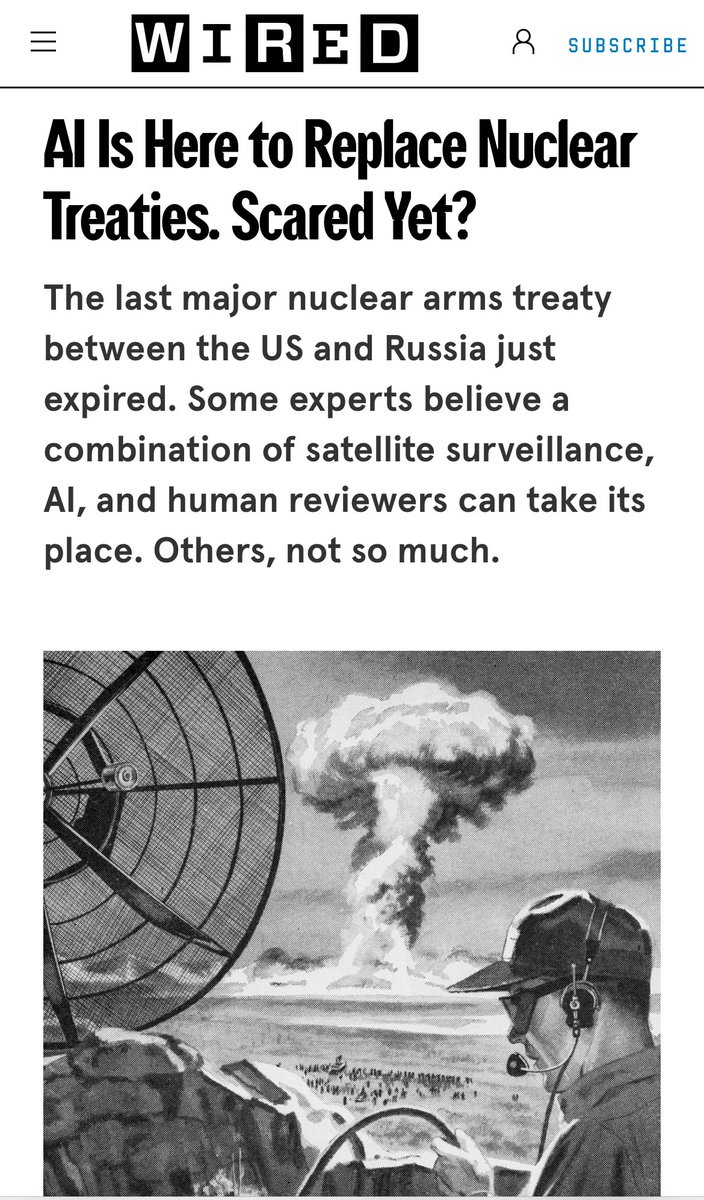
My colleague @mattkorda in Wired discussing his recent study (with @igor_moric) - Inspections Without Inspectors https://t.co/EDxquq76N7 - about use of OSINT for arms control. https://t.co/SFbVR09tXI
Spoke with Martin Burcharth for Dagbladet Information on what happens if New START expires: https://t.co/50HvGIed93
Without transparency and predictability, the U.S. and Russia may default to distrust and planning for worst-case scenarios.
"Arctic security should be managed among NATO allies through the collective efforts of all and under the alliance’s framework, with a far stronger European and US contribution," writes @igor_moric.
https://t.co/LjBPb6wjV0
🚨A new piece in the @BulletinAtomic.
Greenland's geographical location provides no logical benefit to the Golden Dome: a space focused architecture of interceptors and sensors.
Thanks to @francoisdm and the Bulletin team for the careful edit and publication.
Was interviewed by @martinburcharth for his Dagbladet Information article on Greenland and the Golden Dome.
As the article title states, calling Greenland “vital” to the Golden Dome is nonsense.
https://t.co/K3rjoOeP35
🚨 New @scientistsorg report by @igor_moric + me tackling a critical question:
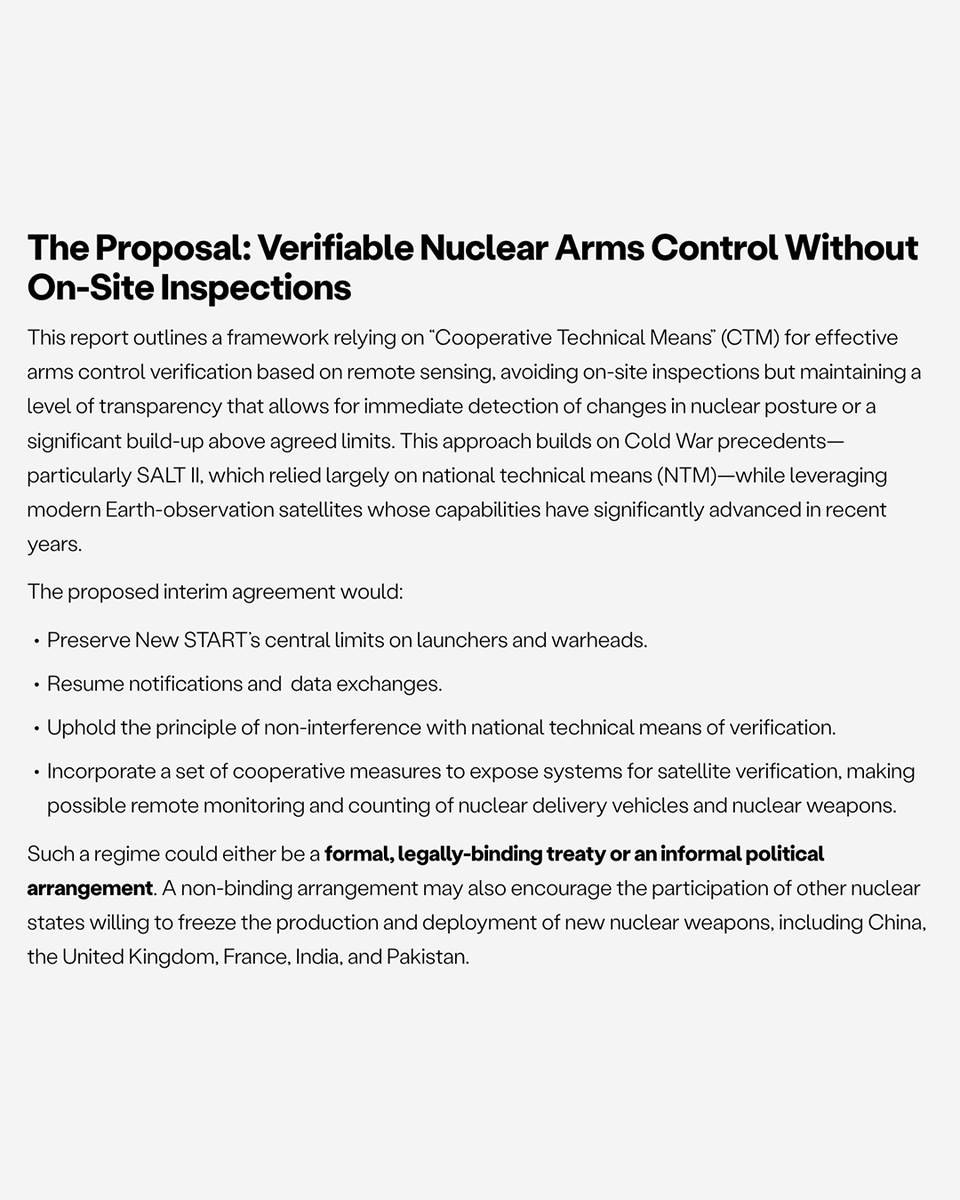
Given that on-site nuclear arms control verification between the US + Russia is unlikely in the near-term, could a cooperative use of remote sensing tools act as a replacement?
https://t.co/0VstdHjRME
With the impending expiration of New START, it is vital to prevent arms control progress from backsliding.
If on-site inspections are impossible, then "Cooperative Technical Means" can temporarily fill that gap.
✍️ @mattkorda + @igor_moric
🔗 https://t.co/sn0e4MSCme
In the worst case, capacities developed and information obtained narrow the knowledge gap between worst-case scenarios and the adversary’s actual capabilities—even if relations further degrade, other channels of communication fail, and guardrails on weapon deployment are removed.
NEW PUBLICATION, with @mattkorda from @scientistsorg.
Can we replace New START with an arms-control agreement relying on remote sensing, without any on-site inspections?
🔗Inspections Without Inspectors:
https://t.co/0h6bO5tMt4
7/8
In the best case, the proposed interim agreement could lead to a more complete arms control treaty in the future, adapting to the new geostrategic environment, acknowledging force asymmetries and non-strategic nuclear weapons, when geopolitical conditions allow it.
Half a century after the ABM Treaty, how far have missile defense tech and policy come? A new piece by Timur Kadyshev, Moritz Kütt & @igor_moric in the @J_NuclearDisarm explores this, and calls on experts to communicate more clearly with the public https://t.co/f3PxA1JR1F
1/10
As part of the Bruce Blair Memorial Lecture 2025, the Program on Science and Global Security, part of @PrincetonSPIA, is organizing a lecture:
"Nuclear Weapons in the Age of AI" by Dr. Herbert Lin, Senior Research Scholar @StanfordCISAC
RSVP: https://t.co/47m4eTPHSR