@AmerZahr True decolonization is not just political it is liberating your language and
mindset.Morocco is indigenous Amazigh, not Arab. Forcing an adopted identity while erasing your own language perfectly fits the proverb: "She leaves her own mother’s home to yearn for her aunt’s."
Why is the baggage policy for @TurkishAirlines flights from Eritrea inconsistent with international standards? While I am allowed two bags (2x23kg) when flying from Sweden, the system only allows one bag when booking from Eritrea. This unfair restriction needs to be addressed! ✈️
Why is the baggage policy for @TurkishAirlines flights from Eritrea inconsistent with international standards? While I am allowed two bags (2x23kg) when flying from Sweden,the system only allows one bag when booking from Eritrea. This unfair restriction needs to be addressed!
Unacceptable extortion by #TurkishAirlines! Limiting passengers from Eritrea to only one 23kg bag and demanding a massive $800 for extra luggage is absolute corporate greed. This unfair treatment and targeted price gouging must stop now! ❌✈️ #Eritrea#ShameOnTurkishAirlines
@MfaEgypt Stand With Eritrean Refugees in Egypt!
Eritrean refugees in Egypt are currently facing a wave of arbitrary arrests, physical abuse, and forced deportations. Many are being held in inhumane conditions, including children and vulnerable families, without access to legal protection
“Self-Discipline with True Passion Is the Secret of My Successes” Lijam Tesfai
By : - Kidane – Shimendi
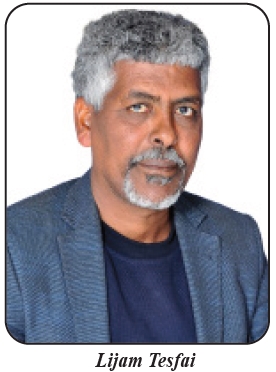
Chasing one’s dreams while bearing family responsibilities amid colonialism is a familiar story in Eritrea. One such story is that of Mr. Lijam Tesfai Weldegabir, born in 1964 in the small village of Wara in the Adi-Tekelezan sub-zone. His long and memorable life journey—as a farmer, student, teacher, school students’ affairs officer, and school director—is among many inspiring Eritrean narratives.
Today, Mr. Lijam Tesfai, a high school supervisor in the Central Region and a published author, is our special guest, sharing his life story and experiences.
- Please tell us about your memorable educational journey.
From the age of five, I grew up and studied in Dekemhare, where I was an outstanding student and won several school prizes. However, in 1977, when the Eritrean People’s Army liberated Dekemhare, my academic journey was interrupted. At that time, I was a 13-year-old Grade Six student who had already sat for the general examination.
Unfortunately, due to the strategic withdrawal and the fact that my beloved father and sister joined the armed struggle, the entire family burden fell on my shoulders. As a result, I decided to return to my birthplace, Wara, to help my family farm our land. It was a challenging period for me at such a young age—to shoulder heavy responsibilities while still having a strong passion for education.
I vividly remember that when schools reopened, my teacher sent me my general examination result, in which I had scored 99 out of 100. My uncle was amazed and offered me the opportunity to join a missionary school. However, my family responsibilities remained my priority. Setting aside my educational passion, I continued working as a farmer for five challenging years.
- When did you return to school?
There were times when I came to Asmara to sell chopped firewood, and seeing students in school uniforms deeply pained me. To relieve this pain, I finally decided to pursue my education alongside my family responsibilities.
I met the director of Mahdere Brhan School in Asmara and showed him my general examination result, requesting admission to an extension class. Initially, he tried to persuade me to join the regular program. Still, after understanding my situation, I was allowed to continue working during my spare time to earn an income.
During this academic phase, I won school prizes from grades seven to nine, which was a significant success for me. From grades ten to twelve, I continued as a regular student.
In 1988, I sat for the high school matriculation examination. However, following the EPLF’s decisive victory in dismantling the Nadew Command, the Ethiopian Ministry of Education opened minimal opportunities for Eritreans in higher education. I remember that only five out of nearly 500 students were admitted.
I obtained a 2.4 certificate and joined an Ethiopian teachers’ training institute. Unfortunately, this opportunity was short-lived, as the Ethiopian regime announced mandatory military conscription for all youths. My time in Ethiopia was extremely frustrating due to my Eritrean nationality. Eventually, in 1991, I returned home following Eritrea’s liberation after the long and bitter armed struggle. Upon my return, I learned of my father’s and sister’s sacrifice for national independence.
After independence, I became an elementary school teacher, while planning to continue my education. After a 12-year gap since 1988, I sat for the Eritrean national matriculation examination and obtained a diploma.
Despite personal and family challenges, I graduated with distinction and was assigned as a junior school teacher. Later, I reapplied to the University of Asmara for a degree program. By carefully managing my time between teaching at the junior school and attending university classes, I successfully graduated with a degree.
This journey was not easy, but graduation rewarded me with immense joy. After completing my degree, I served as a students’ affairs officer and school director for 15 years, and I am currently working as a high school supervisor.
- Let us talk about your writing passion. How did you discover it?
When I became a teacher, I prepared summarized handouts to help my students excel academically. Basic Social Studies was my first handout, which became widely used in junior schools. Later, on readers’ recommendation, I developed it into a book.
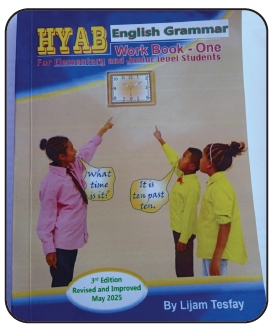
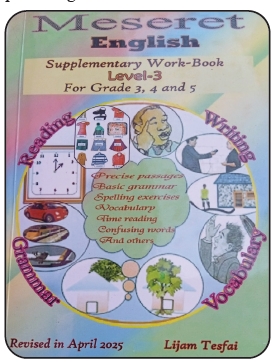
This first experience inspired me to write my second book, Hiyab (Gift), which aims to improve English proficiency among elementary and junior school students. My third book, Meseret (Basic), Levels One to Three, is a supplementary English workbook for elementary students. All three academic books received encouraging feedback.
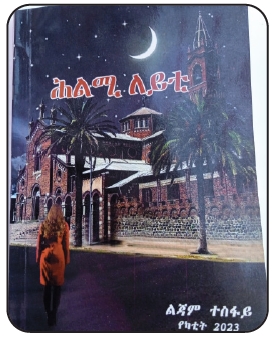
These positive experiences motivated me to venture into fiction writing. Werede was my first fiction book, focusing on youth attitudes, peer pressure, unwanted pregnancy, and related social issues. It was followed by Hlmi Leyti (Night Dream), a collection of ten life stories addressing various social themes.
Constructive feedback from readers played a crucial role in shaping these publications. Overall, I discovered my passion for writing through my desire to improve students’ academic performance.
- How do you manage all these responsibilities?
It all comes down to time management. When people often excuse themselves by saying they are too busy, it usually reflects mismanagement of time rather than a lack of it. In life, there is no shortage of time—only poor management.
Personally, I organize my time to balance family, friends, work, reading, and writing. Time is sufficient for everyone; what we need is wise and disciplined management.
- What is your main goal in writing fiction books?
My primary motivation is to ensure that Eritrean national values and norms are well understood and upheld by Eritrean youth amid globalization. In my fiction, I strive to balance modern and traditional values, helping young people adapt to modernization while preserving their cultural roots.
- How would you explain the teaching profession?
Simply put, teaching is the foundation of all professions and the art of shaping the future. No other profession architects the future by shaping young minds as teaching does. A society with a national vision cannot realize its aspirations without qualified teachers.
When teachers are respected and valued, a society’s future is bright and promising. Conversely, when the profession is undermined, the future becomes uncertain. Therefore, any society that seeks long-term development must invest in preparing and supporting qualified teachers.
- What is the secret behind your successes?
Self-discipline combined with true passion is the secret of my success. Without self-discipline, no amount of knowledge can move a person forward. It is the union of discipline and passion that defines our identity and enables us to shine even in difficult times.
- What are your plans?
Writing has become part of my life. I cannot pass a day without reading or writing a few pages. My focus will remain on preparing and publishing more books. Currently, I am working on a history book documenting Ethiopian atrocities in Eritrea, and the project is progressing very well.
- Mr. Lijam, thank you for your time. We wish you continued success in your future endeavors.
#Eritrea
Abiy Ahmed appears increasingly accustomed to diplomatic rebukes, to the point that his blunders are becoming routine. During the Chinese Foreign Minister’s visit to #Ethiopia over the past two days—part of China’s regular diplomatic engagements in #Africa—it was evident from the photo opportunities alone that things were not going well for Abiy.
That impression was confirmed when the joint statement was released. Its wording was unambiguous: Ethiopia was reminded to respect the UN Charter, international law, and the sovereignty and territorial integrity of #Eritrea.
The statement went on to note that the Chinese side encourages countries in the region to deepen connectivity and cooperation, including maritime logistics and access to the sea, but strictly through dialogue and diplomatic means, and only for the purpose of promoting regional peace, stability, and prosperity.
In case this message was not clear enough, the statement reiterated the point in another article, stressing that all countries must abide by the fundamental principles of the UN Charter and international law, respect the sovereignty and territorial integrity of all states, and oppose the threat or use of force in international relations.
Yet every time the Potemkin Party speaks of its delusion of owning sovereign access to the sea, it claims that the international community supports Ethiopia’s quest. In reality, not a single country has publicly stated that Ethiopia has a right to sovereign sea access—because everyone understands that this claim has no basis in international law and remains a political fantasy.
Asmara is truly a remarkable cultural centre, celebrated for its unique blend of diverse cultural influences and its vital role as Africa's cultural hub. The city is known not only for its unity among residents but also for being one of the safest places to explore. As a delightful walking city rich in history, Asmara feels like an open museum waiting to be discovered. By sharing its captivating stories, vibrant sounds, and enchanting charm, we can truly appreciate what it has to offer. The city's heritage shines through its warm hospitality, religious diversity, and stunning modernist architecture, which have rightfully earned it the designation as a UNESCO World Heritage site. Embrace the magic of Asmara—it’s a treasure! #DiscoverEritrea
Held fruitful and in-depth discussion this afternoon with Ms. Anna Thandi Moraka, South Africa's Deputy Minister of International Relations and Cooperation, and her delegation, on fostering solid ties of partnership on strategic media communication between Eritrea and South Africa as well as rectifying lop-sided and flawed narratives on Africa.
The Minister of Marine Resources, Mr. Tewolde Qelati, today met in Massawa, the Italian delegation led by Mr. Francesco Lollobrigida, Minister of Agriculture, Food Sovereignty and Forests; and, Mr. Edmondo Cirielli, Deputy Minister of Foreign Affairs and International Cooperation.
The discussions centered on investment in the fisheries sector. The delegation also visited the port and ship-repair facilities in the city.
PP's Assab/Hallucination Syndrome appears to be aggravating with time. Latest mutation revolves around, and invokes, "population density".
Eritrea's Assab, we are told, is sparsely populated in comparison to the extremely high population density of Ethiopian cities and towns.
This justifies, in PP's warped logic as paraphrased in the discourse in Parliament yesterday, "the acquisition of Assab, preferably through negotiations; otherwise through military invasion".
Historically, colonial hubris has always been justified by, and packaged in, some seemingly palatable rationale or "higher cause... civilizing mission etc.".
PP's ludicrous variant is unheard-of in these modern times and beyond the pale even by those fraudulent yardsticks!
Potemkin Party (PP) officials and minions seem to be doubling down, yet again, on their irrational obsession with "sovereign access to the sea".
This was the creaky chorus recited in the Symposium convened by the "Institute of Foreign Affairs; the Defense War College; and the Samara University" over the weekend.
Revisionist history; bogus interlinkages between the Nile and the Red Sea; fallacious narratives and imperatives etc.... repeated ad nauseum with much higher pitch and hollow legal/historical rationale. "ኣይትውሓጥዮ እንተበልክዋስ፥ ትጎስሞ"፡ እዩ ነገሩ።
https://t.co/SnNyZa3FgA
CALL AN AGGRESSOR BY ITS NAME
The #AU, the #UN, and all responsible member states bear not only a moral duty but also a binding legal obligation to reject and condemn #Ethiopia’s “#Prosperity” Party #expansionist rhetoric and its dangerous implications. Their publicly declared maritime ambitions, orchestrated media campaign and planned intentions to invade sovereign Eritrean territories can not be considered a mere political discourse; it is a direct assault, not only against a sovereign country, but also on the international legal order, the Charter of the United Nations, and the foundational principles of the African Union that uphold the recognition of colonial borders and respect the #sovereignty of member states.
Failure to act or even silence in the face of such open threats amount to complicity. It will embolden those who entertain daydreams and believe borders can be redrawn by force. It will also further destabilize a region already burdened by instability. The international community must therefore speak with one clear voice; call an #aggressor by its name. #Aggression, in any form or guise, should neither be tolerated nor have a place in the 21st century. Peace and stability among nations depend on principled, decisive, and collective rejection of unlawful expansionist territorial ambitions.
It has been crystal clear that Eritrea’s #independence, its sovereignty and territorial integrity are non-negotiable; they were earned through immense sacrifice, united popular support and safeguarded by unshakable national unity and resolve of its people. Any attempt to undermine these principles would be a grave miscalculation. #Eritrea possesses both the legitimate right and capability to defend its #sovereignty; firmly, lawfully, and decisively.
#EritreaPrevails
#Africa
#RedSea