🔍 What do research software funders actually prioritise, and where are they falling short?
A recent study by Prof. Eric Jensen and Daniel Katz draws on a global survey of research software funders to map strategic priorities, barriers and opportunities for cross-funder collaboration.
Several findings stand out:
👉 Funders have increasingly come to regard research software as a core component of research infrastructure, rather than a peripheral output.
👉 Sustainability beyond the life of individual projects remains the most widely cited concern.
👉 Capacity constraints, particularly shortages of skilled personnel at the institutional level, were identified as a significant barrier to effective support.
👉 On evaluation, most funders reported difficulty measuring the impact and quality of software they fund, a gap that limits accountability and strategic planning.
👉 Cross-funder coordination was seen as the most tractable opportunity, with participants pointing to shared standards, joint infrastructure investment and aligned funding cycles as areas for development.
Read the full study here: https://t.co/5MVtAiV6hR
#ResearchSoftware #SciencePolicy #ResearchImpact #OpenScience #FundingStrategy
📢 Registration is open for the webinar 'Open Science and research culture in practice: How resources, recognition and leadership support shape equity and openness'.
Organised within the FEMLEAD project, the session will examine how institutional incentives, funding structures and leadership support influence who can participate in Open Science and under what conditions.
The discussion will include contributions from Daniela Martin and Eunice Mercado-Lara, with reflections on inclusive research culture, gender equality in STEM, and practical support systems for researchers working in under-resourced contexts.
🗓 Thursday, 11 June 2026
⏰ 4 to 5 pm (CET)
🔗 Register here: https://t.co/qRHRDOMc2Z
More information on Eventbrite: https://t.co/b5PStWHxWS.
#OpenScience #ResearchCulture #STEM
🌐 Open science increases access, but does it automatically guarantee inclusion?
We recently hosted a fantastic FEMLEAD webinar on Open Science and Inclusiveness in Practice, and the discussions completely reframed the way we view research culture.
Making research open is a vital first step, but true inclusion doesn't happen by accident. It has to be intentionally designed, reviewed, and renewed.
Here are three core takeaways from our session:
✔️ Look at who is missing: Standard open science frameworks (like open data and strict replication metrics) often assume a quantitative, positivist default. We need to ensure there is room for qualitative researchers whose work centres on positionality and situated meanings.
✔️ Culture over suspicion: Mainstream open science has historically moved in response to a "crisis of replication," which can sometimes foster a culture of suspicion. True progress requires shifting toward a research culture rooted in collaboration, kindness, and equity.
✔️ Research culture is gendered: The systemic barriers that women and underrepresented groups face in academia directly mirror how open science practices are adopted and evaluated.
A massive thank you to Dr Madeleine Pownall for her incredible insights, her critical feminist lens, and for challenging us to rethink what "rigour" really means! 🙏
If you missed the live session, don't worry. The full recording, along with our practical Inclusive Open Science Progress Review Worksheet, will be live on the Institute for Methods Innovation channels very soon to help you take action in your own projects or institutions.
In the meantime, look out for our upcoming webinars this June and follow our ongoing work at IMI and FEMLEAD!
#OpenScience #InclusionInScience #ResearchCulture #FEMLEAD #QualitativeResearch #EquityInAcademia
⏳ Still time to sign up for our free webinar on inclusive Open Science in practice.
If you are working to strengthen Open Science in your institution, this session will help you move from broad commitments to clear, structured action.
Sign up: https://t.co/LhcwFaYo3s
#OpenScience #ResearchImpact #HigherEducation
Moving from commitment to action in Open Science requires more than good intentions.
This webinar provides a structured diagnostic approach, and you’ll leave with practical tools you can apply immediately.
Remember to sign up to attend: https://t.co/LhcwFaYo3s
#OpenScience #ResearchImpact #HigherEducation
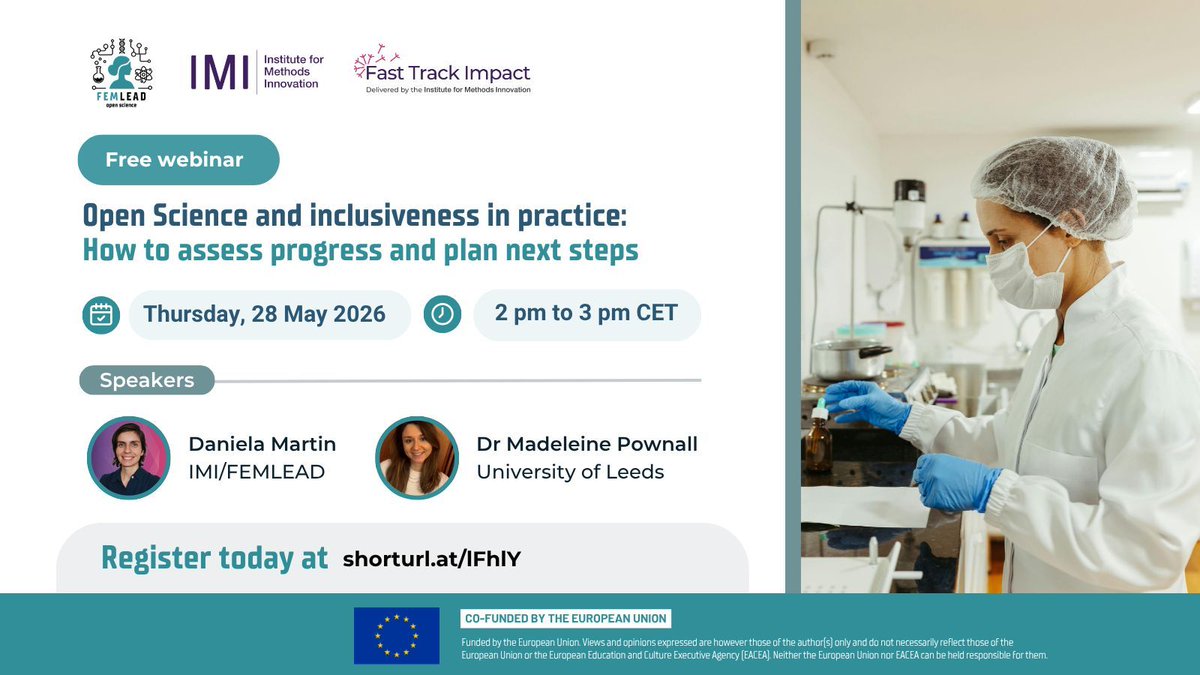
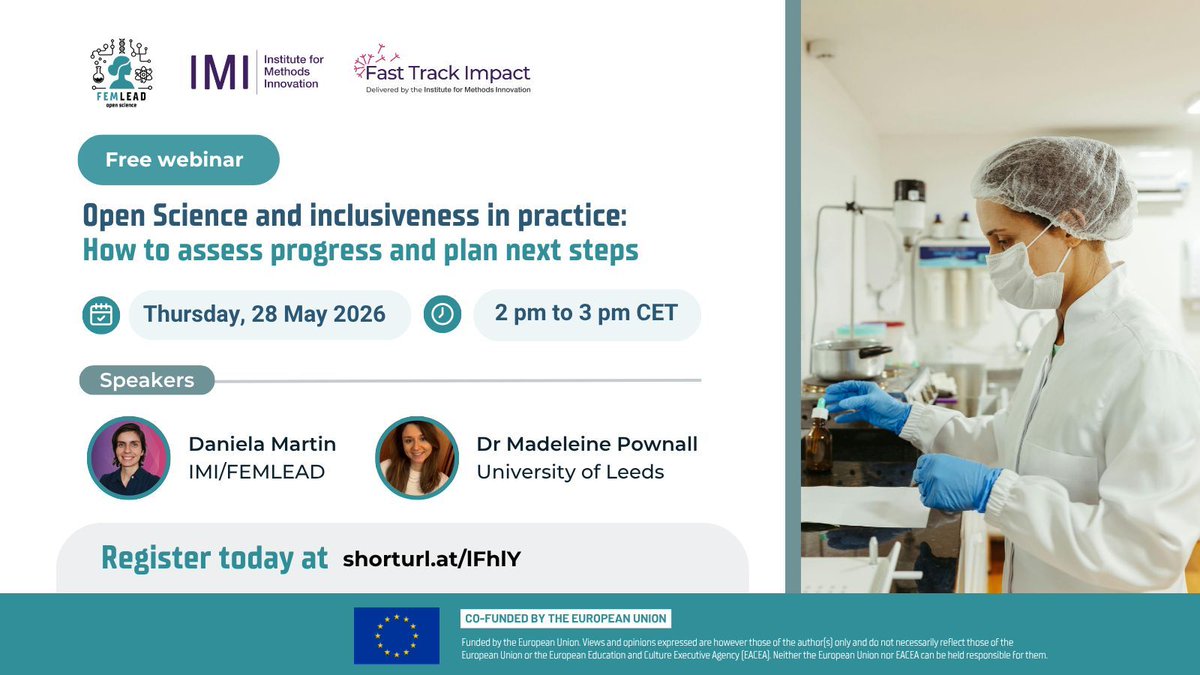
How do you assess real progress towards inclusive Open Science?
Many institutions have strong commitments but lack structured ways to evaluate what’s working and where gaps remain.
In this free webinar, we introduce a practical, evidence-based framework to help you:
• Review current practice
• Identify inclusion gaps
• Plan realistic next steps
Led by Daniela Martin (IMI/FEMLEAD) and Dr Madeleine Pownall (University of Leeds).
Register now 🔗 https://t.co/LhcwFaYo3s
#OpenScience #ResearchImpact #HigherEducation
📈 Partner with IMI for EU-funded projects!
We specialise in several areas, including evalution, research and public engagement.
Discover how we can contribute to your project proposal: https://t.co/6Q04qheVgm.
The @Atlic_Innoblue Legacy Event is coming to Brussels on 2–3 June.
Across two days, young people, partners and local actors will come together to share experiences, present ATLIC Talent, discuss the ATLIC White Paper and reflect on the future of youth-led blue economy innovation.
🔗 https://t.co/NEUr3r70hO
#ATLIC #BlueEconomy #YouthInnovation #InterregAtlanticArea
Yesterday, on day two of the @Atlic_Innoblue project's Youth Summit in Nantes, young participants presented their projects during a boat cruise session.
We were very happy to rate such interesting pitches and provide feedback. Five projects received awards at the end of the session.
Congratulations to all who took part.
#ATLIC #YouthSummit #BlueEconomy #Nantes
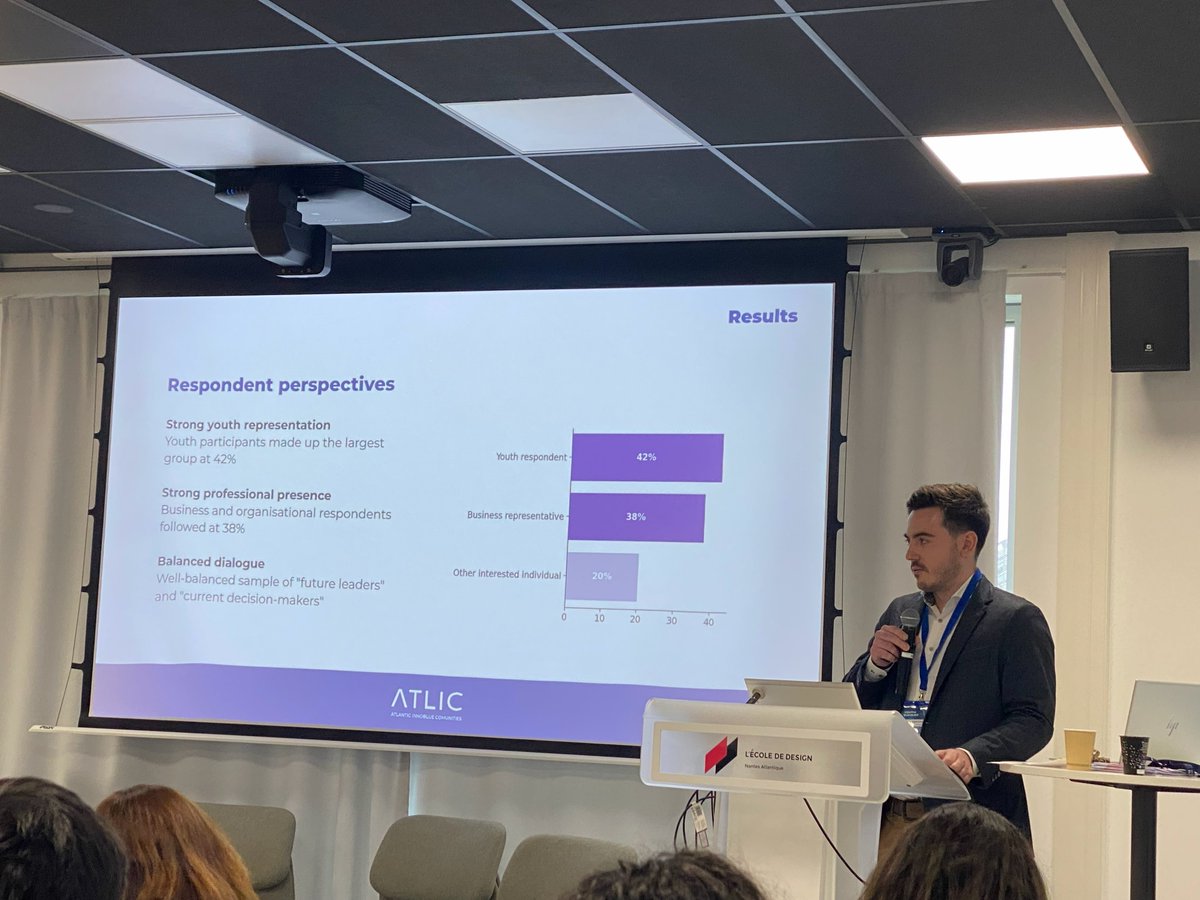
We are at the Youth Summit in Nantes, France, where we’ve just presented our survey findings during the @Atlic_Innoblue transnational roundtable on blue economy challenges identified by young participants and business representatives.
It was a very interesting discussion, with valuable exchange across perspectives.
#ATLIC #BlueEconomy #YouthSummit #Nantes
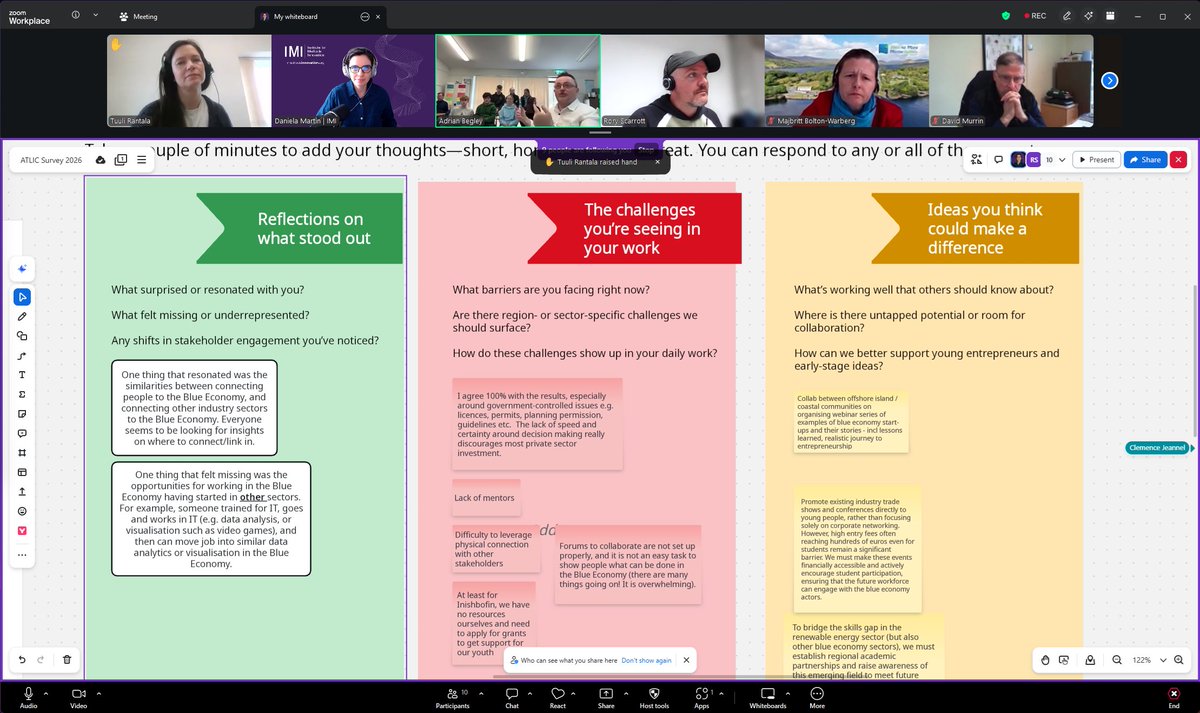
A big thank you to everyone who joined today’s @Atlic_Innoblue roundtable on Ireland’s Blue Economy.
It was a very useful discussion, and we greatly appreciated the time, insight and perspectives shared by participants. We look forward to continuing the conversation and to seeing what future opportunities for collaboration may emerge in Ireland from today’s session.
#ATLIC #BlueEconomy #Ireland #AtlanticArea
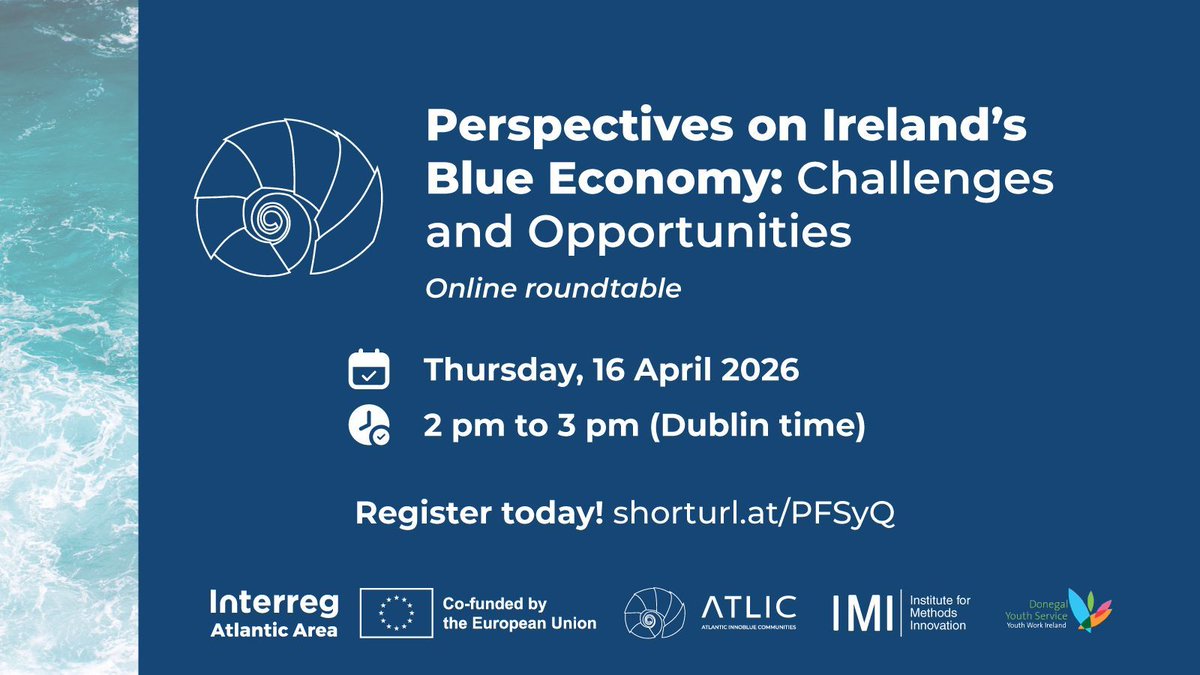
🌊 What’s next for Ireland’s blue economy?
Join the ATLIC roundtable to hear key findings from our stakeholder survey and take part in the discussion on challenges, priorities and collaboration across the sector.
🔗 Register: https://t.co/Dhjvd2zL34
#BlueEconomy#ATLIC #AtlanticArea #Ireland
📢 ATLIC National Roundtable Ireland
Join us for a discussion on findings from the ATLIC survey of Irish blue economy actors, including key challenges and opportunities across the sector.
🔗 Register: https://t.co/t0UUiufSTI
#BlueEconomy#ATLIC#AtlanticArea#Ireland
🔬 Seeking a skilled partner for your next European Commission-funded project proposal?
IMI offers expertise in impact evaluation, participatory research methods, and sustainability and risk analysis.
✅ Learn more about us: https://t.co/vZ9eQOKwKn.
Let's collaborate!
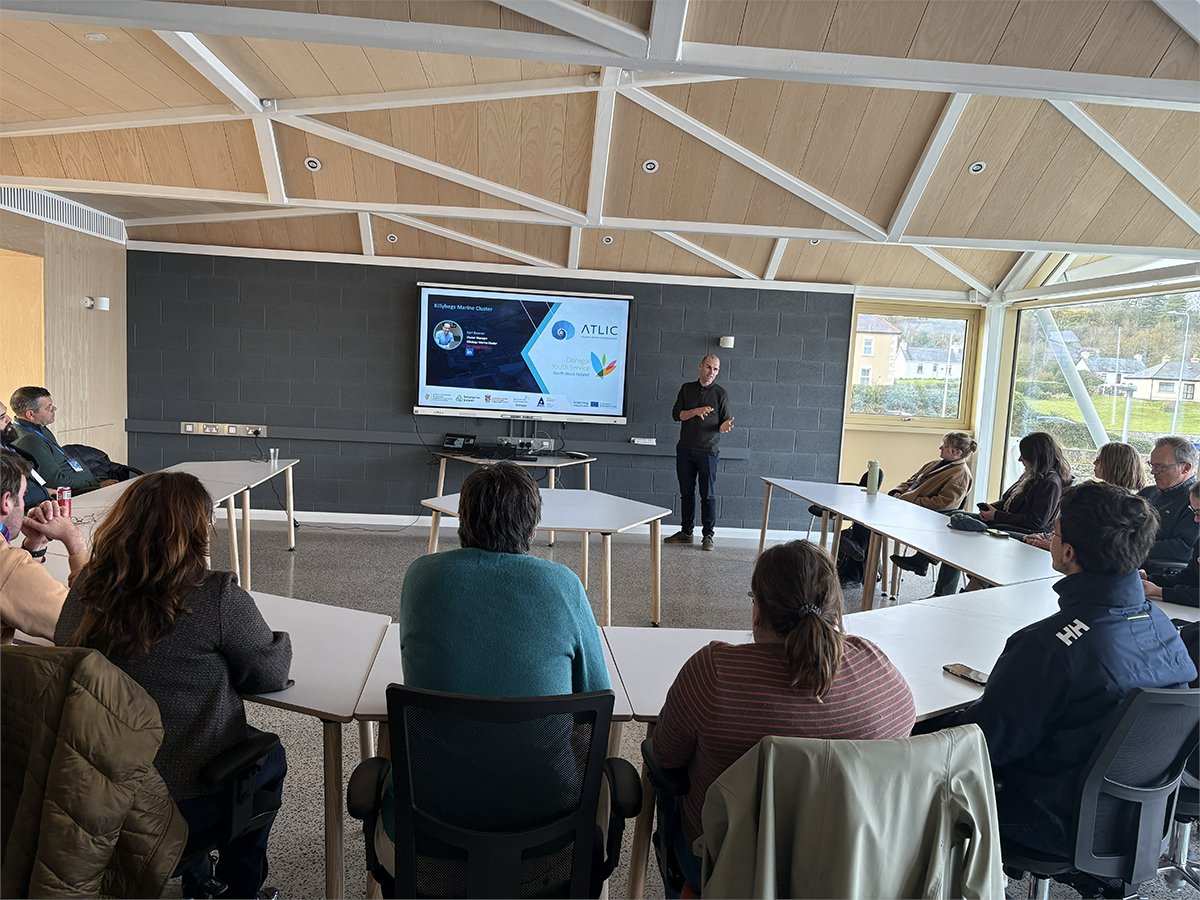
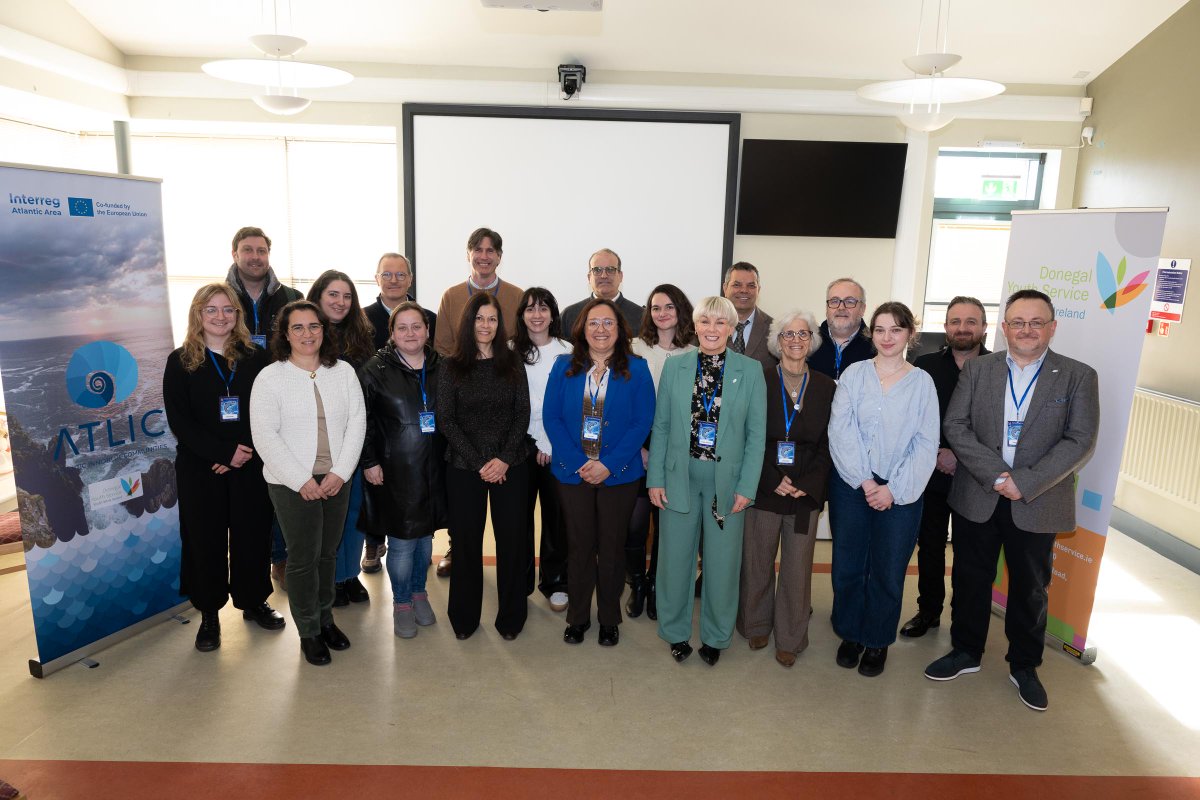
We attended the @Atlic_Innoblue International Creative Jam in Donegal last month, where Sara Noles presented the preliminary findings on Atlantic blue economy challenges.
The discussion comes ahead of the national and transnational roundtables in Nantes, where these themes will be explored further.
A valuable event, and a strong reminder of what young people can achieve when given the space to collaborate and develop ideas across borders.
#ATLIC #BlueEconomy #Donegal #YouthInnovation
📈 Partner with the Institute for Methods Innovation (IMI) for EU-funded projects!
IMI specialises in several areas, including evalution, research and public engagement.
Discover how we can contribute to your project proposal: https://t.co/vBkV64fWxe.
📰 The February 2026 edition of the REMHub newsletter is now available!
REMHub focuses on advancing European excellence in rare earth elements and permanent magnets through a dedicated business and innovation hub. By bringing together research institutions, industry actors and innovation partners, the project aims to strengthen expertise, support knowledge transfer and reinforce Europe’s capacity in this strategic field ⚙️🔬
The Institute for Methods Innovation (IMI) leads Work Package 6 on stakeholder engagement 🤝
Read the full newsletter here 🔗 https://t.co/arpmZMBsb3
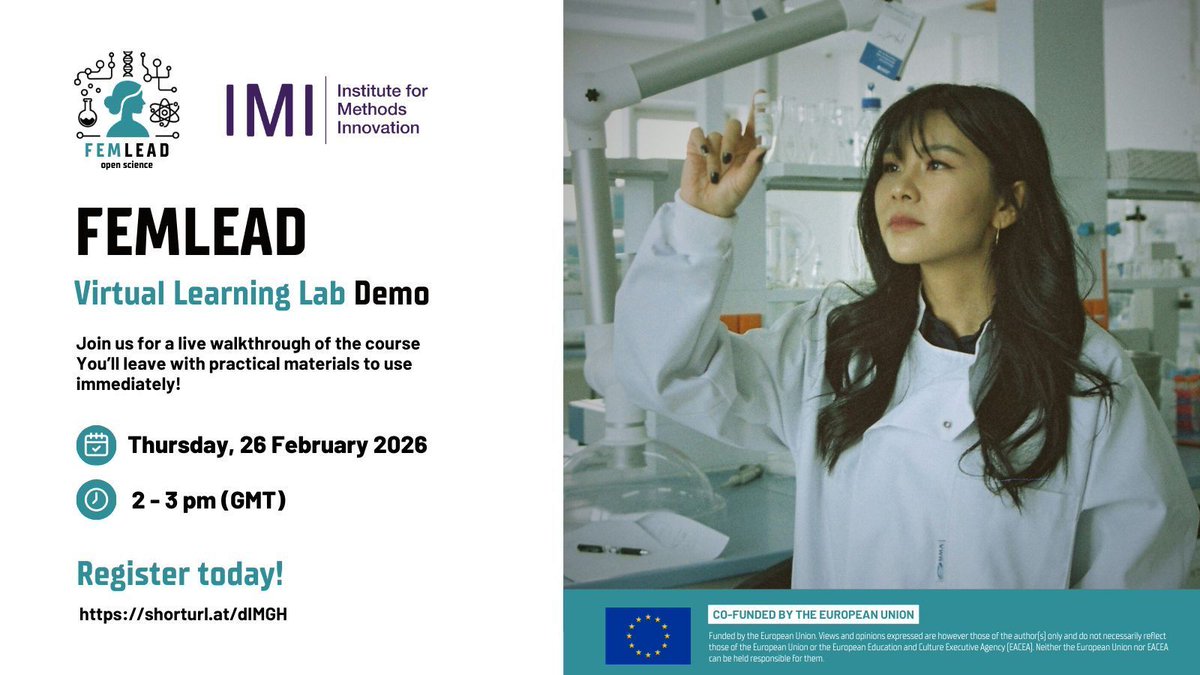
📣 Reminder! The FEMLEAD project has developed a free, online training course to improve gender equality among STEM researchers and HEI staff.
Join the demo on Thursday, 26 February 2026, 14:00–15:00 (GMT), for a live walk-through of the course.
➡️ Register here: https://t.co/86QeM73msP
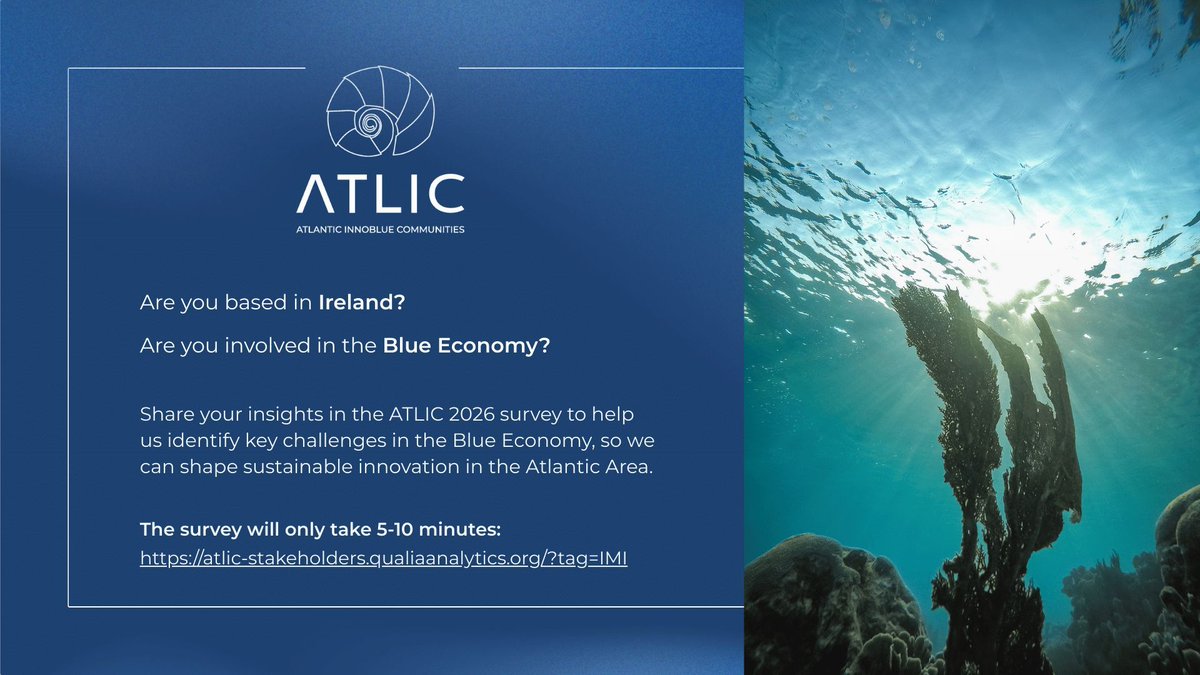
🌊 Shape the future of Ireland’s Blue Economy 🌊
Contribute to the @Atlic_Innoblue survey and help build a future of sustainable innovation in the Atlantic Area.
Take 5-10 minutes to fill out our survey linked below if you haven’t already.
👉 Take part now: https://t.co/kW4AcVsXEX
#BlueEconomy #atlicEU #AtlanticArea #Interreg #Ireland #Sustainability
📣 The FEMLEAD project has developed a free, online training course to improve gender equality among STEM researchers and HEI staff.
Join the demo on Thursday, 26 February 2026, 14:00–15:00 (GMT), for a live walk-through of the course.
➡️ Register here: https://t.co/ihMacMXyyi