We would like to share with you our recently published article “Identification of shared and differentiating genetic risk for autism spectrum disorder, attention deficit hyperactivity disorder, and case subgroups.” https://t.co/bJL9oze8FO… Details below.
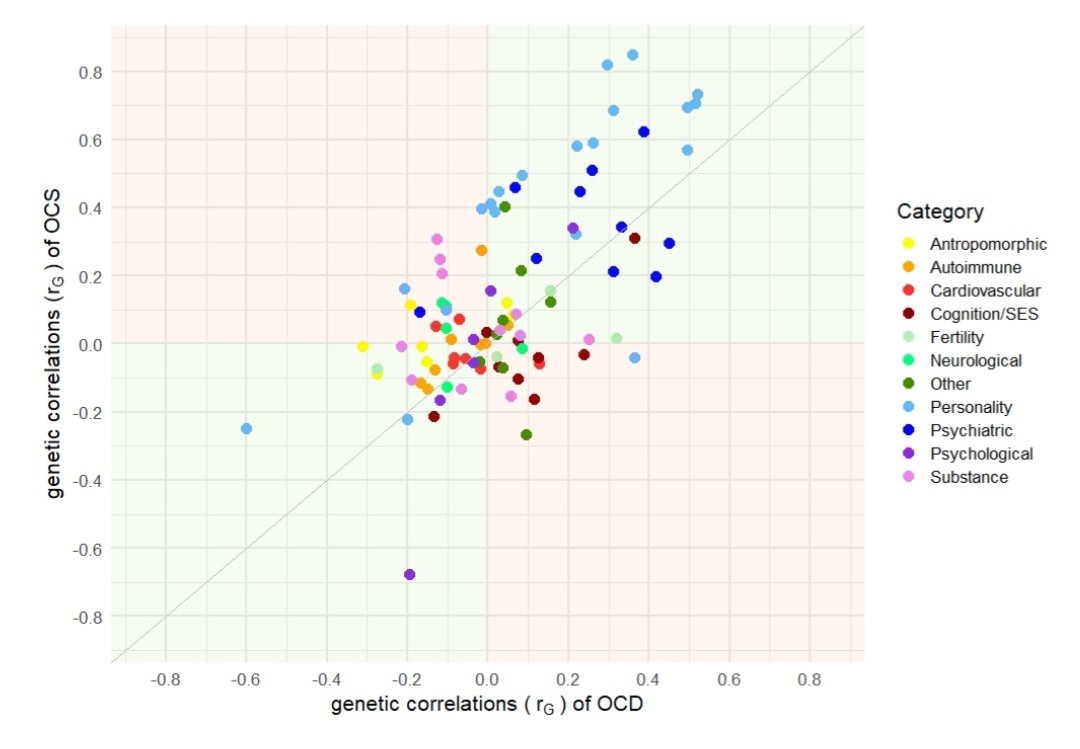
Checkout our new preprint of a GWAS study of self- and parent-reported obsessive-compulsive symtoms (OCS) in ~34k EUR individuals from 7 population-based (twin-)cohorts. https://t.co/mwf2mRQw5N 1/8
We are pleased to announce that our height GWAS: A Saturated Map of Common Genetic Variants Associated with Human Height is published in @Nature today! This is a fantastic effort involving >600 GIANT consortium investigators and @23andMe.
11/11
Summarizing, our results provide novel insights into the biological foundation for developing just one or both conditions and for driving psychopathology discriminatively towards ADHD or ASD.
We would like to share with you our recently published article “Identification of shared and differentiating genetic risk for autism spectrum disorder, attention deficit hyperactivity disorder, and case subgroups.” https://t.co/bJL9oze8FO… Details below.
10/11
Moreover, they suggest that studies such as iPSYCH, i.e., studies with longitudinal phenotypes across diagnostic boundaries, are needed to disentangle the complex relationship between and across mental illnesses.
10/10
Summarizing, our results provide novel insights into the biological foundation for developing just one or both of the disorders and for driving the psychopathology discriminatively towards either ADHD or ASD.
We would like to share with you our new preprint “Identification of shared and differentiating genetic risk for autism spectrum disorder, attention deficit hyperactivity disorder and case subgroups”. https://t.co/yke9Skac0j Some details below.
9/10
Moreover, they suggest that studies such as iPSYCH, i.e. studies with longitudinal phenotypes across diagnostic boundaries, are needed to disentangle the complex relationship between and across mental illnesses.
8/10
Our observations are consistent with the notion that the genetics differentiating the two disorders may be driven primarily by common variants and more extensively for cases diagnosed with ID compared to those without a diagnose of ID.