As we expected, travel restrictions boosted spending in #ChineseNewYear2021 as people stayed in large cities where there is better access to entertainment (and higher prices). Retail sales of key enterprises rose by 4.9% compared to 2019 (before covid-19) https://t.co/X4Ou1ASrKT
One of the most striking pieces of evidence that offline consumption has recovered is the fact box office sales set the world record for the highest sales in one day (a stark contrast to the almost complete collapse in cinema-going last year).
As we expected, travel restrictions boosted spending in #ChineseNewYear2021 as people stayed in large cities where there is better access to entertainment (and higher prices). Retail sales of key enterprises rose by 4.9% compared to 2019 (before covid-19) https://t.co/X4Ou1ASrKT
How will travel restrictions affect spending this #ChineseNewYear? #Consumption will shift from the countryside/small towns to big cities. Shenzhen and Guangzhou, Shanghai and Beijing will benefit most, due to their large migrant populations: https://t.co/oFXadtsZ5D
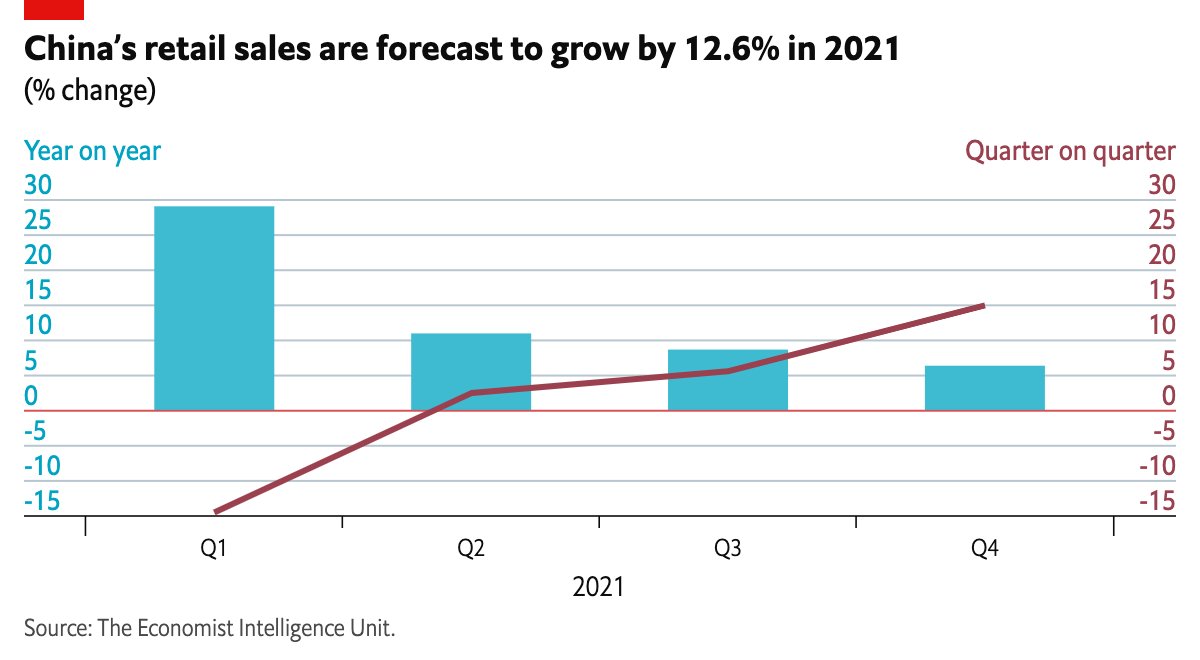
@TheEIU_China has published the latest #China#Consumer Quarterly, in which we review the stockpiling of essentials, shift to #ecommerce, and aversion to visiting public places in 2020. This year, we forecast retail sales will grow by 12.6%. Read why: https://t.co/t2ahP1IJkE
International coronavirus vaccine efforts will be prolonged, with most Asian economies not seeing positive economic effects until 2022 or later. In the interim, expect recurring outbreaks and economically disruptive measures. Our take, by @Imogen_PJ, here: https://t.co/Zfzyxf8gnz
We forecast that most economies in #Asia will take until 2022 or later to achieve widespread vaccination against #covid19. For many developing countries, it could take until 2025 or later. Clients can read about our #vaccine timeline predictions here: https://t.co/1bgsjVLwwp
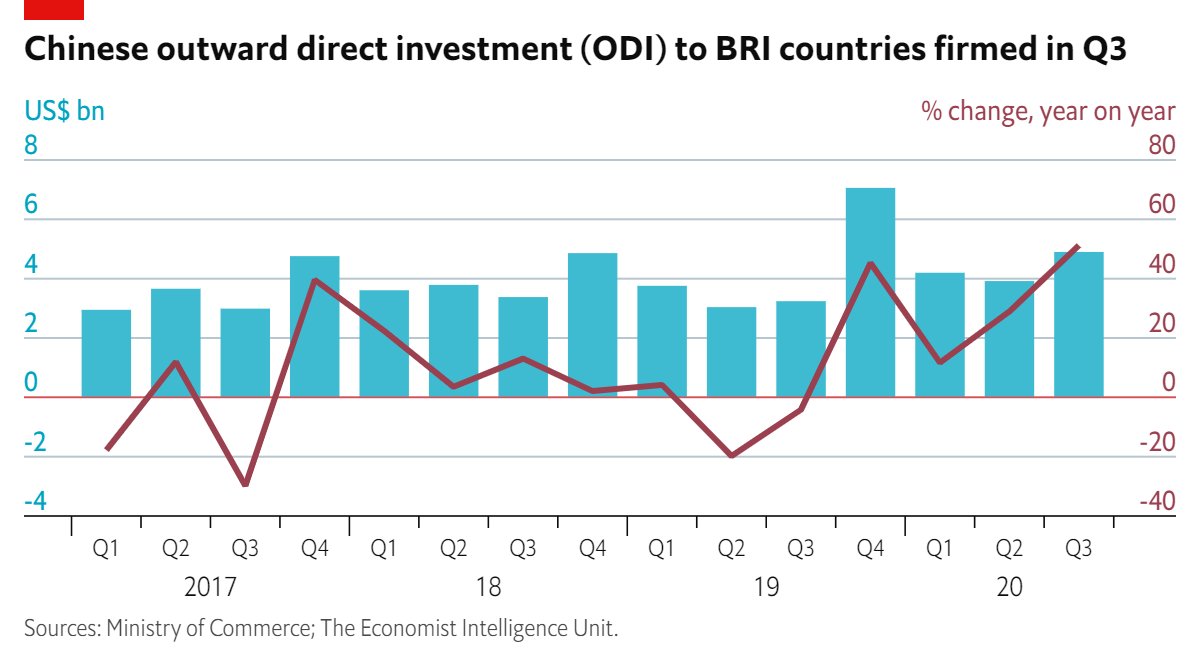
We've published the Q3 issue of the Belt and Road Quarterly! We outline our expectations for how the #Biden administration may seek to counter #BRI activity and look at the rising risk of payment delays and defaults on Chinese loans to BRI countries: https://t.co/ucbZbXGsIr
My comments on US-China relations featured in CNBC: “China is keen to secure additional FTAs as part of its broader goal to diversify its sources of imports, especially for strategically important goods like core technologies, energy and food" https://t.co/QocWToX1XO
#China's #trade surplus rose to US$58.4bn in Oct, up from US$37bn in Sep, supported by 11.4% yoy growth in exports (demand was strong for masks, PPE, and remote working equipment). Import growth softened to 4.7% yoy as oil and tech purchases slowed: https://t.co/SkrykUta6o
The incident is the latest in a chain of vaccine scandals in China, which have eroded public trust in the pharmaceutical sector, and will make it difficult for #China to succeed in its ambitions to be among the first countries to distribute a coronavirus #vaccine globally.
What's going on in Lanzhou? The gov announced over 6,000 residents have been infected with brucellosis, a bacterial flu-like disease, which spread from a vaccine factory that used expired (and therefore ineffective) disinfectant: https://t.co/Wpolvv5N72
How will US-China relations develop under a Biden presidency? Will tariffs remain in place? How will Biden tackle human rights and security issues? We discuss our outlook in this white paper, which is free to download: https://t.co/DRvTMnzM1z #china#biden#election2020
Chinese president Xi Jinping hinted that #China would relax restrictions on foreign participation in digital services on Nov 4 at the #CIIE. However, firms would still need to comply with the #Cybersecurity law and compete with China's tech giants: https://t.co/PJh3hOL63Y
The #China Consumer Quarterly Q3 2020 is out now! In this issue we look at the outlook for #luxury goods in China, and recommend that brands expand their stock and selection at Chinese stores in 2020-21 to capture repatriated spending due to travel bans: https://t.co/iLhBXosNjp
We expect the government to set a GDP per capita target of US$20,000-US$25,000 (in 2020 prices), requiring average real GDP growth of 4.3%-5.8% in 2021-35. However, such a level will not be easy to achieve as the drive for self-sufficiency reduces efficiency and productivity.
We've just published an analysis on five key takeaways from the fifth plenum. Notably, the leadership set a target for GDP per capita levels to reach that of a moderately developed country by 2035: https://t.co/FIwJh7Jl5y
Investment approvals also slowed in September, which suggests that investment activity will weaken further in Q4. Local governments have almost used up their special bond quotas, and poverty alleviation targets mean they have limited fiscal resources to allocate to investment.
@nickm4rro noticed that #China's #investment data for September 2020 was a lot weaker than the official figures. The authorities revised historical data to change the base of comparison, without which investment would have fallen by 28.9% yoy in September: https://t.co/gP7iDagSH6