I once dated a girl who loved being on calls, or rather, loved talking to me. We were almost always on the phone, whether it was a video call or a WhatsApp call. If she had something to do, she would ask me to give her a few minutes, and before I knew it, she would call back.
Even at night, we would talk until bedtime, and she would still ask me to leave the call on so she could fall asleep. Most nights, I would wake up around 3AM after dozing off just to end the call.
The constant calls made me less productive, left me with little time for other things, and even affected my sleep. At one point, my eyeballs became swollen from the lack of proper rest.
I tried talking to her about cutting back on the calls, but it didn't work because that was obviously her love language. She loved to talk, was an excellent communicator, and we could have conversations for hours without running out of things to discuss. I genuinely appreciated that because I like women who are open-minded and easy to communicate with.
However, it eventually became excessive because even good things, when overdone, can become overwhelming.
Jordan Peterson on why Hitler's most irrational decisions reveal his true motivation:
"We assume that Hitler wanted to win, but that's not a very intelligent assumption. Why would you assume that he wasn't exactly a good guy? So why should we assume that he was aiming at the good that he was promoting even in his own terms."
Peterson lays out the strategic reality. As Germany began losing the war, Hitler had a clear choice: redirect resources toward the war effort or continue pouring them into extermination. He chose extermination.
"What happened as the Germans started to lose the war? Did Hitler lose faith in his own ability? No, he believed that the Germans had betrayed him with weakness, and so he was perfectly willing to accelerate the rate at which Germany was losing the war."
This is what makes Hitler even more evil than the standard narrative suggests. He wasn't a monster who went too far in pursuit of victory. Victory was never the real goal.
"When Hitler and his minions had the choice... you can suspend your unnecessary demolition of people, win the damn war, and then pick it up afterwards, or while you're losing you can just accelerate the mayhem even though it's counterproductive... well, they picked to accelerate the mayhem."
Peterson draws on a principle from Carl Jung to explain this:
"If you can't figure out what someone is doing or why, look at the outcome and infer the motivation. If it produces mayhem, perhaps it was aiming at mayhem."
The outcome of Hitler's decisions wasn't a failed utopia. It was the death of 6 million Jews, the obliteration of 120 million people, and Europe left in ruins. Peterson argues that wasn't a byproduct — it was the point.
He also challenges the common explanation that wars are simply fought over territory and resources:
"That's what the wretchedly simple-minded economists presume... but the idea that there are natural resources that we fight over because there's a shortage of them is a pretty oversimplified view of human beings."
Peterson's deeper argument is about the nature of evil itself. Truly destructive people don't destroy as a means to an end. Destruction is the end. Everything else is a cover story.
"Whatever pathologies you were carrying around in your destructive little soul, whatever element of Cain was deeply embedded in you, had the opportunity to be manifest fully at every moment of your waking existence."
The noble mission, the thousand-year Reich, the promise of civilisational glory — all of it was a front. Peterson frames this as an archetypal manifestation of Cain:
"He's going to put up a front that says, 'Well, I'm your savior.' It's like, well, destructive people think that Cain is their savior."
Funny moment when Mandy and Connie created a business from selling fake toys they tricked Mary into making for free. 😊
🎬 Georgie and Mandy’s First Marriage
🚨In 1990s, Stanford researcher Dr. Robert Sapolsky discovered something that should have broken the internet by now.
He was studying dopamine pathways in primates and found that the brain doesn't just adapt to repeated stimulation. It actively fights back.
When you flood dopamine receptors consistently, the brain deploys what neuroscientists call "opponent processes." For every artificial high you create, your nervous system generates an equal and opposite neurochemical low. Not eventually. Immediately. The system is designed to maintain balance, so it starts producing compounds that directly counteract dopamine while you're still experiencing the dopamine hit.
This means every notification, every scroll, every digital reward doesn't just give you a high followed by a return to baseline. It gives you a high followed by a crash below baseline. You end up in neurochemical debt.
Tech companies never publicized this research. They probably never read it. They were too busy discovering that variable ratio reinforcement schedules could keep users engaged for hours. They built addictive systems by accident, then refined them into addiction machines once they realized what they'd stumbled onto.
Your phone delivers an average of 80 dopamine hits per day. Your ancestors got maybe 5. Each hit triggers opponent processes that create a corresponding low. By the end of a typical day of normal phone usage, your baseline dopamine is running in negative territory. You feel flat, restless, vaguely unsatisfied, and hungry for stimulation because your brain chemistry is literally below zero.
You think you're bored. You're chemically depressed by artificial highs.
The opponent process theory explains why nothing feels interesting anymore. Your brain isn't broken. It's precisely calibrated to maintain neurochemical balance, and you keep throwing that balance off with artificial intensity. Every Instagram hit requires an equal Instagram crash. Every TikTok high gets paid for with a TikTok low. Every notification rush gets balanced with notification emptiness.
Your reward system is running a neurochemical deficit that grows larger every day.
Sapolsky's research revealed something even more disturbing: opponent processes don't just create temporary lows. They become permanent changes to your baseline dopamine production. Chronic overstimulation doesn't just make you tolerant to digital rewards. It makes you insensitive to natural rewards.
The sunset that would have captivated your great-grandfather becomes invisible to you not because sunsets got worse, but because your dopamine system needs intensity levels that sunsets can't provide. A good conversation becomes boring not because conversations got less interesting, but because your brain requires the rapid-fire stimulation of social media to register engagement.
You've accidentally trained your reward system to ignore everything that isn't artificially amplified.
This connects to research from Dr. Anna Lembke at Stanford, who found that people who undergo complete digital fasting for just 30 days show measurable increases in dopamine receptor density. Their brains literally regrow sensitivity to natural rewards. Food tastes better. Music sounds more complex. Social interactions become genuinely engaging again.
But there's a catch that nobody talks about: the first two weeks of dopamine detox feel like clinical depression. Your brain has been chemically dependent on artificial stimulation for years. Removing that stimulation creates actual withdrawal symptoms. Restlessness, anxiety, inability to focus, emotional flatness, and desperate cravings for digital input.
Most people interpret these symptoms as evidence that they need their phones. Actually, they're evidence that they've been neurochemically dependent on their phones without realizing it.
The withdrawal period isn't a bug. It's proof the reset is working.
What happens after week three is remarkable. Colors become more vivid. Conversations become genuinely absorbing. Simple pleasures like hot coffee or cool air become satisfying in ways you forgot were possible. Your brain rediscovers that reality contains enough complexity and beauty to hold your attention without artificial amplification.
You don't need more interesting content. You need more sensitive reward systems.
The solution isn't better apps or more engaging entertainment. The solution is restoring your brain's factory settings for what constitutes a worthwhile experience.
Sapolsky's opponent process research suggests this can happen faster than anyone expected. Every day you don't artificially spike your dopamine, your baseline moves a little higher. Every natural reward you pay attention to rebuilds receptor density. Every moment of boredom you endure without reaching for stimulation strengthens your capacity for sustained focus.
Ancient humans lived in a world that provided exactly the right amount of stimulation to keep their reward systems healthy. Enough challenge to stay engaged, enough calm to stay balanced, enough novelty to stay curious, enough routine to stay stable.
We built a world that provides 10 times too much stimulation and wonder why nothing feels rewarding anymore.
Your brain is not the problem. Your environment is the problem.
Change the environment, and the brain heals itself automatically.
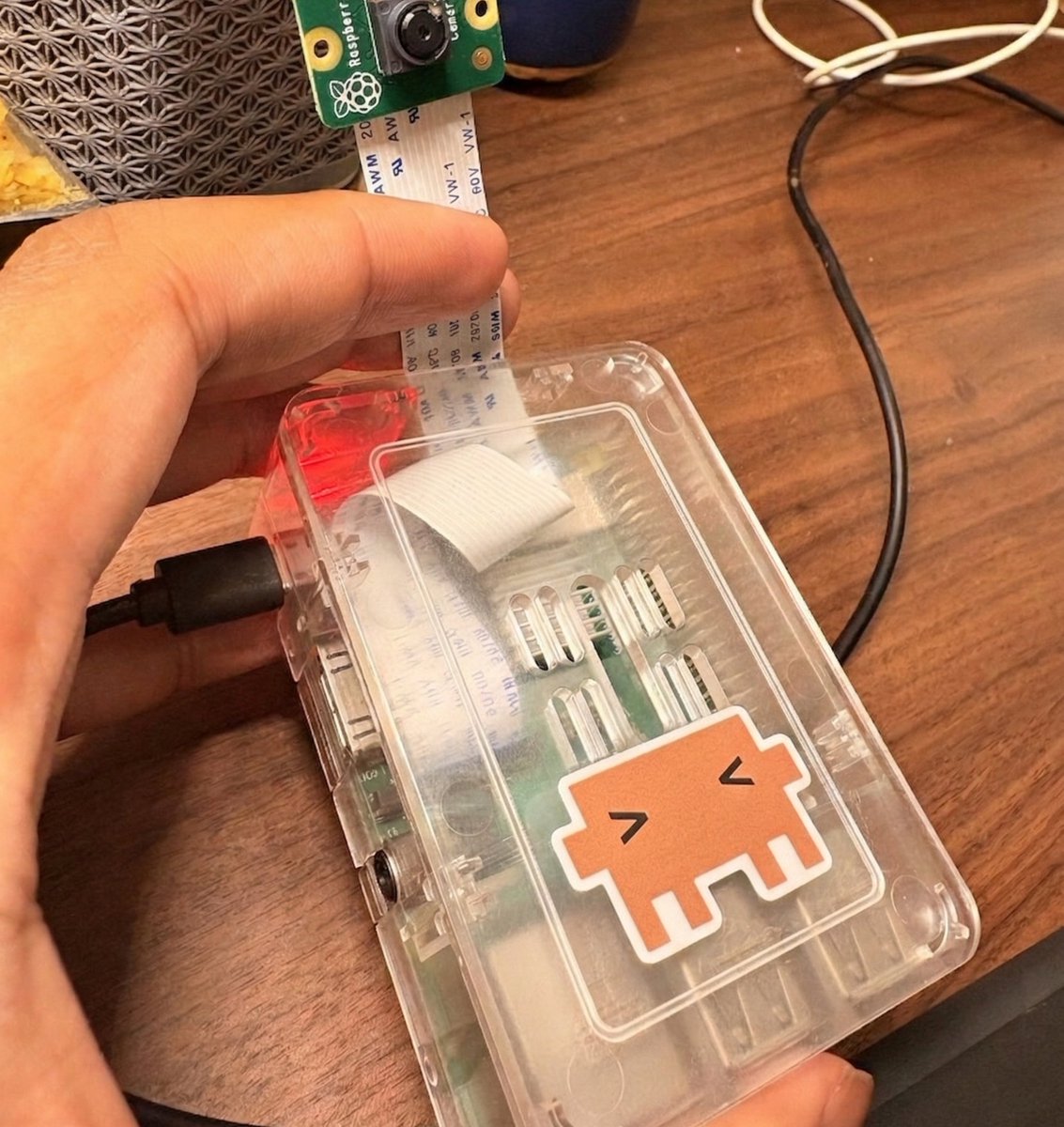
A Chinese engineering student built a Claude powered device the size of a credit card. Raspberry Pi. Camera. One red LED. Total cost $14.
His professor called it a toy. His classmates laughed. He posted a demo on YouTube and got 200 views.
Then someone noticed what the device was actually connected to.
A wallet. Making $11 million. In 10 months.
kch123. $11,525,240 profit. 2,347 predictions. Joined June 2025.
→ Profile: https://t.co/2KJu2NVLlY
The device does one thing. He asks it a question with his voice. Claude scans thousands of prediction markets in real time. When it finds a price that doesn't match reality the red LED lights up.
Red light. He places the trade. Green result.
$2M position on Seahawks. Won. $1.5M on Villarreal not winning.
His professor saw the YouTube video again three months later. The demo was the same. The view count wasn't. Neither was the wallet.
He asked the student what changed. The student showed him the balance. The professor didn't say anything. Sat down. Then asked if the device could run two accounts.
759K people watching. $319K still loaded in active positions. The device fits in your hand. The LED is still blinking.
His classmates stopped laughing around month four. By month six two of them had built their own.
Game theory teaches: never enter a game you haven’t studied, never reveal your strategy until the incentives are locked, and never play to be liked, play to make the rules irrelevant by building leverage.