Unofficial MTG Toolbox App for iPhone, iPad and iPod Touch. Proudly serving the Magic community since 2011. Pokemon and Yu-Gi-Oh! added in 2016. Force of Will.
The vast, featureless wastes of the Sahara Desert have shrunk by about 8% since the 1980s.
This astonishing recovery is due to rising CO₂ levels, fueling a remarkable global green renaissance. Data from NASA’s AVHRR and MODIS instruments show 25% to 50% of Earth's vegetated lands have become significantly greener—an area equivalent to twice the continental United States that has also spurred a global windfall for agricultural production.
CO₂ fertilisation has driven around 70% of this boom, making green plants far more efficient with water. By reducing the time stomata (leaf pores) stay open, it directly cuts water loss and boosts drought resistance.
This unplanned green miracle has allowed vegetation to reclaim zones of great emptiness in inhospitable places like the Sahel (the Sahara's southern fringe), the Middle East and Australia's sunburned outback desert. It has reclaimed over 700,000 km2 of barren sand waste in the Sahara alone, pushing back the desert in formerly barren terrain.
Atmospheric CO₂ now hovers around 426 ppm, enabling plants to thrive where once they couldn't. This protracted greening shows the clear, measurable benefit from higher levels of CO₂.
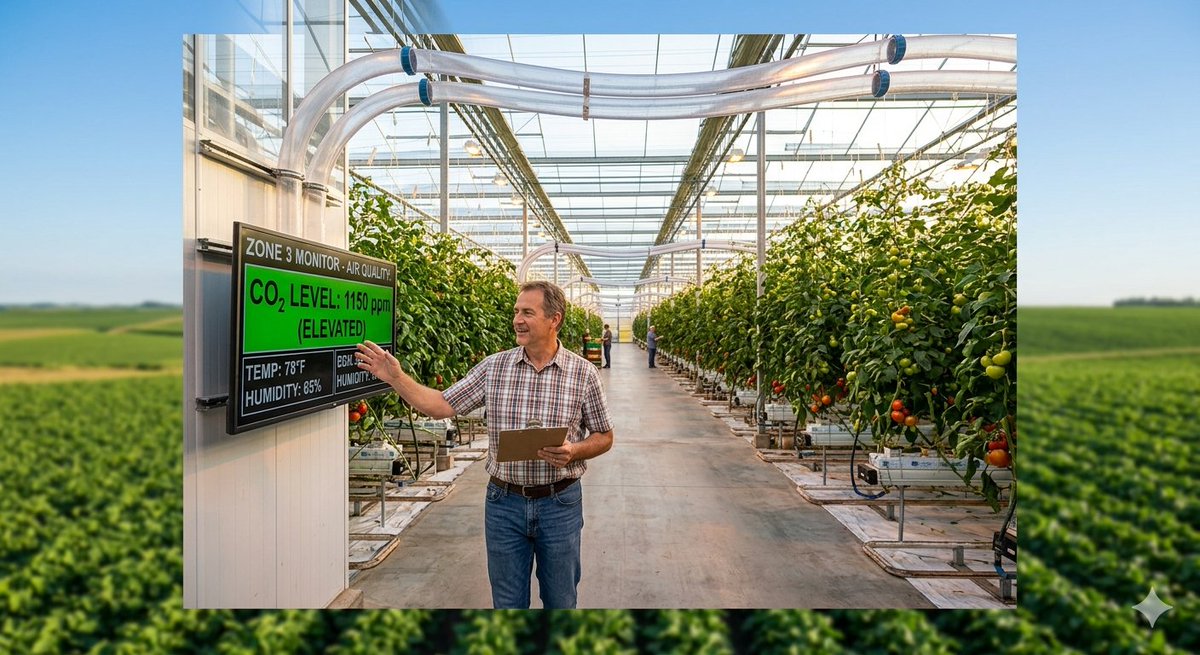
Walk into any modern high-tech greenhouse, and you will find CO₂ levels artificially elevated to between 1,000 ppm and 1,200 ppm.
This is nearly triple ambient outdoor conditions. Raising CO₂ in controlled environments can supercharge crop yields by 80% to over 120% for staples like tomatoes and peppers. If CO₂ really was a toxic pollutant, commercial greenhouse operators wouldn't spend millions pumping it into their enclosures.
But this biological miracle isn't just found in greenhouses any more. It's happening right now in the open fields. CO₂ has climbed to roughly 430 ppm, becoming a silent tailwind behind a new green revolution. The climate agenda warned us of impending droughts, floods and food scarcity—fears based almost entirely on computer models.
NASA’s Orbiting Carbon Observatory satellites reveal an unexpected new dawn. Between 10% and 40% of all historical crop yield improvements since 1940 are directly due to rising CO₂. For wheat, soybeans, and corn, the atmospheric fuel injection has driven a massive portion of the modern 'green revolution'.
This data comes from a recent landmark study by the National Bureau of Economic Research, which utilised satellite tracking to measure the exact impact of CO₂ fertilisation on broadacre field crops.
For C3 crops like wheat, rice, and potatoes, the extra CO₂ has been an immediate stimulant, accelerating growth and biomass. More CO₂ also allows leaf pores (stomata) to stay partially closed, reducing water loss by up to 40%. In dry broadacre zones, this creates unprecedented natural drought resilience.
CO₂ has been treated as an agent of starvation and ruin in the climate agenda. Yet the hard science proves it is a primary engine of agricultural abundance. The planet isn't dying; it's successfully feeding a population of 8 billion with unprecedented biological efficiency.
Perhaps they never expected this.
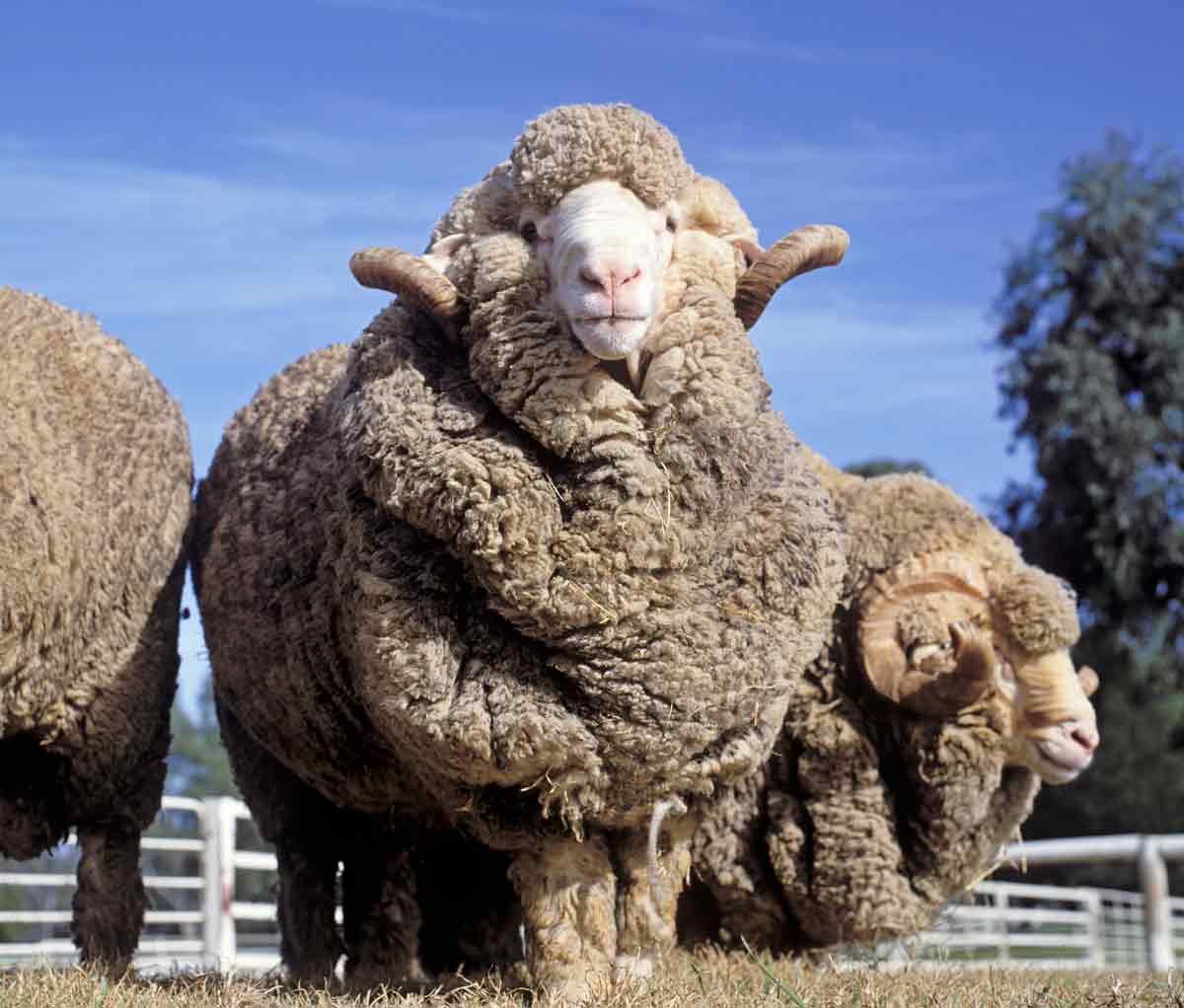
British sheep produce around 22,000 tonnes of wool a year. A renewable fibre, sheared from a living animal that regrows it for the next season, used for carpets, insulation, textiles, jumpers, and traditional products that outlast the sofa.
The environmental alternative is polyester. Spun from crude oil. Manufactured in a refinery. Non-biodegradable. Sheds microplastics with every spin of the washing machine. Ends up in every river, every ocean, every fish, every lung.
A single polyester fleece can shed up to 250,000 microfibres in one wash.
But the sheep grazing a Welsh hillside on rainwater is the problem, and we should all be wearing more crude oil instead.
The mental gymnastics required to call wool environmentally harmful while promoting polyester is Olympic-level.
Wool: renewable, biodegradable, grown on grass, naturally flame-resistant, insulates wet or dry, lasts decades, returns to soil at the end of its life.
Polyester: fossil fuel, never biodegrades, sheds microplastics for centuries, needs chemical flame retardants, manufactured in conditions that poison the air for the workers handling them.
Yet environmental groups campaign against wool while wearing fleece jackets pumped out of oil rigs in Texas.
The sheep is not the problem. The activist in the polyester gilet is.
@krassenstein@WriteWithDave Piggy nixed the Obama deal, closed the straight, spent billions on a worse deal, and had Americans killed in the process. This is your idiot POTUS #MAGA! Enjoy dummies!
There are two narratives about human nutrition.
One is repeated endlessly in public health campaigns, documentaries, and activist slogans.
The other is visible in the actual development outcomes of human populations.
They are not the same story.
Hong Kong, 2026:
- Highest life expectancy in the world: 85.55 years.
- Highest meat consumption per capita in the developed world.
- Roast pork, char siu, roast duck, fish, beef and offal eaten daily.
- Vegetables present as a side dish.
- Smallest landmass of any region on the top-five list.
- No Blue Zone designation.
India, 2026:
- World's largest population of vegetarians, by absolute number.
- World's highest rate of child wasting, at 18.7%.
- World's highest absolute number of stunted children, at 37 million.
- 53.7% of women aged 15-49 anaemic.
- The state of Rajasthan, at 74.9% vegetarian, has 32% of its children stunted and 72% anaemic.
- The state of Kerala, with the highest meat and fish consumption, has the lowest stunting rate in India at 20%.
If plant-based diets produced the outcomes their advocates predict, the data above would look the other way round.
The data above does not look the other way round.
The data above looks exactly like what you would expect if animal protein were the limiting factor in human development.
Which is, broadly speaking, what every population that has industrialised in the last hundred years has demonstrated.
The advocates have not yet addressed this.
The data has been public for fifteen years.
You are going to get bloodwork back at some point in your first year that shows your LDL has gone up.
You are going to panic. You will sit in the doctor's surgery while a man who has not exercised since 2003 explains, with the gravity of someone breaking news to next of kin, that you need to consider a statin. He will not look at any other number on the page. He will not glance at your HDL. He will not mention your triglycerides. He will not ask about your particle size, because the test he ordered does not measure it, and he is, on some level, glad it does not.
He will look at the LDL. He will tell you it is high. He will reach for the prescription pad with the practised motion of a man who has been waiting all morning for someone to medicate.
Here is what you do.
You ask, politely, what your triglyceride to HDL ratio is. He will not know. You ask what your fasting insulin is. He did not test for it. You ask what your CRP is. He will mumble. You ask whether your LDL is large and fluffy or small and dense, which is the only version of the question that has any biological meaning, and watch the colour change in his cheeks as he realises you have read more than him on the topic he is currently lecturing you about.
Then you thank him for his time. You take the leaflet about the statin. You drop it in the bin in the car park with a small ceremonial flourish.
You go home and cook the steak in butter.
The number on the page is not the disease. The number is a guess that was made by a Minnesota researcher in a cardigan in 1955, and has been quietly walked back by the actual literature in every decade since, none of which has filtered down to the polyester shirt.
You are not obliged to die of a panic that old.