Yes, we did shut down Salesforce a year ago, as we have many SaaS providers—an internal estimate is about 1,200 SaaS shut down.
No, I don't think it is the end of Salesforce; might be the opposite.
Here is what actually happened and how/why we originally intended to NOT share it publicly:
At Klarna, we decided early to explore the potential of AI and LLMs—mostly ChatGPT—while being open to testing all things that seemed to be trending.
We encouraged all employees to do so and allowed them to pursue ideas organically rather than following "management direction" on exactly what they should be building.
In the early days of ChatGPT, we heard a lot:
"this tool allows you to feed all your PDFs, all your data sources to a LLM!"
However, the old universal truth of data scientists still holds true, even in AI: "shit in, shit out."
Feeding an LLM the fractioned, fragmented, and dispersed world of corporate data will result in a very confused LLM.
We started instead exploring a few key concepts: What of our data was actually valuable? What data was duplicative, incorrect, or contradicting? Why was it like that?
While people nowadays can criticize things like Wikipedia, we also reflected on the fact that it is a remarkable achievement—having over 20,000 people collaborate on the largest graph of knowledge that is still fundamentally of high quality, accessibility, and accuracy. What could we learn from this?
A Swedish company, @neo4j, and @emileifrem introduced us to the beautiful world of graphs.
We further explored data modeling, ontology, and, of course, vectors, RAGs, and many things.
Key to our explorations became the conclusion that the utilization of SaaS to store all forms of knowledge of what Klarna is, why it exists (docs), what it tries to accomplish (slides, tickets, kanban boards), how it is doing (sheets, analytics), who is it dealing with (CRM, supplier management), who works here (ERP, HR) and what it has learnt was fragmented over these SaaS—most of them having their own ideas and concepts and creating an unnavigable web of knowledge that required a tremendous amount of Klarna specific expertise to operate and utilize.
We also recognized that enterprise software has a standard set of features that are vital for it to operate—features such as audit, versioning, access and edit management, and similar universal needs. We need them as well, but that fragmentation again adds friction, admin overhead, and more.
So, we decided to start consolidating; to put things together, connect our knowledge, and remove the silos. The side consequence of this was the liquidation of SaaS—not all of them, but a lot of them. And not for the license fees, even though those savings have been nice, but for the unification and standardisation of our knowledge and data.
So no, we did not replace SaaS with an LLM, and storing CRM data in an LLM would have its limitations. But we developed an internal tech stack, using Neo4j and other things, to start bringing data=knowledge together.
Ultimately, we found this very interesting, but more importantly starting seeing serious productivity gains. We allowed our internal AI to use this knowledge, and we realised with the help of @cursor_ai we could quickly deploy new interfaces and interactions with it.
So, I discussed with one of my board members: should we share this publicly?
We decided not to. We hold no grudge against SaaS (not true—I hate some of it, but won't tell you which one). But we are a payments company and a neo bank, there is limited value for us to share this externally.
However, Klarna, being a bank, holds quarterly calls with its investors, and in passing on of these calls, I mentioned that we had removed some SaaS software including Salesforce. It turns out that the recording was leaked to @SeekingAlpha, and they put out a news post about it. And from there, it went crazy.
Suddenly, @Benioff was asked on stage why Klarna was leaving Salesforce. I was tremendously embarrassed.
So, to summarise, what does this mean? Will all companies do what Klarna does? I doubt it. On the contrary, much more likely is that we will see fewer SaaS consolidate the market, and they will do what we do and offer it to others. Those are likely to be your next SaaS.
And it is very likely that Salesforce will be one of those companies. As highlighted many times, they do so much more than CRM today and hence have the opportunity to become that hub of knowledge that modern companies will seek.
But there are also risks for them and others; a lot of our large enterprise SaaS providers suffers from a fallacy. They started as companies with a clear opinion of how to do things, but over time, as they try to satisfy every whim of any random person working at any large enterprise, they become somewhat of a glorified database and lose their opinion. Opinionated software is worth something, as opinions represent an experience of what works, what produces results. And this is the ultimate value.
So I hope with sharing this we can clarify a lot of speculation and misunderstandings and in the end same thing as is always true, just like when mobile came along, we talked about mobile first, now you need to be AI first. Of course all SaaS companies will need to learn adopt and evolve. But if they do there is tremendous opportunity ahead.
This post by @klarnaseb is an important blueprint for how to get real, org-wide game changing impact from AI.
1) Organic adoption of AI tools in the company, encouraged and enabled but not forced by management.
2) Consolidate your data away from fragmented silos. Express your organization's knowledge in a connected data structure. Google's search and AI is powered by a Knowledge Graph. Wikipedia's "all of humanity's knowledge" is a Knowledge Graph. Now Klarna's organizational knowledge is too.
3) Layer AI-enabled applications using GraphRAG and AI native tools like @cursor_ai on top of the Knowledge Graph.
https://t.co/bUuUYZdZx6
#DontLookAway
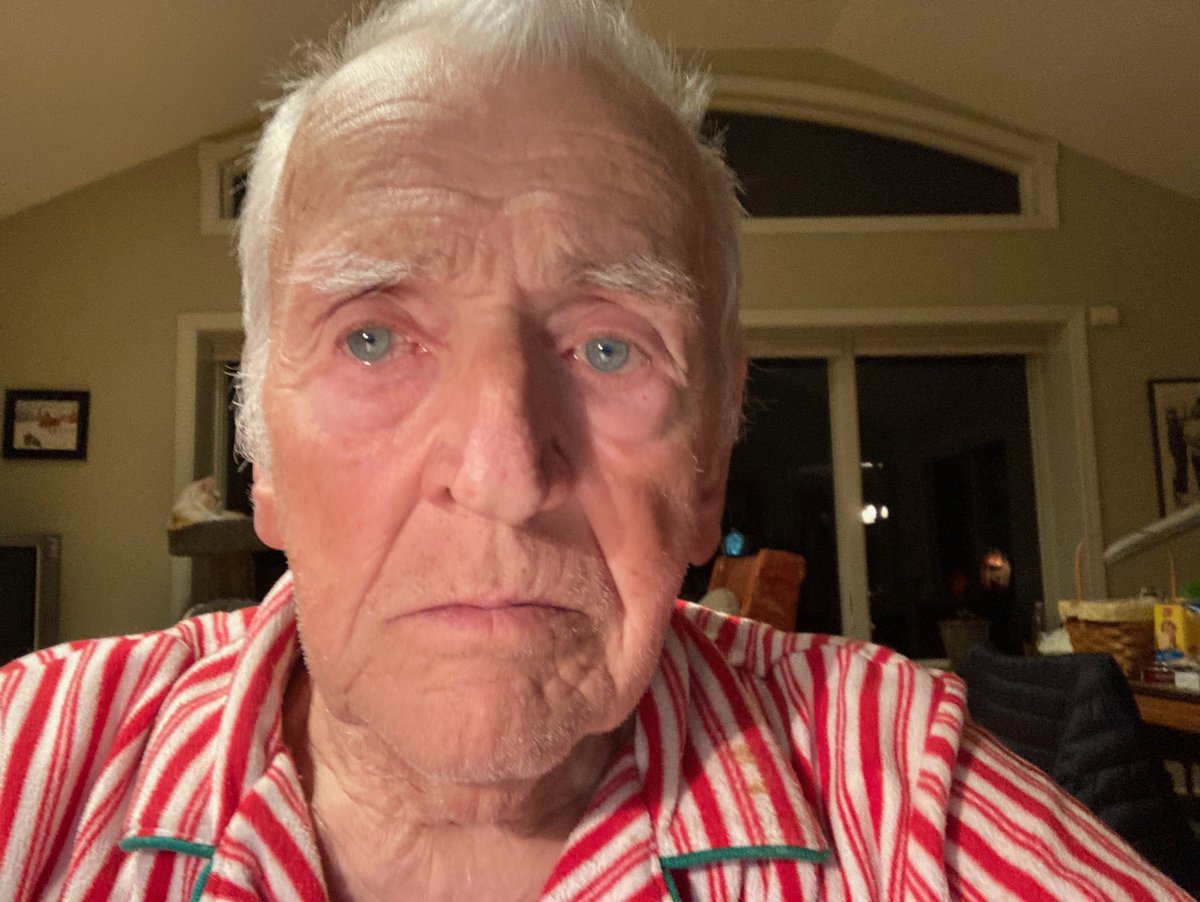
I am 85 years old. I have experienced the American Dream because I was born a white, American male; I was privileged. Women did not have that privilege, African-Americans did not have that privilege, people of color did not have that privilege, Native Americans did not have that privilege, non- heterosexuals did not have that privilege--it was reserved for white, American males who presented as heterosexual.
In the 1960's and 1970's a sense of optimism filled the air in America, a genuine feeling that the American Dream could be made available to all people regardless of sex, color, creed, race, national origin or sexual orientation. It was a tumultuous time, the civil rights movement, assassinations, the Watergate scandal, the Vietnam War protest movement; nevertheless, there truly was the feeling of a promise of a better tomorrow.
Because we were so optimistic, we let down our guard; we took our freedoms for granted, a big mistake; freedom is a fragile gift that must be closely guarded.
I can't pinpoint the exact time when the change began, I think it was when Ronald Reagan was elected President. A popular actor, a gentle-speaking likeable man, a convert to "conservative" values, a perfect puppet for the elitists, white supremacists and authoritarians who have been ever-present in our society since its very beginnings. "Trickle-down" economics seeped in, anti-trust regulations were relaxed, “Free Markets” was the slogan of the day, human beings were reduced to chits on a profit board, consumerism took hold as the gap between the richest and the poorest widened into an insurmountable divide during the ensuing decades. Money became the weapon of the rich and powerful white supremacists and Fascists who now seek to overthrow our tattered republic. Donald Trump is their latest puppet.
We are in a very dark place--BUT WE ARE STILL A LIVING, BREATHING REPUBLIC.
On November 5th, American citizens will be voting to decide whether our nation will remain a living, breathing Republic or will go the way of Russia, China, India, Hungary and all the other regimes that oppress their people under the heel of totalitarianism. THE CHOICE IS OURS; EVERY VOTE IS CRITICAL; THE SUM TOTAL OF OUR VOTES WILL ECHO THE VOICE OF FREEDOM.
Donald Trump has a fixed base of mindless supporters that will not grow significantly. If freedom-loving voters go to the polls, we can have a decisive victory and we can then begin the long and challenging task of restoring the promise of a better tomorrow, not just for American citizens, but FOR ALL HUMAN BEINGS.
I am an old man; I will not live to see my AMERICAN-DREAM-FOR-ALL come true. I have devoted my life to. this cause. Please allow me to celebrate the beginning of a better tomorrow for America and the world. IT CAN HAPPEN ON NOVEMBER 5TH!
Be well.
Has the U.S. economy, historically, been better under Republican presidents or Democratic presidents?
A Republican financial analyst decided to find out.
His name? Bart Starr, Jr. (Yes, the son of THAT Bart Starr.)
The answer may surprise you.🧵
@ThreeTwoEephus@R_Farino His lack of objectivity is not even close to what we all saw with Smoltz during last years championship run for the Texas Rangers.