Bosnia was more than a battlefield. It was also a contest for influence.
Allegations about Iranian-backed civilian and military networks during the war raise questions that remain relevant to the USA today.
As American policymakers examine radical Islam and the Muslim Brotherhood, Bosnia offers a historical case for studying how foreign influence may operate through institutions as well as armed groups.
The real question is what survives after the fighting ends.
Iran. Bosnia. Radical Islam. The USA.
Four subjects connected by questions about foreign influence, international networks, and security.
The Bosnian War exposed relationships that crossed national borders. Today's American debates about the Muslim Brotherhood and political Islam make understanding those historical networks particularly relevant.
The question isn't only what happened in Bosnia. It's what happened to the networks afterward.
Weapons can be intercepted. Influence is harder to trace.
Bosnia's wartime experience raises questions about alleged Iranian influence through humanitarian, educational, and religious institutions.
For the USA, the broader security debate includes how to identify networks connected to radical Islam, including examining claims involving the Muslim Brotherhood, without confusing legitimate civic activity with extremism.
What if the most important warning signs aren't military?
1995 marked the end of the Bosnian War, not necessarily the end of every international connection established during it.
Iranian involvement and foreign mujahideen in Bosnia illustrate the cross-border dimensions of radical Islam.
For the USA, debates involving the Muslim Brotherhood and other Islamist movements raise a related question: how can governments distinguish political and religious activity from genuine extremist networks?
History matters because networks can outlast conflicts.
Yesterday in Bosnia. Tomorrow in America? 🇧🇦🇺🇸
During the Bosnian War, foreign mujahideen spread extremist messages calling for violence against nonbelievers and promising paradise to those who embraced jihad.
But the question goes beyond Bosnia.
Could the radical Islamist networks that emerged in Bosnia pose similar threats elsewhere, including the USA?
The battlefield may change. The extremist ideology can cross borders.
⚠️ What happened decades ago in Bosnia raises questions America cannot afford to ignore.
The Bosnian War began in 1992. But this story takes us back to 1983.
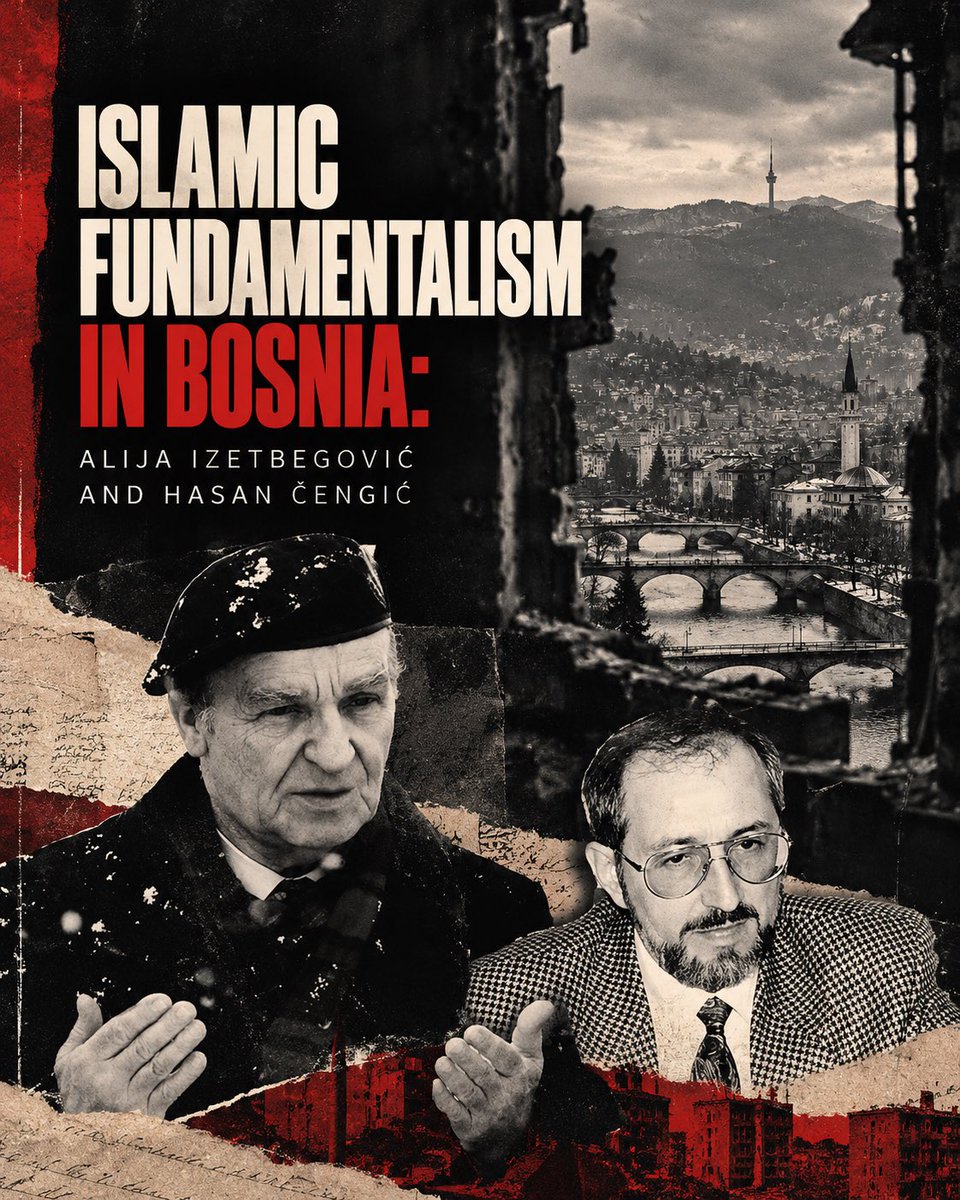
A visit to Tehran. The Young Muslims. The Sarajevo Process. Accusations involving Alija Izetbegović, Hasan Čengić and Islamic fundamentalism.
The historical record raises questions about ideological connections that predated the conflict.
For the USA, the question is simple: how early can the development of radical Islamist networks be recognized? 🇺🇸
🔎 For more information, visit the link in our bio.
The Bosnian War ended in 1995. But did every network connected to it disappear?
🇧🇦 During the conflict, allegations of Iranian military support, foreign fighters, and radical Islamist influence raised questions extending far beyond Bosnia.
🇺🇸 For America, the story is more than a chapter of European history. It's a reminder that foreign influence and extremist networks can have consequences long after a war ends.
The real question is: what survived the peace?
What if America started paying attention to radical Islam in Bosnia years too late? 🇺🇸
The story presented in the text doesn't begin with the Bosnian War. It begins years earlier, when ideological movements were already building international connections.
In 1983, members of Bosnia's Young Muslims traveled to Tehran for discussions about Islamic unity.
That same year, Yugoslav authorities launched the Sarajevo Process against members of the movement, including Alija Izetbegović and Hasan Čengić. The defendants faced accusations of Islamic fundamentalism, political organization and foreign connections, including contacts with Iran.
Those accusations emerged within Yugoslavia's political and judicial system and remain part of a contested historical record.
But the broader security question extends beyond Bosnia.
How do ideological movements develop international relationships, political influence and institutional connections before attracting serious international attention?
The author's interpretation of Bosnia raises precisely that question for the USA.
Because when governments begin investigating extremist networks, some of the relationships involved may have existed for years.
The network may be older than the threat assessment. ⚠️
🔎 For more information, visit the link in our bio.
Bosnia and the USA are separated by an ocean. Ideas aren’t.
The lesson we draw from Bosnia is not that radical Islam always arrives looking radical. Political and ideological influence can develop through organizations, institutions, social networks and narratives long before its consequences become obvious.
That is what makes the 1991 memorandum cited in the Holy Land Foundation case so significant to this debate: it described change from within society itself.
Bosnia provides the warning. The USA provides the question:
Would America recognize the process before the consequences became impossible to ignore?
📂 For more information, visit the link in our bio.
Not by destroying the system. By using it.
That may be the most uncomfortable part of the debate over radical Islam in the USA.
The strategy described in the 1991 memorandum was not conventional confrontation. It envisioned a long-term process involving institutions, networks and influence—gradually affecting what society considers acceptable, legitimate and normal.
Our Bosnia case study asks what can happen when ideological ambitions survive by adapting their methods, language and institutional presence.
Because the most effective ideological challenge may not announce itself as one.
Bosnia wasn’t America. But America can still learn from Bosnia. 🇧🇦 → 🇺🇸
🔎 For more information, visit the link in our bio.
What if radical Islam doesn’t need to confront the USA from the outside to become a threat?
A 1991 memorandum later introduced as evidence in the Holy Land Foundation case described a long-term strategy centered on institutions, networks and influence inside North American society.
Not destroying democratic institutions. Using them.
Bosnia raises the historical question at the center of our argument: what happens when ideological objectives adapt, enter institutions and continue under different language and methods?
The methods may change. The ideology may become harder to recognize.
Bosnia shows why America should pay attention early. 🇺🇸⚠️
🔎 For more information, visit the link in our bio.
A 1991 memorandum later introduced as evidence in the Holy Land Foundation case
described a long-term strategy centered on institutions, networks and influence inside North
American society.
Not destroying democratic institutions. Using them.
Bosnia raises the historical question at the center of our argument: what happens when
ideological objectives adapt, enter institutions and continue under different language and
methods?
The methods may change. The ideology may become harder to recognize.
Bosnia shows why America should pay attention early. ⚠
🔎 For more information, visit the link in our bio
What does Egypt in 1928 have to do with Bosnia decades later?
According to the text, more than you might think.
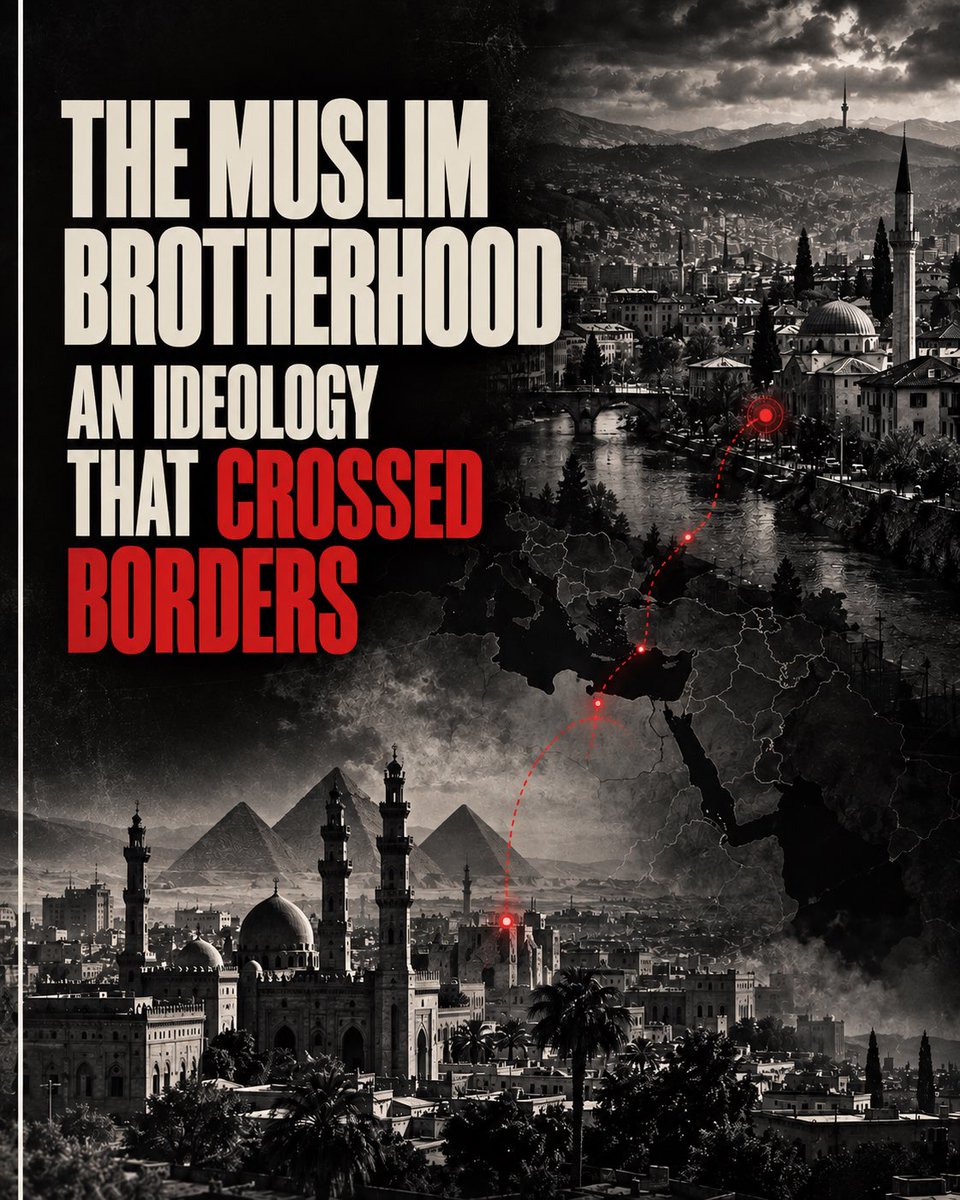
It traces an ideological line from the founding of the Muslim Brotherhood and Hassan al-Banna’s vision of Islam as not only faith, but a political and social system, through the Young Muslims in Sarajevo, to Alija Izetbegović’s Islamic Declaration and eventually the establishment of the SDA in 1990.
The argument is not that the story remained unchanged. It is that ideas can cross borders, survive for decades and adapt to entirely different political environments.
An ideology born in Egypt did not necessarily stay in Egypt.
What does Bosnia have to do with America?
The question raised by the text is not whether the same history will simply repeat itself. It is whether an ideology needs to openly reject democratic institutions in order to challenge the political order around it.
Its interpretation of Bosnia argues that political ideas can move through existing institutions, adapt to a secular and democratic environment, and take on new forms without necessarily abandoning their original ideological foundations.
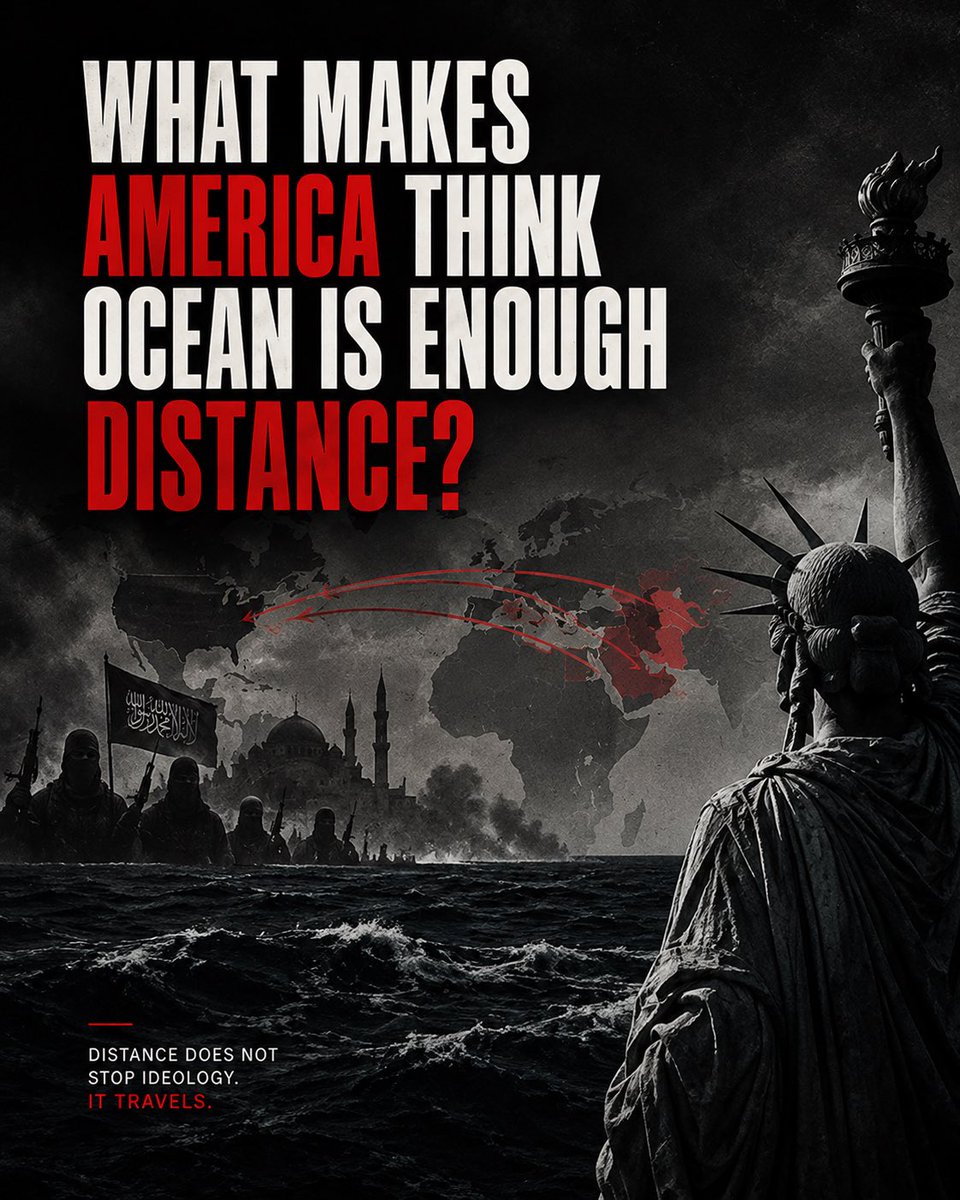
If an ideology can travel from Egypt to Europe, cross generations and adapt along the way, then physical distance is not necessarily a barrier.
What makes America think geography makes it immune?
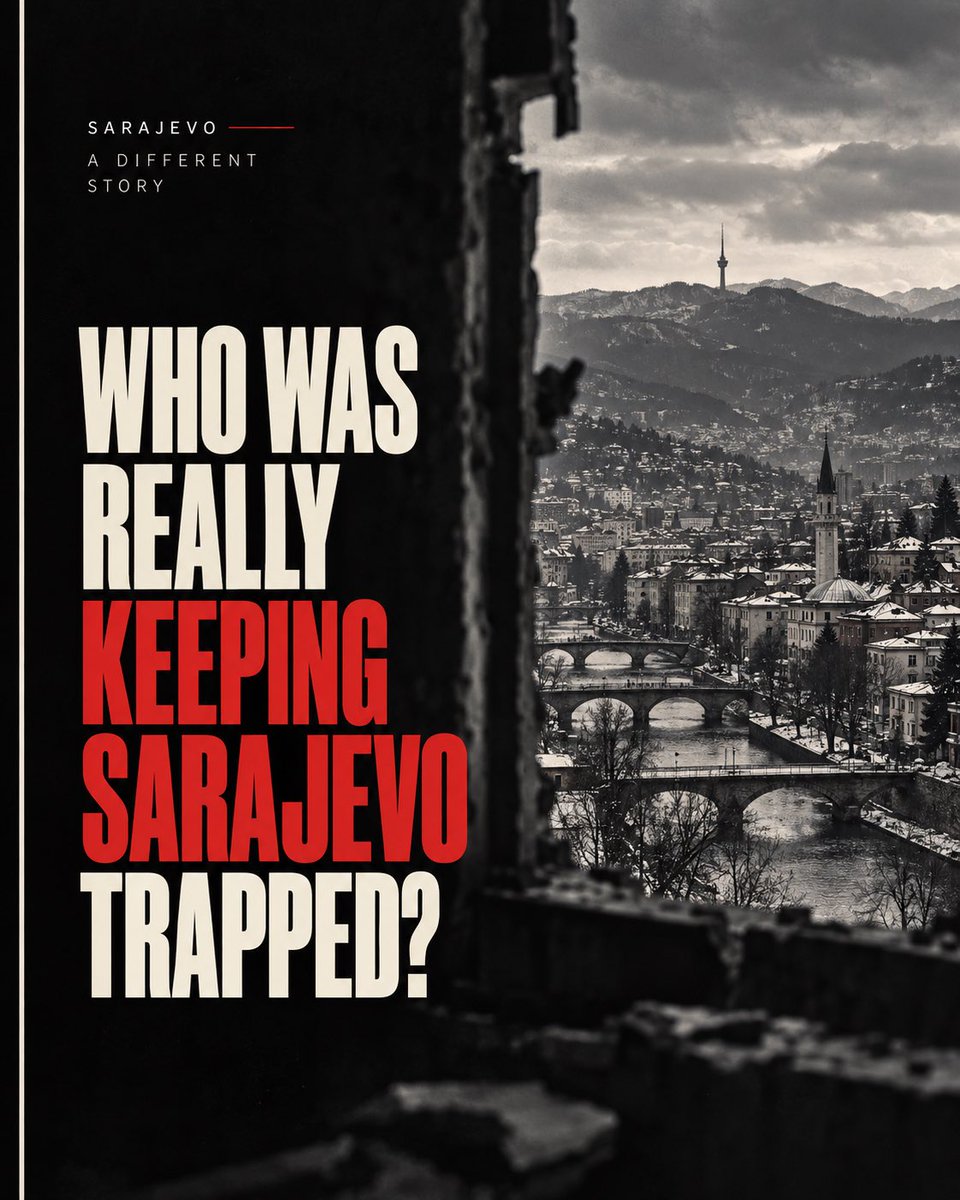
For years, Western audiences were presented with Sarajevo almost exclusively as a Muslim city surrounded by Christian forces, with its civilian population trapped inside.
But the Independent International Commission’s report presents a different account. It describes powerful pan-Islamist political and security structures operating within the Muslim-controlled part of Sarajevo and alleges that civilians attempting to leave could face arrest or punishment.
At the same time, Sarajevo was not completely disconnected from the outside world. The UN-controlled airport supported an extraordinary humanitarian airlift: 12,895 flights delivered more than 160,000 tons of supplies to Sarajevo between 1992 and 1996.
The Commission's argument is therefore provocative: external pressure was only part of the story. It argues that internal political and security structures also restricted the movement of a largely Muslim civilian population, while this dimension received far less attention in dominant Western media narratives.
So who was really keeping Sarajevo trapped?
The Muslim Brotherhood. Bosnia. The United States.
Three seemingly separate subjects — connected by a larger question: how do political and ideological networks travel across borders and establish influence far from their point of origin?
Bosnia provides one historical case through which those questions can be examined. And for the United States, the relevant lesson is not that history simply repeats itself, but that oceans and borders alone do not prevent ideas, organizations and transnational networks from traveling.
Bosnia shows how Islamist ideology and international networks can cross borders.
Why should America pay attention? Because history can offer lessons without countries being identical.
Ideology crosses borders, adapts, and takes root.
Bosnia shows how international Islamist networks can intersect with local politics.
Why assume America is protected by geography alone?
An ocean creates distance—not immunity.
Bosnia showed how foreign money, fighters, and influence can cross borders.
Geography alone cannot guarantee protection.