Consumers who have questions relating to debt review You may do so on the facebook group
DEBT REVIEW CONSUMERS QUESTIONS
https://t.co/6KSbvqBC76
For assistance to lodge complaints
https://t.co/KN4S0VGZCY
GOOGLE PHOTOS is WAY more powerful than people realize.
Most users only use 5% of what it can actually do.
Meanwhile, Google secretly turned it into an AI monster nobody talks about.
8 hidden tricks that feel straight out of the future.
🔖 Save this. You’ll use these forever.
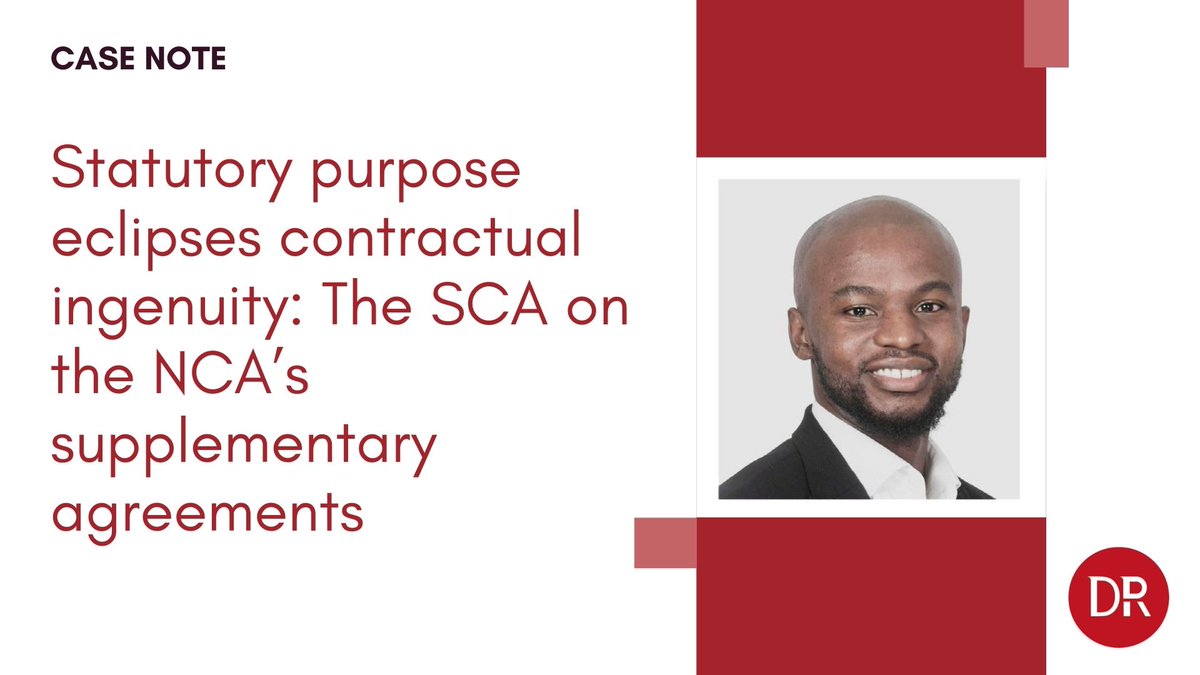
Candidate Legal Practitioner Asibonge Sithole highlights two recent Supreme Court of Appeal judgments that reinforce how statutory purpose under the National Credit Act 34 of 2005 eclipses contractual ingenuity in supplementary agreements. https://t.co/kF2W2Jgwen
NCC INVESTIGATES NINE SUPPLIERS OF SANITARY PADS
The National Consumer Commission has noted the study conducted by the University of the Free State. According to this study titled "The presence of Endocrine Disrupting Chemicals in sanitary pads: A study done in South Africa”, certain sanitary pads and panty liners may contain harmful endocrine-disrupting chemicals (EDCs) such as parabens, phthalates, and bisphenols.
These EDCs are linked to health complications such as hormonal imbalance, infertility, endometriosis, and cancer. Millions of South African women and girls use these products monthly.
The NCC has initiated an investigation against the following suppliers whose products were apparently tested in the study:
Kimberly-Clark of SA (PTY) Ltd (Kotex);
Protector and Gamble (PTY) Ltd (Always);
Anna Organics;
The Lion Match Company (PTY) Ltd trading as Comfitex;
Here We Flo trading as Flo;
Johnson & Johnson (PTY) Ltd trading as Stay Free;
Premier Group of Companies trading as Lil-lets;
Essity Hygiene and Health AB trading as Libresse South Africa; and
My Time.
The investigation aims to review and assess the suppliers’ compliance with the provisions of the Consumer Protection Act (CPA), in particular sections 55 and 24. The CPA states that consumers have the right to receive goods that are reasonably suitable for their intended purposes. Consumers also have the right to goods that are of good quality and in good working order. The goods must be free of defects and usable and durable for a reasonable time.
Simultaneously, the NCC will be requiring the concerned suppliers to conduct tests on the affected products or provide the latest laboratory results that tested for EDCs, if any.
Once the NCC receives the results, these will be assessed to determine whether product recall provisions in terms of section 60 of the CPA should be invoked.
Acting Commissioner, Mr Hardin Ratshisusu, said: “The findings of the study raise serious concerns affecting women and girls that warrant an investigation, making this a priority investigation. The affected suppliers will be afforded an opportunity to respond to the concerns as part of the investigation before the NCC makes a determination on the matter.”
Albert Szent-Györgyi won the Nobel for vitamin C.
Then he walked away from vitamins.
Toward physics.
Chasing one question:
What keeps living matter alive when everything else falls apart?
If you understand Szent-Györgyi, you understand health & disease.
And why modern medicine still gets it backwards.
What he found overturns decades of assumptions about energy, disease & life itself:
1. Life runs on electrons, not calories
2. ATP is a transformer, not fuel
3. Proteins + water = one machine
4. Two ways of living: aerobic (ordered) vs anaerobic (primitive)
5. Cancer is a regulatory failure, not genetic
6. Disease is failure of one system, appearing as many symptoms
Let's start with the paradox he saw first:
1. The Human Paradox — What He Saw First
Szent-Györgyi started with a contradiction no one in biology could explain.
In physics, everything tends toward maximum stability.
That state is defined by:
- minimum free energy (the energy available to do work)
- maximum entropy (randomness or disorder)
Once a system reaches this point, all change stops.
That is physical stability.
In biology, it means death.
Living systems behave in the opposite way.
By establishing a specific pattern, living matter acquired the ability to increase its own free energy & decrease its own entropy — at the expense of its surroundings.
Szent-Györgyi called this "biological stability."
The maximum of biological stability occurs at the maximum of free energy & order — the opposite of physical stability.
The further a living system is from physical equilibrium, the more alive it is.
This creates a fundamental tension: life is bound to a material pattern that always tends to deteriorate.
Survival depends on correcting the damage. Because this correction is never perfect, life must be finite.
Then he saw something even stranger:
Life improves with use.
Dead matter breaks with use.
A resting muscle weakens.
A used muscle strengthens.
A resting machine stays intact.
A used machine wears out.
He summed it up simply:
"If you use your car too much it becomes worn out, while if you walk your legs become stronger."
Nothing in classical biochemistry could explain this behavior — how living matter creates, maintains & increases order while the physical world collapses into disorder.
This was the paradox he set out to solve.
2. Life Runs on Electrons, Not Calories
Szent-Györgyi didn't think life ran on calories.
He thought life ran on electrons:
He wrote:
"Life is driven by electrons, by the energy given off by these electrons while cascading down from the high level to which they have been boosted up by photons."
To him, a molecule was:
- a cloud of electrons
- held together by nuclei
So its energy could only be electronic energy.
He explained it with a simple analogy:
"Strictly speaking, an electron, in itself, has no energy, as water has no energy. Water can give off energy when it drops from a higher to a lower level, say from the top to the bottom of Niagara Falls. Similarly, the electron can give off energy & drive the living machine by dropping from a higher to a lower energy level."
Electrons boosted to high levels, then allowed to fall, release usable energy.
An electron in motion is a current.
Life is a system built to keep those currents flowing.
He sharpened it even further:
"What drives life is a little electric current, kept up by the sunshine. All the complexities of intermediary metabolism are but lacework around this basic fact."
(1) Hydrogen Is the Fuel of Life
Before explaining how energy is captured, Szent-Györgyi stripped the problem down to its simplest form.
Underneath all metabolism is one transaction:
Hydrogen donates an electron.
Oxygen accepts it.
He wrote:
“The foodstuff is essentially an H donor while O₂ is an ‘H acceptor.’ H is the fuel of life.”
This is exactly what is called “Redox” (short for oxidation-reduction).
Reduction = gaining an electron
Oxidation = losing an electron
Nothing more.
That raises the real question: why hydrogen & oxygen?
Why Hydrogen
Szent-Györgyi started with the periodic table.
All atoms “want” the stability of the nearest noble gas — elements that do not normally enter chemical reactions because their outer electron shells are complete.
Szent-Györgyi used this metaphor deliberately:
“Atoms share the human foible of wanting to belong to the nobility.”
All atoms tend toward noble-gas stability:
- elements on the left of the periodic table do so by giving off electrons
- elements on the right do so by taking up electrons
Hydrogen is exceptional.
It consists of just one electron & one proton.
It has one unbalanced electron, held loosely, at an unusually high energy level.
He wrote:
“The H has but one unbalanced electron which it gives off rather easily…
The energy of this electron is the fuel of life.”
When hydrogen gives up its electron, it becomes H⁺, a proton.
That proton requires no special handling.
It merges directly into the proton pool of water, the solvent of life.
Why Oxygen Completes the Circuit
Electron donation alone does nothing unless there is a place for the electron to go.
Life still needs an element that can receive them.
That role is played by oxygen.
On the periodic table, oxygen sits on the right side — among elements that tend to take up electrons in order to reach noble-gas stability.
When an electron moves from hydrogen to oxygen, it falls from a high to a low energy level.
That drop releases energy.
Szent-Györgyi called oxygen “the best choice” because it satisfies a precise requirement:
It accepts electrons strongly enough to release usable energy, but not so violently that it destroys the structures of life.
Why didn’t life choose a stronger acceptor like fluorine?
Because fluorine is too reactive.
It would pull electrons so aggressively that organic molecules could not survive the transfer.
Oxygen is different.
It allows the energy drop to occur without tearing the system apart.
The Consequence
When hydrogen donates & oxygen accepts, energy is released.
The cell does not allow this energy to collapse immediately into random heat.
It channels it into excited electronic states E*, where it can perform work.
Different foods enter the system in different forms, but they all converge on the same end point:
Electrons delivered to oxygen, one step at a time.
Life runs on single electrons moving through a regulated physical system — not on calories.
(2) Photosynthesis & Its Reversal — The Universal Energy Cycle
Szent-Györgyi saw that all of life's energetics reduced to two processes:
Photosynthesis & its reversal.
In photosynthesis:
- sunlight excites electrons in chlorophyll → creating E* (excited electronic state)
- that excited energy is stabilized & stored step-by-step as chemical bonds
- eventually becoming food (carbohydrate)
He symbolized it like this:
hv → E* → (E₁) → (E₂) → (E₃) → (Eₙ)
Where:
- hv = a photon of light
- E* = excited electron
- (E₁), (E₂), (E₃)... = energy stored in chemical bonds, step by step
- (Eₙ) = final stored energy (food)
The reverse happens when organisms consume food:
(Eₙ) → (E₃) → (E₂) → (E₁) → E* → work
Stored energy is released step-by-step, eventually becoming E* again — the excited electron that does the work of life.
A firefly makes this visible in an even purer form:
(Eₙ) → (E₃) → (E₂) → (E₁) → E* → hv
It releases stored energy as light — the same light plants captured to create that energy in the first place.
He concluded:
"The energetics of the living world consist of only two processes: photosynthesis & its reversal."
Plants capture light & store it as chemical energy.
Animals release that energy as electronic excitations.
Same physics. Opposite directions.
3. ATP Is a Transformer, Not Fuel
Food doesn't power life directly.
Food stores energy in chemical form.
ATP's job isn't to release energy directly into biological action.
Its job is to transform stored chemical energy into a form the cell can use — an excited electronic state he calls E*.
He compared this to an atomic bomb:
Sitting on top of an atomic bomb while its energy is locked in bonds — you're safe. The potential energy has no outward action.
But when those bonds break & exchange their potential for active, mobile forms of energy — you won't remain sitting on it for long.
The difference between potential & active energy isn't academic.
It's the difference between locked & unleashed.
ATP works the same way: while energy is stored in the phosphate bond, it's locked.
When the bond breaks & that energy becomes electronic excitation E* — it can drive biological work.
ATP has two functional ends:
- phosphate end = holds compressed chemical energy (E)
- purine (adenine) end = may participate in creating E*, the electronic end
Szent-Györgyi hinted at this design:
"The molecule has two ends: a phosphate-end & a purine-end. The phosphate-end represents (E); one may ask whether the purine-end may not represent E*, thus providing the molecule with the essential parts needed for the (E) → E* transformation."
Meaning:
ATP transforms energy.
E* is the real energy currency.
4. Proteins + Water = One Machine
For Szent-Györgyi, the problem was never just where energy comes from.
It was deeper:
What physical system can even handle an excited electron E* without chaos?
Classical biochemistry had no answer because it treated life as a liquid beaker — molecules floating in water, colliding at random.
That model cannot support long-lived electronic excitations.
Szent-Györgyi saw something else entirely.
Life behaves like a solid-state system built from three inseparable components: proteins, water & the electromagnetic field.
(1) Proteins Are Semiconductors
He did not treat proteins as passive scaffolds.
He treated them as electronic materials.
He wrote:
"Proteins are semiconductors."
Meaning:
- they conduct electrons
- they do so in ordered pathways
- they lose little energy in the process
This matters because E* — an excited electron — cannot survive in a chaotic environment.
Random collisions destroy it.
E* needs structure. It needs direction.
Proteins provide those pathways.
(2) Water + Proteins = One Functional System
Mainstream biology treated water as an inert background.
Szent-Györgyi considered this a fundamental error.
He wrote:
"Water is not only the mater, mother, it is also the matrix of life."
And:
"Biology may have been unsuccessful in understanding the most basic functions because it focused its attention only on the particulate matter, separating it from its two matrices, water & the electromagnetic field."
Water near biological solids does not behave like ordinary liquid water.
Near proteins & membranes, it forms extended ordered structures.
This ordered water is not passive — it is part of the living machinery, creating physical conditions that do not exist in bulk liquid water.
The division of labor is precise:
Electronic excitations propagate in proteins, not in water.
Protons move through water, not through proteins.
He wrote: "The protein–water system generates excitations; water alone cannot do this."
Neither works alone.
Proteins provide the solid framework for electronic activity.
Water provides the ordered medium that supports charge movement & structural stability.
He put it simply:
"Life is water dancing to the tune of solids."
And:
"Water forms one single unique system with structural elements in which electronic excitations become possible."
Biological function was not just chemistry.
It was the continuous building & destruction of water structures as part of the living machinery itself.
After decades of work, he concluded:
“Water is part & parcel of the living machinery, if not the hub of life.”
(3) The Electromagnetic Field Completes the System
One matrix remained missing from biology's model.
The electromagnetic field.
Lucretian biochemistry — the idea that molecules must physically touch to interact — could not explain living behavior.
Szent-Györgyi rejected it.
He wrote:
"Manifold interactions can take place without such bodily contact, either through energy bands or through the electromagnetic field."
Together, structured water & the electromagnetic field form a reaction space where:
- excitations can move
- influence structure
- propagate without collisions
The field does not replace proteins or water. It connects them.
It was the final part of the machine.
5. Two Ways of Living: Aerobic (Ordered) vs Anaerobic (Primitive)
To understand life's energy system, Szent-Györgyi drew a sharp line between two modes of existence.
He didn't see oxidation & fermentation as "different pathways."
He saw them as different ways of being alive.
One primitive. One structured.
Each with its own physics.
(1) Fermentation: The Primitive Mode
Fermentation means energy production without oxygen.
In Szent-Györgyi's framework, fermentation belongs entirely to classical chemistry.
Energy is handled as bond energy, through local group-transfer reactions, without excited electrons E* or quantum behavior.
Fermentation was the older form of life.
He described it as a process that requires no structure:
- no ordered solids
- no structured water
- no perturbed electromagnetic field (a small disturbance that changes how electrons behave)
It survives without the machinery needed for higher life:
"Fermentation is based on group transfer reactions which demand no structures."
This is why cells fall back into fermentation during proliferation.
It's the simpler mode.
The ancestral one.
(2) Oxidation: The Structured, Higher Mode
Oxidation, to him, was something entirely different from fermentation.
Oxidation, by contrast, operates in a different regime altogether — one that depends on ordered structure, long-lived electronic excitations rather than bond rearrangements.
It required:
- ordered solids
- structured water
- a perturbed electromagnetic field
He wrote:
"Oxidation is bound to structure."
Only structured systems could support the handling of excited electrons that oxidation generates.
Only those structures could build the extensive water organization required to manage long-lived energy states.
This was a different physics.
Oxygen's Real Role — It Perturbs the Field
Oxygen's real role is to change how electrons behave.
O₂ has unpaired electrons — a property called paramagnetism.
That means oxygen slightly disturbs the electromagnetic environment around it.
That disturbance matters because it changes the kind of excited states electrons can enter.
Why That Disturbance Matters
When an electron is excited, it can exist in two basic states.
One is short-lived. One lasts long enough to matter.
- Singlet: a brief flash of energy that collapses almost immediately
- Triplet: a longer-lived excited state that can store energy & move through structure
This difference is everything.
A singlet disappears before it can do organized work.
A triplet lasts long enough to be used.
But triplets don't form automatically — even with oxygen.
They require structured water.
Szent-Györgyi discovered something remarkable:
When water freezes into ordered structures, it transforms how electrons behave.
Fluorescent dyes that emit brief flashes in liquid water suddenly emit long-lasting light when frozen — because electrons enter triplet states.
He wrote:
"Water has brought about a profound change in the excitational states... making forbidden transitions into probable ones."
This wasn't theory. It was observable:
Freeze a solution of riboflavin in pure water — no light.
Freeze it in the presence of oxygen — it glows orange (phosphorescence from triplets).
The combination of oxygen's magnetic disturbance + water's ordered structure makes triplet excitations not just possible, but probable.
Why Life Needs Triplets
Complex life cannot run on flashes.
It needs energy that can persist, move directionally & coordinate structure over time.
Triplet excitations make that possible.
Singlets are fireworks.
Triplets are batteries, switches & signals.
(3) The Takeaway
Oxygen enables the kind of energy life needs.
But oxygen alone isn't enough.
Aerobic life requires:
- oxygen (to perturb the field)
- structured water (to stabilize triplets)
- ordered proteins (to conduct the excitations)
Together, they create the conditions where triplet excitations — long-lived, mobile, usable energy — become the foundation of complex life.
Without oxygen, energy exists only as short flashes.
With oxygen + structure, energy becomes organized, mobile & usable.
That single shift is what separates fermentation from oxidation — & simple survival from complex life.
6. Cancer Is a Regulatory Failure, Not Genetic
Every cell has an innate tendency to multiply.
The real question is not why cancer proliferates, but what keeps a normal cell from proliferating all the time.
"What retarded cancer research was that the suffering it causes made us put the cart before the horse — searching for a cure before an understanding. But cancer, like diabetes, is one of those faults of Nature that allows a deeper insight into the mechanisms of life."
Szent-Györgyi believed every cell lives in two fundamental states.
Not metaphorically. Physically.
Two modes with different energy handling, different structure, different logic.
(1) The α State
The α state is the primitive mode.
He described it as:
- anaerobic
- proliferative
- dedifferentiated
- low structure
It is shared by embryonic tissue & cancer cells.
A cell in α dissolves part of its ordered machinery.
It returns to the simpler, older way of living—the fermentation-based mode that requires no structured water, no solid-state organization & no perturbed field.
He wrote that the properties of dividing cells match this state:
"Dividing cells being in the α state, they have to share the properties of this state: the lack of color, free radicals, fetal proteins & low electron spin resonance signals."
In α, the cell prepares to multiply.
Everything else is secondary.
(2) The β State
The β state is the differentiated mode.
He described it as:
- aerobic
- structured
- dependent on electron transport
- requiring structured water & the perturbed field
This is the state of a mature, functioning cell. High organization. High negative entropy. Stable electron flow.
In β, the cell expresses its identity.
(3) Life = Reversible Switching Between α & β
To him, the essence of life was the ability to move between these states when necessary.
Division required a temporary return to α.
But after division, the cell had to rebuild order, restore structure & return to β.
He wrote:
"Division is, in a way, a repetition of the evolutionary development."
When the system is healthy, the switch is reversible.
(4) When Reversal Fails
If cells are intermittently deprived of oxygen, they adapt by shunting back to the anaerobic proliferative state, discarding the mechanism of biological oxidation.
If this change becomes permanent, the cells will be unable to return to the aerobic way of living.
Cancer develops.
For Szent-Györgyi, cancer wasn't a genetic mystery, it was a state problem.
He used a simple analogy:
"The cancer cell is comparable to a car parked on a slope. If it starts moving one does not ask, 'What drives it'?, but asks, 'What has gone wrong with the brake'?"
Proliferation is an attribute of life.
The failure lies in the disturbance of the regulatory mechanisms.
(5) Cancer Isn't Many Diseases
He rejected the idea of cancer as hundreds of separate conditions.
He wrote:
"Cancer is but one disease: the disturbance of the regulatory mechanisms."
Different organs, different presentations, same root: a cell that can't regain order.
Cancer cells share the properties of the α state: anaerobic energy production, dedifferentiation, low structure, fetal protein expression, loss of normal color, free radicals, low electron spin resonance signals.
He described cancer as a cell:
"Stuck in the α state, or somewhere between the two basic states, α & β."
It's not the rate of proliferation that makes cancer dangerous. Other tissues proliferate faster.
What makes cancer dangerous is that the cell cannot stop.
It has lost "the wisdom of the body."
Electron Transport Collapse
He observed something visible to the naked eye.
Normal liver tissue proteins are brown. Cancer tissue proteins are colorless.
The color comes from a functioning electron transport chain.
No color = no electron transport.
But when he treated cancer proteins with an electron acceptor, the color returned to normal levels.
This meant:
- proteins themselves were still there
- structure hadn't fundamentally changed
- electron transport system had simply stopped working
- failure was at the level of electron flow, not DNA
The Nature of a Chain
Why can't the cancer cell rebuild its electron transport chain?
What complicates this is the nature of a chain.
A chain is an indivisible unit. If any single link breaks, the entire chain becomes inoperative.
This makes the electron transport system a "package deal":
- Break one part → the whole system fails
- One failure → triggers cascading failures
This explains why cancer can be caused by many different factors but always produces the same result:
- loss of electron transport
- stuck in α state
- uncontrolled proliferation
Different triggers. Same failure mode.
The Shift From Aerobic to Anaerobic Becomes Fixed
He described carcinogenesis as two steps:
Physiological step: A temporary shift from aerobic β → anaerobic α (the same shift required for division)
Pathological step: The α state becomes constitutive. Irreversible. The cell loses the ability to rebuild structure even if oxygen is reintroduced.
He wrote:
"The anaerobic state & proliferation are coupled. If this anaerobic state lasts too long or is induced repeatedly, the proliferative anaerobic state may become constitutive."
He noted an observation by H. Goldblatt & G. Cameron (1953): temporary oxygen deprivation can induce malignant transformation.
If repeated, the cell adapts to the anaerobic state & loses the ability to return to β—even when oxygen is restored.
This is the core of his cancer model: proliferation isn't the cause.
Proliferation is what happens when the regulatory system collapses & the cell gets stuck in the ancestral mode.
In his framework, cancer isn't a deviation.
It's a reversion—a fallback into a simpler architecture when the machinery of higher life breaks.
The problem isn't growth.
It's the loss of the ability to stop growing because the cell can no longer rebuild the β state.
This reframes cancer therapy entirely.
“Until now, cancer was looked upon as a hostile intruder to be eliminated. But it might also be looked upon as a cell in trouble — one that needs help to return to normal.”
Cancer, then, becomes the ultimate evidence for his larger claim:
Life depends on structure, order, electron transport & regulation between states—not on chemical fuel alone.
7. Disease Is Failure of One System, Appearing as Many Symptoms
Szent-Györgyi believed the same principle applied beyond cancer.
He wrote:
"If the foundations of normal life are simpler than its appearances, then the same may be true also for disease & a great variety of symptoms can be caused by disturbance of single basic mechanisms."
He added:
"The way in which disease declares itself may have no direct relation to the underlying cause."
Vitamin B₁ is equally important for all cells, yet its deficiency causes polyneuritis — a nerve disease.
Withhold certain fatty acids from a rat's diet & its tail drops off.
It would be wrong to conclude the biological function of these acids is to keep tails in place.
Different diseases. Different symptoms.
Disturbance of a single basic mechanisms.
What looks like a hundred separate conditions may be one system breaking in different places.
Bottom Line
For Szent-Györgyi, life was not defined by molecules, pathways, or reactions.
It was defined by order — the ability of living matter to resist entropy.
That order arises from one physical system:
Structured proteins, organized water, excited electrons E* & the electromagnetic field acting as a single machinery.
Life works when a cell can maintain its structure, its excitations & its regulatory balance.
Disease begins when it can't.
Disease is not many unrelated problems.
It is the breakdown of this single living machinery, declaring itself as different symptoms.
That was the foundation he believed modern biology missed—the physical system that keeps living matter alive in a world where everything else falls apart.
LIST OF 40 WEBSITES TO FIND REMOTE JOBS
1. Linkedin. com
2. Indeed. com
3. Glassdoor. com
4. FlexJobs. com
5. weworkremotely. com
6. Remote. com
7. Upwork. com
8. Freelancer. com
9. Fiverr. com
10. Guru. com
11. Toptal. com
12. AngelList. com
13. Hubstafftalent. com
14. Simplyhired. com
15. Remotive. com
16. Virtualvocations. com
17. workingnomads. com
18. Hired. com
19. cloudpeeps. com
20. taskrabbit. com
21. talent. com
22. Remote OK - remoteok. io
23. DRemote - dremote. io
24. Jooble - jooble. org
25. stackoverflow. com/jobs
26. jobspresso. com
27. onlinejobs. ph
28. simplyhired. com
29. themuse. com
30. skipthedrive. com
31. zirtual. com
32. justremote. com
33. hireable. com
34. remoteworkhub. com
35. jobbatical. com
36. freelancewritinggigs. com
37. contentwritingjobs. com
38. problogger. com/jobs
39. behance. net
40. designhill. com
Subscribe @ScholarshipfPhd for more Premium Content
Since 1968, the FDA knew DMSO made a widely used dye rapidly eliminate cancer without touching normal tissue. They tried to bury it, but as @MidwesternDoc shows, doctors recently proved this combination works and safely cures otherwise "incurable" cancers
https://t.co/0dfXlZJmgb
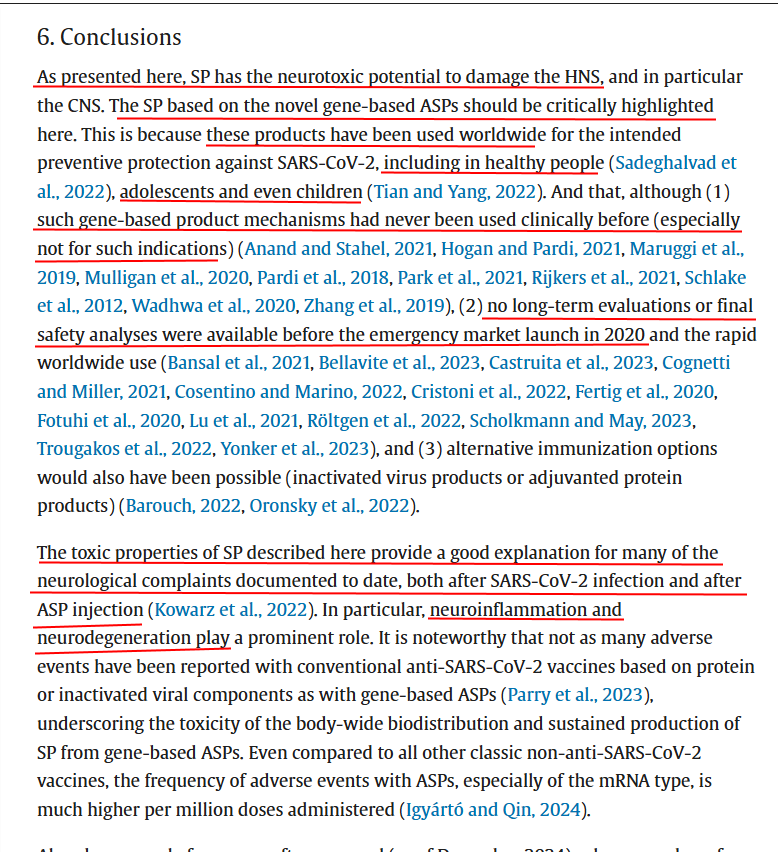
🚨📢URGENT! German Neuroscientist publishes new review - 18 April 2025, showing harmful neurological effects of both COVID-19 Vaccine/S-COV-2 spike protein, demonstrates potential neurotoxicity from COVID-19 Vaccines/repeated vaccinations/inefficacy/safety concerns.
EFFICACY:
-"Pharmacovigilance data are mainly obtained through passive detection systems that are inadequate"
-"repeated vaccine administration can lead to vaccine resistance/tolerance ..to immune system exhaustion"
-"can impair type I interferon signalling crucial for a healthy immune system, infection and carcinogen control"
-"higher reported incidence of infection among ASP-treated individuals compared to untreated individuals"
SAFETY:
"Pfizer-BioNTech´s ASP was administered..systemic inflammatory signature, including interferons/interleukins, was demonstrated..symptoms persist for weeks/months in some people"
"Deaths immediately after ASP administration been described"
"evidence of significant and widespread under-reporting of ADRs"
"The undesirable neurological effects of ASP described in the literature"
"Neurodegenerative potential..SP can induce protein aggregation/misfolding/malfunction..promote neurodegenerative processes"
"Other toxic properties"
"SP been shown to contain a ‘toxin-like’ domain in the RBD on its S1, with sequence homology to rabies virus (RBG), (HIV) glycoprotein and the neurotoxin NL-1, all of which bind to and inhibit α7 nAChRs of the cholinergic system"
"contamination, undeclared admixtures from manufacturing process"
"ASPs also contain substances such as the proprietary functional excipients ALC-0315 and ALC-0159, which have never been used in a medicinal product before"
"DNA contamination was detected in the bivalent mRNA vaccines from both Moderna and Pfizer-BioNTech that exceeded the limits set by (EMA) (FDA)"
"worryingly, that residual DNA represents not only fragments of the DNA matrices, but all genes from the plasmid, including the simian virus 40 (SV40) promoter/enhancer and the antibiotic resistance gene (to Kanamycin)"
"concern because SV40 is associated with cancer in humans"
"it must be proven ASP is cause of any physical or health damage. However, this has already been achieved with detection of SP from injection (not nucleocapsid protein from infection) of inflammation sites in the brain, heart"
"adverse side effects of ASP must not be neglected or even dismissed as a lesser evil."
"it is proposed here to use the term spikeopathy for spike protein-associated pathologies..therefore another proteinopathy with, among other things, neurodegenerative potential"
"terms used so far such as post COVID-19 vaccination syndromes are incorrect..these are not classic conventional vaccinations, but a novel genetically based immunisation concept using immunostimulatory gene-based prodrugs"
Source:
https://t.co/j8e0GkEZpC
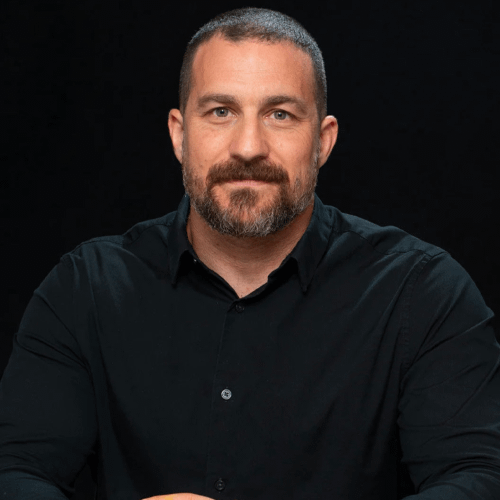
Meet the neuroscientist rewiring millions of minds without a single pill:
Andrew Huberman.
His tools reset the stress systems that push your brain into burnout.
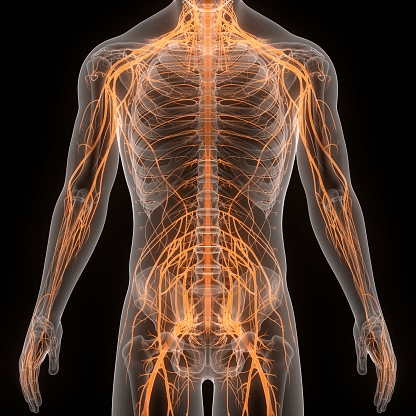
Here are his 9 best methods to rewire your nervous system and master your biology🧵:
After 1.5 years of using ChatGPT, I can say that it is the technology that has revolutionized my life the most, along with the Internet.
So here are 12 prompts that have transformed my day-to-day life and that could do the same for you.
I don't understand why people are paying for ChatGPT every month.
Access ChatGPT, Claude, Gemini, Llama, Grok, Midjourney, Flux, Ideogram, Perplexity, Runway, and Luma all in one place.
Here's how ↓