🇺🇸 Three seconds into the footage, a massive fireball erupts at the edge of the carrier’s flight deck.
On November 25, 1944, USS Essex (CV-9) is operating off Luzon in the Philippines when a Japanese Yokosuka D4Y “Judy” dives toward her. Antiaircraft fire has set the aircraft ablaze, but it keeps coming.
Watch just ahead of the carrier’s island. About three seconds in, the kamikaze strikes the edge of the flight deck near the forward elevator. The blast towers over the deck.
Fifteen men are killed and 44 wounded. Essex survives.
Follow @Vanguard_WW2 for more WWII history through archival footage.
1/2 New floating boom barriers have been installed at the Port of Benghazi following the Ukrainian attack on Nov. 22, replacing the row of small boats that had served as a temporary solution. Image by @planet taken November 28.
🎉🇺🇸 100 years today.
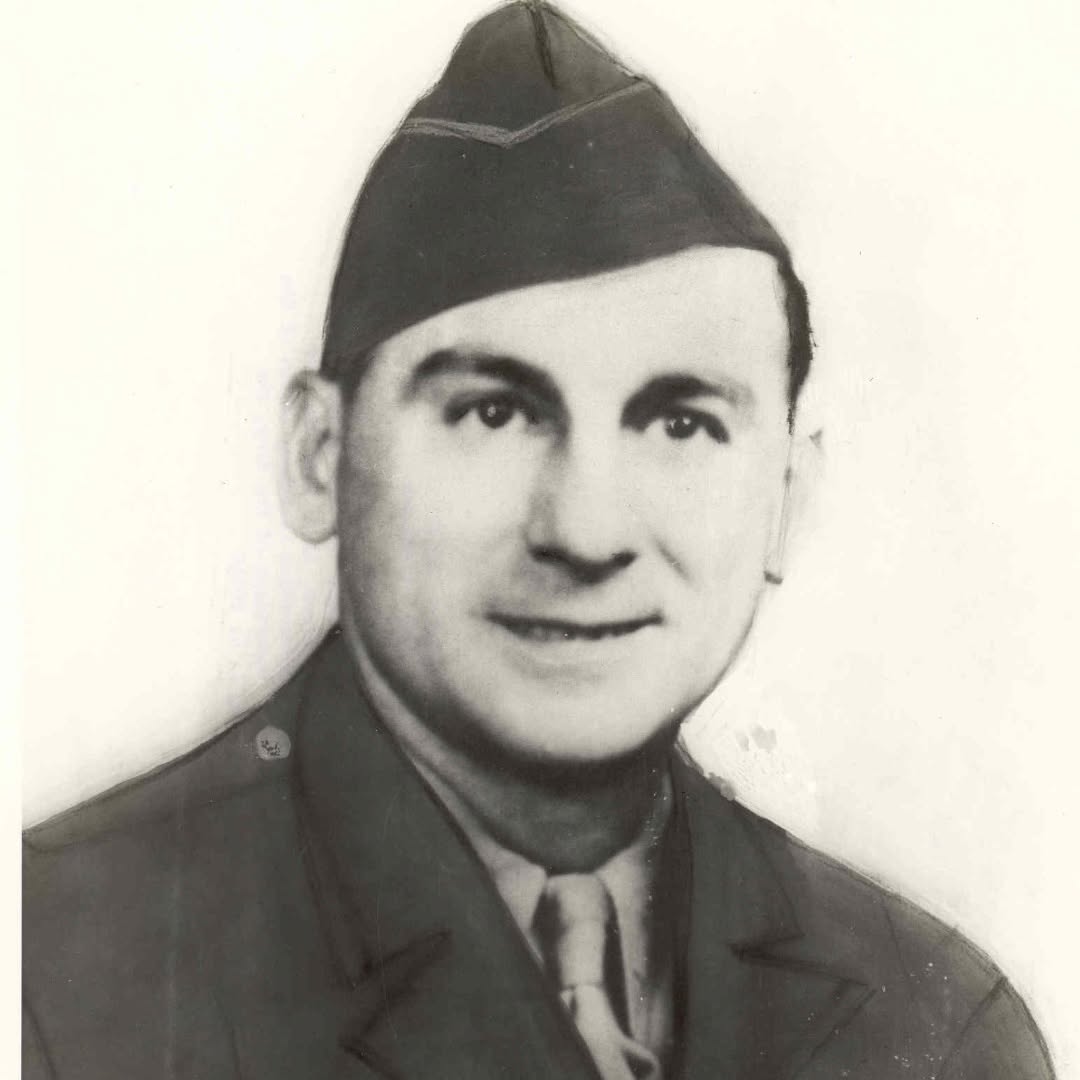
Bertis Blanks, Sr. was drafted into the U.S. Army in 1944 and served for 7 years spanning WWII and the Korean War.
His service took him to France, Germany, Japan, Korea & Guam—and through 4 campaigns.
Then came an extraordinary life:
⚡ Became a certified electrician
🚜 Built successful businesses with his brothers
🚚 Operated a trucking company for 40+ years
💼 Worked until age 89
❤️ Built a life of faith & family with his wife, Elizabeth
🙏 Served for decades as a church deacon
🤝 Mentored younger generations
👨👩👧👦 Father, grandfather & great-grandfather
🏅 Buffalo Soldier Lifetime Recognition Award recipient
From soldier to entrepreneur, husband, father, deacon, mentor, and family patriarch, Bertis has spent a century grounded in service, faith, hard work, and generosity.
Happy 100th Birthday, Bertis Blanks, Sr.—and thank you for your service!
Sign his digital birthday card:
🔗 https://t.co/RoM4LjCI72
#Happy100 #WWIIVeteran #100thBirthday #GreatestGeneration #HonorOurVeterans #BlackVetsCount #WeRememberThem
EXCLUSIVE: Iran was able to use Starlink to help it wage attacks against U.S. troops w/ @nakashimae@AlexHortonTX and @lizzadwoskin https://t.co/kyUkVn89Dp
Marcario Garcia of Villa de Castaño, Mexico, a Command Sergeant Major in the U.S. Army, was awarded the Medal of Honor for his extraordinary actions on November 27, 1944, near Grosshau, Germany.
In 1924, Garcia’s family immigrated to the United States to Sugarland, Texas. Garcia joined the Army in November 1942 and was assigned to Company B, 22nd Infantry Regiment, 4th Infantry Division. Garcia participated in and was wounded during the Allied invasion of Normandy in June 1944. He was awarded the Purple Heart and returned to duty, later earning the Bronze Star. On November 27, 1944, he was an acting squad leader in his platoon and found himself engaged in combat with German troops near Grosshau, Germany. He single-handedly went forward alone and, destroyed two enemy emplacements and captured four prisoners, despite being wounded in the action.
He was awarded the Medal of Honor for his actions on November 27, 1944. Garcia became an American citizen in June 1947 and earned a high school diploma in 1951. He worked as a counselor in the Veterans Administration for 25 years. He died in December 1972 after a car accident. He is buried in the Houston National Cemetery in Houston, Texas.
#WeRememberThem
U.S. Army Private First Class Carl Vernon Sheridan of Baltimore, Maryland, was posthumously awarded the Medal of Honor for his heroic actions on November 26, 1944, near Weisweiler, Germany.
Sheridan joined the Army in May 1943, and by November 26, 1944 was serving as a private first class in Company K, 47th Infantry Regiment, 9th Infantry Division. On November 26, 1944, at the Frenzenberg Castle in Weisweiler, Germany, Sheridan exposed himself to intense fire in order to blast a hole through the doors of the enemy-held castle with his bazooka. He successfully created a gap in the doors but was killed after charging through it.
He was posthumously awarded the Medal of Honor for his actions on November 26, 1944. Sheridan is buried in Druid Ridge Cemetery, Pikesville, Maryland. He was just 19 years old.
#WeRememberThem
🇺🇸 The wild adventures of "Jack", a (young) Marine who never slowed down!
He lied about his age at 14 to enlist in the Leathernecks. In August 1942, Jacklyn "Jack" Lucas talked his way into the US Marine Corps Reserve. Two and a half years later, stuck in a rear unit in Hawaii, he walked out of camp and hid aboard the transportUSS Deuel (APA-160) for nearly a month, turning himself in just before the fleet reached Iwo Jima!
He turned 17 at sea, five days before the landing.
On February 20, 1945, in a volcanic ravine with three comrades, two enemy grenades landed at their feet. Lucas yelled a warning, jammed one into the black ash with his rifle, and pulled the second under his chest. One exploded; the other never went off. All three Marines beside him walked away unharmed.
Left for dead, Lucas survived more than 200 pieces of shrapnel and over 20 surgeries.
On October 5, 1945, President Harry S. Truman awarded him the Medal of Honor. He was the youngest Marine, and the youngest American serviceman of WWII, to receive it.
True valor rarely looks like Hollywood. More forgotten chapters from the front lines are coming on @Vanguard_WW2
Photos: US Marine Corps / US Navy
On Christmas Eve 1944, the men of the 6th Marine Division brought a piece of home to Guadalcanal with the #MosquitoBowl—a football game that became a reminder of the camaraderie, traditions, and sacrifices that connected these men to home. Read more: https://t.co/cczKGOCvEn
unless the EPA/White House waive summer gasoline requirements this early for summer 2027, enjoy these low gas prices now, because things will heat back up in the spring (prices *always* go up in the spring, regardless of politics)
🔥 He carried one of WWII’s most terrifying weapons. But he depended on other men’s guns to get close enough to use it.
Ostfront, circa 1941–42. A German soldier fires a Flammenwerfer 35, sending burning fuel toward a position hidden by smoke.
Did these men fight alone? No. The operator might carry and fire the weapon himself, but he worked as part of an assault team. German combat engineers - the Pioniere - brought flamethrowers forward while supporting troops covered their approach.
Machine guns, smoke or even a tank could help suppress the defenders. There was no single escort arrangement for every mission: small flamethrower teams could support an infantry raiding party or join a larger assault.
That protection mattered. The loaded weapon weighed nearly 80 pounds, and its effective range was roughly 25 yards. Its operator had to approach a defended position carrying a heavy, conspicuous load.
Once spotted, he became an obvious priority target! Firing made his position unmistakable. A 1944 US intelligence report specifically noted heavy casualties among German flamethrower detachments.
The photograph captures the terrifying moment he opens fire. What it cannot show is the struggle to get him there alive.
Follow @Vanguard_WW2 for more WWII photographs, and the stories beyond the frame.
📷 Australian War Memorial
🇺🇸 In a few hours, these Leathernecks will go in.
Their objective: Betio, the main island of Tarawa Atoll. About two miles long, less than half a square mile in all, and held by some 4,700 entrenched defenders.
It would become a bloodbath. In 76 hours, nearly 4,700 defenders were killed, among them about 1,200 Korean laborers. About 1,000 U.S. Marines and sailors died and more than 2,200 were wounded.
Only 17 Japanese and 129 Koreans were taken alive.
📷 U.S. Marine Corps film
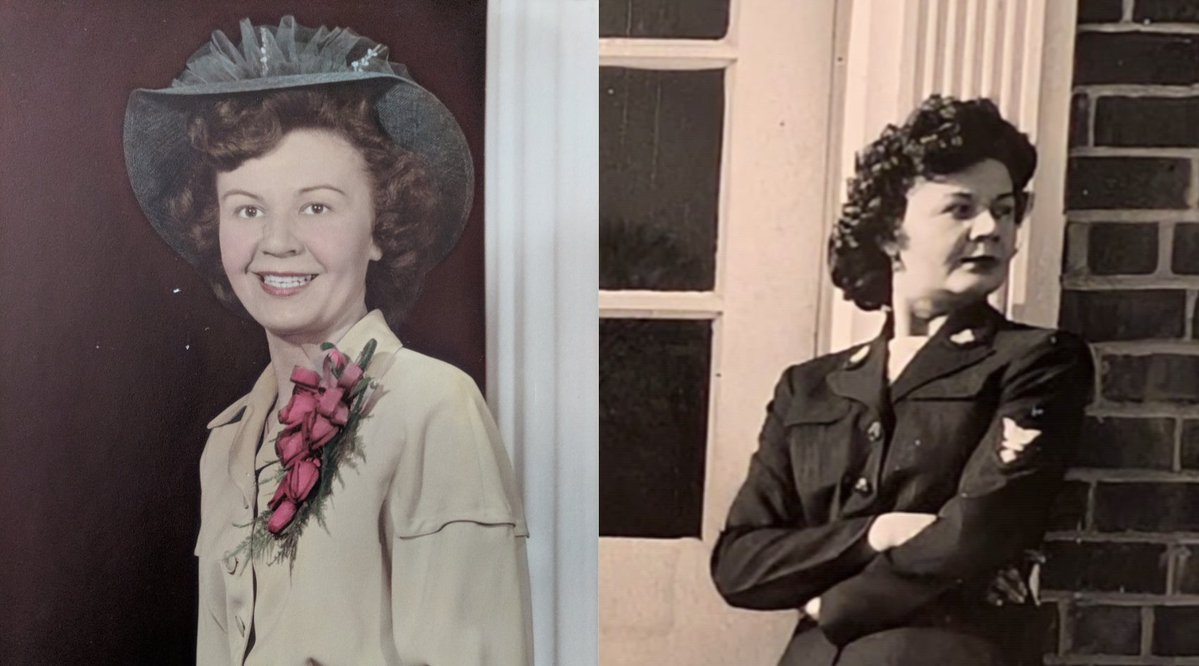
🎉🇺🇸 Today, World War II veteran Julia Kostak Plasko turns 106.
Julia grew up in Pennsylvania coal country, the daughter of immigrants from Czechoslovakia. She spoke Russian from a young age, excelled at softball, and graduated from high school in 1938.
During WWII, she drove to Hunter College in the Bronx and enlisted in the WAVES. As a Specialist (X) First Class, Julia served in the Navy’s Hydrographic Office in Washington, D.C., working as a cartographer and secretary to a lieutenant.
She later described her Navy years as some of the best of her life.
After the war, Julia married fellow veteran Charles Plasko, raised two children, and devoted decades to her family, Catholic faith, and Nemacolin community. She taught catechism, supported church organizations, donated baked goods to the local fire department, and became a proud grandmother and great-grandmother.
From a coal miner’s daughter to a Navy cartographer and beloved family matriarch, Julia’s 106 years reflect service, courage, faith, generosity, and love.
Happy 106th Birthday, Mrs. Plasko, and thank you for your service!
Sign her digital birthday card:
🔗 https://t.co/YMz3TEWrmA
#Happy106 #WWIIVeteran #106thBirthday #GreatestGeneration #HonorOurVeterans #WomenVeterans #WeRememberThem
The Grand Slam was the Royal Air Force's 22,000 lb earthquake bomb. It was the largest & most powerful conventional (non-nuclear) aerial bomb used by either side during WWII.
Look at their faces. Ronald Endicott was 18. Clifford Olds was 20. Louis "Buddy" Costin was 21.
In 1942, when salvage crews finally worked through the raised West Virginia, they found the three men in storeroom A-111.
The Navy's official salvage report recorded what they left behind: emergency rations eaten, the hatch to the fresh-water tanks opened, and a calendar marked with an "X" on each date from December 7 through December 23, 1941.
For days after the attack, sailors on watch recalled hearing tapping from deep inside the hull. On December 12, divers sounded the hull but got no answer. The storeroom A-111 lay on the side pinned against USS Tennessee, moored alongside, out of reach...
📷 US Navy photo
Follow @Vanguard_WW2 for more WWII history.
🇺🇸 Remember these three young sailors of USS West Virginia.
What they left behind still haunts the Navy's salvage records.
On December 7, 1941, their battleship sank at Pearl Harbor. They were sealed inside, alive, trapped below decks. They kept count of the days on a calendar. The last date crossed off was December 23, two days before Christmas.
🧵 1/2
U.S. Army Staff Sergeant John Wilson Minick of Wall, Pennsylvania, was posthumously awarded the Medal of Honor for his heroic actions on November 21, 1944 during the Battle of Hurtgen Forest.
Minick joined the Army in August 1943, and on November 21, 1944, was serving as a staff sergeant in Company I, 121st Infantry Regiment, 8th Infantry Division. On November 21, 1944, inside the German defenses of Hürtgen and Vossenack, Germany, Minick voluntarily led a small group of men through a minefield, single-handedly silenced two enemy machine gun emplacements, and engaged a company-sized force of German soldiers before he was killed while crossing a second minefield.
He was posthumously awarded the Medal of Honor for his actions on November 21, 1944. Minick is buried at Westminster Cemetery in Carlisle, Pennsylvania.
#WeRememberThem
🇬🇧 January 1945, Indian Ocean. Aboard HMS Indomitable, Hellcats and Avengers are readied and launched as a British carrier force strikes Japanese-held Sumatra.
Operation Lentil: under Rear Admiral Sir Philip Vian, flying his flag in Indomitable, the carriers Indomitable, Victorious and Indefatigable sailed from Trincomalee, Ceylon, on December 31, 1944. Their target was the Pangkalan Brandan oil refinery in northern Sumatra.
On the morning of January 4, 32 Avengers, 12 rocket-armed Fireflies and an escort of Hellcats and Corsairs hit the refinery and nearby airfields. Indomitable's 857 Squadron Avengers bombed the main refinery at 8:31 AM. The refinery was badly damaged. Only two British aircraft were lost, and both crews were rescued.
Lentil was the second of four British carrier raids on Sumatra's oil refineries. Later that month, the same force struck Palembang, then sailed on to Australia to join the British Pacific Fleet.
Follow @Vanguard_WW2 for more WWII history from the archives.
🎥 US Army Signal Corps film.