"Markets are controlled by IPDA, or the interbank price delivery algorithm. There is no actual buying or selling pressure. Sentiment and liquidity are engineered for smart money to enter and distribute their orders where the majority of participant positions are liquidated."
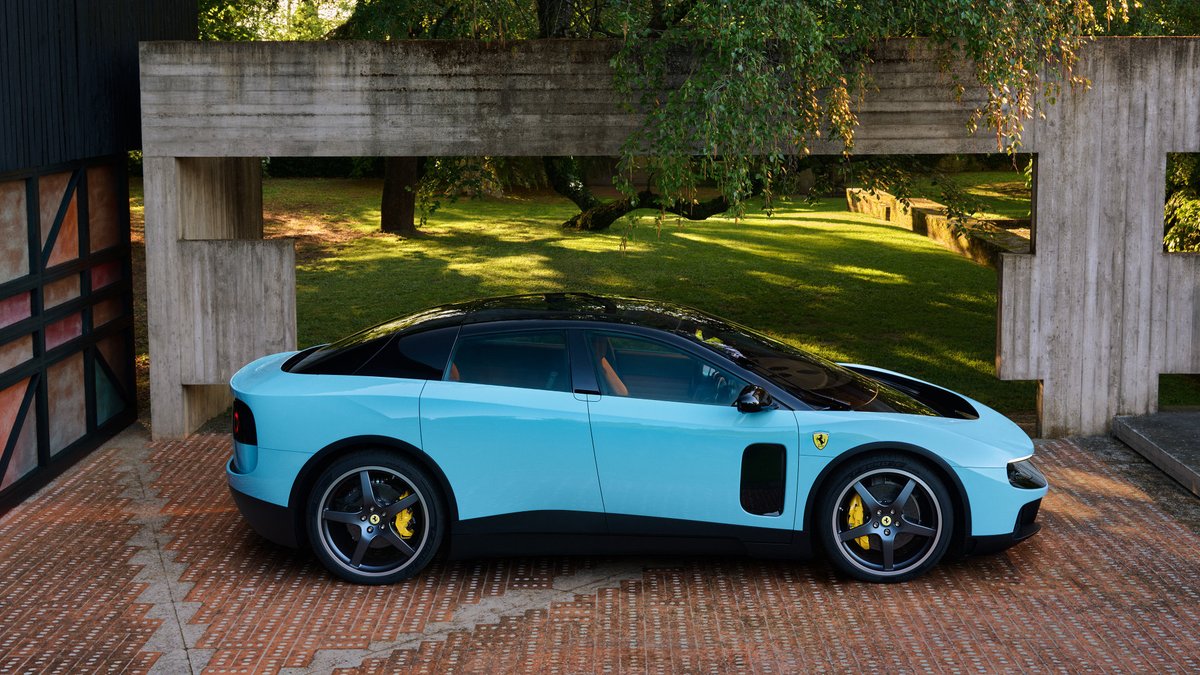
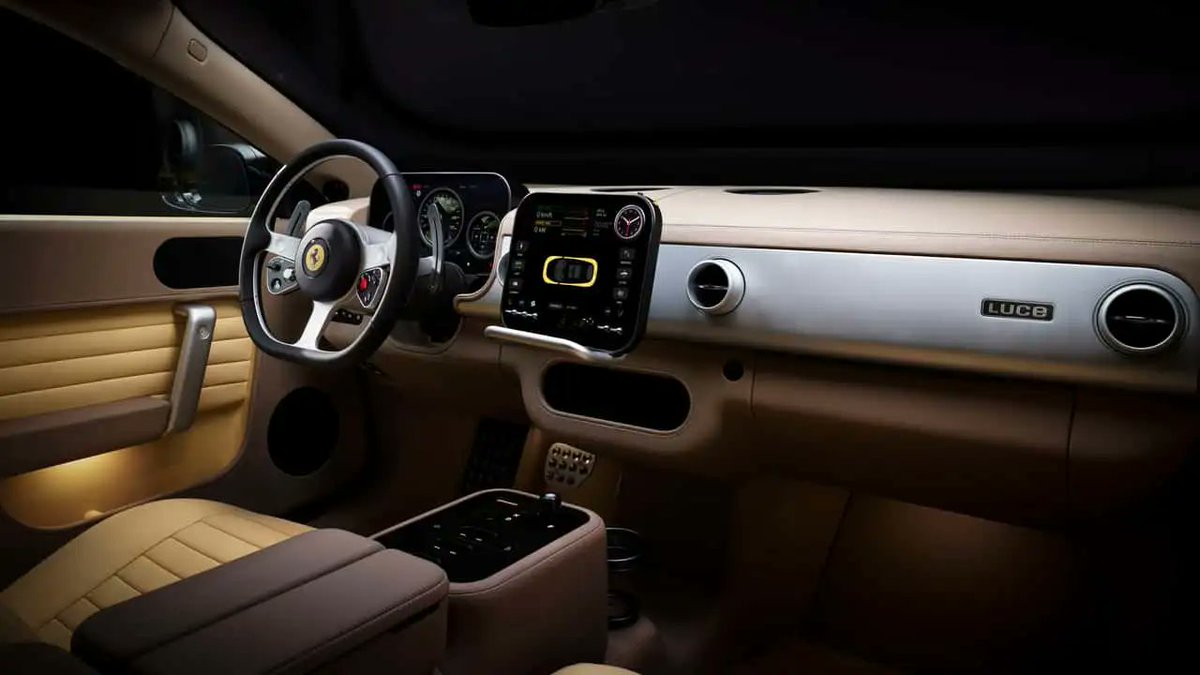
Ferrari has just officially unveiled its first ever all-electric car, called the Ferrari Luce.
• Starting price: $640,000
• Interior co-designed with Apple's former head of design, Jony Ive
• Range: 280 miles (expected EPA)
• Peak charging speed: 350kW
• 122 kWh battery
• 1,050 horsepower
• 0-60mph: 2.4s
• 800v
• Four-door four-seater
• Four electric motors
• OLED screens
• Weight: 4,982 lbs
• Front motors spin to 30,000 rpm, rears hit 25,500 rpm
• Car uses an accelerometer to capture real vibrations from the electric motors & rear chassis. An algorithm filters out unpleasant frequencies and amplifies only the more “musical” sounds. This can be heard inside and outside the car.
• Paddle shifter on steering wheel changes how aggressively torque is delivered, with five different levels
• The trunk has 21.1 cubic feet of space, the largest luggage capacity the company has ever offered
• 197.6 inches long, about as long as a Tesla Model S
U.S. deliveries start in Q2 2027. More photos in the thread below:
Mercedes has just officially unveiled the production version of its all-electric AMG GT 4-Door Coupe.
• Range: ~315 miles (EPA)
• 1,153 hp
• 0-60 mph: 2.0s
• Peak charging speed: 600kW
• 106 kWh battery
• 10-80% state of charge as low as 11 mins. Can add 244 miles of range in 10 mins.
• Formula 1-based 800-volt battery
• Fake V8 engine noises & gear shift sounds (shown below)
• Mercedes said it’s using 1,600 audio files to “sonically interpret” different driving situations. The car makes “exhaust burbles and pops" like as gas car.
• Axial-flux motors (a first). Runs parallel to the motor’s axis of rotation. In a conventional electric motor, it runs perpendicular to the axis. The front axial flux motor reaches more than 15,000 rpm at top speed.
• 2660 cylindrical cells stacked vertically, arrayed in 18 modules, nine to a side. Nickel-cobalt-manganese-aluminum chemistry. Energy density of 298 Wh/kg.
• Active aerodynamics
• Top speed: 186-mph
• Double sunroof with illuminated AMG logos over both driver and passenger seats
• Triple-screen layout. 10.2" digital instrument cluster alongside a pair of 14" screens. Infotainment display is slightly tilted toward the driver.
• Optional 5 seat layout
U.S. deliveries start in late 2026. Pricing will be announced later, but it's expected to be well over $100,000. More photos in the thread below:
DXY bei 118 ist das Signal das den gesamten Bull-Case gefährdet. Bei DXY über 110 beginnen historisch Emerging Market Schuldenkrisen. EM-Krisen erzeugen Risk-Off-Events die Bitcoin zuerst treffen, weil Liquidität zuerst aus dem volatilsten Asset flieht. Warsh kann die Reserve-These für 2027 richtig haben und trotzdem einen 50-Prozent-Drawdown in 2026 produzieren. Beides ist gleichzeitig wahr.
The data likely runs through survivorship bias. Founders who reach $50M are already the ones whose non-financial motivation kept them building through years of zero revenue and investor rejections. The $50M threshold does not create the motivation shift. It reveals the motivation that was always there. The founders who were purely financially motivated probably cashed out at $8M.
$461 pivot is the target but the path matters. MSFT rallied from $365 to $424 in four weeks on light volume — a 16% move without confirmed institutional accumulation at the base is technically incomplete. If the 20-week SMA acts as resistance rather than support on the first retest, the March low gets retested before $461. The chart is constructive. It is not yet confirmed.
Reichtum durch Konzentration stimmt für die Gewinner dieser Geschichte. Survivorship Bias macht sie sichtbar. Wer 2007 mit relevanter Position in Infineon konzentriert war hat einen Absturz von über 90 Prozent erlebt. Dieselbe Psychologie die beim Tenbagger aushält vernichtet beim Totalverlust das Kapital. Konzentration skaliert Ergebnisse in beide Richtungen. Die Frage ist wie man vorher unterscheidet.
Uber überlebt den Robotaxi Übergang weil Uber kein Fahrer Unternehmen ist. Es ist ein Marktplatz. Waymo nutzt bereits Uber's App in Austin. Wenn autonome Fahrzeuge die Flotte ersetzen und Uber die Buchungsschicht bleibt, fällt der größte Kostentreiber weg und die Marge explodiert. Uber ohne Fahrer ist das bullischste Szenario für Uber. Nicht das Ende.
Retail-Kollaboration hat eine nachgewiesene Schattenseite: GameStop, AMC, LUNA. Communities verstärken Überzeugungen statt sie zu testen. Die Top 10% arbeiten zusammen aber sie haben auch Anreize einander zu widersprechen wenn Geld auf dem Spiel steht. Die nützlichste Community ist die die dir sagt warum du falsch liegst, nicht die die dich bestätigt. Die ist seltener.
90 Prozent billiger als Uber ist das Skalierungs-Endpunkt-Szenario, kein aktueller Marktpreis. Waymo ist in drei Städten. Der Weg von drei Städten zu globaler Abdeckung erfordert Mapping-Daten, regulatorische Freigaben und Edge-Case-Handling die kein Modell vollständig löst. Die These stimmt. Der Zeitpunkt wird massiv unterschätzt in die andere Richtung: zu früh erwartet, zu spät eingepreist
Gold "sichert" Papiergeld formal nicht mehr seit Nixon 1971 den Goldstandard beendet hat. Der Euro ist durch EZB-Glaubwürdigkeit gedeckt, nicht durch Bundesbank-Barren. Das Argument gegen Fratzscher ist nicht die Währungsdeckung. Es ist dass 3.355 Tonnen Gold als Krisenreserve und Vertrauenssignal mehr wert sind als der aktuelle Marktpreis suggeriert — besonders wenn man nicht weiß was nächste Woche in Pakistan unterschrieben wird.
Der Freibetrag ist das falsche Instrument wenn das eigentliche Problem die Nominalbesteuerung realer Verluste ist. Wer 4 Prozent Rendite bei 3,3 Prozent Inflation macht zahlt Steuer auf einen Gewinn den er real nicht hatte. Kein Freibetrag löst das ohne Inflationsindexierung. Ein Freibetrag von 30.000 Euro schützt den Kleinanleger. Er löst das strukturelle Problem nicht.