Anyone who knows me knows this is my favourite photo.
President Frederick Titus Jacob Chiluba leaned in, I stood tall, and my mother watched as power shook hands.
It was one of those fully parent driven events. I just knew my mum was excited that the Zambian president was coming to Kenya. This was in the early 1990s, not long after Chiluba had succeeded Kenneth Kaunda. At that time he represented hope, a fresh chapter for Zambia after nearly three decades of one party rule. For Zambians living in Nairobi it was a moment of pride, a chance to meet the new leader who carried so much promise. My mum, working at the British Council, insisted I be there. She had come to Kenya for further studies, met my dad, and built a life here, but her roots and her pride in Zambia’s future carried her to the airport that day with me in tow.
I did not grasp the gravity. I was just a child being taken to meet a visiting head of state. Yet today, when I look back, I see more. I see posture, symbolism, and history in a single frame. Chiluba leans forward, extending authority. I stand upright, unintimidated, hand outstretched. My mum looks on, smiling, the bridge between heritage, identity, and a moment of recognition.
This photo reminds me that we rarely understand the weight of moments while we are in them. Their meaning unfolds years later when life teaches us how to see.
For my mother, this was pride. For me, it became perspective. Power bends, youth rises, and the witness in the background holds both stories together.
Sometimes leadership is exactly that: recognising when to lean in, when to stand tall, and when to simply bear witness so that others can remember.
Charles, you’ll get serious bile from Kenyans, but the numbers do not lie. We have a real doping problem. I was in denial myself until I sat down and worked through the data.
Blaming it on more testing does not hold up. Extra tests do not magically produce positive samples for recombinant EPO, steroid metabolites, or manipulated blood passports. That is deliberate enhancement, not contaminated pharmacy syrup.
If it were limited to fringe runners chasing small road-race purses, you could almost understand the pressure. But it is hitting the very top. World Marathon Major winners, world record holders, and global medalists are receiving multi-year bans, including for tampering with forged medical records.
Let’s separate the pensions from the parastatals. Pension schemes put in at least KES52bn, and at least KES28bn of the KES40.5bn sold to Dangote had to be pension money. That sold part trails a T-bill at every reported price, by KES0.3–2.3bn, locked in. That’s the first problem. What’s left shows a paper gain at Friday’s close, but which schemes kept shares? No seller has been named. If NSSF sold, its members took the loss and none of the rise. “Nothing lost” needs a ledger nobody has published. That’s the second problem: we can’t even check what happened to our pension money. That is not good enough.
Let’s separate the pensions from the parastatals. Pension schemes put in at least KES52bn, and at least KES28bn of the KES40.5bn sold to Dangote had to be pension money. That sold part trails a T-bill at every reported price, by KES0.3–2.3bn, locked in. That’s the first problem. What’s left shows a paper gain at Friday’s close, but which schemes kept shares? No seller has been named. If NSSF sold, its members took the loss and none of the rise. “Nothing lost” needs a ledger nobody has published. That’s the second problem: we can’t even check what happened to our pension money. That is not good enough.
We agree on more than you think. Pension money can build the nation, and the state is never fully out of it. But one of two standards has to hold. Either the state pays for the pot like any other borrower, or, if it may reach in on its own terms, members get the same freedom with their own balances. What can’t hold is the rule we have now: the pot is open when the state wants it and shut when a member does.
I don’t think people mind the investment. It’s how it was done. Why use people’s pensions to warehouse shares for a return below a T-bill? If you’re going to dip into the pensioner pot, two conditions: full transparency first, and a return that at least beats the safest benchmark, the government’s own paper.
https://t.co/vlpZnjDJOU
Straight answer: a mabati shack in Kibera rents for KES3,000 to 3,500 a month. At your 20 bob toilet, a family of four making one visit each a day pays KES2,400. Add four jerricans of water a day at KES10 (KES1,200) and about KES2,000 for fuel and lighting, and that lifestyle costs KES8,600 a month. That’s my point: rent alone tells you nothing.
The formal lifestyle: the Mukuru social unit costs about KES3,900 a month, which the Affordable Housing Board’s CEO said covers repayment, service charge and insurance. Add metered water, power and gas and an ordinary month comes to about KES6,100. The floor is KES3,900 every month, whatever comes in.
Neither number means anything without income. Two Kibera studies put average monthly household income at about KES10,000 and KES13,100. Those are averages, and the typical household earns less. In the larger study, only 13 per cent of households reported having savings, and only 36 per cent said their income covered their food needs.
How that income arrives matters as much as how much it is. Much of it comes through casual work and small trade, not a regular salary. Kenya’s Financial Diaries found low-income households drawing on an average of ten separate income sources. The 2024 FinAccess survey found casual labour was the main livelihood for 26.5 per cent of Kenyan adults, twice the 13.2 per cent who named employment. When the 2020 shock hit, a study tracking 1,033 Kibera households found average household income fell 59 per cent within the first three months.
So the typical Kibera household can’t consume your KES8,600 bundle without rationing. At the measured incomes it would take two thirds to over 80 per cent of everything earned. The household makes fewer paid toilet visits and uses less water, less fuel and a cheaper room.
In a bad month, the informal bundle can fall to about KES3,400: a KES1,500 mud room, two jerricans a day (KES600), forty paid toilet visits across the household (KES800) and KES500 for fuel and lighting. Most sanitation moves to unpaid alternatives. The formal unit cannot fall below KES3,900 before water, power or gas. Both figures come before food, transport, school fees or healthcare. In an ordinary month, the unit’s KES6,100 takes 47 to 60 per cent of the measured household incomes.
The deposit isn’t waived. Under the 2025 regulations, deposit assistance is a Board loan. You get it only if the Board judges you able to repay under Regulation 8(1)(e), it is added to what you owe under Regulation 8(4), and Regulation 2 says its full repayment becomes due upon default. On a unit priced around KES640,000, the deposit is up to KES32,000.
A household that falls behind faces the Regulation 10 process (two weeks to pay, downsize or restructure after two consecutive missed months) and the deposit loan falling due in full. That is the structure on offer to households where 87 in every 100 reported having no savings.
At Canaan, in Kibera’s Soweto Zone A, about 821 families received units under the earlier upgrading programme. Within about a year, reports found that roughly half were no longer living in them. Many had rented or sold the units and returned to the slum.
So I priced both lifestyles and the deposit against income, and against how that income arrives. The math works for steady earners near the top of the social band. It fails for the typical Kibera household because the obligation is fixed and the income isn’t.
The arithmetic for slum dwellers never worked. This framing, middle-class housing that low-income earners can climb into, is the first version that matches the numbers. It also leaves one question standing: what, then, is the plan for the slums?
The math from earlier in the week: the social unit is a 20sqm bedsitter quoted at KES3,900 a month. Add the service costs of blocks built with gyms, pools and lighting, add power and water, then put a deposit and a regular-income test at the door, and set the total against the incomes in the 2021 study from the same Eldoret, earned mostly daily and irregular. The math still does not close for slum dwellers. But for lower middle income, it does.
The math from earlier in the week: the social unit is a 20sqm bedsitter quoted at KES3,900 a month. Add the service costs of blocks built with gyms, pools and lighting, add power and water, then put a deposit and a regular-income test at the door, and set the total against the incomes in the 2021 study from the same Eldoret, earned mostly daily and irregular. The math still does not close for slum dwellers. But for lower middle income, it does.
NO TRANSPARENCY, NO ACCOUNTABILITY.
Kenyans deserve to see, verify, and scrutinise election results. @IEBCKenya You cannot claim to protect democracy while weakening the very safeguards that make elections credible. The vote must not only be counted. It must be verifiable.
#GetitDone #ReKe
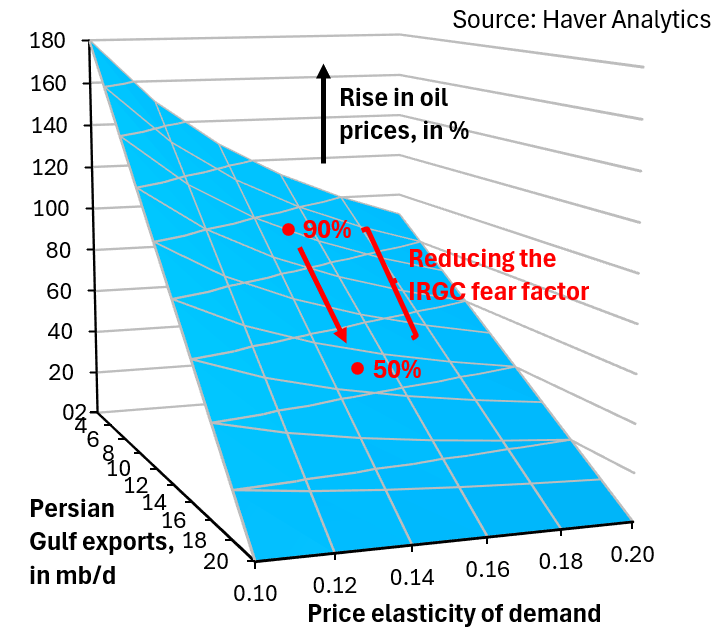
The front-month Brent future is up 90% from the start of 2026, yet oil flows out of the Persian Gulf are back to pre-war levels. Since the start of the war, we've not seen this kind of decoupling between prices and flows. A huge risk premium is priced in.
https://t.co/9NwpYcaEGr
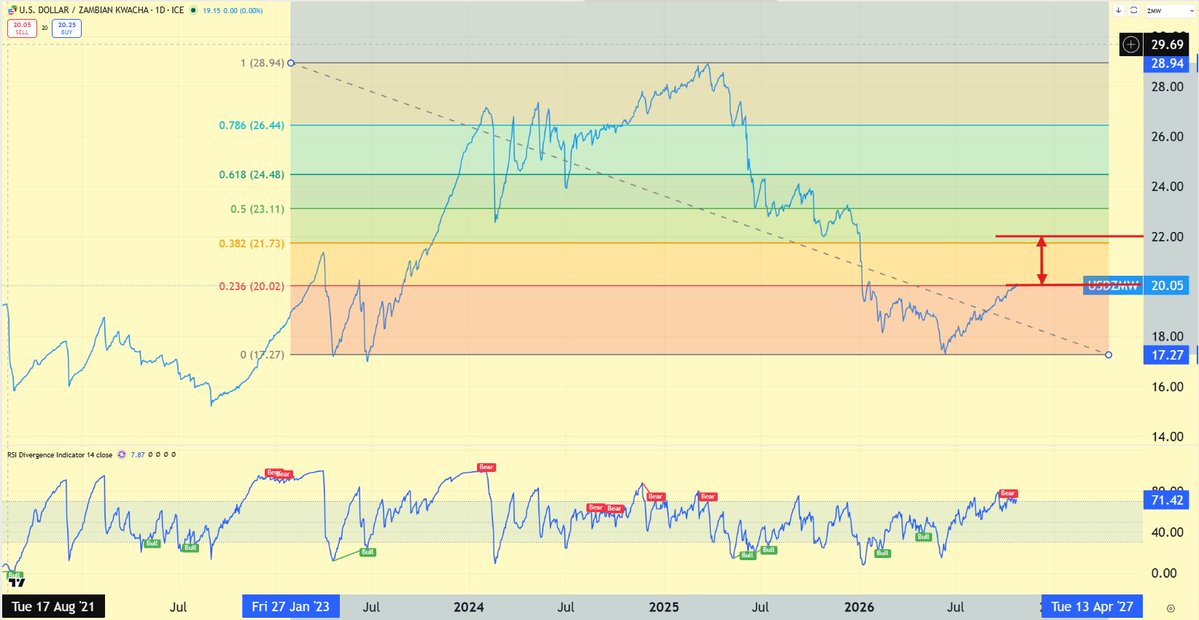
USD/ZMW: Nothing to panic about.
1. Price just above 20.
2. ZMW still roughly 33% overvalued on the Bank's own REER series.
3. No sharp depreciation expected. Currency directives, reserves near USD6 billion and copper revenues cap the pace. The new ECF language also blesses flexibility, not defence of a level.
4. Still expecting an initial move into the 20–22 range (underway), and then 22–24.