🚨 JUST IN: New York under Kathy Hochul and Zohran Mamdani has ignored 16,070 ICE detainers.
Those illegal aliens had 52,503 criminal charges.
Including: 131 homicides, 132 kidnappings, 1,017 sexuaI offenses
Democrats kept them on the streets.
ICE is cleaning up the mess they created.
Hochul and Mamdani protect the criminals. Americans pay the price.
End sanctuary cities.
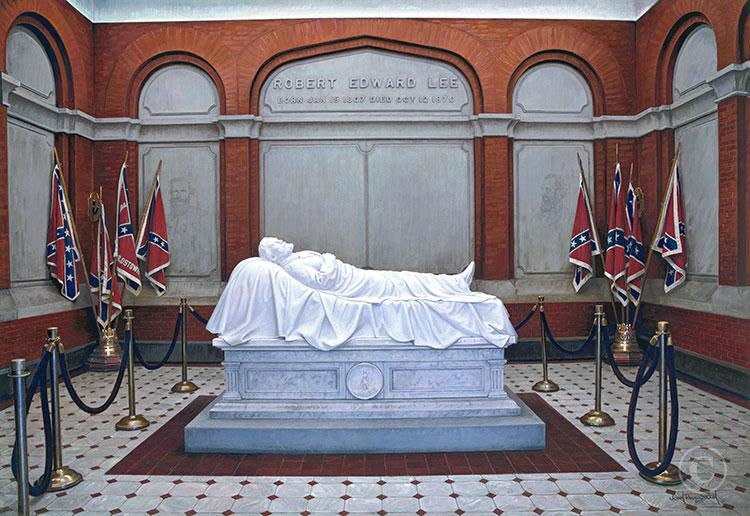
Oct 12, 1870: Robert E. Lee died in Lexington, Virginia, five and a half years after he surrendered at Appomattox.
When the war ended, Lee was the most famous man in the South and he had nothing. His family home at Arlington had been seized by the federal government and turned into a cemetery for Union dead. He was 58, his health was failing, and he was under indictment for treason, though he was never tried.
Offers came in. Businesses wanted to put his name on their letterhead for big salaries. He turned them down. Instead he took a job as president of Washington College, a tiny school in the Shenandoah Valley that had been looted by Union troops during the war. It had a few dozen students and a handful of professors. The salary was $1,500 a year.
He threw himself into it. He knew most of the students by name. He added courses in engineering, business, and journalism, which were unusual for the time. He replaced a long list of rules with an honor system and told students the school had only one rule: every student must be a gentleman.
He spent those years telling Southerners to accept the result of the war. He told former soldiers to go home and rebuild. According to an often-told story, when a widow complained bitterly to him about the Union, he told her not to raise her sons to hate the United States and to make them Americans. In 1869 he paid a short visit to President Ulysses S. Grant at the White House.
His heart was giving out. In the spring of 1870 he took a long trip south, partly for his health. Crowds met him at every stop. On Cumberland Island in Georgia he visited the grave of his father, Revolutionary War hero Light-Horse Harry Lee.
On Sept 28, a cold, rainy day, he went to a long meeting at his church about raising money for the minister's salary. When they came up short, Lee pledged the difference himself. He walked home in the rain and sat down to dinner with his family. When he tried to say grace, no words came out.
He had suffered a stroke. They made a bed for him in the dining room. For two weeks he lay there, mostly silent, while one of the worst floods in Virginia history swept through the region outside.
He died around 9:30 in the morning on Oct 12. He was 63.
Accounts written later said his last words were "Strike the tent," along with an order for A.P. Hill to come up, as if he were back on the battlefield. Doctors who have studied the case think the stroke had taken his ability to speak, and many historians doubt those words were ever said.
The flood had washed away the town undertaker's stock of coffins. Some were found downriver, and the only usable one was too short. Lee was buried in his suit without shoes.
He was laid to rest in a crypt beneath the chapel on the college grounds. Within days the school's trustees voted to rename it Washington and Lee. His horse Traveller, who walked behind the funeral procession, is buried just outside.
After the war Lee had signed an oath of allegiance and applied for a pardon. The oath was lost and never acted on. It was found in the National Archives a century later, and in 1975 Congress restored his citizenship.
Americans still argue over how to remember him and the cause he fought for, and they probably always will. But in the last five years of his life, he chose to spend what he had left teaching young men, rebuilding a broken school, and telling a defeated people to put down their anger and become Americans again.
156 years ago today. Rest easy General.