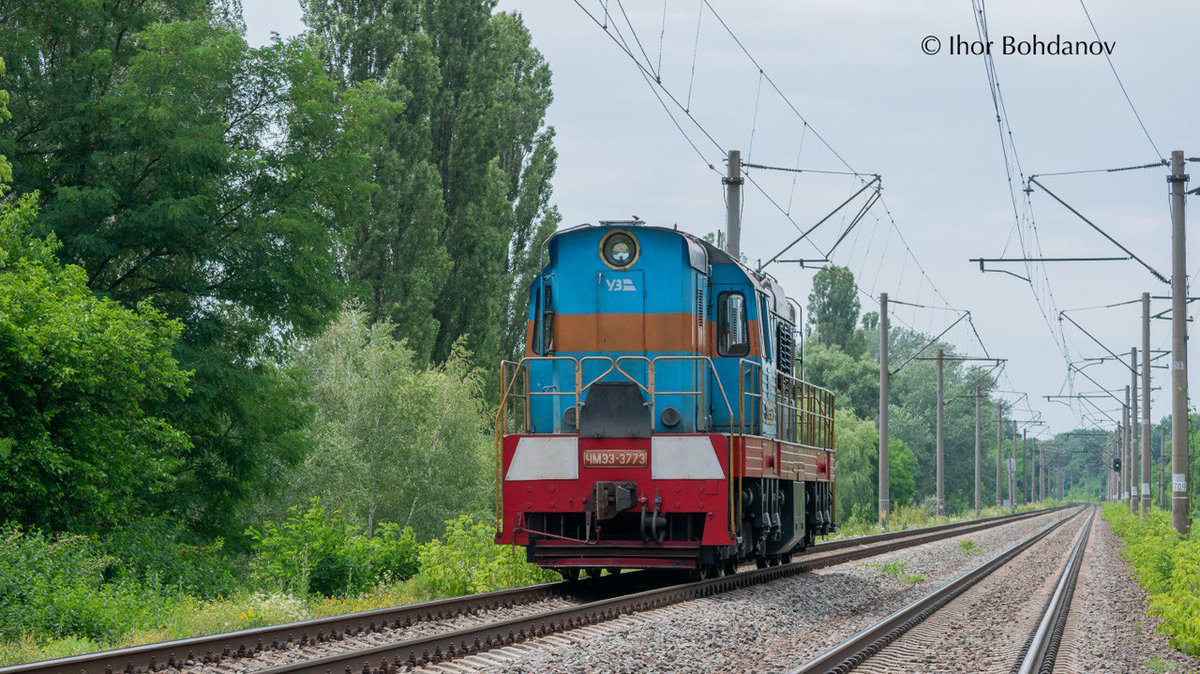
Railways are becoming a direct target. In 2026, attacks increasingly hit trains in motion—not just infrastructure—especially locomotives and suburban services.
Ukrzaliznytsia is responding with new rules: 7-minute evacuation, large-scale crew training, and the use of shield cars.
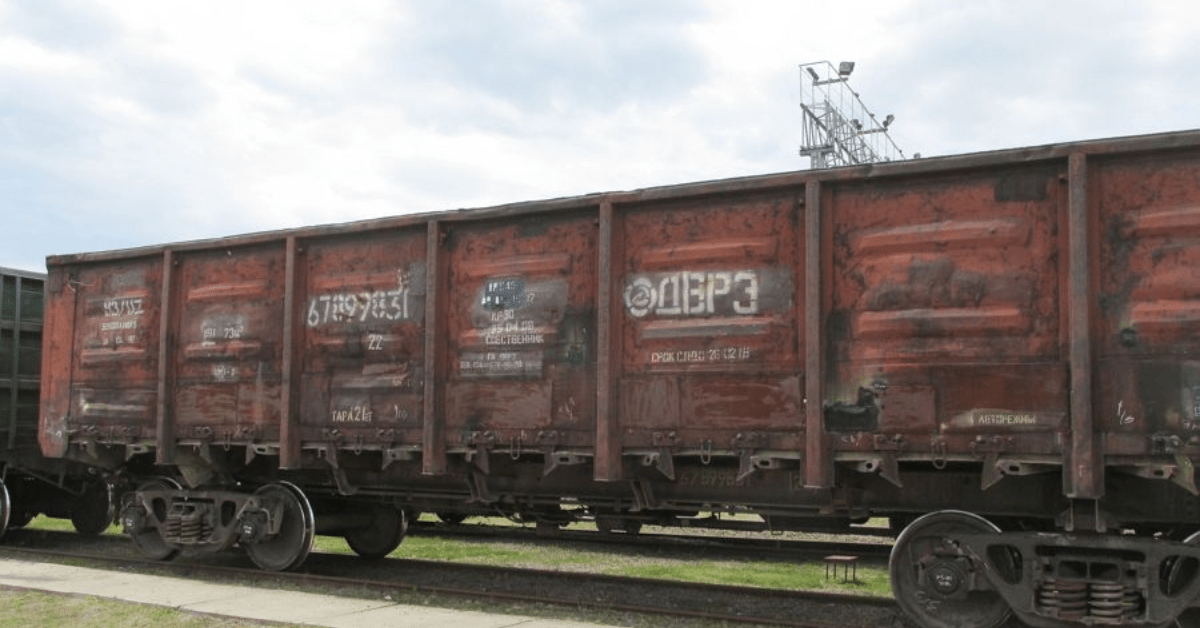
Losses are mounting: nearly 5,000 attacks since the invasion began, with over 10% recorded in just the first months of 2026. In freight, 1,704 railcars have been damaged or destroyed.
At the same time, even advanced electronic warfare cannot guarantee full protection: drones with autonomous targeting remain a critical threat to rolling stock.
https://t.co/P2EuIivV2o
Ukraine allocates UAH 16 billion (approx. €315 million) to finance domestic passenger rail services in 2026.
Funds will be provided from the state budget reserve and distributed on a quarterly basis.
Until now, passenger rail services in Ukraine were largely financed through cross-subsidisation. Ukrzaliznytsia covered losses from socially necessary but unprofitable passenger routes using revenues from its freight business.
This model created structural imbalances: freight tariffs effectively carried the burden of passenger losses, investment capacity was constrained, and financial transparency remained limited.
Ukraine is now introducing a Public Service Obligation (PSO) mechanism — a model widely used across the European Union. Under this approach, the state directly compensates the railway operator for operating socially important passenger services.
This marks one of the most significant changes in Ukraine’s rail financing model in recent years, reducing pressure on the freight segment and bringing the system closer to European practice.
https://t.co/IYdBk3rBpg
‼️Since the start of 2026, Russia has carried out 266 strikes on Ukraine’s railway infrastructure and rolling stock.
Since the full-scale invasion began, 686 port infrastructure facilities have been damaged or destroyed, 150 civilian vessels hit, and 224 civilians injured (including foreign nationals). Against Ukrzaliznytsia, Russia has launched 4,700+ attacks, damaging nearly 24,000 railway assets.
‼️Since the start of 2026, Russia has carried out 266 strikes on Ukraine’s railway infrastructure and rolling stock.
Since the full-scale invasion began, 686 port infrastructure facilities have been damaged or destroyed, 150 civilian vessels hit, and 224 civilians injured (including foreign nationals). Against Ukrzaliznytsia, Russia has launched 4,700+ attacks, damaging nearly 24,000 railway assets.
🚅 Ukrzaliznytsia will shift to an airline-style pricing model for premium passenger tickets in March��April 2026: fares will be dynamic, depending on day of week, season and purchase timing — only for SV (lux) and 1st class Intercity+. Standard platskart, compartment (kupe) and 2nd class Intercity fares remain unchanged.
🚆 International SV (lux) fares will also be indexed for the first time since 2012 (by agreement with partner railways), with prices expected to rise by ~20%; other classes on international trains stay unchanged.
https://t.co/qdOKGtpl9b
❗️Ukrzaliznytsia (UZ) will suspend coupon payments on its 2019 & 2021 Eurobonds from 9 Jan, citing the need to preserve liquidity, keep rail services running and ensure timely wage payments under martial law. UZ’s Eurobond debt totals >$1bn, with >$700m maturing in July; $90m in coupons is due in 2026.
🔸UZ cites: expected ~17% drop in 2025 freight revenue vs 2024 (regulated tariffs unchanged since 2022 amid high industrial inflation); 1,195 attacks on rail assets in 2025 (more than 2023–24 combined); higher recovery, energy and materials costs; and loss-making passenger services (fares unchanged since 2021). UZ says it is preparing a debt restructuring and will seek constructive talks with bondholders while prioritising defence-critical rail operations and servicing concessional financing from international partners.
https://t.co/VPk2CLIpMi
🌾 Ukraine’s railways transported 28.856 Mt of grain in 2025 (-27.3% y/y). Rail exports: 25.481 Mt (-25.3% y/y).
Flows
🔸 To seaports: 23.454 Mt (92%), down 19.7% y/y
🔸 Via western border crossings: 2.027 Mt (8%), down 58.7% y/y
Why volumes fell: a high 2024 base after export shifts linked to the sea corridor; weaker late-2025 grain prices and tougher competition (South America, Russia) prompting farmers to pause sales; the 2025 corn harvest delayed by ~1 month; and Nov–Dec disruptions after strikes on rail and port infrastructure.
Market trends: lower exports are building stocks at storage sites; major traders are avoiding large inventories at port terminals due to security risks; grain-hopper wagon rates remain highly volatile.
https://t.co/fl9HR76AMx
🚉 In 2025, Ukraine’s long-distance trains carried 28 million passengers — +200,000 vs 2024.
🔸300,000+ people travelled from frontline regions in the East and South to the Carpathians
🔸1.9 million children; dedicated kids’ carriages ran at ~100% occupancy most of the year
🔸240,000 pets travelled by rail
Ukrzaliznytsia also arranged a record 2,200 rail trips for official diplomatic delegations in 2025.
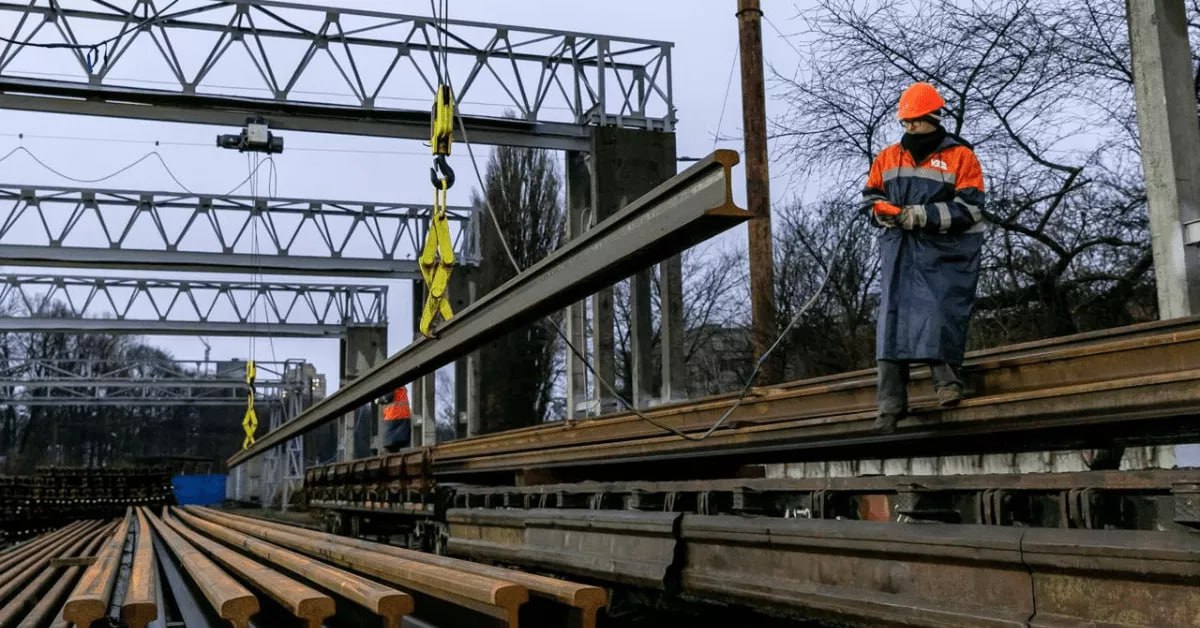
🛤️ JSC Ukrainian Railways (Ukrzaliznytsia) has presented its track infrastructure renewal plan for 2026–2028. The total demand for track superstructure materials alone in 2026 is estimated at UAH 7.62 billion. Track repairs are planned on 504.6 km of railway lines.
More than 70% of the track superstructure budget is allocated to 10 key items (around UAH 5.8 billion). The largest expenditure categories include:
🔸R65 rails: 50,406 tonnes worth UAH 3.46 billion;
🔸Elastic rail fastenings: over 1.3 million sets valued at UAH 1 billion;
🔸Turnouts: 257 sets worth UAH 750.9 million.
The key priority for the track facilities sector in 2026 will be capital overhaul of tracks and turnouts. The following targets are planned:
🔸Capital track repairs: 504.6 km, which is 88.5 km more than planned for 2025;
🔸Capital overhaul of turnouts: 358 sets, up by 91 sets year-on-year;
🔸Replacement of rails with new ones on previously rehabilitated sections: 120.0 km of track;
🔸Stations reconstruction with turnout replacement: 28 new turnout sets to be installed.
🔨 In 2025, JSC Ukrainian Railways (Ukrzaliznytsia) signed supply contracts for various goods totaling UAH 38.3 billion.
According to the company’s Procurement Director Oleksandr Nakhod, nearly 850 new participants joined Ukrzaliznytsia’s tenders during the year. In total, more than 3,000 companies took part in procurement procedures, with 2,013 becoming suppliers.
Out of more than 10,000 announced tenders, 67.4% were successfully completed. The average level of competition stood at 1.89 bidders per tender.
📄 The Verkhovna Rada of Ukraine has adopted as a first reading the draft Law “On the Safety and Interoperability of Railway Transport of Ukraine” (No. 14174).
The bill aims to implement EU railway legislation, particularly on traffic safety and interoperability, in line with Ukraine’s commitments under the EU–Ukraine Association Agreement.
The document provides for the introduction of an EU-compliant railway safety management system and the mandatory implementation of risk assessment for railway operations, with the goal of improving transport safety.
Ukrzaliznytsia has around 250,000 t of scrap stored at its sites, with nearly 100,000 t added each year — about 18% of Ukraine’s annual scrap collection.
The company lacks staff to properly prepare decommissioned assets for sale.
In 2025, UZ would need to sell roughly 250,000 t of scrap (150,000 t in stock plus 100,000 t newly generated), but admits it is unlikely to manage this volume.
This year, only 25,000 t were shipped out of the planned 100,000 t.
🌾 Over the first 25 days of November, Ukraine’s railway exported 2.132 million tons of grain.
In total, 2.299 million tons of grain were loaded on the network in November — 25% more than in October and 5.2% above last November. The average daily loading reached 90.9 thousand tons, up 17% month-on-month.
Grain transport volumes are also rising: 2.425 million tons were moved over 25 days, 22% more than in October.
In export traffic, 2.132 million tons were moved by rail — 31% more than in October and 1.9% above November 2024.
Shipments to seaports accounted for 92% of export grain volumes, while 8% moved via western border crossings.
Ukrainian Railway has announced a significant increase in passenger capacity in its new 2026 timetable. During the presentation of the updated passenger schedule, Ukrzaliznytsia CEO Oleksandr Pertsovskyi stated that the company plans to add over 2.2 million seats by introducing turnaround services and using the existing rolling stock more efficiently.
According to the company, passenger numbers continue to grow steadily. Over the first 11 months of 2025, 25.4 million passengers were carried — 22.5 million on domestic routes and nearly 3 million on international ones. The forecast for 2026 is 27.7 million passengers.
Ukrzaliznytsia kept freight tariffs unchanged throughout 2025 — saving producers over ₴20 billion.
CEO Oleksandr Pertsovskyi says this became possible largely due to railway workers, whose wages haven’t been reviewed since 2024 and remain among the lowest in the sector.
50% of Ukrzaliznytsia’s expenses are payroll costs for its nearly 170,000 employees.
He noted that logistics for many producers actually became cheaper thanks to repaired bridges and low wagon demand — but the “price” of this economy has been shouldered by rank-and-file rail workers.
Ukrzaliznytsia is ready to discuss how a future tariff increase could be redistributed between tariff classes, while also supporting a systemic reform of tariff-setting led by the Ministry.
Ukrzaliznytsia has received new equipment for its track and energy units as part of its infrastructure modernization and mechanization program.
Track crews were supplied with 20 new hopper-wagons built at Ukrzaliznytsia’s own facilities, with 30 more to be completed by year’s end. They also received over a thousand units of small mechanized tools — including rail saws, drilling machines, tampers, brush cutters, wrenches, and tensioning devices, many of them produced in Ukraine. This equipment reduces physical workload and speeds up maintenance operations.
Additionally, the energy division received a new telescopic aerial platform for rapid restoration of high-voltage lines after attacks, while track teams were equipped with Ukrainian-made tractors with mulchers for clearing the right-of-way.