Pick the wrong Supabase region and your Privacy Policy transfers section is wrong. N. Virginia means EU user data leaves the EU, so the policy names the US location and your mechanism. Frankfurt keeps hosting in the EU, so the wording changes.
A policy that was right at launch goes wrong the day you add an SDK. On Pro, adding Meta Pixel to a sample project gave 6 suggested edits. They arrive as tracked changes, and your own edits are kept.
Instant Terms now knows 109 tools.
Most SDKs, Pixels, Databases, Hosts, and analytics platforms are all covered.
Draft and keep your policies up to date with Instant Terms.
A template Privacy Policy can block Google sign-in. Google's OAuth verification rejects template or sample policies. The policy must also sit in the body of a web page, not an embedded PDF or iframe.
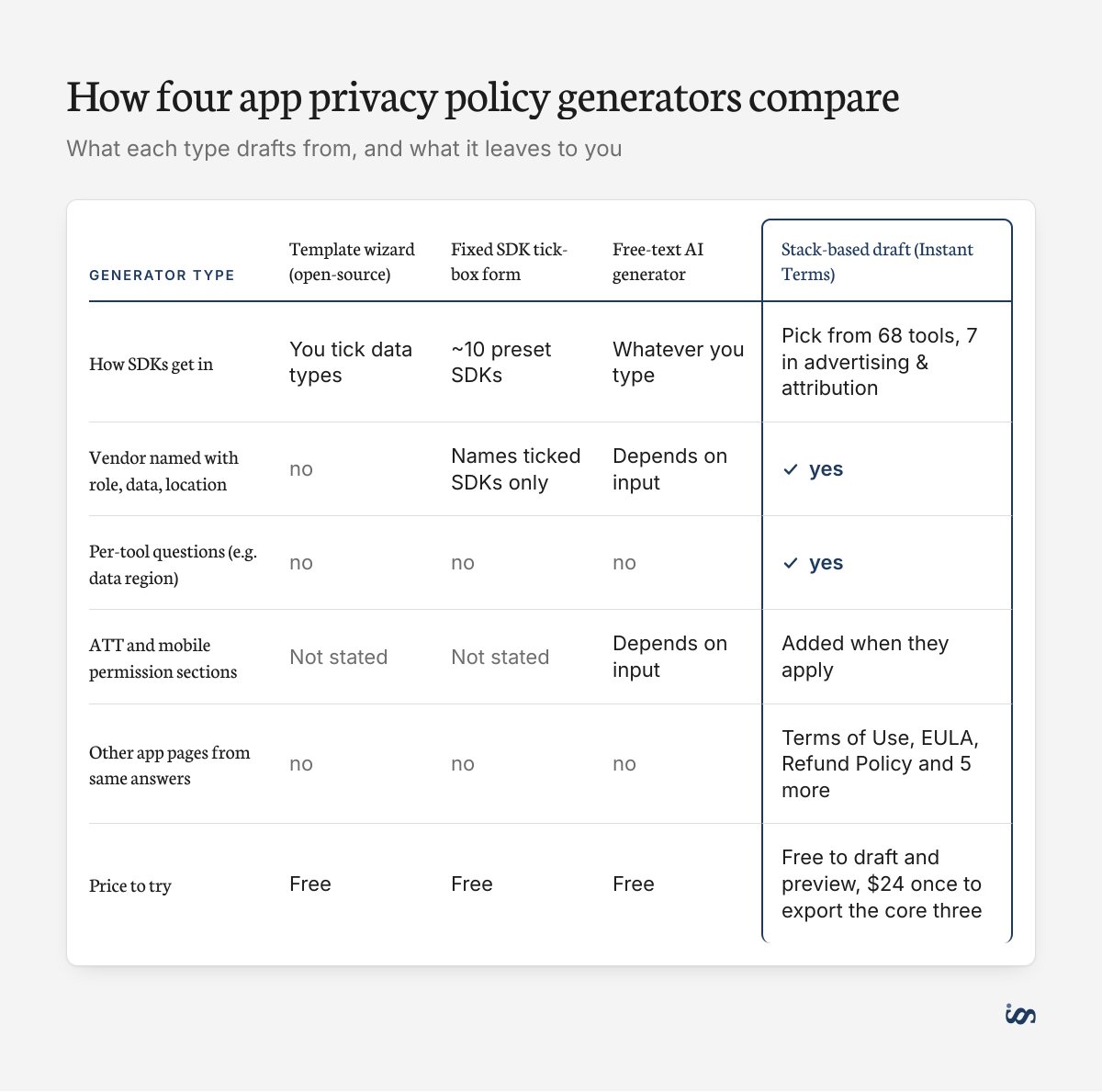
A tick-box privacy policy generator that lists about 10 SDKs leaves a simple gap. If your SDK isn't on the list, it isn't in your policy. Free-text generators have the opposite problem: they only know what you remember to type.
Even an app that collects no data needs an accurate Google Play Data safety form. Since 20 July 2022, that has applied to every app. If the form misrepresents your app, you fix it or face enforcement.
A privacy policy URL that 404s is a store review problem you created yourself.
So is one that redirects to a login page. If a legal page has to move, keep the old address working and update the link in your store console.
https://t.co/9Phc8MAWgj
"We collect nothing" is not a reason to skip a Privacy Policy.
Google Play requires one even from apps that access no personal or sensitive data. Every app completes the Data safety form too. And your SDKs may collect data even if your code does not.
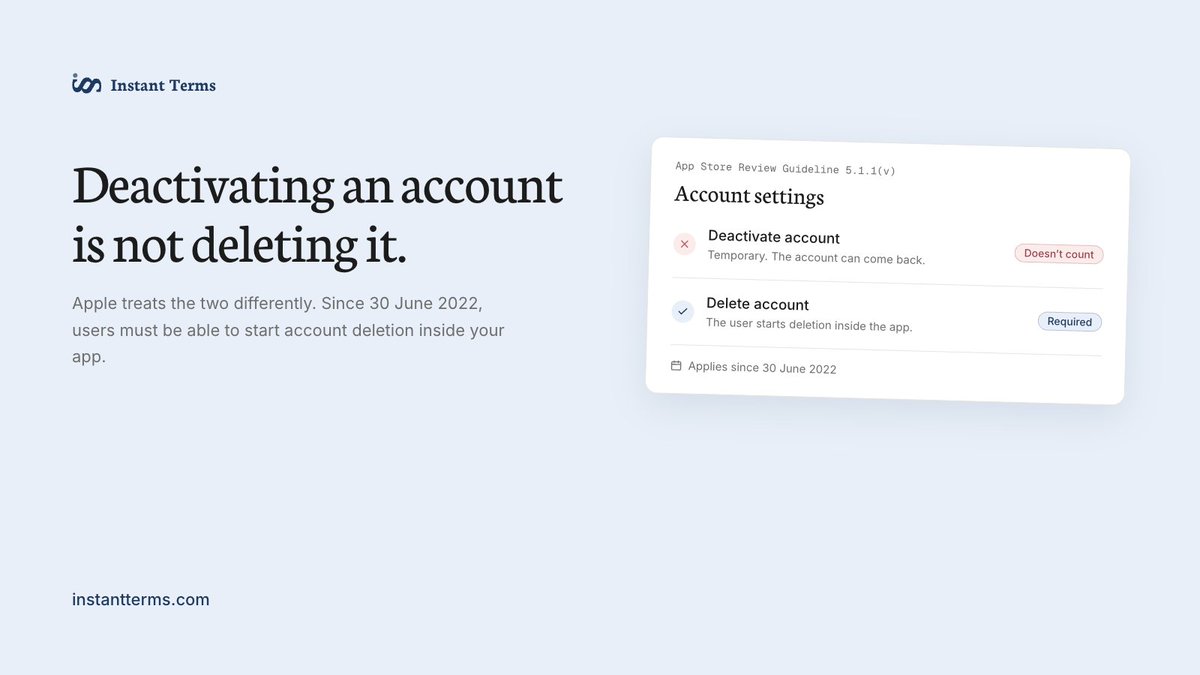
Deactivating an account is not deleting it, and Apple treats the two differently.
Guideline 5.1.1(v) has applied since 30 June 2022. Users must be able to start deletion inside the app. Temporary deactivation does not meet that rule.
https://t.co/9Phc8MAoqL