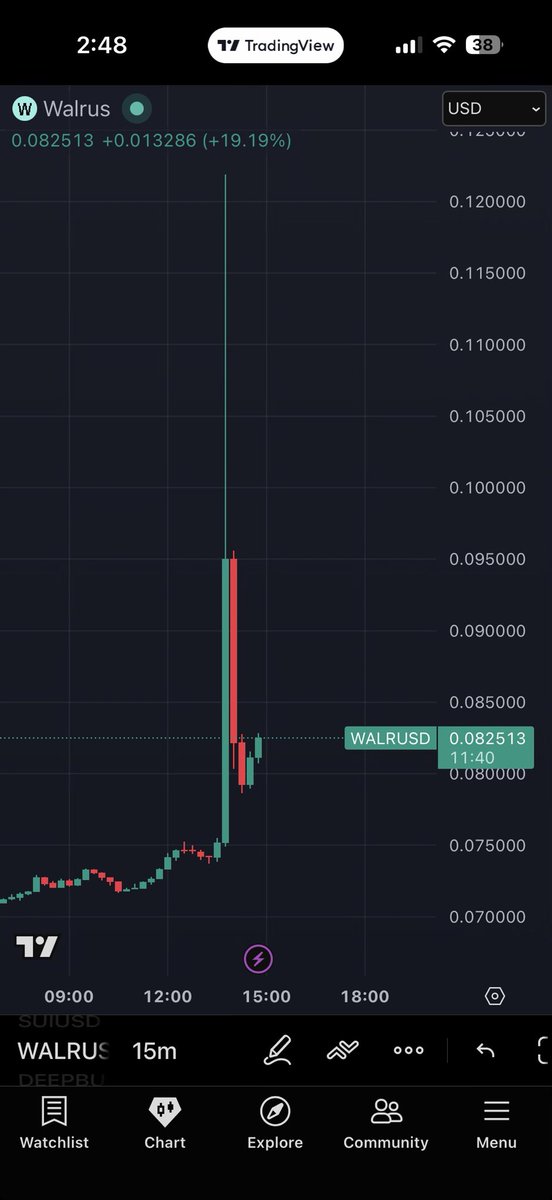
So yeah, at first it sounded like a niche concept.
But the more I think about it, the more it feels like core infrastructure.
Not flashy.
Not hyped in the usual way.
But quietly essential.
Curious how others see it though.
Do you think users will actually care about verifiable data in the future…
or will it stay something only devs and protocols worry about?
@WalrusProtocol
The part that people might be underestimating is how early we still are.
Most users don’t even think about whether their data is verifiable.
They just use apps.
But over time, I think expectations will shift.
People will start asking:
Can I verify this?
Can I prove this exists?
Can I rely on this long-term?
And platforms that can’t answer that properly might start losing trust.
It kinda reminds me of how HTTPS became standard.
At first, nobody cared.
Then slowly, it became the baseline.
I wouldn’t be surprised if verifiable data becomes that same kind of standard for Web3.
Thread 🧵
I didn’t really think much about “verifiable data” at first.
It sounded like one of those buzzwords you see thrown around in Web3 posts and white-papers.
Cool in theory, but kinda abstract.
But the more I looked into it, the more I realized…
this might actually be one of the most important pieces of the internet going forward.
We talk a lot about trading and DeFi… but most of it is still manual.
Clicking. Switching apps. Managing positions ourselves.
That’s starting to change.
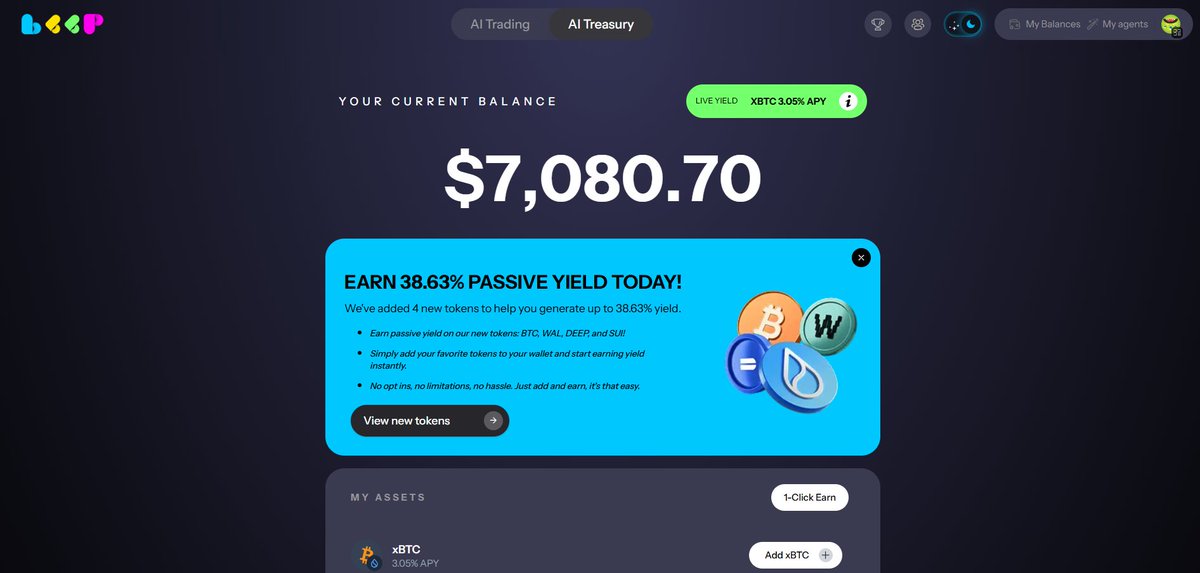
@0xbeepit is introducing the idea of agentic treasury + agentic trading.
In simple terms:
Instead of you doing everything manually,
AI agents can help manage capital and execute strategies on your behalf.
Think of it like this:
You define the strategy
The agent handles execution
Markets move -> actions happen automatically
No constant monitoring needed.
This opens up a lot of possibilities:
> Automated treasury management
> Smarter trade execution
> Faster reaction to market changes
> More efficient capital usage
And on a fast chain like Sui, this actually makes sense.
Low latency + scalable infrastructure =
agents can operate in real time without friction.
Still early, but this is where things seem to be heading.
From manual DeFi → to intelligent, agent-driven systems.
If you want to explore it yourself:
https://t.co/yQo7okrIyK
Curious what you think.
🚨 Walrus just introduced MemWal — a real memory layer for AI agents
Building AI memory today is messy.
Multiple tools, broken flows, no reliability.
MemWal fixes that.
A single, verifiable, persistent memory layer built on @WalrusProtocol .
Agents can now have:
Long-term memory
Shared context across systems
Data that’s always available and provable
No patchwork. No guesswork.
Think of it like this:
AI agents finally get a tamper-proof notebook
that never forgets and can be shared.
This is a big step for AI onchain.
Walrus is no longer just storage.
It’s becoming the data + memory layer for autonomous systems
And honestly, that’s where things get interesting.
🚨 CME Group is launching $SUI futures
Institutional capital just got a regulated way to access Sui.
Live from May 4
24/7 trading from May 29
TradFi is stepping in.
Most people are still underestimating what @ikadotxyz ( $IKA) is actually unlocking on Sui.
It’s not just one feature.
It’s a full stack of real use cases coming together.
>> Chain abstraction
You can control accounts across different chains directly from a Sui smart contract.
No switching networks.
No fragmented UX.
Just one unified experience across Web3.
>> Wallets
Ultra-fast MPC wallets that are actually usable.
Account recovery
Spending limits
Better security without sacrificing speed
This is the kind of UX upgrade crypto has needed for years.
>> DeFi
Sub-second execution changes everything.
Instant swaps
Efficient lending
True multi-chain DeFi
Not the slow, fragmented experience we’re used to.
>> Bitcoin
This is where it gets interesting.
Ikadot brings programmable Bitcoin into Sui.
That means:
Using BTC in DeFi
Secure custody
Actual utility beyond just holding
>> AI
Probably the most underrated part.
AI agents don’t just get access to funds blindly.
Ikadot adds MPC guardrails, so:
Agents can act
But within defined limits
Safer automation. Real control.
>> Staking
Stake across multiple networks.
Any asset
Any protocol
Faster, more flexible, and actually scalable.
Put all of this together and you start to see the bigger picture.
Ikadot isn’t solving one problem.
It’s building the infrastructure for:
Cross-chain control
Smarter wallets
Real DeFi
Bitcoin utility
AI + finance
Unified staking
This is what a next-gen Web3 stack looks like.
And it’s all being built on @SuiNetwork .
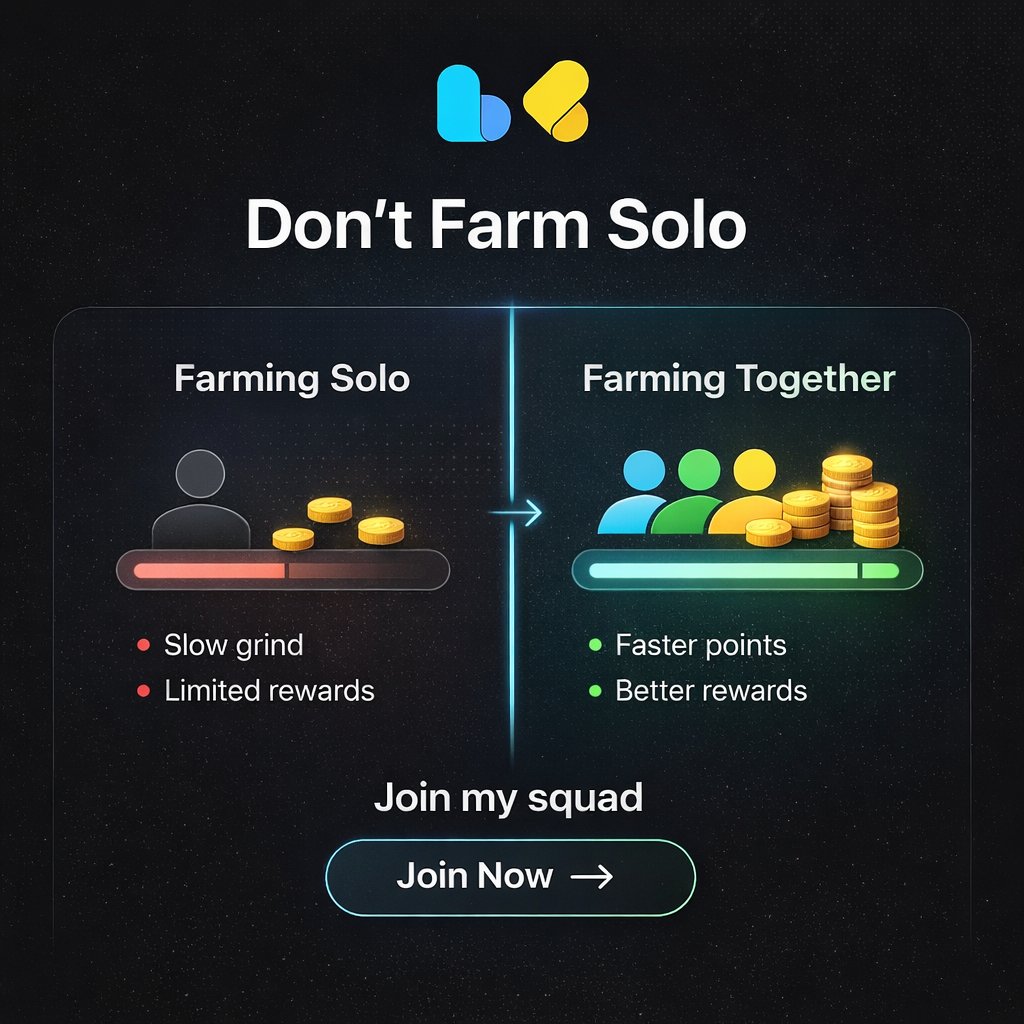
Started a squad on @0xbeepit 👀
If you’re already exploring agentic trading and farming points, it makes way more sense to do it together.
More activity → more points → better rewards.
Join in 👇
https://t.co/cyhrm40M9I