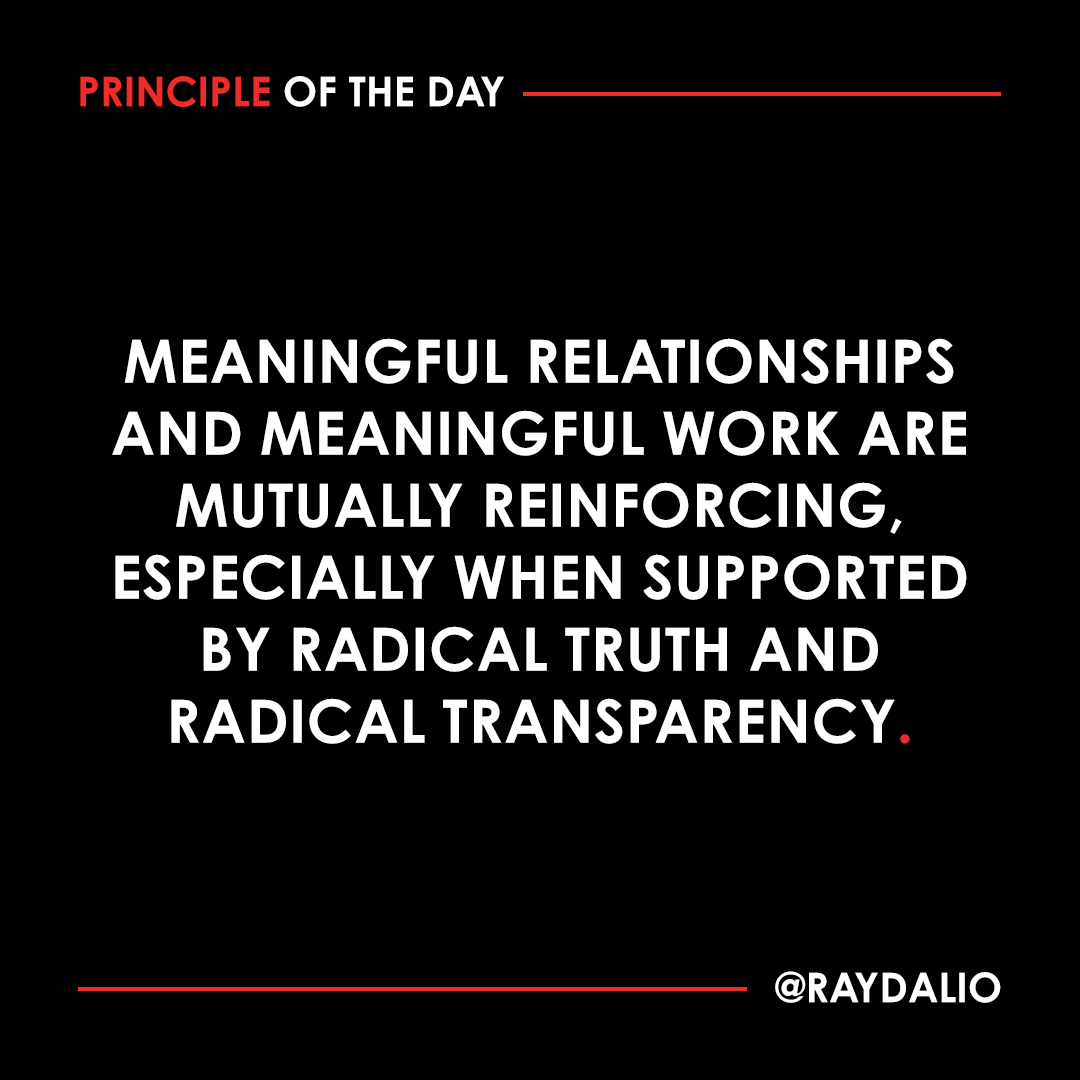
The most meaningful relationships are achieved when you and others can speak openly to each other about everything that's important, learn together, and understand the need to hold each other accountable to be as excellent as you can be.
When you have such relationships with those you work with, you pull each other through challenging times; at the same time, sharing challenging work draws you closer and strengthens your relationships.
This self-reinforcing cycle creates the success that allows you to pursue more and more ambitious goals. #principleoftheday
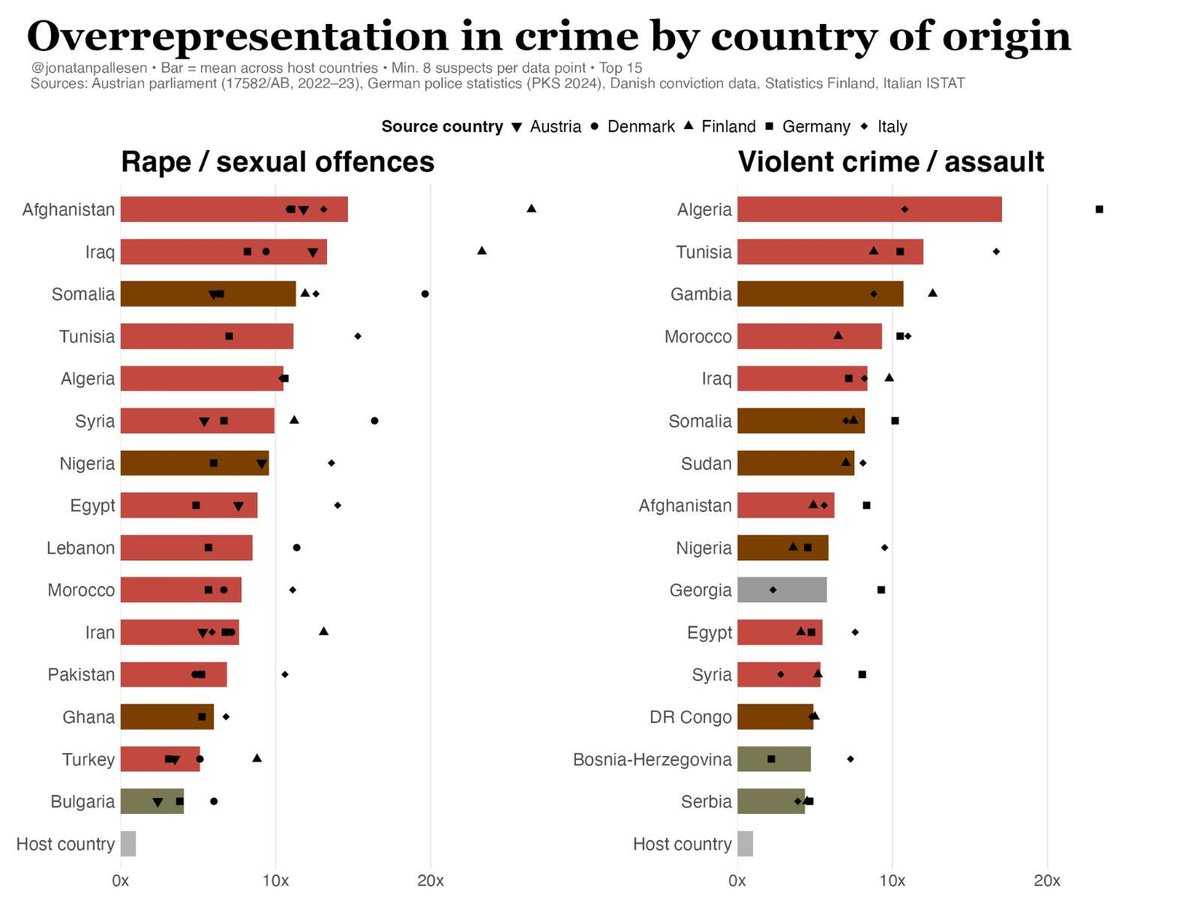
Lots of people discuss immigration & crime in Europe, so I compiled what I think is ALL the data on the topic, which is hard because many countries hide it.
Do they commit more crime?
Is it because of age? Sex? Education? Poverty? Culture?
1. Sexual offenses & violent crime:
As a Norwegian startup founder I've unfortunately spent a lot of time thinking about, dealing with, and debating unrealized capital gains taxes. Here are some key points worth noting:
A wealth tax is an implicit form of confiscation. While practically all other taxes are based on taking a cut of a voluntary exchange, a wealth tax is a transaction forced by the state.
In practice, there are only two ways to pay it: taking out a very high salary or dividends, or selling shares. For private tech companies, this is usually neither feasible nor desirable. In either case, every $1 of wealth tax paid reduces the company’s value by $1—meaning the state has de facto confiscated private property. In fact, it takes out even more than the $1:
You also pay taxes in order to pay taxes. Income, dividend, or capital gains taxes must be paid to extract the cash needed to pay the wealth tax. As a result, the true effective tax burden is significantly higher than the stated rate.
The value of any asset can change quickly. Wealth taxes are set at an arbitrary point in time. An asset can drop 90% between the wealth valuation date and when the bill is due. It is deeply unfair to pay an actual tax bill based on values that does not exist anymore. Furthermore:
It is impossible to know the true value of an asset that is not transacting. This creates substantial uncertainty for taxpayers and high administrative overhead for governments attempting to assess values. Preferred versus common shares, vesting schedules, transaction size, and whether a founder or a small minority shareholder is selling can all lead to vastly different prices for what appears to an ignorant observer to be the “same” shares.
The only sensible solution to these problems is to tax voluntary transactions in the economy. Those who lean left may prefer higher marginal rates, while those who lean right may prefer lower ones—and that is a legitimate political debate. High tax rates can be fine; taxing unrealized values can't.
As a reminder, please use the following decentralized domains during the migration process:
https://t.co/cEErJUpEFw
https://t.co/0LUA1oorOT
https://t.co/7U8yRQszAQ
https://t.co/QCVU4AWRvz
For more on the incident:
https://t.co/ChZqmkSTmP
@zerolendxyz when are we getting our money back? when are you gonna fix a "UX/UI bug" that is keeping peoples money away from them, over 6.5m just on zksync to be exact?
anyone watching this dont lock your liquidity in this protocol