Foundation for Ecological Security's technology arm was conceptualised to enable nature conservation and natural resource management through data and technology
Across regions, communities are coming together to better understand groundwater and strengthen collective water stewardship through the Napo Jal Bachao Kal campaign.
Community members are monitoring well water levels before and after the monsoon, reflecting on changing groundwater conditions, and using this knowledge to plan for more sustainable water use and conservation.
This initiative highlights how local monitoring and collective participation can support informed decision-making on crop planning, groundwater management, water conservation, and long-term resilience.
These stories from the ground reflect a shared understanding: water conservation begins with awareness, observation, and collective action. Through their experiences, they encourage us all to participate in the campaign and join this collective effort towards water security.
Through community participation, local planning, and tools such as the Groundwater Monitoring Tool, villages are building pathways towards safer and more water-secure futures.
“Jal hai toh Kal hai.”
Join the pre-monsoon leg of the campaign between 15 May - 15 June 2026.
@IOforCommons
#NapoJalBachaoKal #WaterConservation #Groundwater #Commons #CollectiveStewardship #CommunityAction #WaterSecurity #ClimateResilience #PromiseOfCommons #MGNREGA
#GroundwaterMonitoring #WaterCommons #LocalAction
Use these guides, available in English, Hindi, Odia, Telugu, Marathi, Kannada, and Gujarati, to assist you through the well-water mapping process this #NapoJalBachaoKal Campaign Pre-Monsoon data collection.
Click here for more information on the campaign: https://t.co/miDcCu6PAu
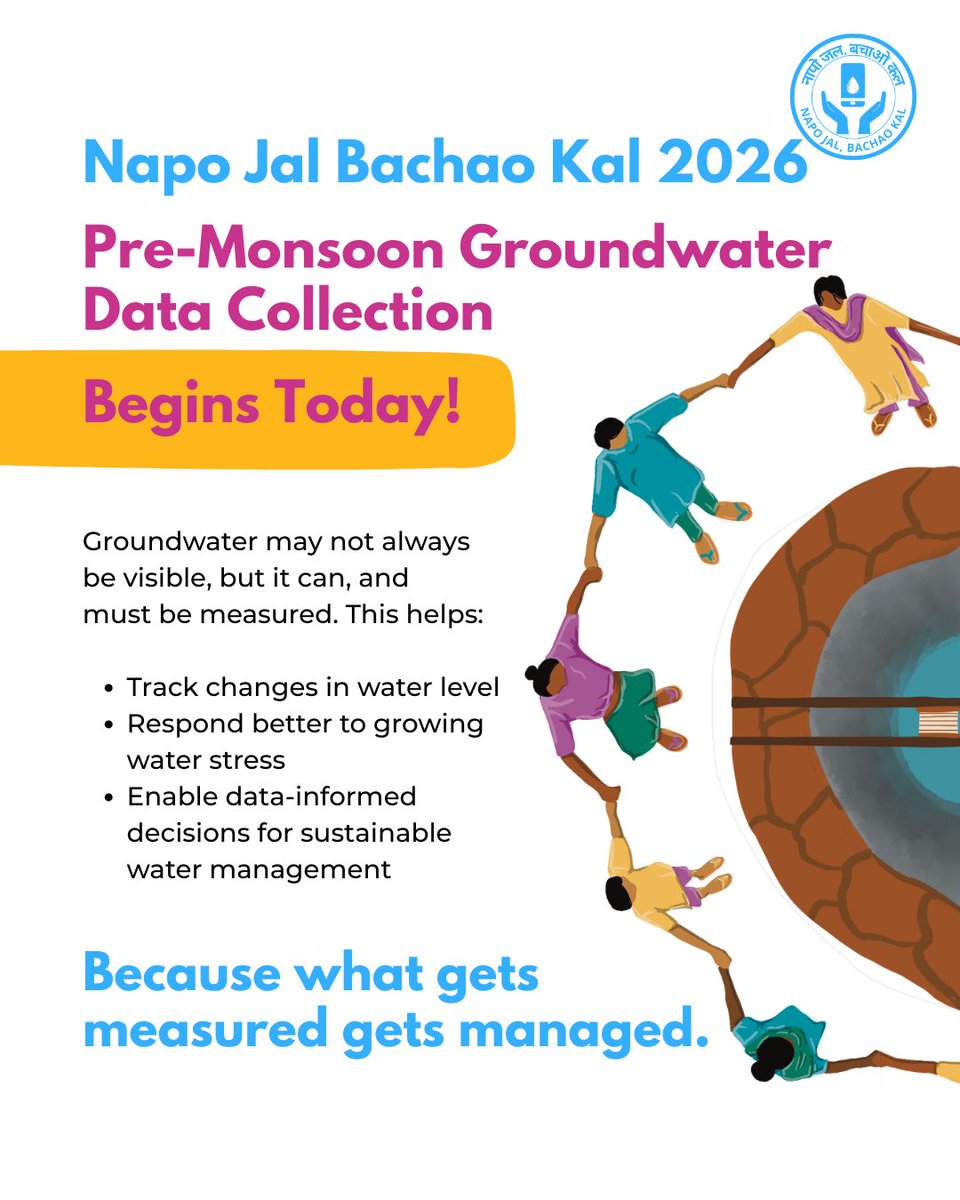
The #NapoJalBachaoKal Campaign 2026 begins today.
From May 15 to June 15, citizens, communities, students, and institutions across India will come together to measure groundwater levels in wells under this citizen science initiative. By measuring water levels in wells over time, we build a deeper, collective understanding of our groundwater systems.
Participating is simple.
Whether you’re a first-time user or working alongside your community, these easy guides help you collect well-water data with ease. These guides are available in 7 languages: Marathi, Gujarati, Odia, Kannada, Telugu, English and Hindi.
Click on the link, pick your language, and join the movement for a water-secure India. https://t.co/1OMQBinUrz
@IOforCommons
#NapoJalBachaoKal #GroundwaterMonitoring #WaterCommons #LocalAction #PromiseOfCommons
Join the nationwide movement for community-led groundwater governance through the Napo Jal Bachao Kal Campaign.Participate in the upcoming webinars on groundwater monitoring, data collection, and the use of GWMT to strengthen informed local action and sustainable water management
The Napo Jal Bachao Kal Campaign is a nationwide effort to build a decentralised, community-driven groundwater monitoring system by encouraging the monitoring of at least one well in every village across India.
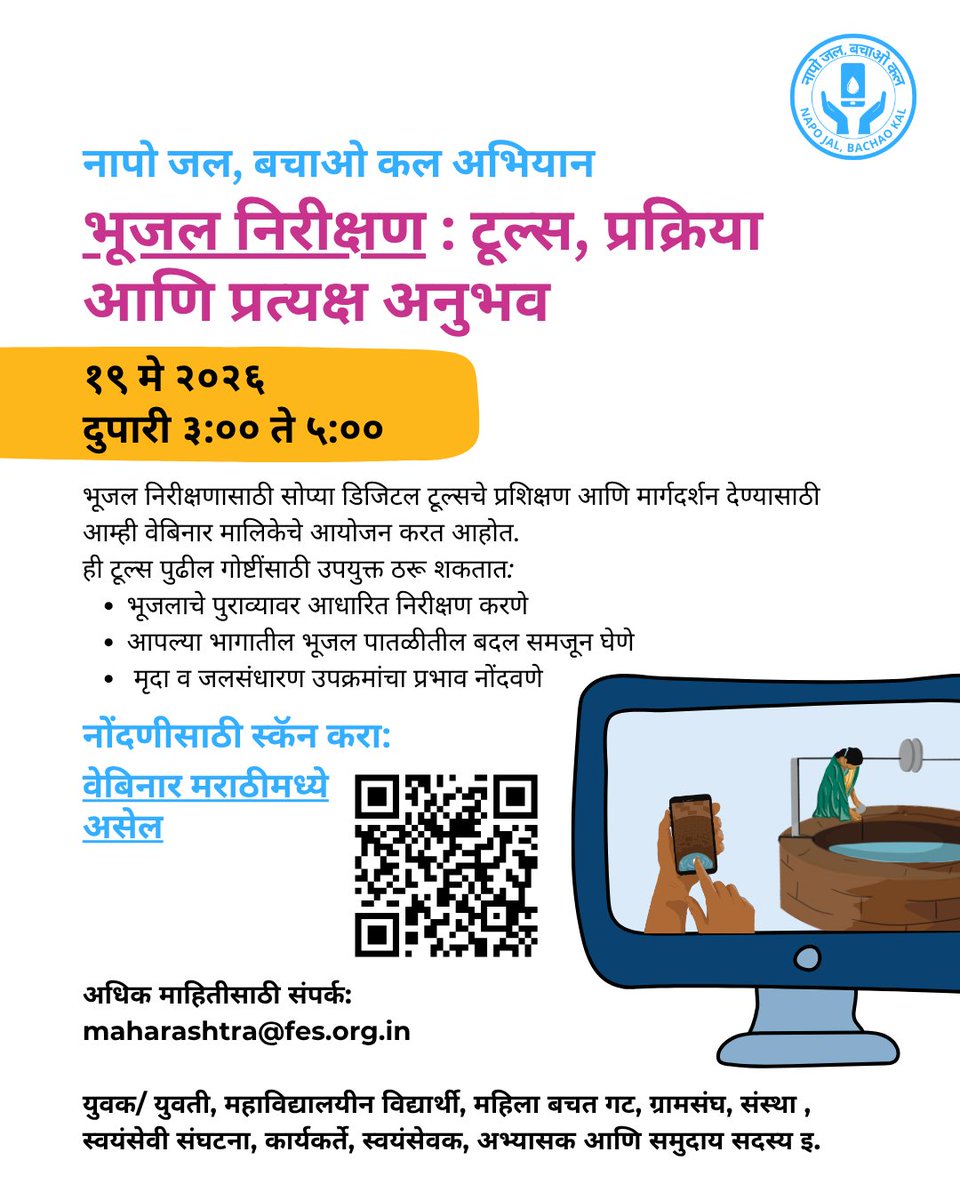
As part of this initiative, two webinars are being organised on 19 May 2026 to build a common understanding of groundwater monitoring processes, data collection standards, and the use of the Groundwater Monitoring Tool (GWMT).
These webinars are designed to enable organisations, institutions, volunteers, practitioners, and community members to actively participate in the nationwide Pre-Monsoon Well Monitoring Campaign through a shared understanding of groundwater monitoring processes and tools.
Session 1 : 11:00 AM – 1:00 PM IST, An open webinar for all on groundwater monitoring processes, data collection standards, and the use of the Groundwater Monitoring Tool (GWMT). Register here: https://t.co/a9VtTWjo5I
Session 2 : 3:00 PM – 5:00 PM IST, A regional language webinar in Marathi to enable wider participation, local engagement, and discussions grounded in regional contexts and experiences. Register here: https://t.co/9iCOWLQFhw
By strengthening local groundwater evidence, the campaign seeks to enable better planning, informed decision-making, and collective action towards sustainable groundwater governance.
After all, “What gets measured, gets managed.”
@IOforCommons
#NapoJalBachaoKal #Groundwater #GWMT #WaterConservation #ClimateAction #WaterGovernance #PromiseofCommons
Groundwater may be invisible beneath our feet, but it determines how our landscapes survive and thrive.
Before the monsoon arrives and recharge begins, the pre-monsoon season gives us a vital opportunity to understand the true state of our groundwater.
This is where collective action matters.
The #NapoJalBachaoKal Campaign returns this pre-monsoon season, inviting citizens, communities, students, and institutions across India to join a nationwide citizen science effort to monitor groundwater levels in wells.
A single well measurement may seem small, but together, thousands of observations can help build a deeper understanding of our shared water systems and strengthen its stewardship.
Pre-monsoon Monitoring Cycle: 15 May – 15 June
Know more and participate: https://t.co/EmMDGCqa0C
@IOforCommons
#NapoJalBachaoKal #GroundwaterMonitoring #WaterCommons #PromiseOfCommons
We are pleased to share that Chiranjit Guha from FES will be speaking tomorrow, 1 May 2026, at the Geospatial Knowledge Infrastructure (GKI) Summit taking place during the Geospatial World Forum Conference & Tech Show 2026 in Amsterdam, Netherlands.
In his session, “Embedding GKI into Digital Public Infrastructure: Connecting Digital Systems to Physical Reality,” Chiranjit will discuss why Geospatial Knowledge Infrastructure (GKI) is a critical missing layer in Digital Public Infrastructure (DPI).
While DPI has largely focused on identity, payments, and exchange, GKI serves as the spatial operating system that enables digital systems to connect with the physical world. From geolocating beneficiaries in social protection systems to strengthening last-mile public health logistics and enabling digital addresses where formal street systems are incomplete, GKI can significantly improve the reach, efficiency, and equity of public systems.
Join the conversation as global experts explore how integrating geospatial intelligence into DPI can transform governance and public service delivery and why it should be a national priority.
@GeospatialM@IOforCommons
Learn more: https://t.co/dGY9XWor9J
#GWF2026 #GeospatialInfrastructure #PromiseOfCommons
We are pleased to share that Chiranjit Guha and Jay Patel from FES are participating in the Geospatial World Forum Conference & Tech Show 2026, taking place in Amsterdam, Netherlands, from 27 April 2026 to 1 May 2026.
We look forward to connecting with fellow delegates, exchanging insights, and contributing to the global dialogue on geospatial knowledge infrastructure.
Know more on the Geospatial World Forum Conference & Tech Show 2026: https://t.co/dGY9XWor9J
@IOforCommons@GeospatialM
#GWF2026 #GeospatialInfrastructure #PromiseOfCommons
The post-monsoon well monitoring exercise has been extended till 30th November, 2025!
If you haven’t started mapping your village/town’s wells yet, this is your chance.
Thank you to everyone who has already contributed!
With your support, water levels for thousands of wells across India are being recorded — helping communities take informed decisions to manage their groundwater.
The GWMT (Ground Water Monitoring Tool) app — version 3.5, available in 9 languages — makes it simple.
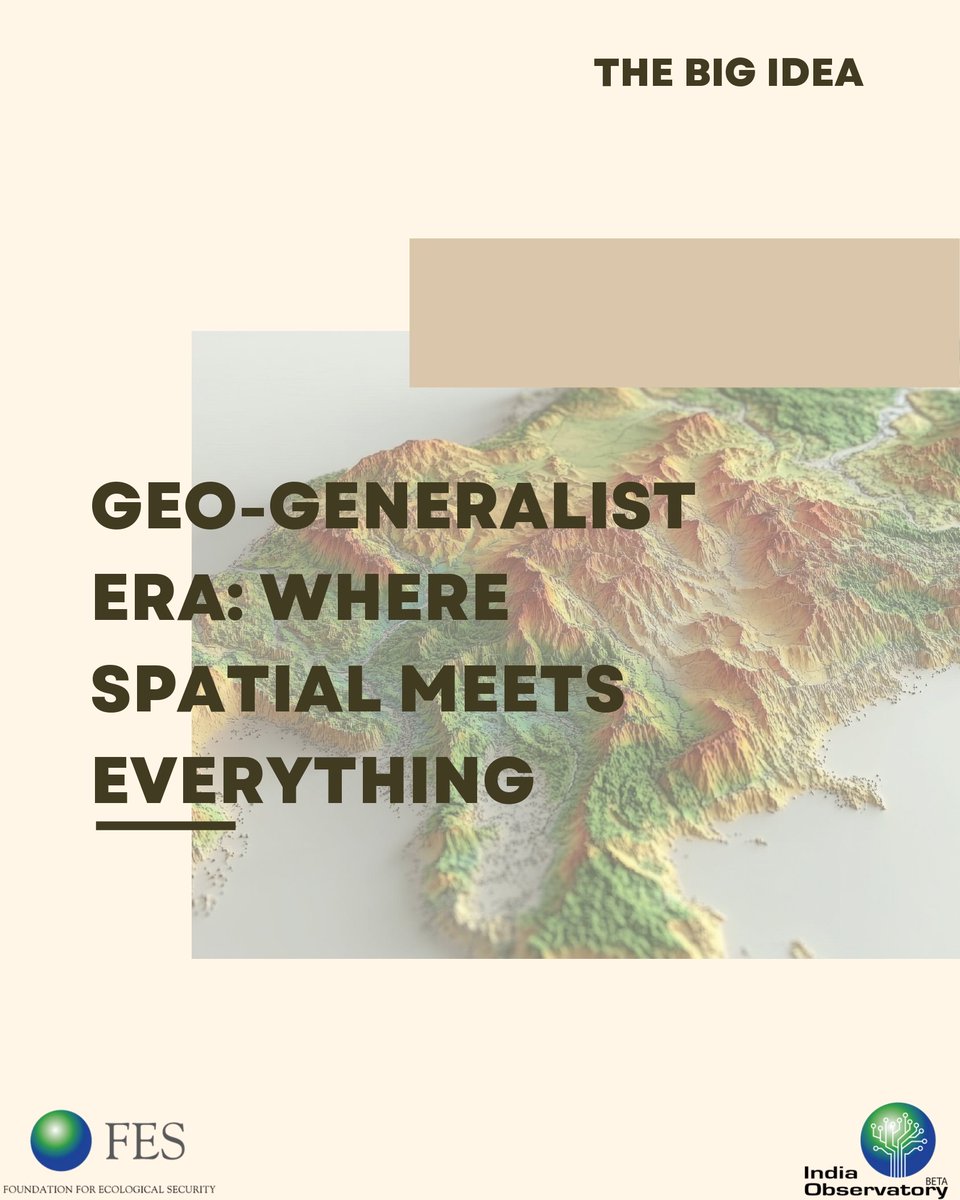
This GIS Day, as we celebrate the theme “Geo-Generalist Era: Where Spatial Meets Everything,” we invite you to look beyond technology and see its true power, the ability to connect ecology, economy, and equity.
(1/4)
The post-monsoon leg of the Napo Jal Bachao Kal campaign begins tomorrow!
Participate in the well monitoring exercise and contribute to the collection of granular groundwater data.
(3/4)
Guides available in Marathi, Gujarati, Hindi, English, Odia, Telugu and Kannada
- for step-by-step support to monitor the well-water levels in your area. Let’s work together for a water-secure future.
Congratulations to the talented winners of the 2nd edition of the Code4Nature Challenge!
As this challenge brought together designers, data scientists, & tech enthusiasts for innovative solutions to today’s environmental challenges, we are excited to share the results with you!
Kudos to all the participants for their creativity and commitment to charting solutions to shared environmental problems.
Each solution reminds us that when innovation meets purpose, sustainability becomes achievable!
We’re excited to share the successful conclusion of the 2nd edition of Code4Nature, a unique coding challenge where technology meets ecology. @IOforCommons