“Be mindful of the Day when you will ˹all˺ be returned to Allah, then every soul will be paid in full for what it has done, and none will be wronged” - Q2:281
Do not rush to think ill of your brother or sister in Islam.
Sometimes, we read a message, hear a conversation or come across something that appears questionable, and immediately form an opinion about the person involved.
But what if you have misunderstood what you saw? What if there is context you do not know? What if the situation is not what it appears to be?
Islam teaches us to be careful about our assumptions and to give our fellow Muslims the benefit of the doubt.
Allah does not teach us to rush to suspicion, accusations or judgement.
Allah says in the Qur'an:
يَـٰٓأَيُّهَا ٱلَّذِينَ ءَامَنُوا۟ ٱجْتَنِبُوا۟ كَثِيرًۭا مِّنَ ٱلظَّنِّ إِنَّ بَعْضَ ٱلظَّنِّ إِثْمٌۭ
“O believers! Avoid many suspicions, for indeed, some suspicions are sinful.”
Reference: Qur'an, Surah Al-Hujurat 49:12.
Hz. Zekeriyya (Aleyhisselam) yaşlı ve eşi kısır olmasına rağmen Allah’tan kendisine bir çocuk hibe etmesini istiyor ve şu cümleleri kullanılıyor.
قَالَ رَبِّ اِنّ۪ي… وَلَمْ اَكُنْ بِدُعَٓائِكَ رَبِّ شَقِيًّا
O, şöyle demişti: “Rabbim! Şüphesiz kemiklerim gevşedi. Saçım sakalım ağardı. Sana yaptığım dualarda (cevapsız bırakılarak) hiç mahrum olmadım.”
Meryem/4
Kadı Beyzâvi (Allah ona rahmet eylesin) bu ayetin son kısmını tefsir ederken dikkat edilmesi gereken güzel bir noktaya değiniyor
“Allah’tan istenilen dua edilen şey (çocuk) anormal/sıra dışı bir durum olsada Allah’ın dualara icabet etmesi gayet normal olduğuna dair bir uyarıdır.!
Yüce Allah onu (Zekeriyya) icabete alıştırmış ve bu konuda ona umut vermiştir.
Umut verdiği kimseyi hayal kırıklığına uğratmamak ise Kerîm olanın hakkıdır.”
Bu yüzden istediğiniz şeylerin olabilir bir şey mi diye ilgilenmekten çok; verene tevekkül etmekle ilgilenmek, ona istekte ısrar etmekle uğraşmak gerekir.
in the Hands of the One who knows you better than you know yourself.
Trust Allah. Make du‘a. Take the means. And leave the unseen to Him.
What Allah has written for you will reach you at its appointed time.
His decree is perfect, even when you cannot yet see the wisdom
3/4
your tests, your ease, what reaches you and what passes you by, all of it is known and written by Allah.
Nothing that was meant for you can miss you, and nothing that was not meant for you can reach you.
So don’t exhaust your heart worrying about a future that is already
2/4
𝗪𝗵𝗲𝗻 𝘆𝗼𝘂 𝗳𝗲𝗲𝗹 𝗮𝗻𝘅𝗶𝗼𝘂𝘀 𝗮𝗯𝗼𝘂𝘁 𝘁𝗵𝗲 𝗳𝘂𝘁𝘂𝗿𝗲, 𝗿𝗲𝗺𝗲𝗺𝗯𝗲𝗿 𝘁𝗵𝗶𝘀:
The Prophet ﷺ said:
“Allah wrote the decrees of the creation fifty thousand years before He created the heavens and the earth.”
[Sahih Muslim]
Your rizq, your life,
1/4
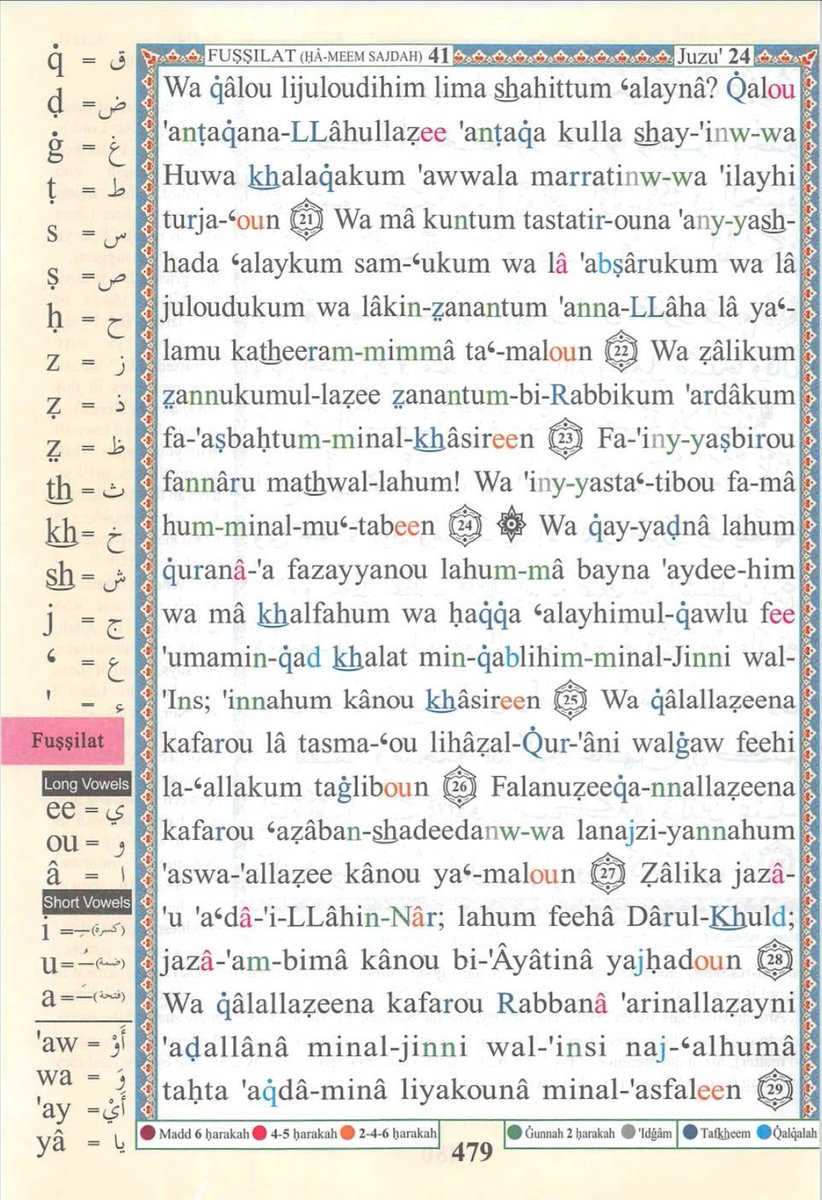
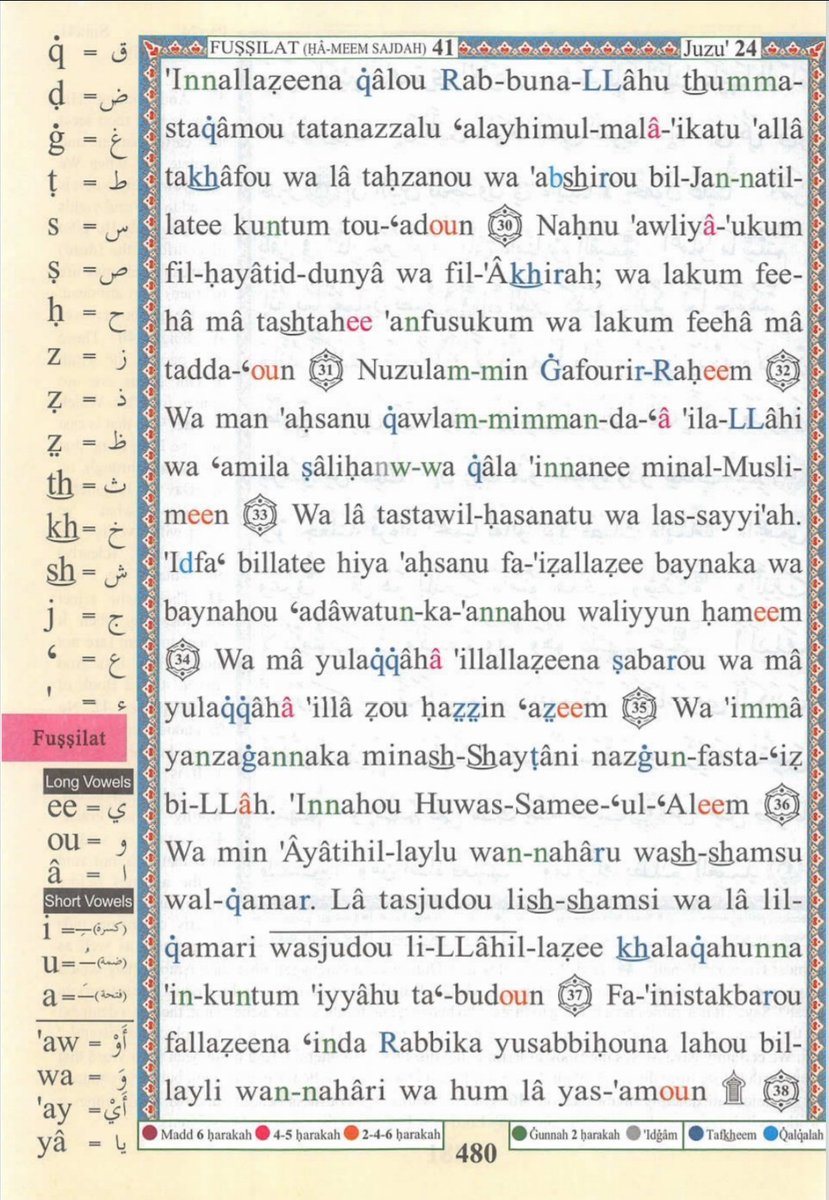
Pages of the Glorious Qur’ān today
Wednesday 18/11/26, Sūrah Fuṣṣilat (41): 21-38, reflection on verse 41: 34-45
Theme: Repay evil with goodness and exercise patience when provoked
وَلَا تَسۡتَوِی ٱلۡحَسَنَةُ وَلَا ٱلسَّیِّئَةُۚ ٱدۡفَعۡ بِٱلَّتِی هِیَ أَحۡسَنُ فَإِذَا ٱلَّذِی بَیۡنَكَ وَبَیۡنَهُۥ عَدَ ٰوَةࣱ كَأَنَّهُۥ وَلِیٌّ حَمِیمࣱ (34) وَمَا یُلَقَّىٰهَاۤ إِلَّا ٱلَّذِینَ صَبَرُوا۟ وَمَا یُلَقَّىٰهَاۤ إِلَّا ذُو حَظٍّ عَظِیمࣲ (35)
"Good and evil are not equal. Repel evil with what is better, and then the one who is hostile towards you will become like a close and devoted friend.
But none will attain this except those who are patient, and none will attain it except those who possess a great portion of goodness."
LESSONS:
1. Allah establishes a fundamental moral principle: good and evil are not the same. No matter how widespread wrongdoing becomes, it does not acquire the virtue of righteousness. We must therefore resist the temptation to justify evil simply because others practise it. Our moral standards should be determined by divine guidance, not by the conduct of those around us.
2. Allah does not merely instruct us to repel evil with good; He commands us to repel it with what is better (ا��َّتِي هِيَ أَحْسَنُ). This demands a higher level of moral discipline. It means refusing to allow another person's hostility to determine our character, words and actions. Sometimes, the best response to an insult is silence; sometimes, it is kindness, forgiveness or a dignified explanation.
3. The verse presents a remarkable possibility: someone with whom we share deep-seated hostility may eventually become a close and devoted friend through our consistent response with goodness. This teaches us that not every disagreement must end in enmity, and not every provocation deserves confrontation. A person may be won over by the very kindness they never expected to receive.
4. Allah immediately follows this instruction by declaring that only those who exercise patience can attain this quality. This is significant because responding to evil with goodness is not always easy. It requires emotional restraint, self-control and the ability to rise above immediate impulses. Patience is not merely enduring hardship; it is also having the discipline to do what is right when doing otherwise seems easier.
5. Allah concludes by describing those who possess this quality as people who have been granted a great portion (حَظٍّ عَظِيمٍ). This suggests that the ability to overcome resentment, restrain anger, forgive and respond with excellence is itself an immense blessing. Not everyone possesses this strength. It is a reflection of a heart nurtured by faith, wisdom and spiritual maturity.
O Allah, bless us with excellent character, open hearts, strength in patience and purity of heart. Help us to repel evil with what is better, and make us among Your servants who possess a great portion of goodness. Āmīn.
The Messenger of Allah ﷺ said: 'The most burdensome prayers for the hypocrites are the 'Isha' prayer and the Fajr prayer. If only they knew what (reward) there is in them, they would come to them even if they had to crawl.'" - Sunan Ibn Majah 797
Beloved brethren, it’s time to offer Solātul Fajr prayer in Lagos, Nigeria.
Let’s head to the Masjid to pray in congregation.
May Allah accept it from us as an act of ‘Ibādah. Āmīn
Sometimes you cry over the little you lost, unaware that Allah has already written an ocean for you. What feels like deprivation may simply be Allah protecting you from what was never meant for you and preparing you for something better.
Allah says, “Perhaps you hate a thing and it is good for you.” (Qur’an 2:216).
So don’t let one closed door make you doubt the One who knows every door you have yet to walk through. Trust His timing, His wisdom, and His decree because what Allah has written for you will never miss you.
Allah doesn’t define you by your worst day. He defines you by your return to Him. Hate the sin. Leave the sin. But never hate yourself so much that you stop going to Allah. The shaytan wants you to quit. Allah wants you to repent.
Choose who you listen to.
قُلْ يَا عِبَادِيَ الَّذِينَ أَسْرَفُوا عَلَىٰ أَنفُسِهِمْ لَا تَقْنَطُوا مِن رَّحْمَةِ اللَّهِ
“Say: O My servants who have transgressed against themselves, do not despair of the mercy of Allah”
—— Al Qur’aan [39:53]
When it comes to issues relating to Islam that require me to defend one scholar against another, you will hardly find me taking sides. One of my reasons is that I only take what is beneficial from their lectures, not a staunch supporter of any and I do not belong to any particular sect.
I strongly believe that every human being is capable of making mistakes. However, our blind loyalty to a particular scholar, or our affiliation with their sect, sometimes makes it difficult for us to disagree with their positions, even when we know they may be wrong.
We are at a critical moment as Muslims, and I believe this is the time to be more concerned about what unites us as an Ummah rather than what divides us. The world is watching, and unfortunately, many are delighted to see the internal disagreements and divisions within the Muslim Ummah.
I pray that Allah unites us, strengthens the bonds of brotherhood among us, and guides us towards what is right. Ameen.
Please repost 🙏🙏
This cream two-piece set is exactly what your modest wardrobe needs right now!
Just look at how beautifully it sits on my customer. Elegant, modest and effortlessly put together. It would look just as beautiful on you!
₦35,000
Nationwide delivery available. Send us a DM or WhatsApp to order.
Allah swt is the only one alone to be worthy of our worship.
Seeking forgiveness give infinte reward.
Speak good or remain silent
Allah knows what is in every heart.
Oh Allah guide us to the straight path and keep us firm on this deen Islam.
Ameen🤲
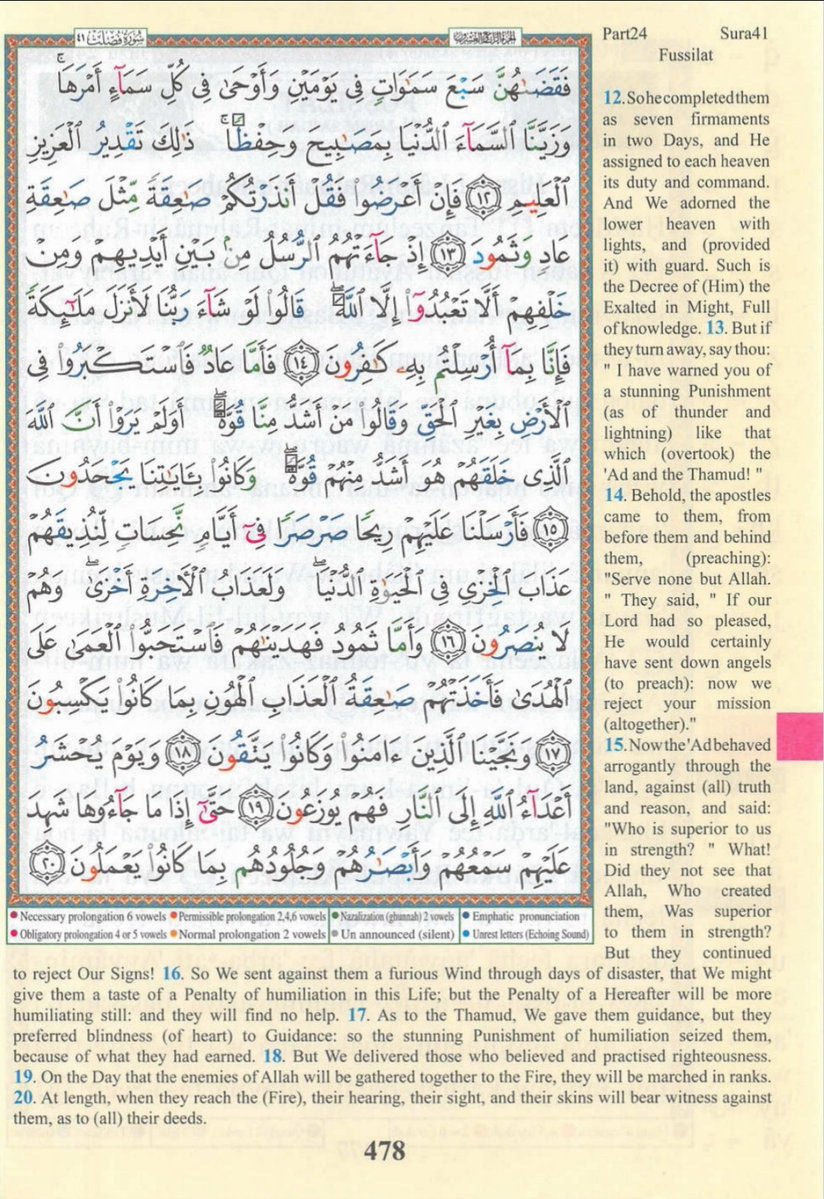
Pages of the Glorious Qur’ān today
Tuesday 17/11/26, Sūrah Fuṣṣilat (41): 1-20, tafakkur verse 41: 6
Theme: Know Allah, remain steadfast upon His path, and seek His forgiveness constantly
قُلۡ إِنَّمَاۤ أَنَا۠ بَشَرࣱ مِّثۡلُكُمۡ یُوحَىٰۤ إِلَیَّ أَنَّمَاۤ إِلَـٰهُكُمۡ إِلَـٰهࣱ وَ ٰحِدࣱ فَٱسۡتَقِیمُوۤا۟ إِلَیۡهِ وَٱسۡتَغۡفِرُوهُۗ وَوَیۡلࣱ لِّلۡمُشۡرِكِینَ
"Say (O Prophet Muhammad): "I am only a human being like you. It is revealed to me that your God is only One God. So take a straight path towards Him and seek His forgiveness. And woe to the polytheists."
LESSONS:
1. The verse establishes the humanity of Prophet Muhammad while distinguishing him through the extraordinary privilege of receiving divine revelation. His humanity does not diminish his prophethood, just as his prophethood does not make him divine. This is a fundamental distinction in Islamic theology: we honour Prophet Muhammad immensely, love him deeply and follow his Sunnah, but we worship Allah alone.
2. The central message of revelation is that Allah is One. This is not merely an intellectual declaration or a statement of identity; it is the foundation upon which our beliefs, worship, values and relationship with our Creator must rest. Our hearts must recognise Allah as the only One worthy of worship, ultimate devotion and absolute submission.
3. It is not enough to know Allah, acknowledge His oneness or profess Islam. We must demonstrate our faith through our conduct, choices, worship and relationships with others. Islam demands consistency between what we profess with our tongues and how we live our lives. Faith must be reflected in character.
5. Immediately after commanding steadfastness, Allah says: "And seek His forgiveness."
This is profound. Allah knows that human beings are imperfect. Even those who sincerely strive to remain steadfast will make mistakes, fall short and sometimes stumble. The solution is not to abandon the journey but to return to Allah through sincere repentance.
A believer must never become complacent about righteousness or despair because of personal shortcomings. Keep striving, keep returning and keep seeking forgiveness.
5. The verse concludes with a warning: "And woe to the polytheists."
Having established Allah's oneness and commanded steadfastness, the verse warns against associating partners with Him. Shirk contradicts the very foundation of the primordial covenant and undermines the purpose for which human beings were created: to worship Allah alone.
This reminds us that sincerity in worship is indispensable. We must guard our beliefs, intentions and acts of devotion against anything that compromises the exclusive right of Allah to be worshipped.
O Allah, we ask You for steadfastness upon Your religion, sincerity in our affirmation of Your oneness, excellence in our worship, consistency in seeking Your forgiveness, and a beautiful ending to our lives.
O Allah, let us live as Muslims, cause us to die as Muslims, and join us with the righteous.
Āmīn, Yā Rabb al-ʿĀlamīn.
“Establish regular prayer: for prayer restrains from shameful and unjust deeds; and remembrance of Allah is the greatest (thing in life).”
— Al Qur’aan [29:45]
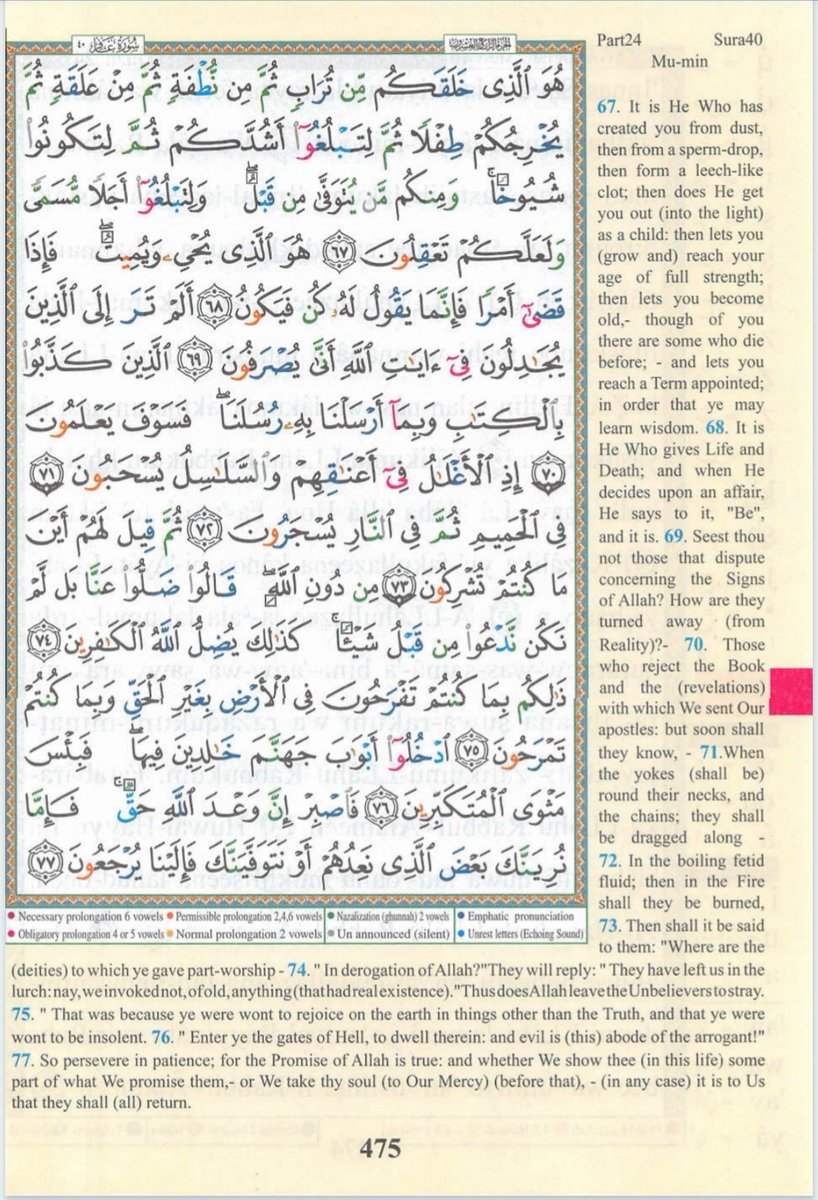
Pages of the Glorious Qur’ān today
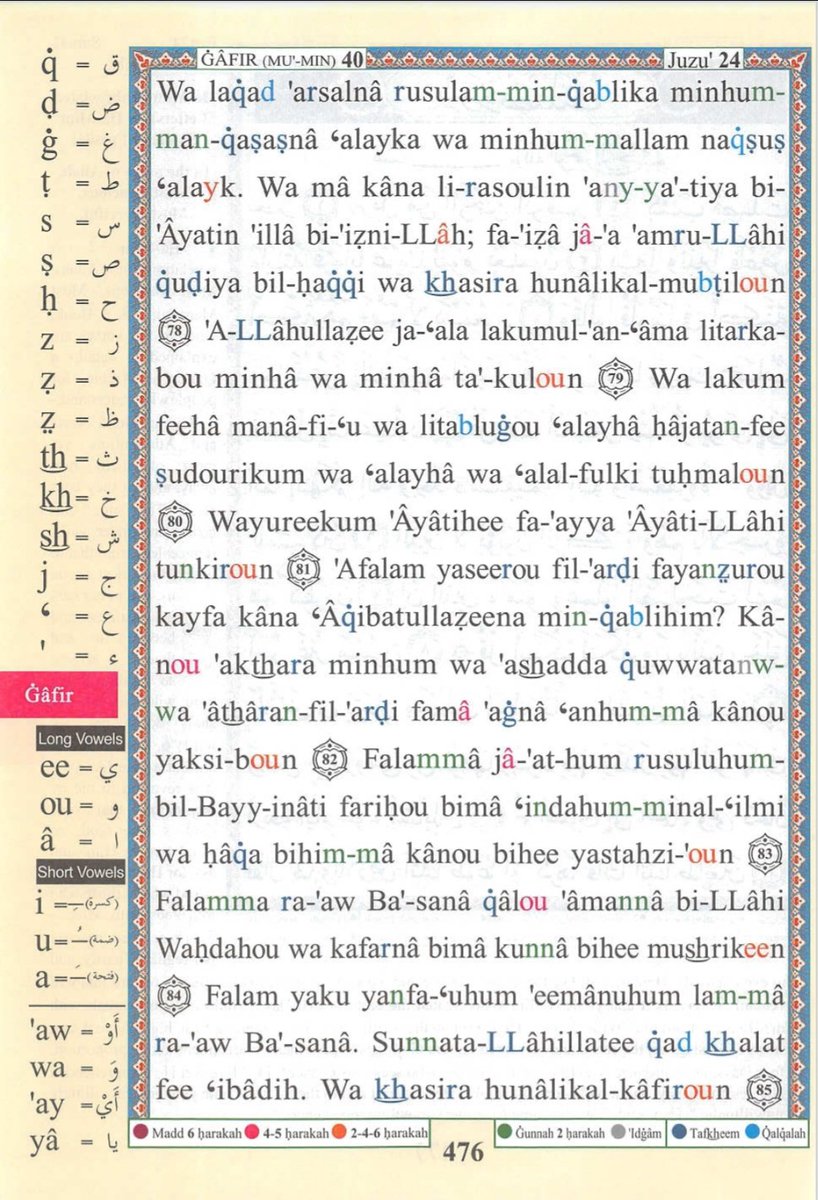
Monday 16/11/26, Sūrah Ghāfir (40): 67-85, tafakkur verse 40: 65
Theme: Remember your humble beginning and your final return to Allah
هُوَ ٱلَّذِی خَلَقَكُم مِّن تُرَابࣲ ثُمَّ مِن نُّطۡفَةࣲ ثُمَّ مِنۡ عَلَقَةࣲ ثُمَّ یُخۡرِجُكُمۡ طِفۡلࣰا ثُمَّ لِتَبۡلُغُوۤا۟ أَشُدَّكُمۡ ثُمَّ لِتَكُونُوا۟ شُیُوخࣰاۚ وَمِنكُم مَّن یُتَوَفَّىٰ مِن قَبۡلُۖ وَلِتَبۡلُغُوۤا۟ أَجَلࣰا مُّسَمࣰّى وَلَعَلَّكُمۡ تَعۡقِلُونَ
"It is He who created you from dust, then from a sperm-drop, then from a clinging clot; then He brings you out as a child; then [He develops you] that you reach your [time of] maturity, then [further] that you become elders. And among you is he who is taken in death before [that], so that you reach a specified term; and perhaps you will use reason."
LESSONS:
1. Remember your origin, and humility follows: Allah begins with *turāb*, dust: the same ground we walk on and will return to. Whoever remembers that he was once dust has no room for arrogance towards Allah or towards people. Pride forgets its beginning, while piety never does.
2. Every stage is His work, not ours:
Nuṭfah, then ʿalaqah, then ṭifl: at none of these stages did we contribute anything, and none of them did we even witness. We were carried from stage to stage by a Will that was not ours. The heart that grasps this learns *tawakkul*, because the One who fashioned us when we were helpless does not abandon us now that we are able.
3. Strength is a trust, not a possession:
Li-tablughū ashuddakum, "that you may reach your full strength." Our youth and vigour are a station on the journey, not its destination. The Prophet ﷺ said that on the Day of Judgement a person will be asked about his youth and how he spent it (Tirmidhī 2417). Strength used in obedience becomes provision; strength wasted becomes a regret.
4. Not everyone reaches old age:
Wa minkum man yutawaffā min qabl, "and among you is he who is taken before." The verse breaks its own sequence to remind us that death does not wait for its turn. The aware heart does not postpone repentance until old age, because old age was never promised. Ibn ʿUmar's counsel applies: "When evening comes, do not wait for the morning" (Bukhārī 6416).
5. A fixed term invites reflection:
Ajalan musammā, an appointed term, then laʿallakum taʿqilūn, "so that you may reason." Allah does not end the verse with fear but with intellect. Life has a beginning, a course and a known end, and the intelligent person is the one who prepares for that end. The Prophet ﷺ called the wise person the one who holds himself to account and works for what comes after death (Tirmidhī 2459).
May Allah make our final stage our best and our last deed our finest. Àmín.