Bridging the gap between scholars, practitioners, and policymakers to support the community of irregular warfare professionals. @ESoConflict | @WarInstitute
New in IWI: Winning the Systems War: Why the Army Should Reorganize Itself for Modern Combat
In this article, Maj. Ryan Walters argues that the U.S. Army remains organized around traditional warfighting functions while its adversaries are fighting as integrated systems. He proposes creating an Information Warfighting System that unifies intelligence, cyber, information operations, and communications under a single structure to improve decision-making and resilience in future conflicts. A thought-provoking look at how military organizations must adapt for the next generation of warfare.
Read more here: https://t.co/NsHj4PLtPJ
#NationalSecurity #InformationWarfare #USArmy #DefenseStrategy #IndoPacific #MilitaryInnovation #StrategicCompetition #IWI
What is the future of U.S. Army Special Forces?
In a new IWI article, Maurice “Duc” DuClos argues that the answer is not consolidation, but decentralization.
Responding to recent debates about the future of Special Forces, DuClos makes the case for a return to persistent presence: small teams and embedded advisors who build long-term partner networks in key regions. In his view, Special Forces’ enduring value lies not in becoming a more technically lethal strike force, but in cultivating the human relationships and access that cannot be surged once a crisis begins.
Read “Operationally Detached: Why Decentralization, Not Consolidation, Is the Future of U.S. Army Special Forces” here: https://t.co/5Za5lFX2gD
#IrregularWarfare #SpecialForces #UnconventionalWarfare #NationalSecurity #Defense #SecurityStudies
A New Vision for Special Forces
In Part II of his two-part series, Ned Marsh argues that U.S. Army Special Forces must undergo a fundamental transformation to remain relevant in today’s operating environment.
From drone-saturated battlefields to contested urban spaces and pervasive surveillance, Marsh contends that the current Special Forces model is no longer aligned with the demands of modern irregular warfare. His essay calls for a smaller, more adaptive, and more technically capable force built for denied environments and strategic disruption.
Read the full article here: https://t.co/uStzFG3ZkR
#IrregularWarfare #SpecialForces #NationalSecurity #MilitaryInnovation #Defense #SOF
How can drones reshape deterrence in the Indo-Pacific?
In Hellscape Taiwan: Drones, Deterrence, and the Future of Asymmetric Defense, the Irregular Warfare Podcast examines how Taiwan could strengthen its defense by using drones, autonomous systems, and mobile capabilities to impose costs on a potential invasion force.
Watch the full playlist here: https://t.co/b8FlRPoYpI
#IrregularWarfare #Drones #Deterrence #Taiwan #IndoPacific #NationalSecurity #DefenseInnovation
What happens when the force built for unconventional warfare can no longer survive in the environments it was designed to penetrate?
In a new two-part series for the Irregular Warfare Initiative, retired Special Forces Colonel Ned Marsh argues that U.S. Army Special Forces have failed to adapt to the realities of modern warfare. From pervasive surveillance and biometric tracking to multidomain operations and digitally contested environments, Marsh contends that the traditional Green Beret model is no longer suited for contemporary conflict.
The article examines how decades of counterterrorism deployments, institutional inertia, and an emphasis on persistent global presence left Special Forces optimized for missions the joint force increasingly does not prioritize. Marsh calls for a fundamental redesign of Army Special Operations rather than incremental reform.
Read more here: https://t.co/Yc5S9pqEY7
#IrregularWarfare #SpecialForces #NationalSecurity #MilitaryStrategy #GreatPowerCompetition #SOF
How do state and local decisions shape strategic competition?
In a new article for the Irregular Warfare Initiative, Connor T. Christensen examines how Wyoming’s transition from coal to data centers and advanced nuclear energy reveals the growing role of subnational governance in irregular warfare and gray-zone competition.
From power grids supporting AI and military-adjacent infrastructure to advanced reactor development and nuclear fuel supply chains, the article argues that county commissions, utility boards, and state energy offices increasingly influence national resilience and strategic advantage.
Read: “From Coal to Code to Reactors: How Wyoming’s State and Local Decisions Shape Irregular Warfare”
#IrregularWarfare #NationalSecurity #EnergySecurity #StrategicCompetition #NuclearEnergy #GrayZone #Infrastructure #EnergyPolicy
Mercenaries, Private Security, and the Civilian Cost of Outsourced Coercion
In a new IWI article, Oluwaseyi Mike Bamigboye examines how mercenaries and private military and security companies have become central tools of irregular warfare, allowing states to project force, manage escalation, and preserve deniability below the threshold of open war.
The article argues that existing legal frameworks remain too focused on actor labels, such as “mercenary,” “contractor,” or “PMSC,” while failing to regulate the functions these actors perform and the coercive effects they generate. Bamigboye highlights three key blind spots: legal status, accountability, and escalation management.
Read the full article here: https://t.co/XNI0kBcxpP
#IrregularWarfare #NationalSecurity #PrivateSecurity #PMSCs #InternationalLaw #StrategicCompetition
How much influence can a small number of foreign fighters have on an insurgency?
In Episode 154 of the Irregular Warfare Podcast, “The Counterinsurgency Dilemma: Foreign Fighter Influence on Insurgencies in Afghanistan and Somalia,” Benjamin Jebb and Alexandra Chinchilla discuss Tricia Bacon’s research on how foreign fighters can exert disproportionate influence within insurgent movements.
While foreign fighters may provide resources, experience, and ideological commitment, local insurgents remain the decisive actors because they control strategy, legitimacy, and relationships with the population.
Watch the full episode here: https://t.co/z2WW5CKQIq
#IrregularWarfare #Counterinsurgency #NationalSecurity #SecurityStudies
How much influence can a small number of foreign fighters have on an insurgency?
In Episode 154 of the Irregular Warfare Podcast, “The Counterinsurgency Dilemma: Foreign Fighter Influence on Insurgencies in Afghanistan and Somalia,” Benjamin Jebb and Alexandra Chinchilla discuss Tricia Bacon’s research on how foreign fighters can exert disproportionate influence within insurgent movements.
While foreign fighters may provide resources, experience, and ideological commitment, local insurgents remain the decisive actors because they control strategy, legitimacy, and relationships with the population.
Watch the full episode here: https://t.co/z2WW5CKiSS
#IrregularWarfare #Counterinsurgency #NationalSecurity #SecurityStudies
New IWI article: Neutrality as Vulnerability: Russia’s Hybrid Playbook in Moldova
In this article, Thomas Austin Thompson examines how Russia’s sustained hybrid pressure—from disinformation campaigns to electoral interference and its continued military presence in Transnistria—undermines the credibility of Moldova’s neutral status.
Read the full article here: https://t.co/htLbl3pEHJ
#NationalSecurity #HybridWarfare #Moldova #Russia #StrategicCompetition #ForeignPolicy #SecurityStudies #Geopolitics #Disinformation #EasternEurope
IWI Article: Credibility vs. Speed: Israel and Hamas in the Gaza Information War By Ashraf Aldmour
In modern conflict, the decisive contest is often not only fought on the battlefield, but in the information environment. Perception, legitimacy, and narrative shape what governments can do and what publics are willing to tolerate.
This article explores how Israel and Hamas have approached that contest differently. Israel has emphasized credibility through verification, institutional messaging, and evidence-based communication. Hamas, by contrast, has often prioritized speed and emotional resonance, leveraging the dynamics of digital platforms to capture attention early.
The result is not a clear winner, but a shifting balance. Early narratives tend to dominate. Credibility builds long-term trust. And in a saturated information space, endurance and audience targeting become just as important as accuracy.
A sharp and timely analysis of how information, not just force, shapes outcomes in high-visibility conflicts.
Read more: https://t.co/v5qIYvjwSi
#IrregularWarfare #InformationOperations #StrategicCommunications #NationalSecurity #Gaza #MiddleEast #IO
New IWI: What does the future of global conflict look like?
In “Q&A with Robert D. Kaplan,” conducted by Christopher Booth, the conversation with Robert D. Kaplan spans from Iran and the Strait of Hormuz to the long-term trajectory of great power competition and the shifting geography of global influence.
Kaplan argues that we are moving toward a more compressed and volatile world, where crises in seemingly peripheral regions can rapidly escalate into global consequences. From the growing strategic importance of the Indian Ocean to the risks of miscalculation over Taiwan, the interview highlights how geography, demography, and political decision-making continue to shape international security.
The discussion also underscores a key takeaway: future conflict will not be defined by a single region or domain. Instead, it will emerge from interconnected pressures across economic, military, and political spheres in an increasingly multipolar system.
As Kaplan puts it, every place is now potentially strategic.
Read more: https://t.co/riOs51Lvhn
#NationalSecurity #Geopolitics #ForeignPolicy #GreatPowerCompetition #IrregularWarfare
Episode 153 of the Irregular Warfare Podcast is now live: “Where the Lion Can’t Reach: Unconventional Warfare in Major War.”
In this episode, hosts Kyle Atwell and Alexandra Chinchilla lead a timely discussion on how unconventional warfare (UW) operates alongside conventional military campaigns in large-scale conflict. Drawing on the 2003 invasion of Iraq, the conversation highlights how U.S. Special Forces, working by, with, and through Kurdish Peshmerga forces, helped create a northern front, generate intelligence, and shape the broader operational environment.
Featuring insights from Ken Tovo and Mark Grdovic, the episode explores both the strategic value and inherent limitations of UW. From partner alignment and political constraints to feasibility and long-term relationship building, the discussion underscores that UW is not a quick fix but a capability that requires sustained investment and understanding.
Produced by the Irregular Warfare Initiative, this episode contributes to ongoing efforts to bridge the gap between scholars and practitioners in the irregular warfare community.
As great power competition sharpens and access becomes more contested, understanding when and how UW can support or substitute conventional operations is more relevant than ever.
Listen now here: https://t.co/lBlSUspQnO
#IrregularWarfare #UnconventionalWarfare #SpecialOperations #NationalSecurity #MilitaryStrategy #GreatPowerCompetition
Geoeconomics of Irregular Warfare: Iran and the Global Ripple Effects — Part VII
As the Iran conflict enters its eighth week, the Irregular Warfare Initiative continues its Geoeconomics of Irregular Warfare series with a timely discussion on escalation across economic, legal, and cognitive domains.
This session features insights from Gianni Koskinas, Hamlet Yousef, and Matt Flug, moderated by Jackie Giunta.
The conversation examines how maritime enforcement, asset seizures, and pressure on energy and financial systems are generating cascading regional and global effects. With a focus on the Strait of Hormuz and Iran’s asymmetric use of infrastructure and proxy networks, the panel highlights how disruption and uncertainty are being leveraged to impose strategic costs.
Hear the full conversation here: https://t.co/ZieyHlDLT6
#IrregularWarfare #Geoeconomics #Iran #NationalSecurity #EconomicStatecraft #Strategy #IWI
New IWI Podcast: What the Hell Is Irregular Warfare Anyway?
In Episode 152 of the Irregular Warfare Podcast, Alisa Laufer leads a conversation on one of the field’s most persistent challenges: defining irregular warfare.
Featuring Chris Tripodi, Eric Robinson, and Mike Nagata, this episode explores why the concept has resisted a stable definition across decades of doctrine and practice and what that ambiguity has cost strategically and operationally.
The discussion unpacks three competing frameworks—the maximal, traditional, and competition-disruption models—and asks a fundamental question: what is irregular warfare at its core, and why does getting it right matter for both doctrine and practice?
This episode also engages with Fragmented Frontiers: Three Approaches to Understanding Irregular Warfare, offering a deeper look into how the community continues to grapple with this evolving concept.
🎧 Listen now here: https://t.co/WyMVz5XriR
#IrregularWarfare #NationalSecurity #Strategy #MilitaryThought #SecurityStudies #Podcast
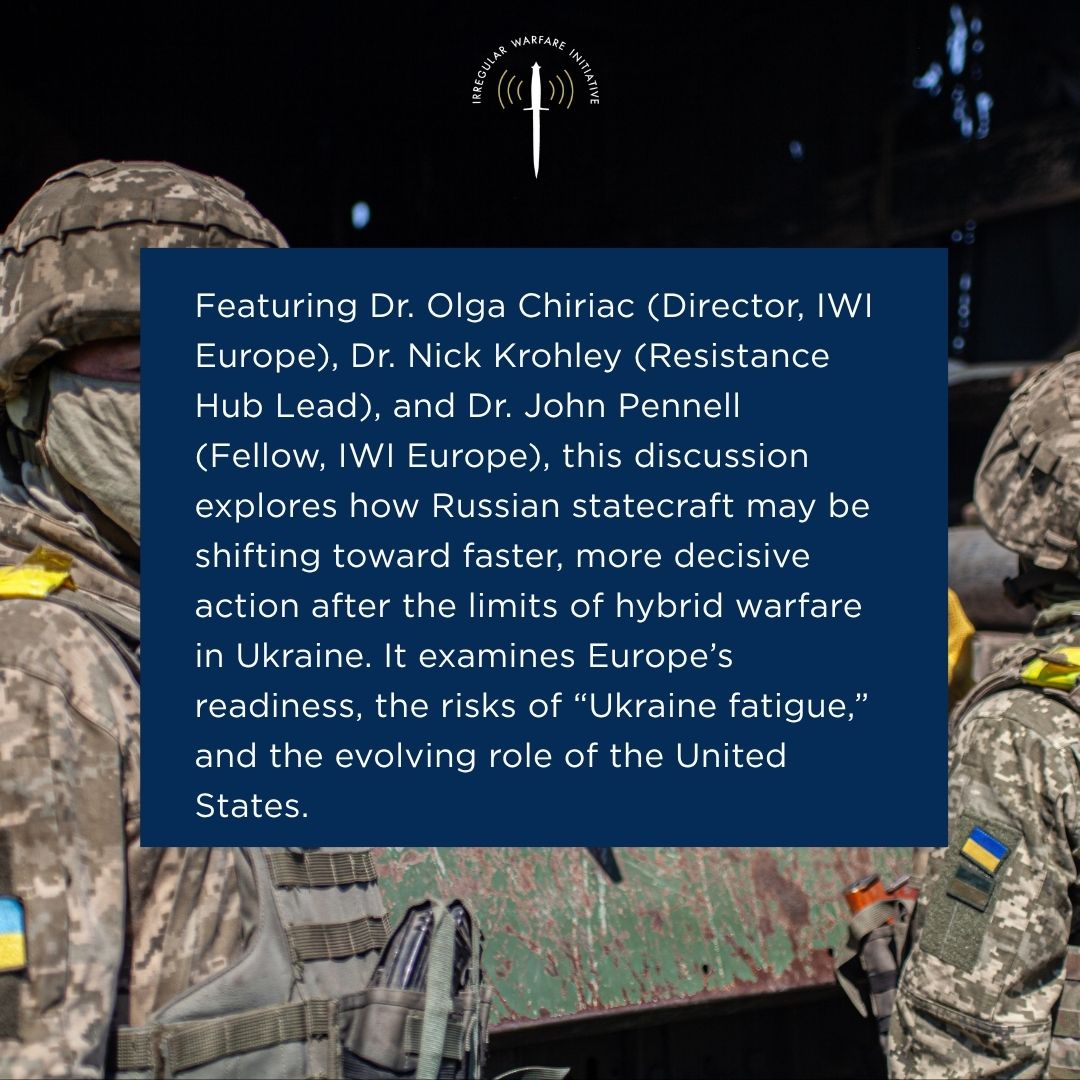
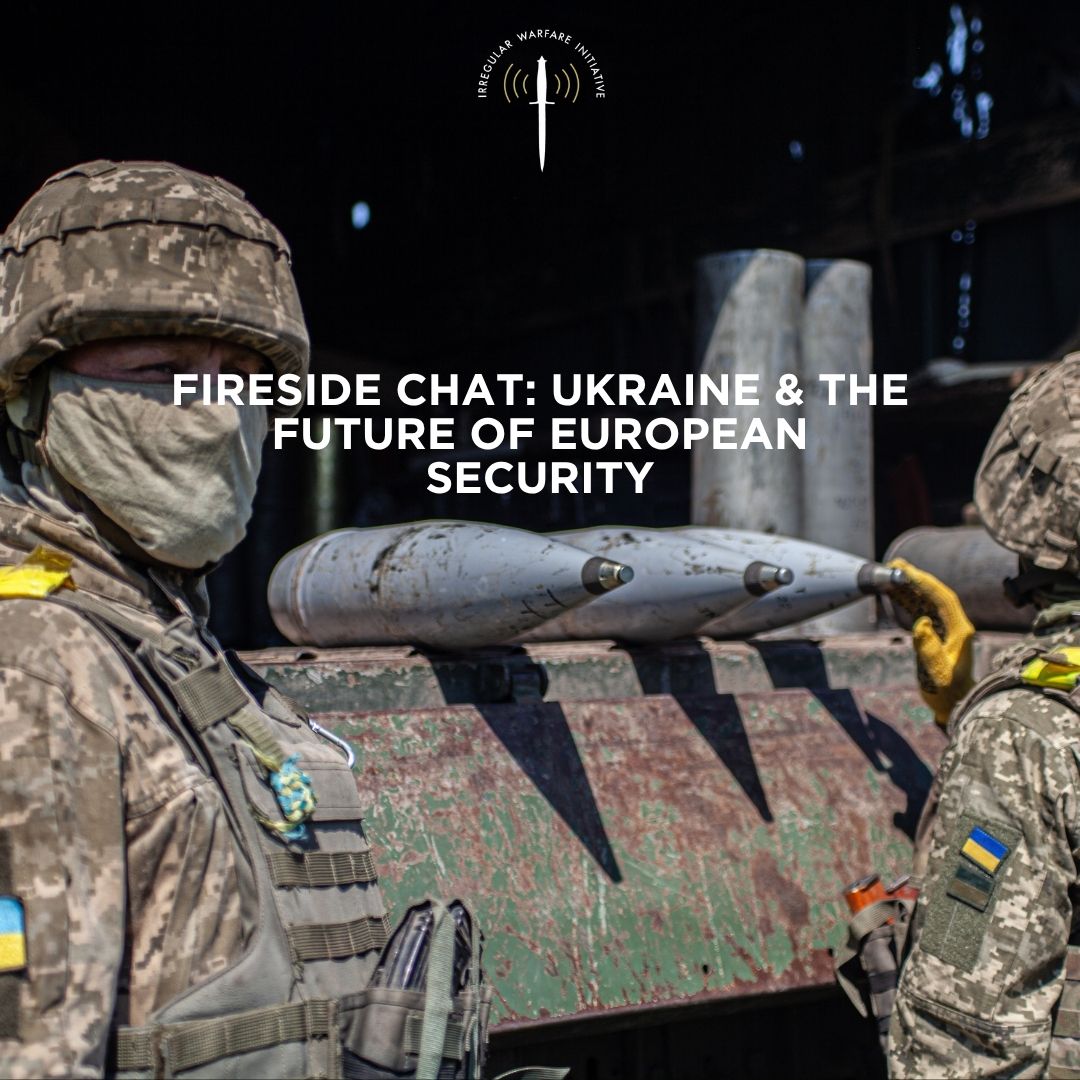
Fireside Chat: Ukraine & the Future of European Security
How is Russia adapting its strategy after more than two decades of engagement with Ukraine—and what does that mean for Europe’s security landscape?
This timely discussion brings together Dr. Olga Chiriac, Dr. Nick Krohley, and Dr. John Pennell to examine how the lessons learned from the war in Ukraine may reshape Russian statecraft and challenge prevailing assumptions about hybrid warfare.
The conversation will explore whether Russia may shift toward more rapid and decisive approaches, the realities of European preparedness, and the implications of growing “Ukraine fatigue” across Europe and the United States.
As the strategic environment evolves, this is a critical opportunity to reassess deterrence, resilience, and the future of transatlantic security cooperation.
Hosted by the Irregular Warfare Initiative Europe Program.
Hear the full conversation here: https://t.co/C4mhdIOXeh
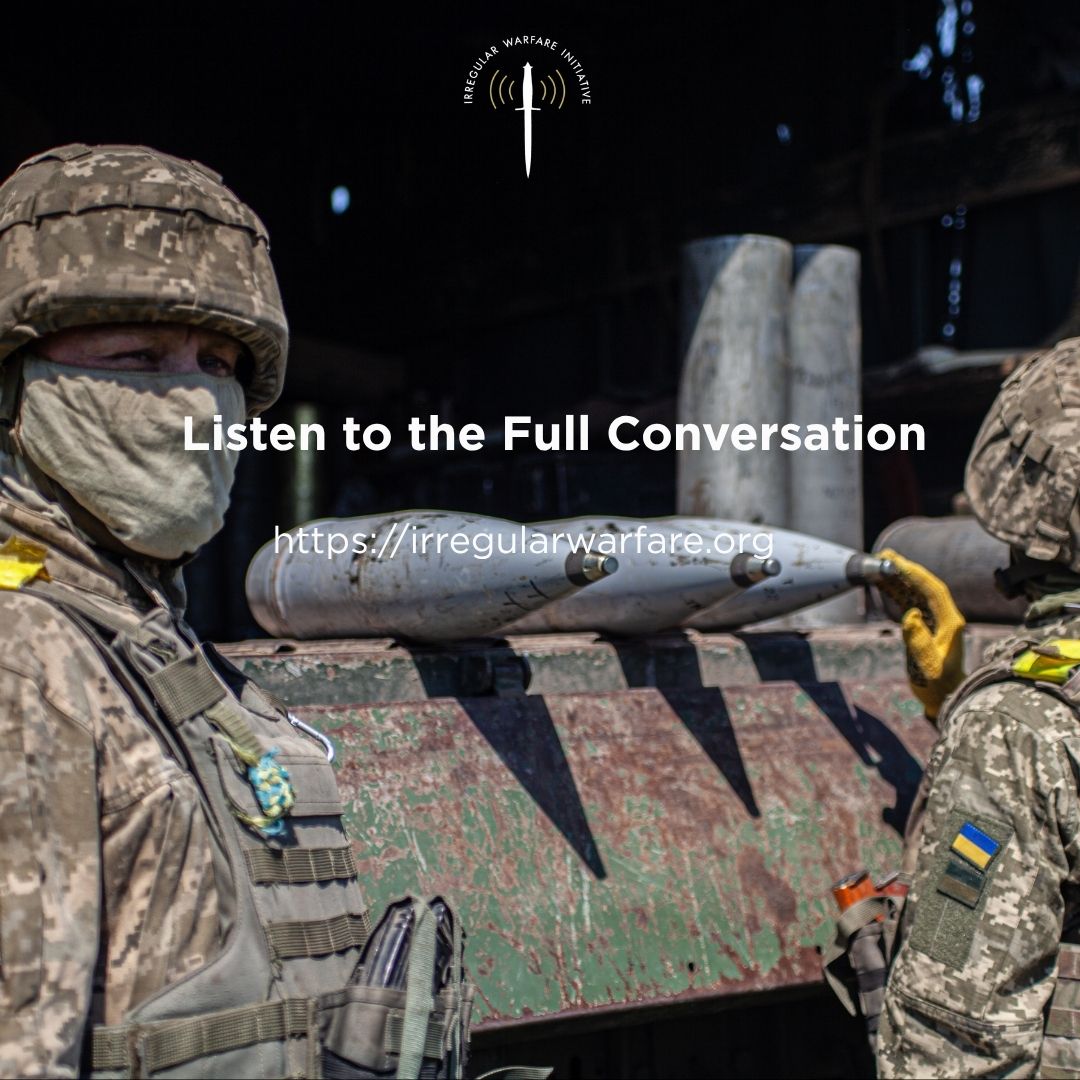
Photos taken at a Ukrainian artillery position firing on Russian positions on the Kherson front in the summer of 2022.
#EuropeanSecurity #Ukraine #Russia #IrregularWarfare #NATO #USForeignPolicy #SecurityStudies
In “Conflict Has Memory: Why Local Wars Follow Distinct Trajectories,” Steven M. Radil and Olivier J. Walther argue that conflict is not a series of isolated incidents, but a path-dependent process shaped by local dynamics over time.
Drawing on data from more than 3,700 conflict-affected localities, they show that most conflicts are short-lived, some become recurrent, and a critical few become entrenched. These distinctions matter because each trajectory requires a fundamentally different policy response.
Too often, policymakers misread the type of conflict they are facing, leading to short-term fixes that fail to address deeper dynamics. The result is predictable: temporary gains followed by relapse.
Conflict has memory. Strategy should reflect it.
Read more: https://t.co/f77Lp0z9eC
#IrregularWarfare #ConflictAnalysis #SecurityStudies #Geopolitics
In “Economic Warfare Reimagined: Insurance as a Tool of U.S. Strategic Influence,” Tom Johansmeyer and Matthew Flug propose a different approach: using insurance as an instrument of economic warfare.
Their concept, “insurance as economic security” (IAES), reframes how the U.S. can deliver support. Instead of reactive aid, parametric insurance enables fast, predictable payouts during crises, offering a scalable and cost-effective way to build influence and resilience.
The strategic implication is clear. Economic tools are not just about sanctions or aid. They can shape alignment, deny adversaries space, and rebuild U.S. credibility in contested regions.
Innovation in irregular warfare will not only come from the battlefield. It will come from how we use markets.
Read more: https://t.co/8G7tLnRQjl
#IrregularWarfare #EconomicStatecraft #Geoeconomics #GlobalSouth #SecurityStudies
New in IWI: “The Limits of Leadership Decapitation: Strategic Consequences of Overreliance on Military Force for Political Transformation” by Ron MacCammon.
For more than two decades, U.S. national security policy has often relied on leadership decapitation as a pathway to political change. This piece challenges that assumption, arguing that removing individual leaders rarely dismantles the underlying networks of power that sustain regimes.
Drawing on cases from Iraq and Afghanistan to Venezuela, Iran, and Cuba, the article highlights a consistent pattern: tactical success does not necessarily translate into strategic transformation. Instead, regimes frequently adapt, reconstitute authority, and preserve coercive structures.
Read more: https://t.co/jO5ZQcE53o
----------
Nuevo en Irregular Warfare Initiative: Los límites de la decapitación de líderes: consecuencias estratégicas del exceso de confianza en la fuerza militar para la transformación política
Durante décadas, la política de EE.UU. ha asumido que remover líderes puede generar transformación política. Este artículo explica por qué esa lógica suele fallar.
Desde Irak y Afganistán hasta Venezuela, Irán y Cuba, el patrón es claro: eliminar a un líder no desmantela las redes que sostienen el poder. Los regímenes se adaptan, se reorganizan y persisten.
El éxito táctico no es igual al cambio estratégico.
Lee la versión en español aquí: https://t.co/x35oJeURqk
#IrregularWarfare #NationalSecurity #Strategy #Geoeconomics #SecurityStudies
New in IWI: Capital Controls: The Evolution of Outbound Investment Security Strategy
In this article, Brad Dragoon explores how outbound investment controls are evolving into a central tool of U.S. economic statecraft. From the new Outbound Investment Security Program (OISP) to the proposed COINS Act, policymakers are rethinking how capital, technology, and national security intersect in an era of strategic competition.
Historically, these tools have had mixed results, sometimes constraining adversaries, but also reshaping global markets in unintended ways. Today’s challenge is finding the balance between protecting sensitive technologies and sustaining innovation and global economic leadership.
As the U.S. navigates competition with countries like China, outbound investment restrictions may define the next phase of geoeconomic strategy.
Read more here: https://t.co/I8F68WOksj
#NationalSecurity #Geoeconomics #EconomicStatecraft #China #ForeignPolicy #Innovation #SecurityStudies #IWI