Let's set the record straight!!
Read our joined statement with @eshgsociety condemning attempts to resurrect discredited race science to promote the pseudoscience of eugenics, in response to recent investigation shared by the @guardian and @Channel4
https://t.co/ijKSaTFK5P
We're looking for a Technical Programme Manager to lead the Next Generation Sequencing section of our @CUH_NHS laboratory.
Permanent role, full- or part-time with flexible working possible. NHS Band 7.
Find out more: https://t.co/hGW8Gp67I7
Closes 4 November 2024 at 23:59.
Important changes in the Rare and Inherited Disease Genomic Test Directory concerning testing criteria for patients with developmental disorders.
ℹ️https://t.co/QHClupgVEQ
Register for our Paediatric Genomics Forum, 26 Sep where these will be discussed: https://t.co/1VpCjho1vZ
Deux-trois choses que @CastetsLucie ne sait pas sur les Français de l'étranger et l'expatriation : un thread 🧵
1️⃣ Entre 2.5 et 3 millions de Français résident hors de 🇫🇷. Parmi eux, nombreux sont nés à l'étranger. D'autres sont bi-nationaux. Certains ne parlent pas le Français.
Check out vacancies for scientific roles at the Cambridge University Hospital Genomics Laboratory. Come work in an internationally reputed laboratory delivering the Genomics Medicine Service @acgs_news @East_Genomics @CUH_NHS https://t.co/9HBkbI7mqJ
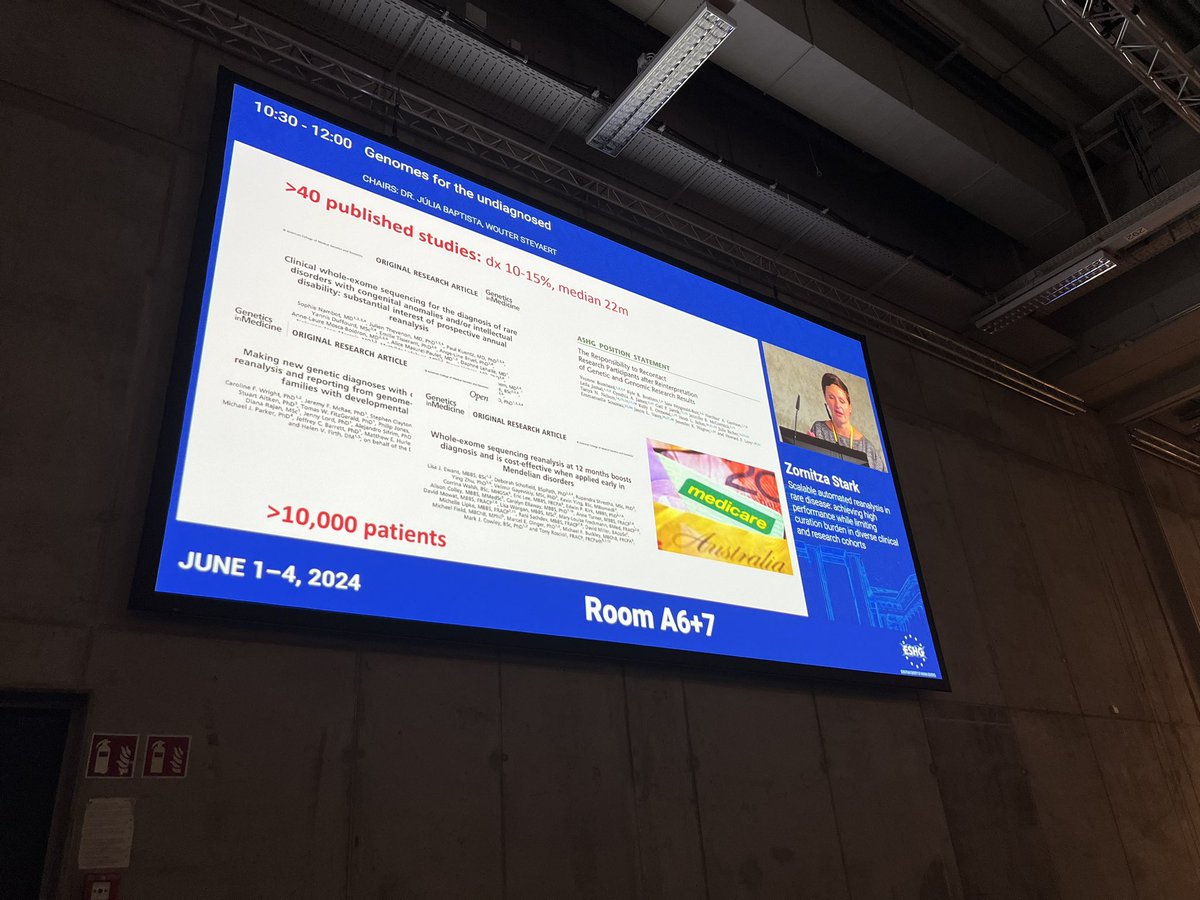
Zornitza Stark (@ZornitzaS) presenting on a collaboration with my team to develop an automated pipeline to regularly reanalyse genomic data from undiagnosed patients. We know reanalysis is highly effective, but (shockingly) rarely done in clinical settings. #eshg2024
We're delighted to announce that registration for the ACGS Summer meeting 2024, taking place at the ICC Birmingham, on the 10th-11th June, is live.
You can register, and view full details of the meeting, by following the link below.
https://t.co/bFkJQAZEGn
1/ What do you think about sequencing the entire genetic code (#genome) of babies at birth?
👶 🧬 🔍
A thread based on our @bmj_latest paper
https://t.co/eaoaFEMf7B
Would you believe me if I told you that a single variant in a non-coding RNA explains ~0.5% of all undiagnosed individuals with neurodevelopmental disorders (NDD) in @GenomicsEngland ???
I didn’t initially either, but here is the story of RNU4-2 🧵1/9
We are hiring Principal Clinical Scientists to join the senior team of the Rare Disease service at the Cambridge Genomics laboratory.
@East_Genomics @acgs_news @CUH_NHS https://t.co/PK6B5F3F1w
The UK Newborn Genomes Programme plans to sequence the genomes of over 100 000 newborns to look for conditions.
Yet predicting future health from the genetic code is difficult and could leave more families living with anxiety about their baby’s future
https://t.co/nwkEt0plHJ
A rare opportunity to contribute to rare disease diagnostic and research working with the Decipher team on the Welcome Genome Campus
https://t.co/ixYdDBemQQ
Want to be a pivotal member of our #raredisease team?
Our lead #genomics lab at @CUH_NHS is recruiting Scientific Support Officers to support Duty Scientists and #prenatal / #wholegenomesequencing service.
Find out more and apply by 3 Jan: https://t.co/sBqGkJafKY
🎅🎄
When I thought I was done with the GWAS stories of 2023 and I should wrap up, @StephenORahilly dropped yet another great paper from his team. How can I resist?
It's storytelling time.
In this hot-off-the-press Nature paper, @DrFejzo et al. uncover an absolutely fascinating biology underlying the link between GDF15 (a hormone that is elevated during pregnancy) and hyperemesis gravidarum (HG) (a pregnancy-associated medical condition characterized by severe nausea and vomiting).
Discovery of GDF15
An in vitro experiment in 1997 to study proteins associated with macrophage activation revealed a novel protein that structurally resembled the members of a cytokine family called TGF-β (https://t.co/DSkDYmkhZt). The scientists called it macrophage inhibitory cytokine 1 (MIC1) and cloned the gene encoding the protein.
In the next few years, the same team, who continued to study their newly found protein, stumbled upon the fact that the gene encoding MIC1 is highly expressed in placental tissue. This led to the discovery that MIC1 is elevated in pregnant women and its level rises as the gestation progresses, and this might be an evolutionarily evolved response by the growing fetus to fight the maternally derived proinflammatory cytokines (https://t.co/K8XErklHGo).
Fixating on obesity and overlooking pregnancy
See, there are two important halves to this initial discovery: the MIC1 protein (which'll be later called GDF15) and its link with pregnancy.
But for the next two decades, the scientific field's attention was mostly on the first half, that is, the GDF15 protein itself, which was studied extensively as a biomarker for various diseases and also as a drug target for obesity. But, color me surprised, no one seemed to have bothered much about the second half--the link between GDF15 and pregnancy.
In a few years after its discovery, it became apparent that GDF15 is secreted from many tissues, especially, cancer tissues. In 2007, Samuel N Breit and colleagues (some of the same Australian scientists who cloned GDF15) established a causal link between elevated GDF15 levels and cancer-associated anorexia, experimentally proving that the high GDF15 levels made the cancer patients highly aversive to food resulting in pathologic weight loss (https://t.co/zMdkiZeYBL). The finding intensified the GDF15 research as many believed that understanding the GDF15's mechanism of action is the key to designing the next breakthrough medicine for obesity.
The discovery of GDF15 receptor
The obesity field's obsession to GDF15 for the next 10 years would result in a major breakthrough in 2017--the discovery of GFRAL, the receptor of GDF15, by not one or two, but four (!) industrial research teams (NGM Biopharmaceuticals, Novo Nordisk, Lilly&Co and Janssen), published side by side in Nature and Nature Medicine (https://t.co/o254AplTic).
One of the major revelations in the GFRAL discovery was the impressive specificity of its expression to regions in the brain stem that hold the chemoreceptor trigger zone for vomiting and not behind the blood-brain barrier (https://t.co/nGsCm1ZKpZ). One among the privileged few who got an early peek into the GFRAL discovery before the official publication was Stephen O'Rahilly, a renowned obesity researcher.
The moment the GFRAL's brain location was revealed, Stephen remembered the 20 yr old report on GDF15's link with pregnancy and predicted GDF15 to play a major role in HG and started working towards proving his intuition.
GWAS meets biology
While on one part of the world, endocrinologists and molecular biologists are putting together the GDF15 puzzle one by one, on the other side, a geneticist Marlena Fejzo was on the search for the cause of HG that she herself suffered from. I recommend reading this NYT article to learn about the inspiring story of Marlena (https://t.co/o8WcjyfJzL). She sought GWAS to find answers and it didn't fail!
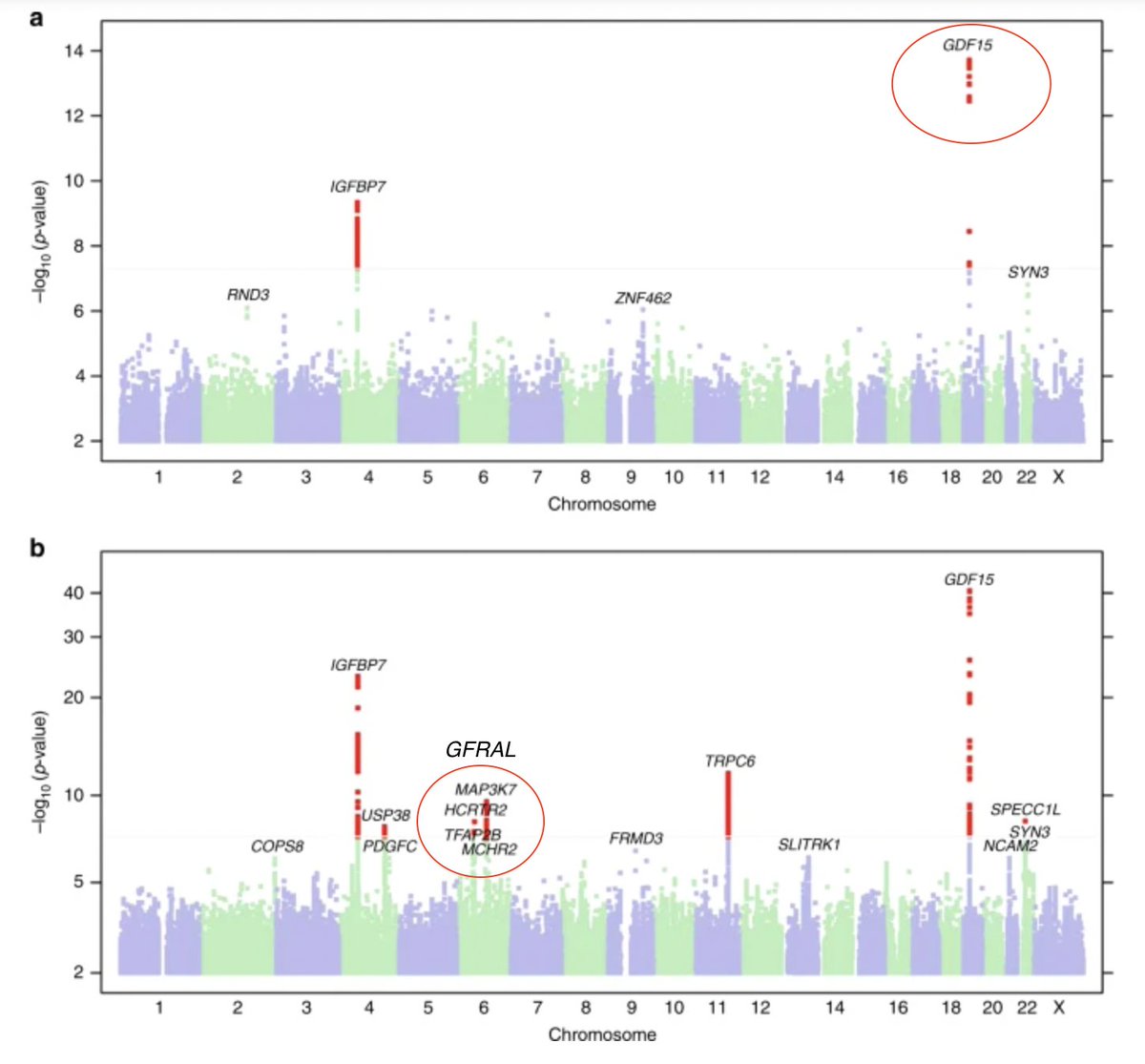
Marlena collaborated with 23andMe and did the first GWAS of HG in 2018 (self-reported severe nause and vomiting during pregnancy) in mere 1300 cases and 15k controls (https://t.co/Q5fl69331w). Voila! The strongest hit is none other than GDF15! And not just that, the authors also found a signal near GFRAL associated with symptom severity. How amazing is that?
The publication of the GWAS findings connected Marlena with Stephen resulting in them working together on the GDF15 puzzle.
Making sense of the human genetics findings
So far all the research findings about the GDF15 and hyperemesis gravidarum seem to fit well together, except for one tiny bit: the effect direction of human genetic associations conflicted with the known GDF15 biology.
Clinical observations and animal studies all pointed that increased GDF15 is associated with higher risk of HG. But human genetics said the opposite: those who had common genetic variants that increased the GDF15 levels in blood appeared to be at lower risk of HG and those who had a rare genetic variant that severely reduced GDF15 level in the blood were found to be at high risk of HG (https://t.co/DXniGRjGmn). How is that possible?
It turned out GDF15 hormonal system are susceptible to desensitization like many other hormonal systems. So, how well a woman tolerates the rise in GDF15 levels during pregnancy depends on her basal GDF15 levels during non-pregnant state. Someone who's genetically predisposed to have high basal GDF15 levels appear to tolerate pregnancy associated GDF15 elevation better and vice versa.
The authors experimentally proved the desensitization hypothesis using mice experiments where they used GDF15's well established effect of food intake as a readout. Acute bolus injection of GDF15 did not reduce food intake or affect body weight in mice sensitized to GDF15 (using low-dose injection) but did so in mice not exposed to GDF15 prior.
To demonstrate the desensitization in humans, you'll need a system where basal GDF15 levels are highly elevated. Unfortunately, there is no gain of function variant that raises GDF15 levels to extreme levels. But, it turned out, individuals with thalassemia have extremely high levels of GDF15.
So, the authors used the rare Mendelian disease as a system to validate the desensitization hypothesis in humans. A survey of pregnant women with and without thalassemia showed that <5% of those with thalassemia experienced any nausea or vomiting during pregnancy, which is impressively lower than 60% frequency observed in those with thalassemia.
Putting all together, the authors have uncovered the beautiful mechanics of GDF15 hormonal axis in pregnancy. The findings suggest GDF15 and its receptor GFRAL, both are promising drug targets to treat this devastating condition (hyperemesis gravidarum) that many pregnant women all over the world suffer from.
It's really amazing to learn how the whole GDF15 story has evolved and how human genetics again and again has played a crucial role in understanding of this complex biology.
Say hello🖐to Gavin Fuller, principal clinical scientist in our rare disease team.
For Gavin, job satisfaction is finding a diagnosis for a family's unexplained symptoms: 'The most appealing part of my job is finding an answer'.
For more 👉https://t.co/fuN1qTvko7
#Genomics