‼️WOMAN FINDS OUT HER GRANDMOTHER WAS IN THE KLAN
“THAT IS NOT A BANANA COSTUME” grandma 🍌
QUESTION 🙋🏽♂️: How many lynchìngs do you think she was apart of? 🤔
The Tragic Story of Saartjie (Sara) Baartman
Sara ‘Saartjie’ Baartman was born in 1789* at the Gamtoos river in what is now known as the Eastern Cape. She belonged to the cattle-herding Gonaquasub group of the Khoikhoi.
Sara grew up on a colonial farm where her her family most probably worked as servants. Her mother died when she was aged two and her father, who was a cattle driver, died when she reached adolescence.
Sara married a Khoikhoi man who was a drummer and they had one child together who died shortly after birth.
Due to colonial expansion, the Dutch came into conflict with the Khoikhoi. As a result people were gradually absorbed into the labour system.
When she was sixteen years old Sara’s fiancé was murdered by Dutch colonists. Soon after, she was sold into slavery to a trader named Pieter Willem Cezar, who took her to Cape Town where she became a domestic servant to his brother.
It was during this time that she was given the name ‘Saartjie’, a Dutch diminutive for Sara.
On 29 October 1810, Sara allegedly ‘signed’ a contract with an English ship surgeon named William Dunlop who was also a friend of Cezar and his brother Hendrik.
Apparently, the terms of her ‘contract’ were that she would travel with Hendrik Cezar and Dunlop to England and Ireland to work as a domestic servant, and be exhibited for entertainment purposes.
Secondly, the Cezar families experienced financial woes and it is suspected that they used Sara to earn money.
Sara Baartman’s large buttocks and unusual colouring made her the object of fascination by the colonial Europeans who presumed that they were racially superior.
Dunlop wanted Sara to come to London and become an oddity for display. She was taken to London where she was displayed in a building in Piccadilly, a street that was full of various oddities like “the ne plus ultra of hideousness” and “the greatest deformity in the world”.
Englishmen and women paid to see Sara’s half naked body displayed in a cage that was about a metre and half high. She became an attraction for people from various parts of Europe.
During her time with Dunlop and Hendrik Cezar, the campaign against slavery in Britain was in full swing and as a result, the treatment of Baartman was called into question. Her “employers” were brought to trial but faced no real consequences, They produced a document that had allegedly been signed by Sara Baartman and her own testimony which claimed that she was not being mistreated. Her ‘contract’ was, however, amended and she became entitled to ‘better conditions’, greater profit share and warm clothes.
After four years in London, in September 1814, she was transported from England to France, and upon arrival Hendrik Cezar sold her to Reaux, a man who showcased animals.
He exhibited her around Paris and reaped financial benefits from the public’s fascination with Sara’s body
Her constant display attracted the attention of George Cuvier, a naturalist. He asked Reaux if he would allow Sara to be studied as a science specimen to which Reaux agreed. As from March 1815 Sara was studied by French anatomists, zoologists and physiologists.
He began exhibiting her in a cage alongside a baby rhinoceros. Her “trainer” would order her to sit or stand in a similar way that circus animals are ordered.
Cuvier concluded that she was a link between animals and humans. Thus, Sara was used to help emphasise the stereotype that Africans were oversexed and a lesser race.
Sara Baartman died in 1816 at the age of 26. It is unknown whether she died from alcoholism, smallpox or pneumonia.
Finally on the sixth of March 2002, Sara Baartman was brought back home to South Africa where she was buried. On 9 August 2002, Women’s Day, a public holiday in South Africa, Sara was buried at Hankey in the Eastern Cape Province.
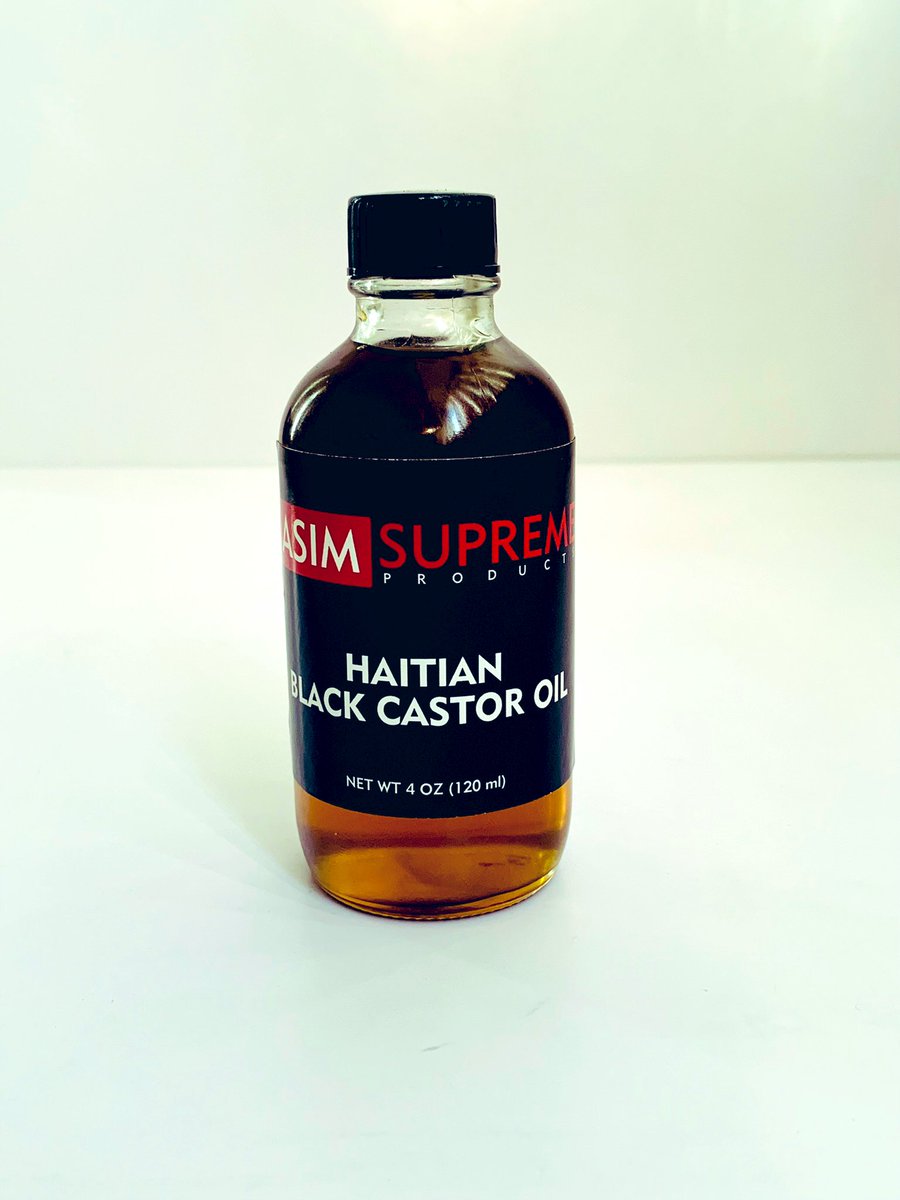
Transform your hair care routine with the magic of Asim Supreme Products Haitian Black Castor Oil (4 oz.) – a powerhouse elixir designed to breathe life into your hair. Dive into the enriching world of this meticulously crafted oil, renowned for its exceptional hair growth and strengthening benefits.
At the core of this transformative elixir lies the purity of Haitian Black Castor Oil. Immerse your strands in a rich blend of essential fatty acids that dive deep into the roots, fortifying each hair follicle and reducing breakage. This isn't just a surface-level fix; it's a commitment to cultivating a strong, resilient mane from within.
The 4 oz. bottle isn't just a beauty product; it's a journey towards lush, voluminous hair. Asim Supreme Products ensures that their castor oil is cold-pressed, preserving its natural potency and allowing it to work its magic on your scalp. Experience the thrill of accelerated hair growth as the oil stimulates blood circulation, encouraging healthier, more robust strands.
But it's not just about quantity – it's about quality too. Revel in the newfound strength and resilience of your hair as this castor oil becomes a cornerstone in your hair care routine. Say goodbye to thinning and hello to a fuller, more vibrant mane.
Asim Supreme Products doesn't compromise on ethics either. This Haitian Black Castor Oil is sourced with care, supporting local communities and embracing sustainability in every step of the production process. Elevate your hair care journey with a touch of nature's potency – Asim Supreme Products Haitian Black Castor Oil is your key to unlocking the beauty of strong, thriving hair.
https://t.co/2EIU8RiXbp
#10YearsOfAsimSupreme
#AsimSupremeInEveryHousehold