new essay: “The Coal-to-Gas Switch Was Neither Accident Nor Design.”
The argument: U.S. power-sector decarbonization was not just a technology story or a fuel-price story. It was also an institutional story about market rules, incentives, and system design. 1/3
@trevor_rose_@EnverusEnergy I got one: as high tier shale resource play in US L48 gets harder to find/acquire, well’s lateral length seems to increases to 4-mile and beyond to avoid rapid production decline. Is there any sweetspot of production efficiency from this practice? Longer the better? Thanks!
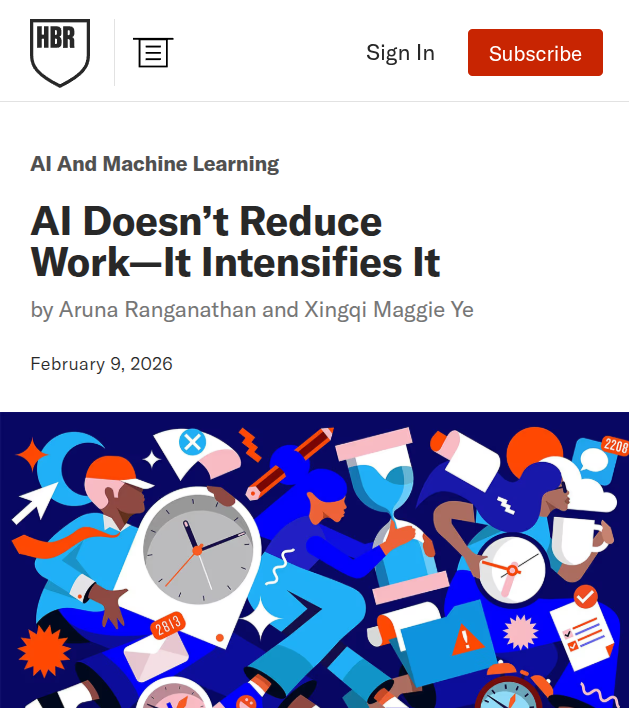
A super interesting new study from Harvard Business Review.
A 8-month field study at a US tech company with about 200 employees found that AI use did not shrink work, it intensified it, and made employees busier.
Task expansion happened because AI filled in gaps in knowledge, so people started doing work that used to belong to other roles or would have been outsourced or deferred.
That shift created extra coordination and review work for specialists, including fixing AI-assisted drafts and coaching colleagues whose work was only partly correct or complete.
Boundaries blurred because starting became as easy as writing a prompt, so work slipped into lunch, meetings, and the minutes right before stepping away.
Multitasking rose because people ran multiple AI threads at once and kept checking outputs, which increased attention switching and mental load.
Over time, this faster rhythm raised expectations for speed through what became visible and normal, even without explicit pressure from managers.
In the era of affordability politics, making clean energy cheaper may be a more viable emissions mitigation strategy than making dirty energy more expensive. My latest over at The Climate Brink digs into the debate: https://t.co/9qDDjDHnOW