Jordan's King Abdullah II decried Israeli settler incursions in the occupied West Bank as a strategy of ‘forced displacement’ that should be considered a war crime.
@WaruiNjiru@citizentvkenya There's nothing that can escape Parliament’s scrutiny. Auditor General is the primary audit office to audit financial records of all public funds created by Parliament. Confirms whether public money is spent legally, efficiently, and in an effective way to ensure accountability.
By 1992, the civil war in Rwanda had exhausted both sides. Kagame declared a ceasefire and agreed to peace talks in Arusha, Tanzania. For thirteen months, bitter enemies sat across negotiating tables, arguing over power, representation, refugees and the future of a country that had spent years tearing itself https://t.co/nSaSwgU7JZ August 1993, they finally signed the Arusha Accords..
But peace had acquired enemies of its own.
Hutu extremists had been excluded from the negotiations, and the CDR(the Coalition for the Defense of the Republic) wanted nothing to do with compromise. To them, Arusha was betrayal. They incited riots in Kigali in which hundreds of Tutsis were killed.
Then they built something more dangerous than another militia by the name radio station. RTLM(Radio Télévision Libre des Mille Collines)began broadcasting hatred into Rwandan homes. Tutsis were called inyenzi, or "cockroaches." Names of Hutus branded as "traitors" were announced over the airwaves, accompanied by instructions to "finish them." The broadcasts spread conspiracy theories, sexualized propaganda and fantasies of a Tutsi plot to restore the monarchy.
The world, meanwhile was busy looking elsewhere. The United States maintained what it described as an excellent relationship with Rwanda. The United Nations deployed a small peacekeeping mission with a painfully limited mandate. France continued supporting and arming Habyarimana's government..By early 1994, the warning signs were no longer whispers. Roadblocks appeared across the country. Political assassinations became routine.Weapons and machetes were imported by the government on a massive scale from China, officially described as agricultural equipment. Enough machetes to arm every adult male in Rwanda.The tools of farming were being stockpiled for a harvest of human beings.
So When Habyarimana's plane exploded on April 6, 1994, the machinery of killing was already waiting. Within hours, roadblocks appeared across Kigali. Within days, thousands were dead. The presidential guard hunted down Hutu politicians and other moderates who supported the peace process, while Interahamwe militias spread through communities, checking identity cards and hunting Tutsi families.
The killing was intimate and brutally primitive. Machetes, clubs and farm tools became instruments of mass murder. Churches that had offered sanctuary became killing grounds. Schools became places of slaughter. Hospitals were no refuge; Tutsi patients were dragged from their beds and killed.
Children were not spared. Babies were smashed against walls. Pregnant women were disemboweled. Entire families were forced to dig their own graves, then shot or hacked to death in front of their screaming children. And Hutus who refused to participate were themselves threatened or killed. The genocide forced ordinary people to choose between participating in the machinery of death and risking becoming its next victim.
Kagame watched from the mountains.
He had believed in the Arusha process. He had accepted negotiations when continuing the war might have been easier. Now the peace agreement lay in ruins while Tutsis were being exterminated across the country. He appealed to the UN for intervention and promised cooperation with peacekeepers. The response was painfully inadequate.
On April 7, Kagame gave the order, advance on Kigali. But France was already preparing its own intervention. Operation Turquoise was presented as a humanitarian mission. French troops poured into Rwanda, not to stop the genocide, but to protect the Hutu government, to shield the perpetrators from Kagame's advancing army. They created a "safe zone" in the southwest, a zone where the killers could regroup, could plan their next moves, could escape justice.
For best Investigative and History stories follow @timothyturunga .
Kagame's family crossed into Uganda with the clothes on their backs and stories burning in their hearts. They settled in the Nshungerezi refugee camp, where they joined the "59ers" Rwandan exiles who had lost their country, their homes, and any realistic hope of returning. In the camp, young Paul met another refugee boy named Fred Rwigyema. They became inseparable. Kagame walked ten miles each day to school. He was top of his class, brilliant and ambitious. Yet he could not obtain Ugandan citizenship, and scholarships were largely beyond his reach.
A hypocritical Belgian family friend helped pay for his education, but money could not erase the sting of exclusion. Ugandan students mocked him. They called him a Munyabwenge, a derogatory term for Rwandans. Kagame fought back, often with his fists. The humiliation hardened his resolve into determination.
By fifteen, he had lost his father. By sixteen, his closest friend, Fred, had disappeared into the chaos of Idi Amin's Uganda. Kagame was alone, angry, and searching for something that could give his life direction. He read spy novels and devoured biographies of Che Guevara, becoming fascinated by intelligence, strategy, and the art of turning weakness into a weapon. Then Fred Rwigyema reappeared, but transformed. He had joined Yoweri Museveni's National Resistance Army, fighting to overthrow Amin. Fred was no longer simply the refugee boy from the camp; he was a soldier, a revolutionary, and willing to use a gun to kill.
"Why not you?" Fred asked.
In 1981, Kagame joined Museveni's rebels. For five years, they fought in the Ugandan Bush War, surviving on little and sleeping in swamps. Kagame was quiet, observant, and disciplined. He rose through the ranks and eventually became Museveni's head of military intelligence. There, he learned the machinery of intelligence: how to read people, how to anticipate an enemy, and how information could sometimes accomplish what bullets could not.
When Museveni seized power in 1986, Kagame was rewarded with a senior position in Uganda's army. Other Rwandan exiles also found places within the new government and military establishment. They had fought for Museveni and proved their usefulness. The refugees who had once been treated as outsiders had now become soldiers, officials, and power brokers. But Kagame's mind was elsewhere.
By the late 1980s, Rwandan refugees in Uganda were organizing around the question that had haunted them for decades: when, exactly, were they going home? In 1988, they formed the Rwandan Refugee Welfare Foundation, an organization that would eventually evolve into the Rwandan Patriotic Front (RPF).A political and military movement determined to end the exile of Rwandans and reclaim a place in their homeland.
Fred Rwigyema emerged as its military leader. Kagame was his shadow, his strategist, his second brain. But in 1989, Museveni grew nervous. The Rwandans in his army were too powerful and too organized. He sent Kagame to the United States Army Command and General Staff College at Fort Leavenworth, Kansas. A prestigious posting that was also a convenient exile. Let the troublesome Rwandan study war theory while the real war was planned without him.
Then, on October 1, 1990, the RPF crossed the border into Rwanda. About 2,000 rebels, accompanied by hundreds of civilians, entered the country with a dream that had survived three decades of exile. Fred Rwigyema led them. Kagame was still in Kansas, studying military strategy while his comrades were fighting the war he had been preparing for all his life.
The invasion initially appeared promising. The RPF seized border positions, captured towns, and gained support from local residents. By the end of the first day, they had taken Gabiro, a regional administrative center. Victory looked almost close enough to touch.1/2
For best Investigative and history stories follow @timothyturunga
Every video emerging from Nepal is somehow even scarier than the last. A peaceful valley under a bright, completely normal sky and then suddenly look at how that wall of gushing water sweeps away everything in its path. #Nepal
🚨BREAKING:Jamie Carragher on Declan Rice vs Bruno Fernandes for PFA Player of the Year.
🗣️Jamie Carragher:
"Look, both players were outstanding last season. No doubt about it.
But for me there’s only one winner tonight — and that’s Declan Rice.
Only one of them helped his team win the Premier League and got them all the way to a Champions League final. That has to count for everything.
People always say ‘but where are the goals and assists?’ Rodri won the best player at the World Cup without a goal and an assist. You don’t judge a DM on goals. You judge him on control, on leadership, on making the team tick.
And Declan did that all season. He was the heartbeat of that Arsenal side. Shielded the back four, broke up attacks, then started the attacks himself. His range of passing, his positioning, his presence in big games — he was everywhere.
And he proved it on the world stage too. He was better than Bruno at the World Cup. He dominated the middle of the park against the best in the world.
Bruno Fernandes had a great year, great numbers, and he carried United at times. But Rice set the standard every single week for the champions. He’s been consistent, he’s been elite, and he’s been the difference.
For me, that’s why Declan Rice deserves the PFA Award ahead of Bruno Fernandes.
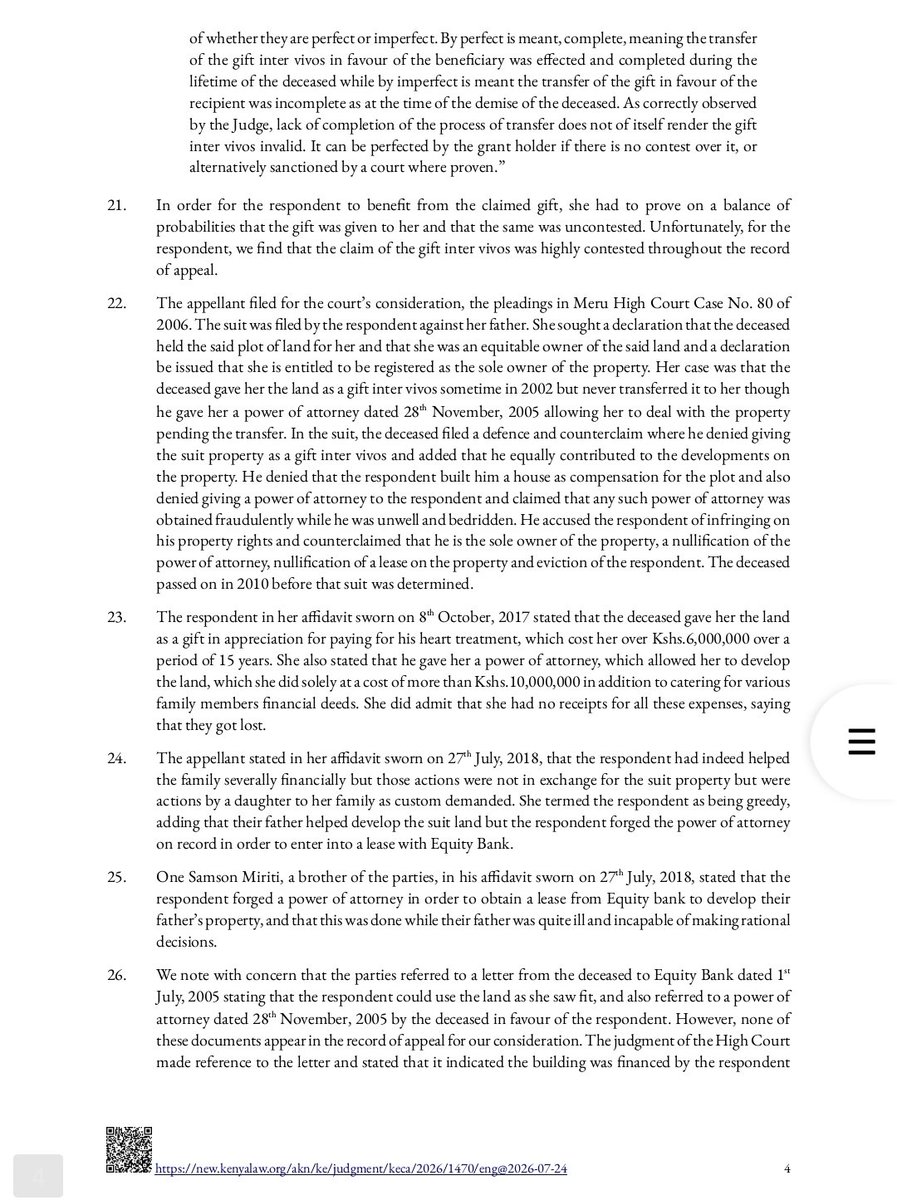
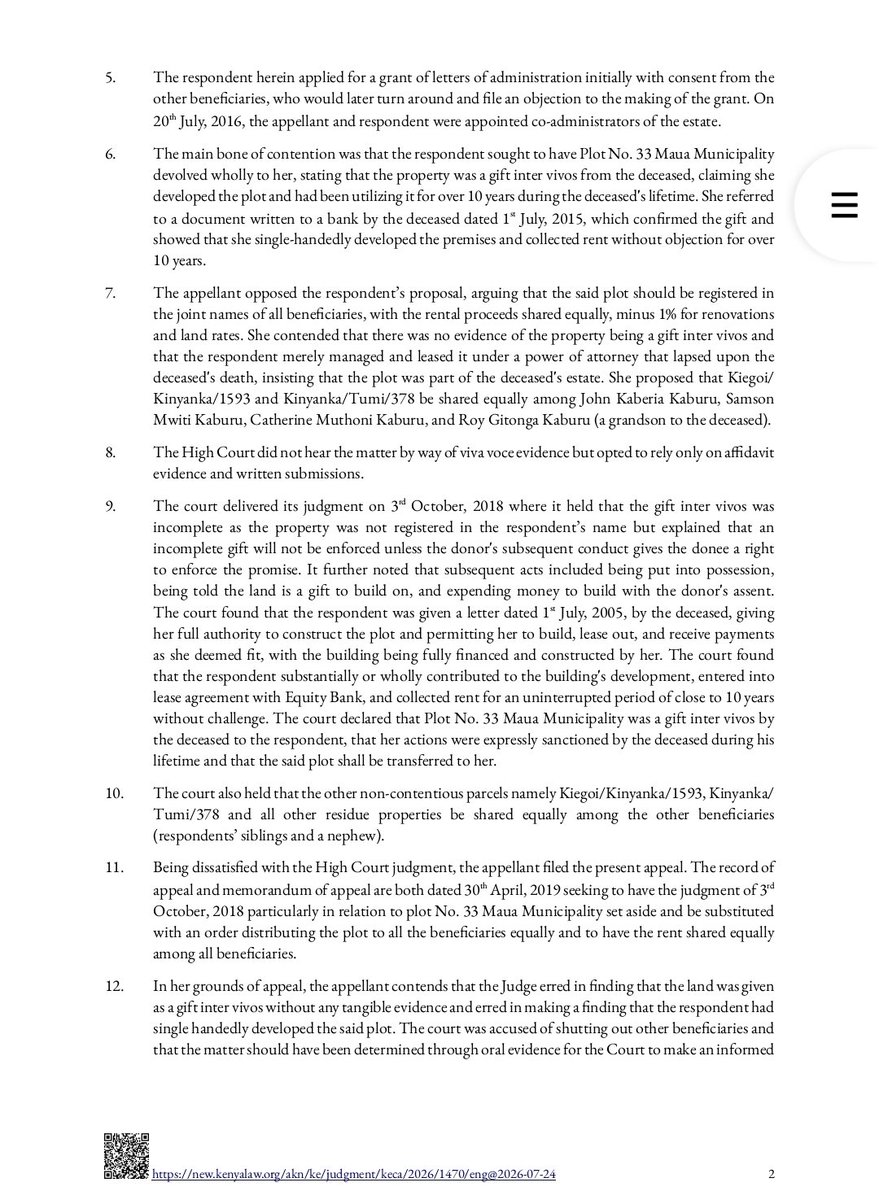
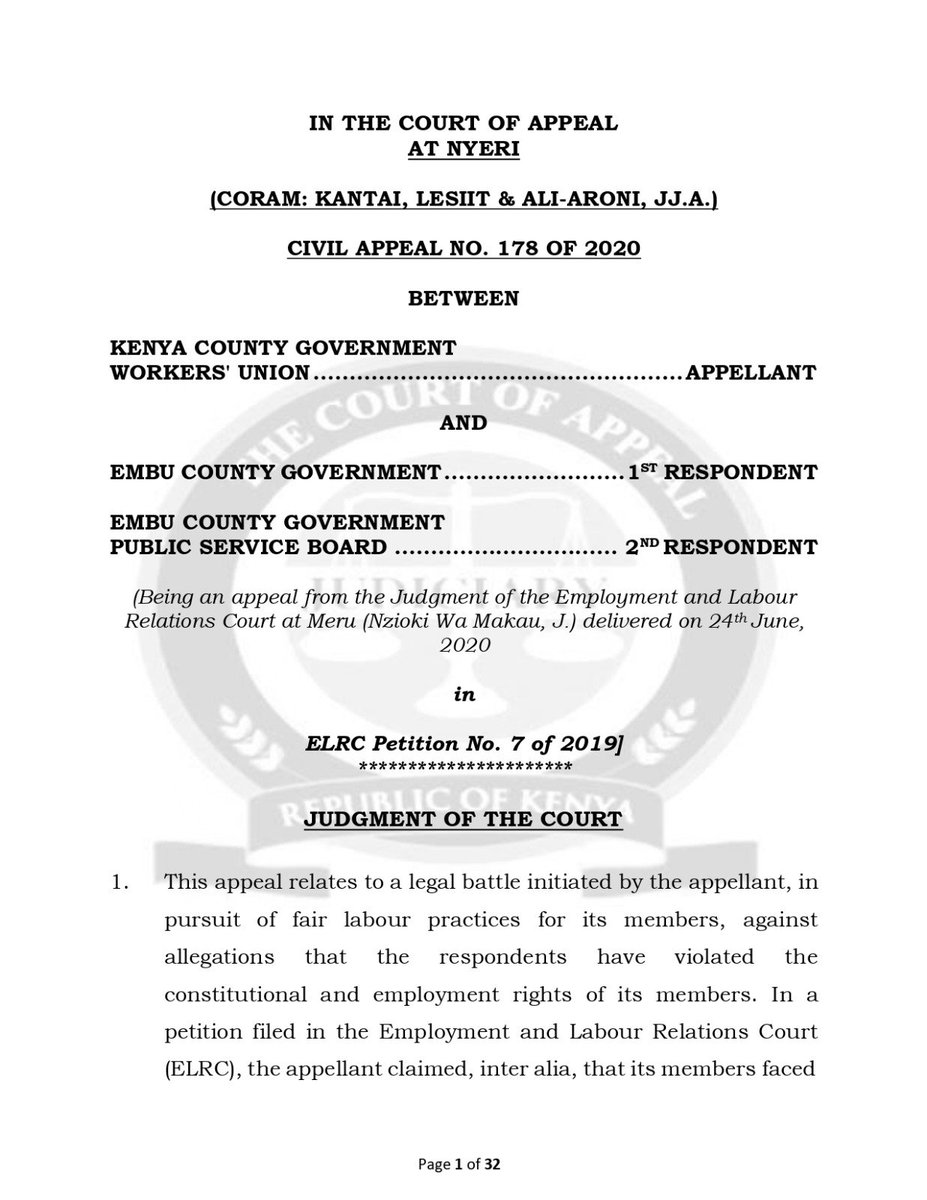
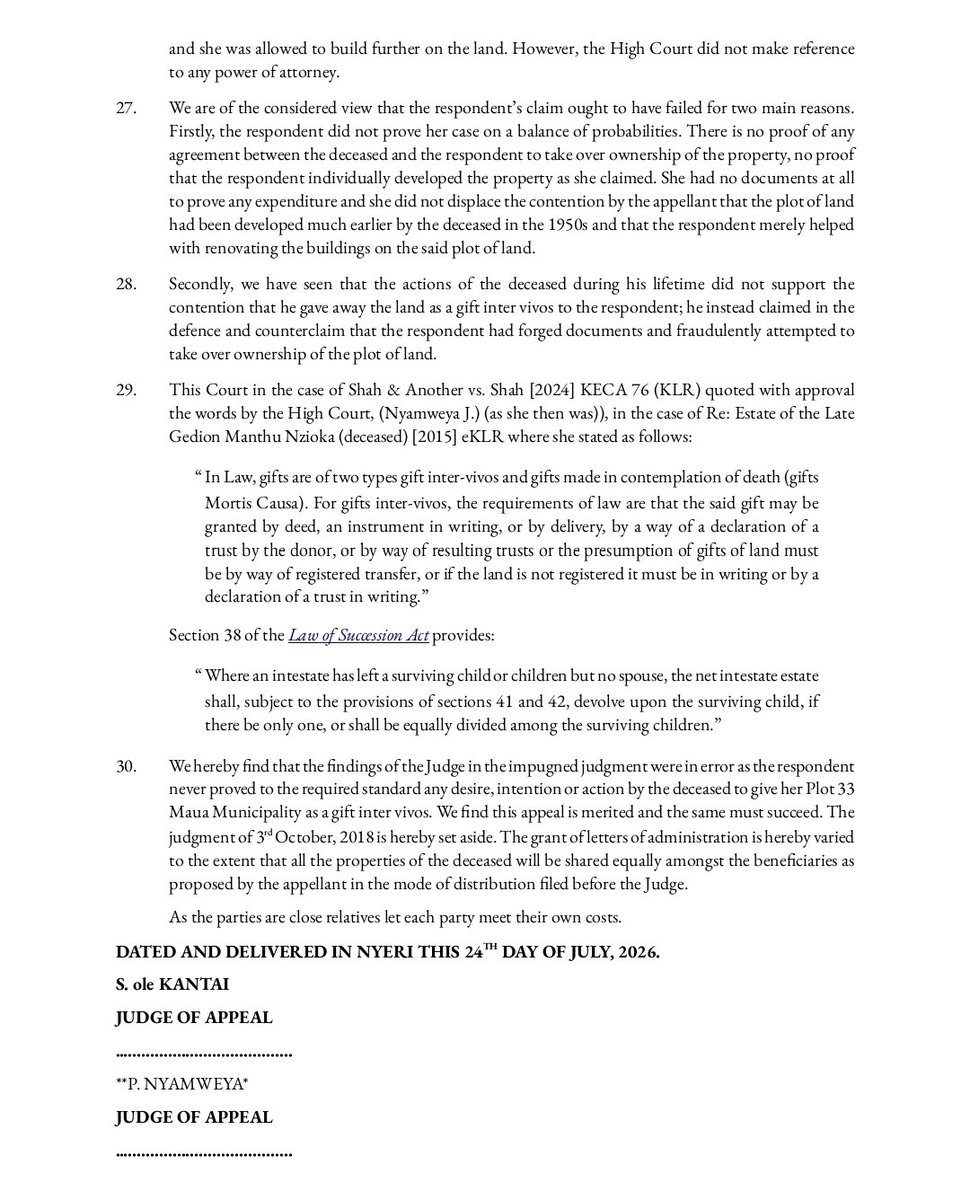
A daughter has lost land worth millions after the Court of Appeal ruled that simply saying, "My late father gave it to me," is not enough.
The daughter claimed the land belonged to her because her father had gifted it to her during his lifetime and she had developed it, managed it, and collected rent. But the Court found there was no valid transfer, no credible evidence of the gift, and even noted that the deceased had previously disputed her claim.
The Court of Appeal has now sent a clear warning: if you claim a deceased parent gifted you land, you must prove it with solid evidence. Family promises, developing the land, living on it, or collecting rent do not make you the legal owner. Without proof, the property remains part of the deceased's estate and must be shared according to the law.
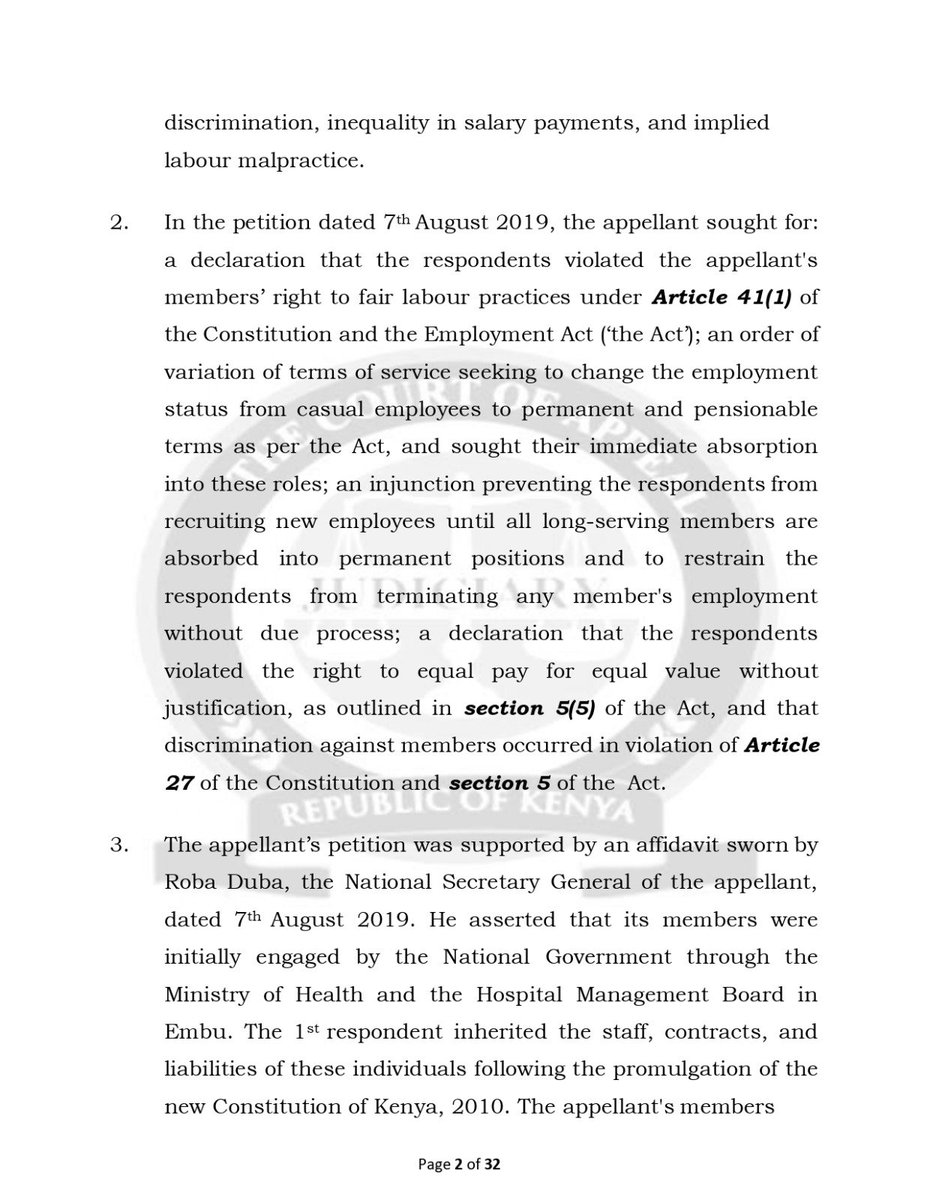
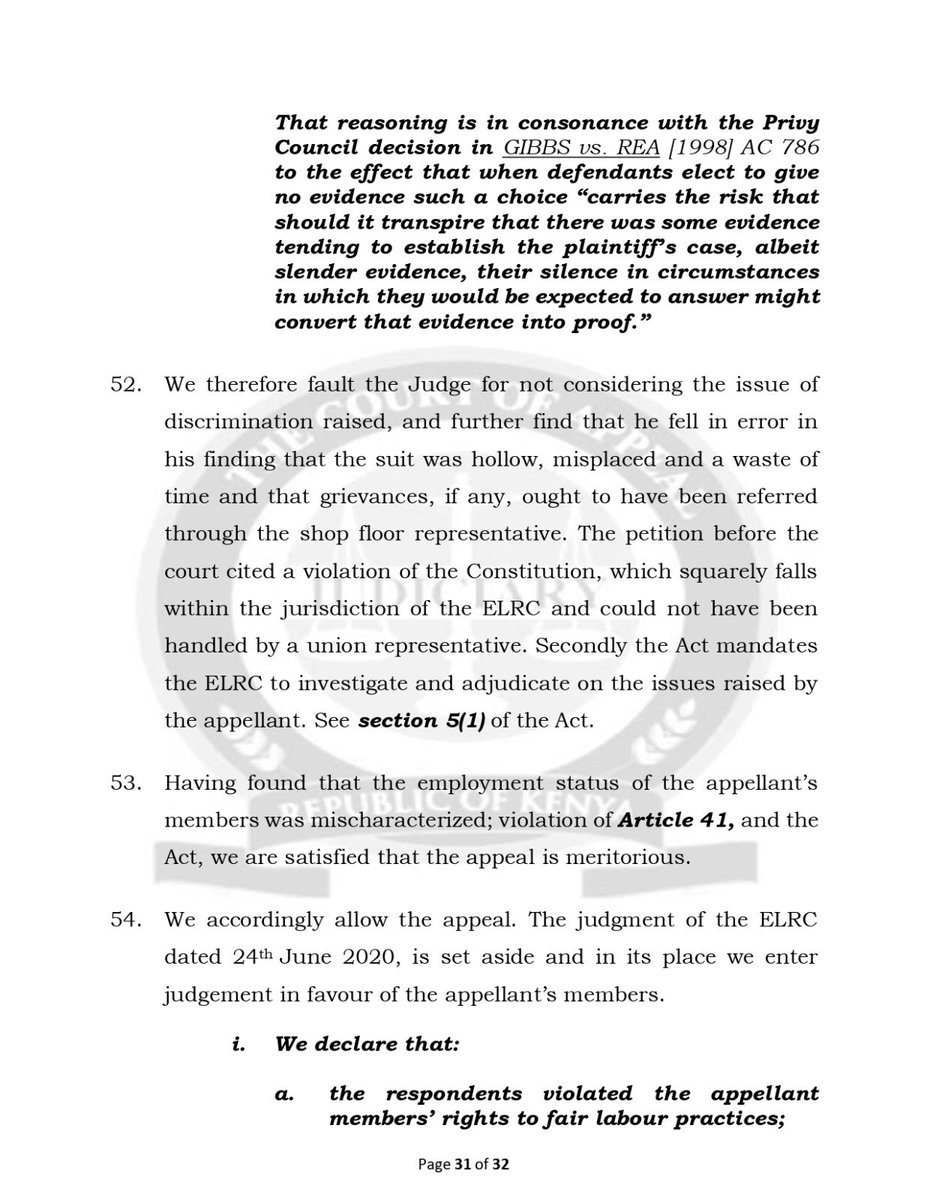
The Court of Appeal had held thay You can't keep someone working for years, call them a casual and then deny them permanent employment rights.
The Court of Appeal has made it clear, the law looks at the reality of the job, not the label on the contract.
If you're doing permanent work on endless short-term or "casual" contracts, you may already be entitled to the rights of a permanent employee.
The era of exploiting workers through fake casual contracts has come to an end.
Aliko Dangote has revealed how he plans to finance his proposed $17 billion (about Sh2.2 trillion) oil refinery in Kenya.
Here's an explanation of how he plans to do it.
Save the thread below:
Former NTV Journalist Kennedy Mureithi narrates how someone is running a fake SGR website and stealing large sums of money from unsuspecting Kenyans who can't differentiate between the genuine and fake Madaraka Express websites.
Did you know you don't always have to go to the cells for a minor traffic offense
Under Section 116 of the Traffic Act, an officer has the legal power to issue you a Notice to Attend Court (NTAC) instead of arresting you or towing your car on the spot. This official document acts as a formal court summons, allowing you to drive away and continue your day safely.
The condition is simple: you must present yourself to the designated traffic court at the exact date and time written on the slip. By law, this notice must be served to you within 14 days of the alleged offense.
Just don't ignore it! Because it carries the weight of a court summons, skipping your date automatically triggers a warrant of arrest.
#RoadSafety #UtumishiKwaWote
🚨 Can a foreign embassy hire a Kenyan, dismiss them unfairly, and then claim it is above the reach of Kenyan courts? A question about where sovereign immunity ends and a Kenyan worker's rights begin.
Two Kenyan employees sued the Embassy of Sweden over their employment. The Embassy argued that as the mission of a sovereign State, it was immune from Kenyan courts altogether. The Employment Court said no. The Court of Appeal agreed. And now the same question is on its way to the Supreme Court.
The dispute runs to the heart of a hard tension. A sovereign State is not ordinarily answerable to another country's courts. But a Kenyan who works for that State, on Kenyan soil, has constitutional rights too. Whose position prevails? Here is the issue. 🧵
🚨 Can a public officer enjoy absolute immunity in the course of their functions? A constitutional question about where the State's protection ends.
A District Commissioner was ordered to pay six citizens KShs. 800,000 each, personally, for a malicious prosecution he set in motion while in office. He argued the State should carry the cost. The courts said no.
The sequence raises a question that runs deep into Kenya's constitutional design. When a public officer harms a citizen through the office he holds, who answers for it? Can he be sued personally? Where does lawful authority end and personal liability begin? And how do we protect that line from being abused by every litigant who simply dislikes an official decision?
Here are the key issues. - A Thread
🚨 JUST IN: KRA has officially changed the deadlines for filing annual tax returns in Kenya.
Millions of Kenyans will now have different filing dates depending on their tax status.
📌 New deadlines:
• Nil Returns (no taxable income): By January 31
• Salaried employees (PAYE only): By April 30. Most returns will be pre-filled on iTax - simply verify and submit.
• Businesses & taxpayers with other income (side hustles, consultancy, rental income, etc.): June 30 remains the deadline.
This replaces the old system, where almost everyone filed by June 30.
Please read, save, and share so your family and friends don't miss the new deadlines and end up paying unnecessary penalties. Adios.
🚨To what extent can we govern the use of AI in our courtrooms? A look into the Judiciary’s Draft AI Policy.
A lawyer filed a court document built almost entirely by AI. It cited cases that do not exist.
The judge struck it out.
Two months later, Kenya's Judiciary published its first formal rulebook for AI in the courts. Here is what it actually says, and where it still falls short. - A THREAD
In May 2013, the government of Uganda sent armed police to shut down the country’s biggest independent newspaper because it printed something the regime insisted was a lie. Thirteen years later, the man at the centre of that so-called lie has gone on Twitter countless times, unprompted, to tell us it was all true.
Let me take you back, because the story is almost too neat.
1/6
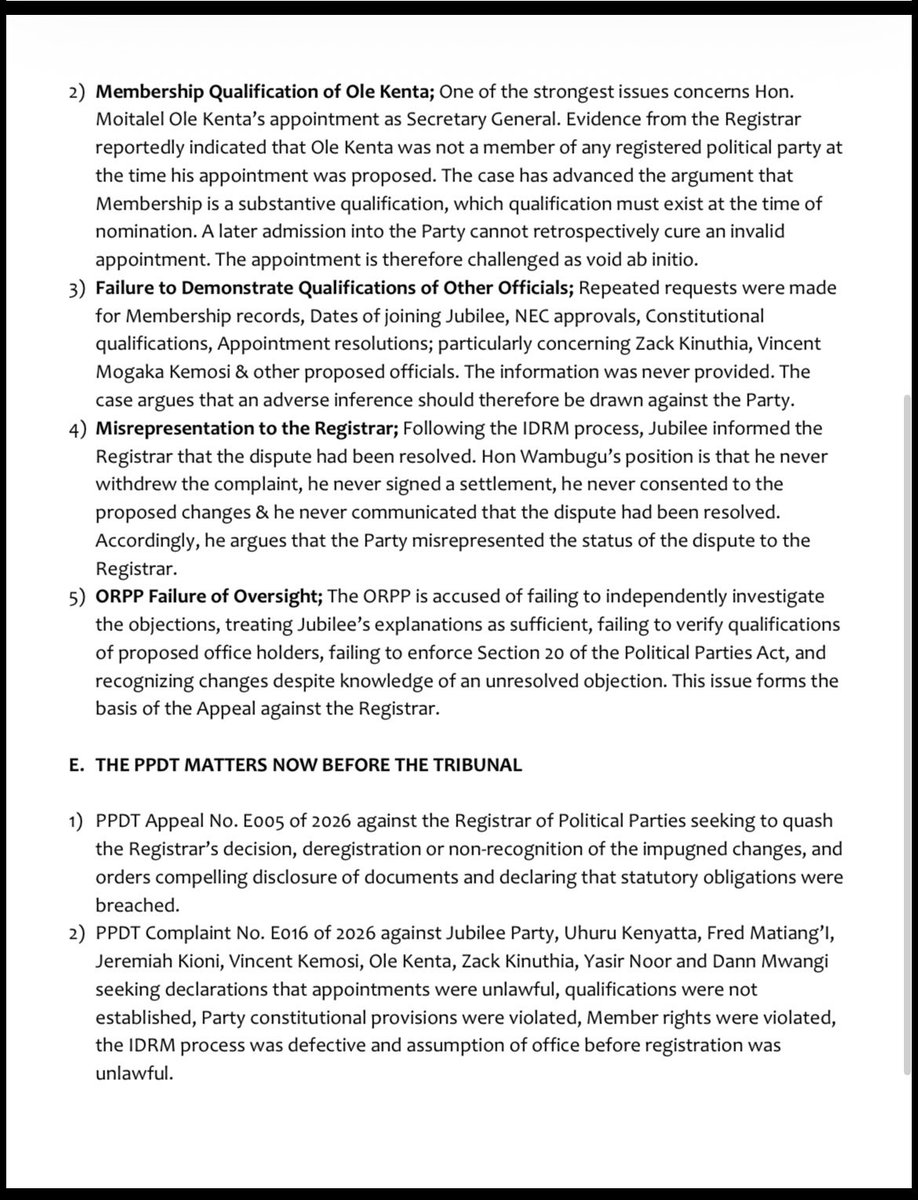
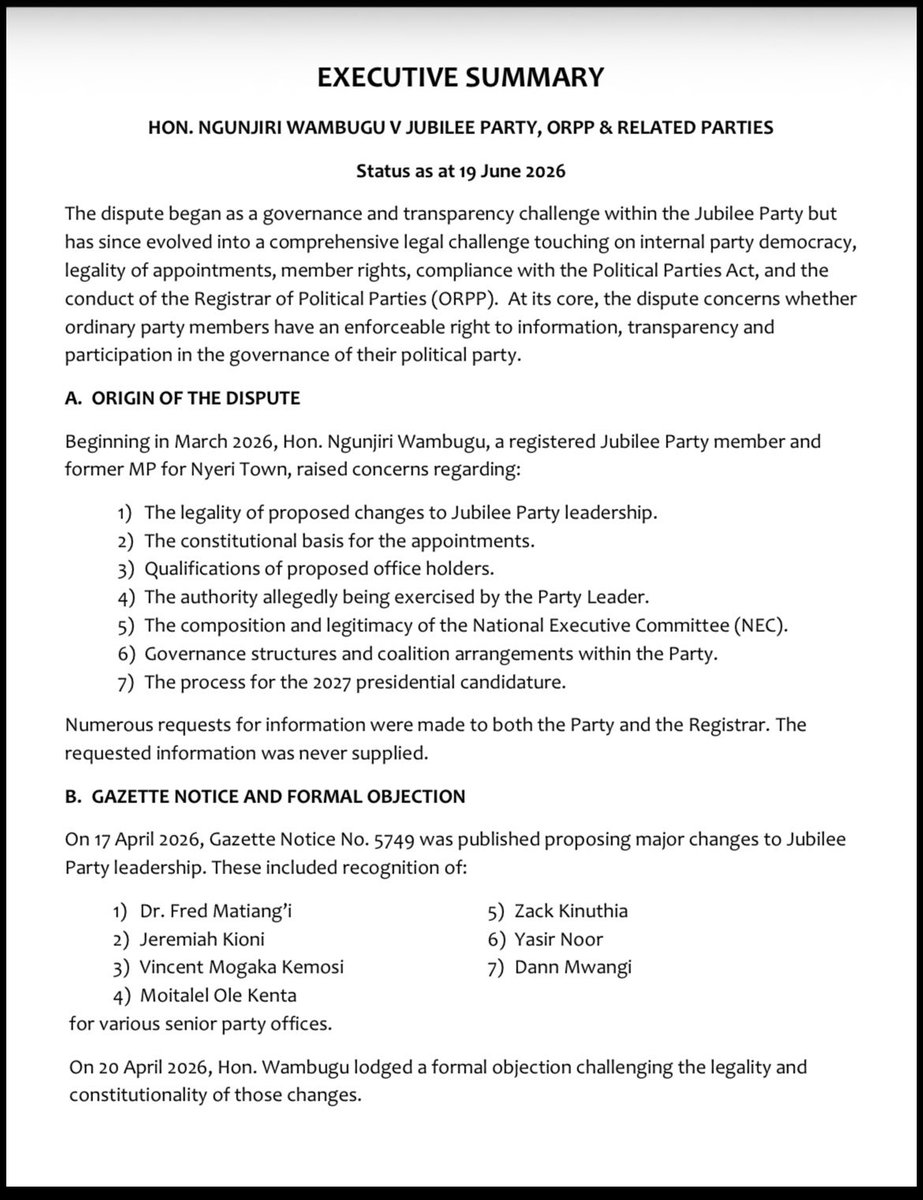
UPDATE; NGUNJIRI Vs JUBILEE PARTY / ORPP
Nairobi, Kenya – 20th June 2026
As you are aware I have moved to the Political Parties Disputes Tribunal (PPDT) to challenge recent leadership changes within Jubilee Party & the decision by the Registrar of Political Parties to recognize those changes.
This is after months of seeking answers on the qualifications of proposed officials, the authority under which appointments were being made & the constitutional processes being followed.
Those answers were never provided.
At the PPDT I am seeking answers to 3 simple questions;
1. Were Jubilee’s recent leadership changes lawful?
2. Did some officials begin acting in office before the legal process was completed?
3. Did the Registrar properly discharge his oversight role?
Evidence before the Tribunal raises serious concerns that some officials may have acted, introduced and celebrated themselves in office way before the statutory process had been concluded.
My case also challenges the claim that a dispute had been resolved when no withdrawal, settlement or consent had been given by the complainant.
Of great importance is the fact that this is not a fight against Jubilee. It is a fight for Jubilee. It is a fight for transparency. It is a fight for accountability. And it is a fight for the rights of ordinary party members.
If the Constitution matters, it must matter inside political parties. If the law matters, it must matter inside political parties. If members matter, then their voices must be heard.
Political parties cannot preach democracy in public while practicing secrecy in private. No Party Can Demand Democracy While Denying It To Its Own Members.”
Ultimately the case asks whether Jubilee Party leaders can appoint officials, allow them to function in office before approval, refuse to disclose information to members & then rely on ORPP registration to retrospectively legitimize the process.
That is why I am at the Tribunal.
HON. NGUNJIRI WAMBUGU, CBS
Jubilee Party Member JP 1116789
————
For those interested in the full details attached is a 4-page summary of the case so far.