As America marks its 250th with misgivings and malaise, how about if we seek inspiration from the Nordic model going forward? I traveled to Scandinavia to understand how these countries achieve prosperity and a high degree of equality -- while also becoming the happiest places on Earth.
As Norway's finance minister, @jensstoltenberg, told me: “We actually live the American dream....The American dream, it��s more reality in the Nordic countries than in America.”
They do have real challenges, and it's not entirely clear that the Nordic model is fully sustainable, let alone replicable. And we're not going to adopt it wholesale. But the US was actually on a similar track in the 1950s and 1960s, so it's not exactly alien. And I argue that in the Nordic model there is much to admire and learn from -- and adopt. Here's a gift link, and I welcome your thoughts: https://t.co/EwuZYSLeuO
Ainsi le citoyen Mélenchon a décidé de « ne plus aller à la matinale de France Culture ». Question « Ne plus aller à la matinale France Culture », je peux témoigner qu’il n’en est pas à son coup d’essai. Sa décision valait déjà en 2013. Récit.
1) A l’époque j’animais sur FC une séquence d’interview de cinq minutes, à 7 heures 15 le matin, baptisée « En toute franchise ». Mélenchon refusait d’y venir, car il voulait la grande matinale animée à l’époque par Marc Voinchet et qui commençait après un rappel de titres à 7 heures 30. Je l’invitais à 7h15, il refusait, sa déjà meute m’accusait de le censurer…
2) Avec Marc Voinchet nous avons décidé de l’inviter sur la grande matinale. Il a fini par accepter.
3) La veille de cette matinale, à 22 heures 30, il m’appelle : il annule le rendez-vous. Il est trop fatigué.
4) Imaginez le problème. Trouver un grand invité de rechange le soir à 23 heures, à la veille de l’émission. Dans ce cas on avait dans les rédactions un gilet de sauvetage qui se précipitait dès qu’on l’appelait : Nicolas Dupont Aignan !
5) Imaginez l’effet : Dupont Aignan à la place de Mélenchon dans la grande matinale. Le flot de hurlement des partisans de la future France insoumise a été énorme. Le médiateur de Radio France a vérifié ce que veut dire « la meute ». Nous avons donc décidé d’une séance d’explication dans le journal de 12h30 d’Antoine Mercier. Interrogé par le médiateur j’ai expliqué : Mélenchon avait annulé sa participation la veille au soir pour cause de fatigue. Mais une dépêche était tombée ce matin sur l’une de ses déclarations matinales. En fait il avait choisi d’aller à Rmc, chez Jean-Jacques Bourdin.
Aussitôt la même meute a traité France Culture et moi-même de tous les noms. Nous étions accusés cette de participer au combat contre Jean-Luc Mélenchon en le faisant passer pour un menteur.
Un aveu pour conclure : au premier tour de 2012 j’ai voté Mélenchon. Je peux vous dire qu’en 2013, le jour où s’est passé cette histoire de coulisses, j’ai viré ma cuti pour toujours…
Alerte. Les invités de Radio France doivent se méfier. Le faussaire Erner et ses complices à France Culture étant impunis, ils sont à présent suivis sur les réseaux sociaux par des hordes qui harcèlent ceux qui refusent de répondre à Erner comme l'historien Patrick Boucheron. Le plus sage, en attendant des jours meilleurs après 2027, est de ne pas aller à la matinale de France Culture.
Financial Times: "Beijing now sees AI-enabled machines as a way out of the demographic trap. Last year the country installed more industrial robots than the rest of the world put together."
This very interesting FT article claims that because its aging population "is China’s biggest economic headwind" (I am a little skeptical about this claim), and that because its declining population makes a bad debt problem even worse (I agree), Beijing wants to increase worker productivity by investing heavily in automation and robot technology.
This sets off at least three, perhaps unrelated, points. First and most obviously, mainstream economists have long argued that manufacturing jobs are no better than service jobs, and because the former are declining anyway, we should avoid a manufacturing "fetish".
But this might only show just how poorly they understand the economy. It is precisely because manufacturing productivity can rise so rapidly (which also explains most of the decline in manufacturing employment) that countries like the US and the EU should do all they can do encourage domestic manufacturing.
Second, China has among the lowest unit labor costs in the world, i.e. wages are lower relative to productivity than they are in most of its trade partners. It also has a very high underemployment as gig work absorbs a huge number of workers who would otherwise be unemployed. With such low labor costs, you would expect Chinese growth to be very labor intensive at this stage.
But it is instead very capital-intensive, as demonstrated by the extraordinarily high investment share of GDP, and illustrated by the huge push into the labor-saving automation described in this article. This is pretty strong evidence than in China labor may be cheap, but capital is even cheaper.
Third, many analysts worry that automation and robot technology will lead to a rise in unemployment. This is only true, however, if overall demand fails to keep pace with overall supply, in which case production facilities would have to close down and workers fired.
But this may be a misplaced concern. In an economy in which investment growth depends on growth in consumption, overall demand will fail to keep pace with overall supply only if household income fails to keep pace with productivity growth.
This returns us to China's original problem. while Chinese productivity has been rising, especially until the late 2000s and early 2010s, wages haven't kept pace with productivity growth.
So what really matters to overall Chinese and global growth, at least in the medium term, is not the rate at which China automates and expands robot technology, but whether or not wage growth is able to keep pace with the resulting increases in productivity.
Given the extent of unemployment and underemployment in the economy, however, this seems pretty unlikely, at least in the next few years, in which case the impact of automation in Chinese manufacturing is likely to be even bigger domestic imbalances and trade surpluses.
The key, as I see it, is whether China can continue to subsidize the cost of capital to such an extent that, even with very low labor costs Chinese businesses still prefer capital-intensive growth over labor-intensive growth. This in turn probably depends on how much longer Chinese debt can grow faster than China's real debt-servicing capacity. With debt so high and rising so rapidly, I suspect we will only get a few more years of this at best.
https://t.co/Uli4JS7ZKA
Sharing this analysis by Taipei Forum Foundation President Su Hungdah on KMT Chairwoman Cheng Li-wun’s travels and her challenge to secure the dual confidence of the Taiwan electorate and the US in order to preserve KMT leverage with Beijing.
https://t.co/MgyPngrqxv
Good piece: So many young Chinese have quietly asked me what happened at Tiananmen, knowing that I was there but not quite sure what the "6-4 incident" entailed. As Lu Xun wrote a century ago: "Facts written in blood cannot be erased by lies written in ink."
In a sign of Xi Jinping's insecurities, China has expelled an outstanding New York Times correspondent, Vivian Wang, who for years has done tremendous work covering that country. The Times, which has covered China since the 1850s and once had about a dozen correspondents in China, now has just one -- because of visa restrictions. China is a major international power, but it displays a remarkable lack of self-confidence when it bars correspondents like this. It will still be covered but from places like Taiwan in ways that can't do it justice. China has some extraordinary accomplishments in science, in education, in health, in infrastructure; a baby born in Beijing today has a longer life expectancy than a baby born in Washington DC. Yet China fears international coverage in a way that I think reflects a political immaturity and hurts itself. 搬起石头砸自己的脚. https://t.co/3LJQfY1I30
I broke down crying on live CBS television. I couldn’t hold it together anymore. Because it was the 4th time that I sat in a courtroom watching actual assassins, convicted murderers sent by the Islamic Republic to kill me, face charges on American soil.
You’d think that feels like winning. Unfortunately , it doesn’t. Because all I could think about was them. The same killers back home in Iran, The innocent people facing the exact same murderers, the same regime, the same orders, the same hands, with no courtroom. No lawyer. No protection. Just a rope at dawn and a family forbidden from crying at their grave.
In America, they get arrested. In Iran, the same murderers are hanging my protesters killing women and children.
I survived. I am supposed to feel grateful. But how do you feel grateful when the same machine that came for you is still running, and your family back home are still dying?
This is called survivor guilt. And it doesn’t leave me…..
💔
Michel Ouaknine, membre de l’Union juive française pour la paix (UJFP), estime que « aucun Juif des pays arabes et musulmans n’a été déporté pendant la Shoah » et dénonce l’amalgame entre antisionisme et antisémitisme dans le débat public français
Dans un entretien accordé à Anadolu, il critique également le soutien occidental à Israël et les poursuites visant certains militants pro-palestiniens
https://t.co/zJ8FRqcLV3
Beijing's pattern is clear: silence independent reporting, control the narrative. But here's the irony-kicking out American journalists doesn't make China look strong. It makes it look afraid. https://t.co/eWxYdKHtC1
Pauline Kael on how Gregg Toland's work in Karl Freund's "Mad Love" (1935) influenced Orson Welles' "Citizen Kane" (1941):
"I had always been puzzled by the fact that Kane seemed to draw not only on the Expressionist theatrical style of Welles’s stage productions but on the German Expressionist and Gothic movies of the silent period. In Kane, as in the German silents, depth was used like stage depth, and attention was frequently moved from one figure to another within a fixed frame by essentially the same techniques as on the stage — by the actors’ moving into light or by a shift of the light to other actors (rather than by the fluid camera of a Renoir, which follows the actors, or the fragmentation and quick cutting of the early Russians).
There were frames in Kane that seemed so close to the exaggerations in German films like 'Pandora’s Box' (1929) and 'The Last Laugh' (1924) and 'Secrets of a Soul' (1926) that I wondered what Welles was talking about when he said he had prepared for Kane by running John Ford’s 'Stagecoach' (1939) forty times.
Even allowing for the hyperbole of the forty times, why should Orson Welles have studied 'Stagecoach' and come up with a film that looked more like 'The Cabinet of Dr Caligari?' (1920) | wondered if there might be a link between Gregg Toland and the German tradition, though most of Toland’s other films didn’t suggest much German influence. When I looked up his credits as a cameraman, the name 'Mad Love' rang a bell, I closed my eyes and visualized it, and there was the Gothic atmosphere, and the huge, dark rooms with lighted figures, and Peter Lorre, bald, with a spoiled-baby face, looking astoundingly like a miniature Orson Welles.
'Mad Love', made in Hollywood in 1935, was a dismal, static horror movie — an American version of a German film directed by the same man [Robert Weine - "The Hands of Orlac' (1924)] who had directed The 'Cabinet of Dr Caligari'. The American remake, remarkable only for its photography, was directed by Karl Freund, who had been head cinematographer at Ufa, in Germany. He had worked with such great directors as Fritz Lang and F.W. Murnau and G.W. Pabst, and, by his technical innovations, had helped create their styles; he had shot many of the German silent classics (The Last Laugh, Variety, Metropolis, Tartuffe).
I recently looked at a print of 'Mad Love', and the resemblances to Citizen Kane are even greater than my memories of it suggested. Not only is the large room with the fireplace at Xanadu similar to Lorre’s domain as a mad doctor, with similar lighting and similar placement of figures, but Kane’s appearance and makeup in some sequences might be a facsimile of Lorre’s. Lorre, who had come out of the German theatre and German films, played in a stylized manner that is visually imitated in Kane. And, amusingly, that screeching white cockatoo, which isn’t in the script of Kane, but appeared out of nowhere in the movie to provide an extra ‘touch,’ is a regular member of Lorre’s household."
("Raising Kane and Other Essays", Pauline Kael, 1996)
P.S: Remembering the legendary American Cinematographer Gregg Toland on his 122nd birthday!
Very good Rhodium piece on the challenges facing the Chinese economy. The good news, Rhodium notes, is that there is pretty much a consensus among economic policy advisors (although, I would add, not necessarily among policymakers) on the urgent need to rebalance the economy away from investment and towards consumption.
The bad news is that there is no consensus on how the costs of this rebalancing are to be allocated within the economy – nor, I would also add, even an acknowledgement that this is the key issue in rebalancing. With, broadly speaking, three sectors in the economy, the transfers needed to raise consumption must be allocated either within the household sector or from the business or government sectors.
In the first case, the transfers would come from rich and middle class households (e.g. through higher income taxes, property taxes, or cuts in services) and go to migrant workers and the rural poor. But with the middle class already suffering from job uncertainty and the property decline, this might be socially and politically more disruptive than Beijing would want to consider. What is more, the main reason for low consumption in China is not income inequality within households but rather the low overall household share of income, so even if Beijing were willing to implement such policies, they wouldn't solve the deeper underlying problem.
Another way to raise the consumption share involves transfers from businesses to households (e.g. raise interest rates, revalue the currency, reduce subsidies to businesses, close down the weakest players in sectors with low profitability and excess capacity, cut spending on logistical infrastructure). The problem here is that after years of operating on massive direct and indirect subsidies, many Chinese manufacturers are incredibly competitive but not terrible efficient (in the sense of being able to create more economic value than they absorb directly and indirectly through subsidies and transfers).
Without these transfers, in other words, an awful lot of businesses would be forced either to cut capacity sharply or to close. If this were to happen quickly, it would be very disruptive for employment and the overall economy, but if this were to happen over at least a decade or more of careful restructuring, it would require a lot more foreign forbearance on trade and a lot more debt.
The third way to raise the consumption share of GDP is to allocate the costs to the central or local governments. The right way to do this, as Rhodium notes, might involve directly or indirectly transferring ownership of businesses and assets from local governments to households.
The wrong way to do this would be to increase China's debt burden even further. Unfortunately even though China has the second highest debt burden in the world (after Japan's) and the fastest-growing debt burden in history, increasing debt further would be politically easier in the short term than transferring government assets to households. The key point here is that local governments should not liquidate assets to fund additional spending, as they seem to be doing now, but rather either to pay down debt or to fund transfers to households. But this almost certainly involves a significant change in the distribution of income within China and, with it, a potentially disruptive redistribution of power.
So if it is so hard to rebalance, why not ignore rebalancing and just double down on the existing model? The problem here is that while certain aspects of the Chinese economy may seem in good shape, in fact the overall economy is struggling, and it is only massive increases in debt every year that allow Beijing to continue to achieve its growth targets. But as happened to every other country that followed this model, debt is always what causes the ultimate unraveling, and it is much better for China to begin the difficult adjustment while it still has fiscal space than to be forced into adjustment when it no longer has fiscal space.
#Cannes jury president Park Chan-wook says "I don’t think politics and art should be divided."
" I think it’s a strange concept to think that they’re in conflict with each other. Just because a work of art has a political statement, it should not be considered an enemy of art. At the same time, just because a film is not making a political statement, that film should not be ignored. Even if we are to make a brilliant political statement, if it’s not expressed artfully enough, it would just be propaganda. So what I want to say is that art and politics are not concepts that are in conflict with each other, as long as they are artistically expressed, they are valuable."
1/2
BBC: "In a letter to Spaniards posted on social media, Sánchez said the mass legalisation sought "to acknowledge the reality of nearly half a million people who already form part of our everyday lives"."
https://t.co/xs8SEnRkOj
Trump administration is taking money Europeans and others have paid for arms for Ukraine and other purposes, not delivering said arms, and spending cash to help with self-created Gulf mess. This is not a trustworthy power. Credibility incinerated.
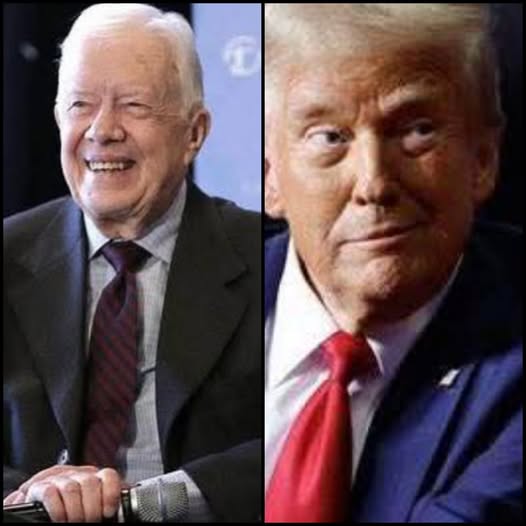
« Tu crains que la Chine ne nous devance, et je suis d’accord avec toi. Mais sais-tu pourquoi la Chine nous devance ? J’ai normalisé les relations diplomatiques avec Pékin en 1979. Depuis cette date, sais-tu combien de fois la Chine est entrée en guerre contre quelqu’un ? — Pas une seule fois. Alors que nous, nous sommes constamment en guerre.
Les États-Unis sont la nation la plus belliqueuse de l’histoire du monde, parce qu’ils veulent imposer des États qui obéissent à notre gouvernement et aux valeurs américaines dans tout l’Occident ; contrôler les entreprises qui disposent de ressources énergétiques dans d’autres pays. La Chine, de son côté, investit ses ressources dans des projets comme les chemins de fer, les infrastructures, les trains à grande vitesse intercontinentaux et transocéaniques, la technologie 6G, la robotique intelligente, les universités, les hôpitaux, les ports, les immeubles et les trains à grande vitesse, au lieu de les utiliser pour des dépenses militaires.
Combien de kilomètres de lignes à grande vitesse avons-nous dans ce pays ? Nous avons gaspillé 300 billions de dollars en dépenses militaires pour soumettre des pays qui cherchaient à sortir de notre hégémonie. La Chine n’a pas gaspillé un seul centime dans la guerre, et c’est pour cela qu’elle nous dépasse dans presque tous les domaines. Et si nous avions pris ces 300 billions de dollars pour installer des infrastructures, des robots, un système de santé publique aux États-Unis, nous aurions des trains à grande vitesse transocéaniques. Nous aurions des ponts qui ne s’effondrent pas, un système de santé gratuit pour les Américains, il n’y aurait pas eu plus de milliers d’Américains infectés par le COVID-19 que dans n’importe quel autre pays du monde. Nous aurions des routes correctement entretenues. Notre système éducatif serait aussi bon que celui de la Corée du Sud ou de Shanghai. »
— Jimmy Carter à Trump
(Newsweek)
If the US is asking European and Asian allies to send their navies to the Strait of Hormuz, they should consider demanding an immediate cessation of all US tariffs on them in return. I don't think Trump would hesitate to make that demand, if the situations were reversed.