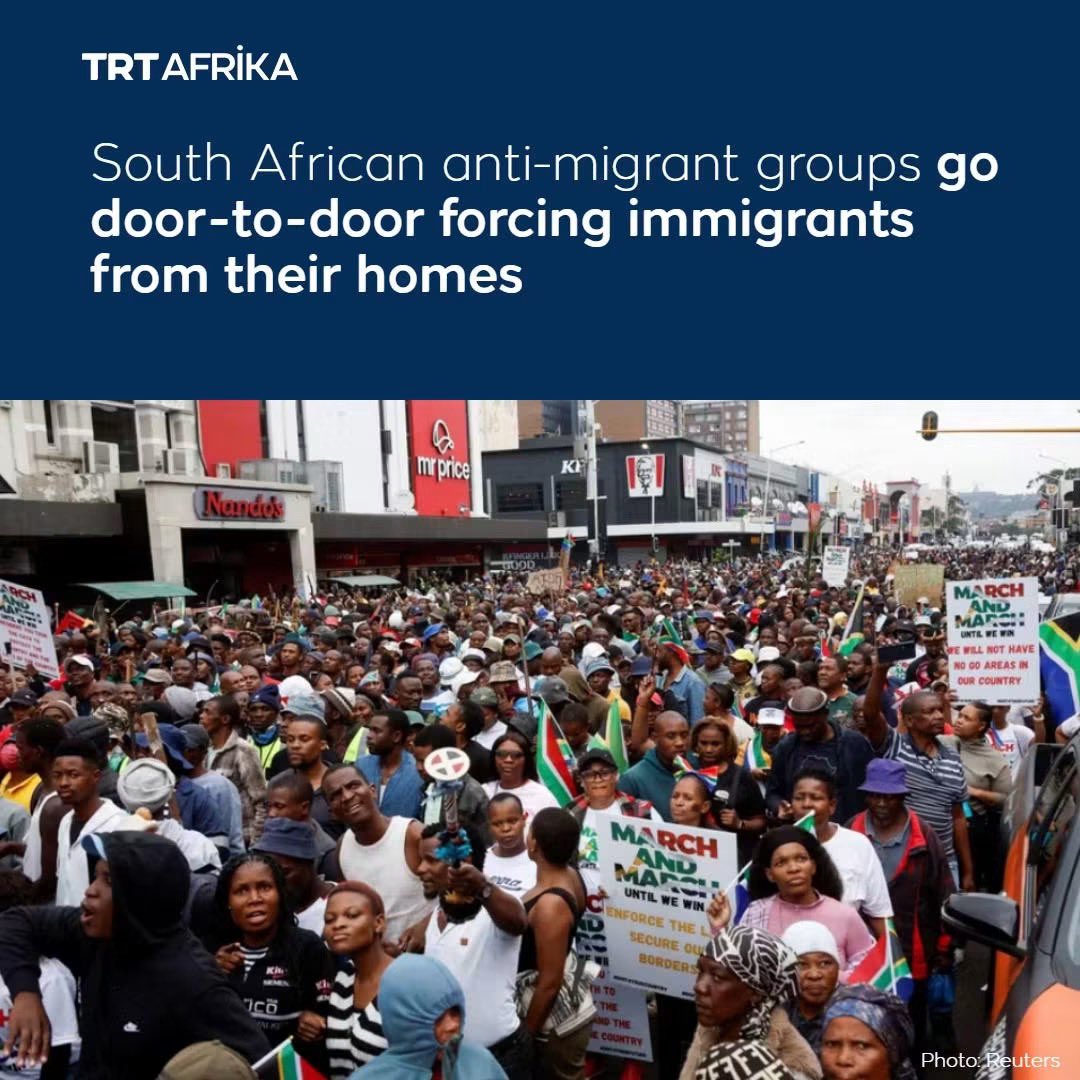
Anti-immigration groups broke into homes in Johannesburg's Alexandra township, seizing foreigners and escorting them to police vans, in a hardening of protests that have sown fear in communities and strained ties with some countries https://t.co/v1rk25GVSU
This is eroding South Africa’s international reputation bit by bit, and whoever hates South Africa and is behind this must be extremely happy. Not a single day has passed since 30 June without South Africa receiving negative international publicity.
Many people abroad may end up cancelling their bookings for fear of violence, something that has long been a concern for those considering visiting South Africa.
The hard work of South Africa’s tourism boards, associations and businesses is being undone before our very eyes. A country’s image takes years to build, but it can be damaged in a matter of days.
It is great to read that the International Monetary Fund has reached a Staff-Level Agreement with Zimbabwe on the First Review under the Staff-Monitored Program.
It means the IMF’s technical staff believe Zimbabwe has made enough progress on certain economic reforms to recommend that the programme moves forward.
If the Zimbabwean government follows through on these reforms agreed with the International Monetary Fund, it would significantly reduce the cost of borrowing for Zimbabwe. This would benefit not only the government but also Zimbabwean businesses.
At the moment, companies such as Econet have repeatedly spoken about the challenges of sustaining and expanding their operations because growth often requires access to affordable international capital.
However, when international financial institutions see that a company is Zimbabwean, the cost of borrowing tends to rise because of the country’s risk profile and credit ratings, which are heavily influenced by assessments from Bretton Woods institutions such as the International Monetary Fund and the World Bank.
If confidence in Zimbabwe’s economic management improves and the country makes progress on its reform agenda and debt resolution, the risk premium attached to Zimbabwean borrowers could decline.
This would make it cheaper for both the government and private companies to access international finance, attract new investment and undertake projects that create jobs and stimulate economic growth.
Ultimately, lower borrowing costs are not just about numbers on a balance sheet; they can translate into more investment, business expansion, improved infrastructure and better economic opportunities for ordinary Zimbabweans.
Many Zimbabwean businesses have had their expansion programmes put on hold because of the high cost of borrowing internationally. Some have even had to register in other countries in order to access international capital.
Hopefully, if this agreement between the Zimbabwean government and the IMF is seen through, that could change. One hopes that the Government of Zimbabwe follows through on these reforms.
https://t.co/itsawYvfGC
@daddyhope Moving away from the economic spectrum, for reengagement & debt-relief with the IMF, Uncle Sam will have to also look at the political-economy that shapes Zimbabwe’s economic outlook. Growth that doesn’t translate to real change in ordinary people’s is baseless.
@daddyhope In as much as this is a green light to Zimbabwe’s economy; noting that Zimbabwe’s economy grew by 3.5% in 2025, nonetheless, the current political climate is Zimbabwe may in as much derail any real chance of reengagement with the Bretton Woods.
OFFICIAL: Zimbabwe's🇿🇼 President Emmerson Dambudzo Mnangagwa, 83, has signed into law a legislation that extends his term in office by 2 years to 2030.
Zimbabweans will no longer vote for a president; instead, parliament will elect the head of state.
WATCH | A Zimbabwean man, Brett, who resides in South Africa, shares his perspective with South Africans on the realities of life in Zimbabwe.
He speaks about the economic challenges and the daily struggles many citizens face. Brett explains that these difficulties have forced many Zimbabweans to leave their homeland in search of better employment, improved living conditions, and a more secure future for themselves and their families.
🎥Brettmuvet, Facebook
@AlexanderRusero@JMafume@stan There is a need for the Library to invest in African Literature. Also go beyond the traditional “reading & book space”, there is a whole new Library Industry Innovation that can be done.
BREAKING NEWS: Keir Starmer says he will step down as Labour leader and prime minister after accepting that his party does not believe he is best placed the lead the country into the next general election.
Follow live updates and reaction: https://t.co/zds1Zq0raP