Parasites often evolve alongside their hosts, but sometimes they might also switch hosts for a variety of reasons.
This study looked at the phylogeny of Urocleidoides, a monogenean parasite that lives on the gills of fishes in the eastern Brazilian Amazon
https://t.co/e8nZckZNZV
Interesting!
Monogenoids are ectoparasites that attach to the gills of fish using a structure called the haptor (haptoral anchor).
This study explores the taxonomic relationship between some monogenoids using geometric morphometry applied to the haptor:
https://t.co/z7QGnFuZMd
Tem uma proposta de Valorização da Carreira Cientifica sendo votada da no Plano plurianual do governo atual. Se você foi ou é bolsista, sabe o quão importante é a Valorização da carreira. Vote e compartilhe!
https://t.co/T2oULDyqJy
CALANGO é um método computacional desenvolvido por estudantes do meu grupo na @UFMG e diversos colaboradores. Nosso programa busca, em escala genômica, por genes associados a fenótipos, e foi escolhido como a capa da edição da revista @Patterns_CP ;-)
https://t.co/4vQXppWgSC
Rejection of your paper or grant has NO relevance to the opinion of #research community. It is nothing but the opinion of one person.
Several examples:
1. The first paper on graphene was rejected from Nature because “it did not constitute a sufficient scientific advance”. Later, it was awarded a Nobel prize.
2. The first manuscript showing the microbiome-brain connection was published after 7 submissions that took 3 years. Today, this field has exploded. I expect it will get a Nobel prize in the future.
3. Theodore Maiman tried to publish a paper describing the first operating laser in Physical Review Letters and… got a rejection!
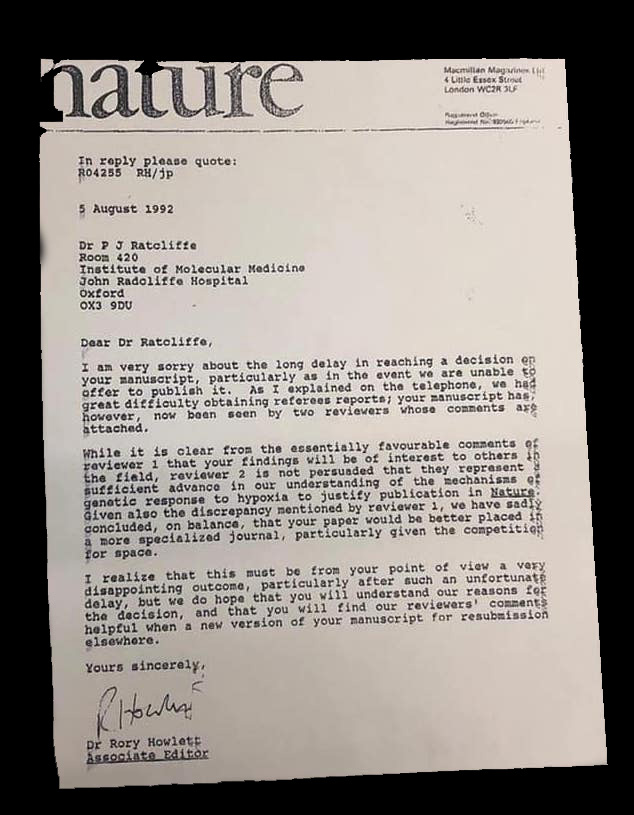
4. Peter Ratcliffe, who worked on cells’ response to changes in oxygen levels, got his key paper rejected from Nature (see photo). Later, he was awarded a Nobel Prize for this work.
And there are many other examples…
.
And yet I see so many young scientists stressing about rejections. For some reason, they seem to genuinely expect that the editors should know which study is truly worth it.
As a result, many rejections are met with surprise and disbelief:
“How could they reject it? They publish so much trash, and yet they think our detailed 3-year-long study is not interesting to the community! WHY?”
.
Well, the reality is:
- Most editors have very little time to delve into your study. They can easily FAIL to recognize the potential impact of your study. Proper communication in the cover letter and clear writing style can help (although only to a limited degree).
- Many reviewers have little idea about the science in your paper. But they can have a big ego. So, if they have a bad day or were rejected recently, it’s easy for them to find 1000 technical reasons to reject your paper as well.
- Most scientists genuinely don’t know if your discovery can make any impact. If we could predict the course of science, we would be living very differently!
My message is simple:
Forget about objectivity. Academia is a very subjective world. Fight for objectivity but don’t take it for granted.
A great study will be found, cited and recognized. Disregard of where it’s published.
A bad study requires a high-impact journal to be found and cited. But the long-time recognition might be a problem.
High-IF journals are simply billboards. Their rejections do NOT represent the opinion of a scientific community.
You can get rejected but don’t reject yourself!
Believe in your results.
#AcademicTwitter #AcademicChatter
Animal selvagem não é pet! Quem finge estar preocupado com aquela capivara do Tiktoker na verdade está mais interessado em atacar o IBAMA que é extremamente necessário nesse momento de recuperação das políticas ambientais. Aqui mostro pegadas das capivaras que rodeiam minha casa.
A new paper published: Morphology and molecular phylogeny of Chauhanellus Bychowsky & Nagibina, 1969 (Monogenoidea) parasitizing marine catfish (Ariidae) from the Atlantic coast of South America: https://t.co/IlKOnqmcS2
É fácil querer ser cientista quando você tem 7 anos. O problema é se manter querendo ser um cientista com 20, com 30, com 40 e enfrentando todo tipo de adversidade.
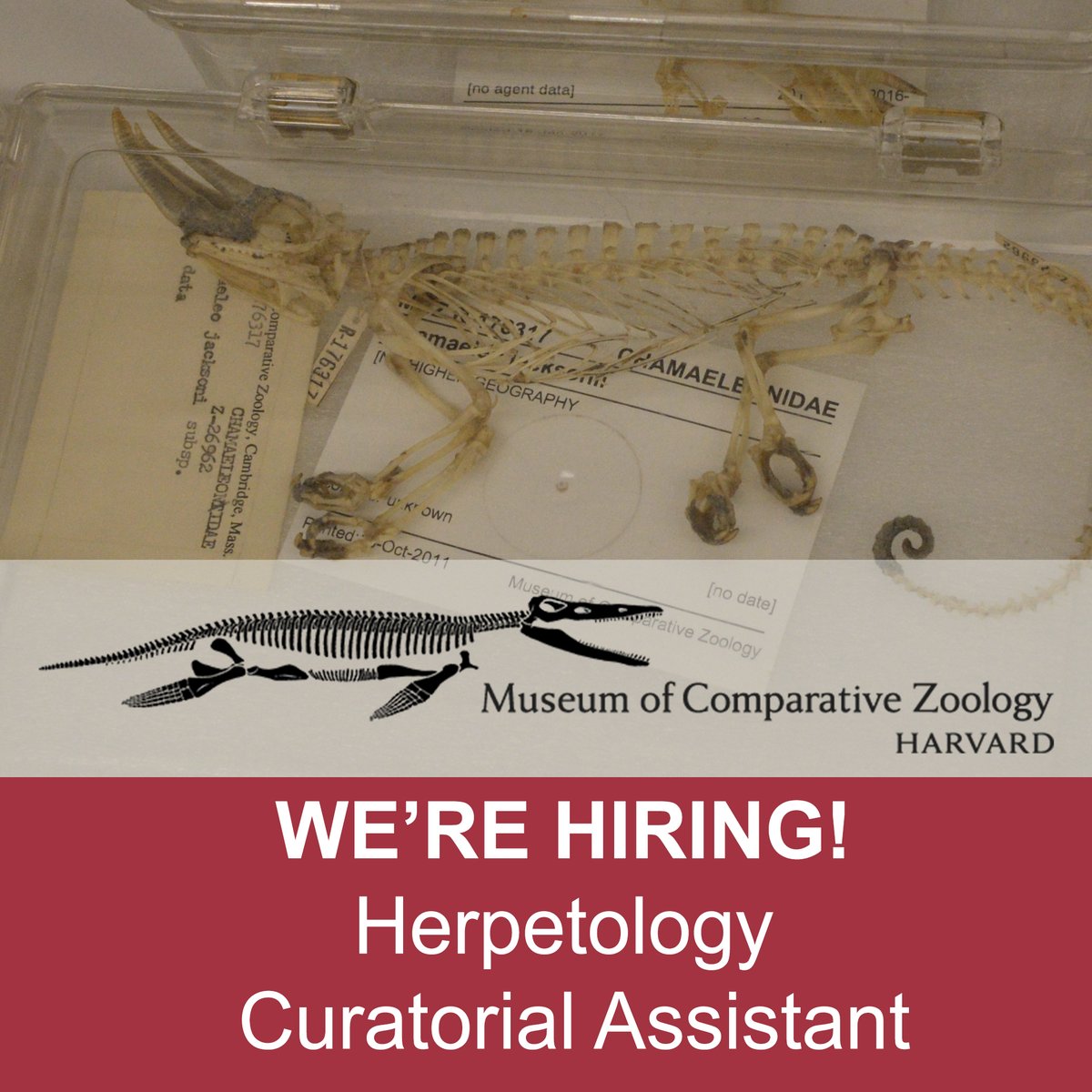
The MCZ is looking for a curatorial assistant for our Herpetology department - come work with our reptile and amphibian specimens, including 2,674 primary types and 19,608 paratypes! https://t.co/tkNTuyq2VQ #MuseumJobs#MCZHerpetology#CollectionsAreEssential
Diversification processes between monogenoids (Dactylogyridae) and their marine catfish (Siluriformes: Ariidae) from the Atlantic coast of South America https://t.co/PihlHFNOyH
Feliz #DiaDaTerra! 💚 Na #Espanha estamos muito orgulhosos da nossa natureza. Bosques verdes 🌲🌳 desertos 🏜️ mares incomparáveis 🌊🏖️🐟... Você sabia que somos o país com o maior número de Reservas da Biosfera do 🌍?