Perplexity Computer is now available for Pro subscribers.
Access Computer’s full suite of 20+ advanced models, prebuilt and custom skills, and hundreds of connectors.
Max subscribers receive monthly credits and higher spend limits than Pro.
https://t.co/mEZ8MoSP7C
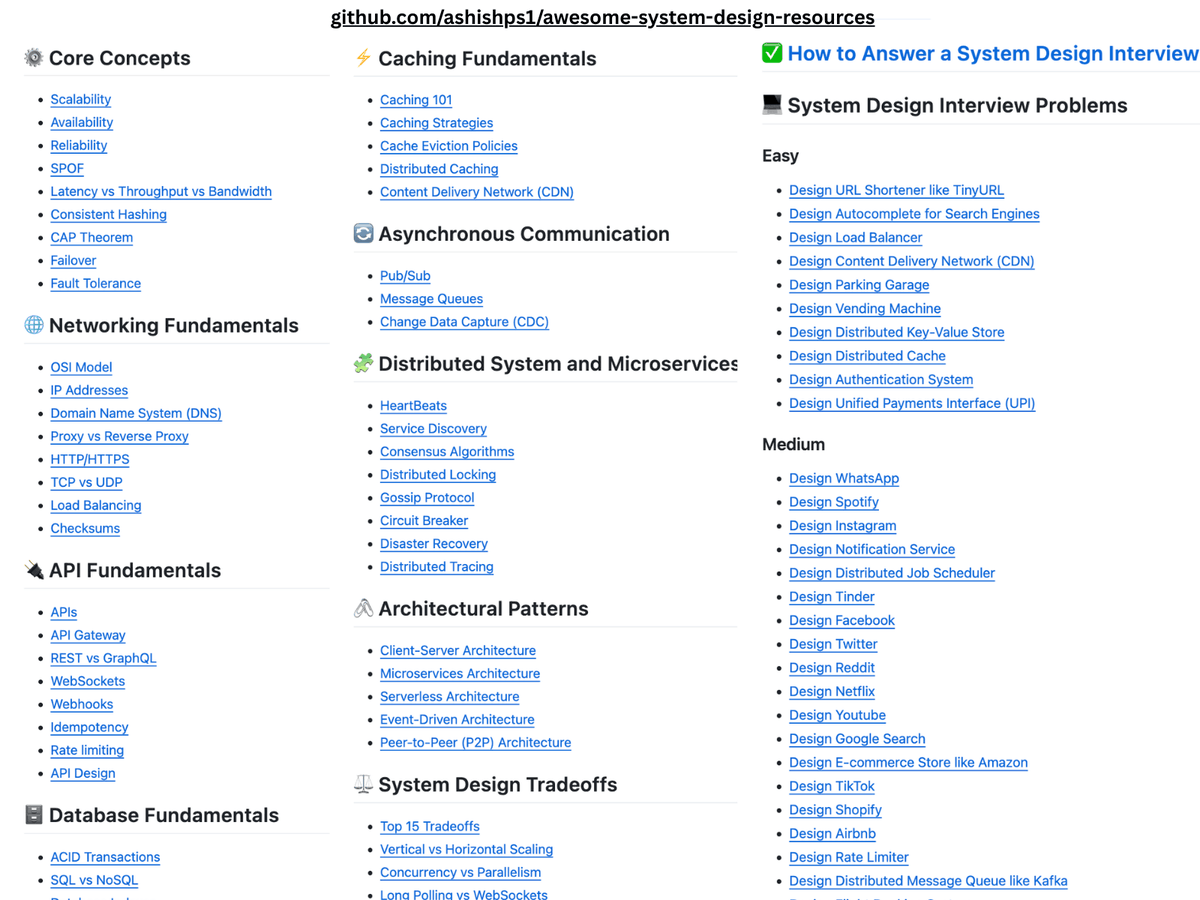
I created a Github repository to learn System Design, and I'm excited to share that it crossed 30k stars recently.
The repository contains a collection of resources to study:
- System Design Core Concepts
- Networking and API Fundamentals
- Database and Caching Fundamentals
- Distributed Systems, Microservies and Architectural Patterns
- System Design Tradeoffs
- 40+ System Design problems categorized by difficulty level
Check it out here: https://t.co/pkVpi6LxSV
If you find the repo valuable, consider giving it a ⭐️ and share with others.
Thanks to everyone who has starred or forked the repository!
We started a new YouTube channel dedicated to AI fundamentals, infrastructure and models.
So far, we’ve published four videos.
We plan to publish 1 video every week.
Since this channel is new, we’re still shaping its direction and would genuinely love your input.
If there are topics you’d like to see covered, please share them with us. Thank you!
Subscribe here: https://t.co/OuKkQotLBP
GPT-5 is not one model.
It is a unified system with multiple models, safeguards, and a real-time router.
This post and diagram are based on our understanding of the GPT 5 system card.
When you send a query, the mode determines which model to use and how much work the system does.
Instant mode sends the query directly to a fast, non-reasoning model named GPT-5-main. It optimizes for latency and is used for simple or low-risk tasks like short explanations or rewrites.
Thinking mode uses a reasoning model named GPT-5-thinking that runs multiple internal steps before producing the final answer. This improves correctness on complex tasks like math or planning.
Auto mode adds a real-time router. A lightweight classifier looks at the query and decides whether to use GPT-5-main or GPT-5-thinking when deeper reasoning is needed.
Pro mode does not use a different model. It uses GPT-5-thinking but samples multiple reasoning attempts and selects the best one using a reward model.
Across all modes, safeguards run in parallel at various stages. A fast topic classifier determines whether the topic is high-risk, followed by a reasoning monitor that applies stricter checks to ensure unsafe responses are blocked.
Over to you: What's your favorite AI chat bot?
Multi-Service Deployment
In this model, we deploy new changes to multiple services simultaneously. This approach is easy to implement. But since all the services are upgraded at the same time, it is hard to manage and test dependencies. It’s also hard to rollback safely.
One of the most asked System Design Interview Question:
Design a Rate Limiter for a high-traffic API service (think Twitter/Netflix scale).
Requirements:
1. Limit requests per user (e.g., 100 requests/min).
2. Limit requests globally (e.g., 1M requests/sec across all users).
3. Should work in a distributed environment (multiple servers).
4. Must ensure fairness (no single user should starve others).
5. Handle burst traffic gracefully.
What Interviewers look for:
Which algorithm would you choose? (Token Bucket, Leaky Bucket, Fixed Window, Sliding Window) and why.
How will you store counters? (In-memory, Redis, DB) considering consistency vs performance.
How to ensure accuracy in sliding windows without degrading performance?
How to prevent race conditions when multiple servers check/update limits concurrently?
What will you do if the rate limiter itself becomes a bottleneck?
How do you gracefully degrade service when limit is reached (429, queue, drop)?
Follow-ups asked:
What if limits are dynamic (different tiers of users: free vs premium)?
How to handle multi-region deployments?
Can you design it as a reusable library/service used by multiple teams?
Before going for the LLD round , don't forget to prepare how to :
Design a Parking Lot
Design an elevator system
Design API rate limiter
Design a logging system
Design a hotel management system
Design a movie ticket booking system
JPMorgan Interview Questions shared by 3 years exp candidate-
1. What are the issue might appear in multithreading?
2. Concurrent Hashmap how it works? why is better than synchronised block?
3. how to achieve locking? difference between lock and shynchronised
VERY commonly asked Interview Question 👇
Suppose you have 2 threads. One of
them prints (1,2,3.) and the other one
prints (A,B,C,.).
How will you ensure that they run in a sequence so that it prints (1,A,2,B)?
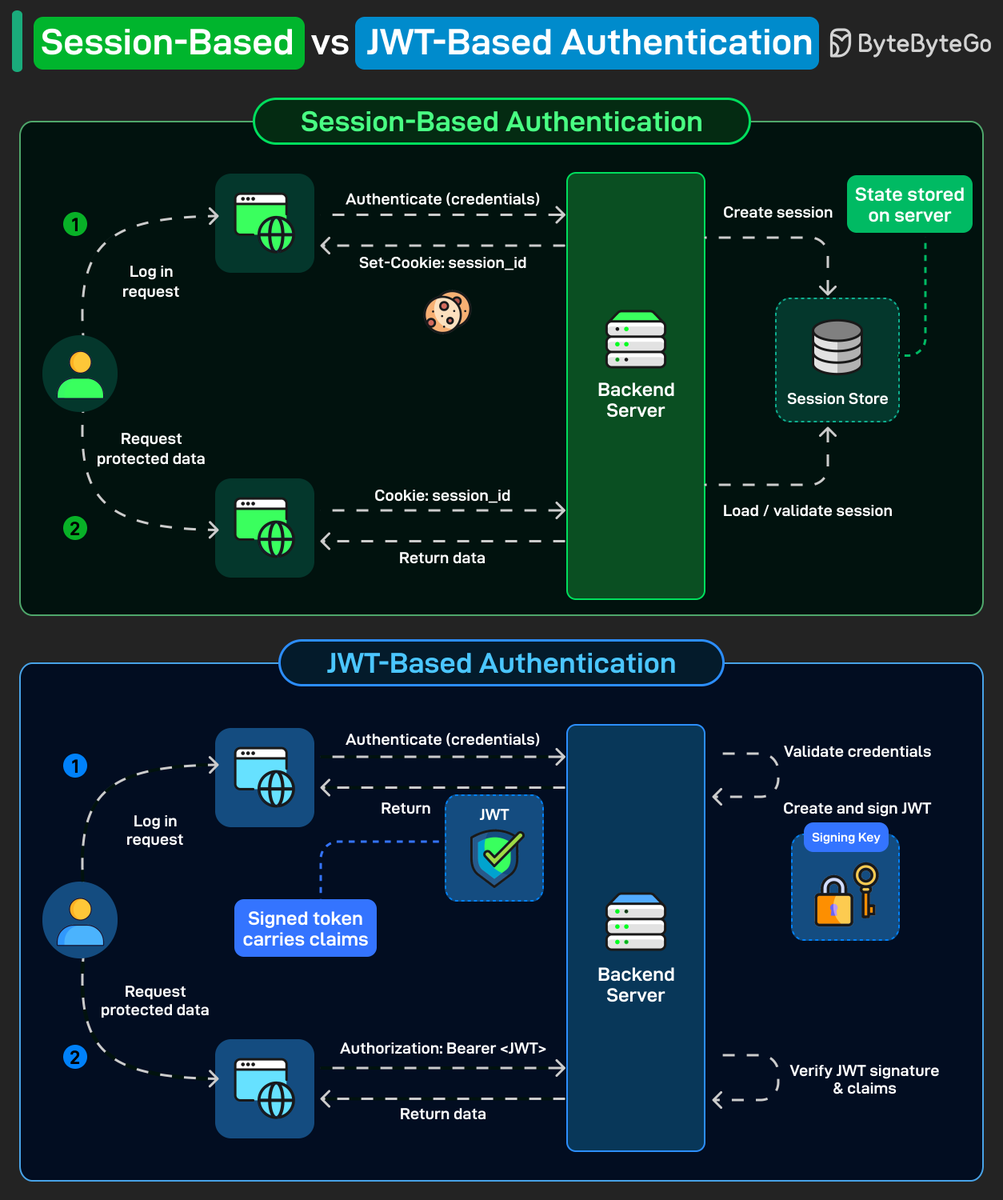
As a developer, do you know what is OpenID Connect (OIDC)?
Built on top of OAuth 2.0.
It adds an identity layer for authentication.
It gives an ID Token (JWT) that tells who the user is.
It powers Single Sign-On across apps.
You can request scopes like openid, profile, email.
Tokens include Access Token for APIs and ID Token for identity.
That's why "Login with Google" just works everywhere.
Very common Java Interview question:
What’s the difference between Callable and Runnable in Java?
Let's see how to answer it perfectly:
Both are functional interfaces, but:
Runnable has a run() method that returns void and can't throw checked exceptions.
Callable<V> has a call() method that returns a value (V) and can throw checked exceptions.
Use cases:
Runnable: simple, fire-and-forget logic (e.g., logging, cleanup)
Callable: for tasks that need to return results or handle exceptions (e.g., service/API/database calls)
Example you can say:
"We used Callable for parallel HTTP calls where we needed the response and wanted to catch timeouts or server errors using Future.get(). It kept our task logic clean without relying on shared mutable state."
What interviewers actually want to hear:
You understand the trade-offs between the two: result handling, exception handling, task coordination.
You are not misusing Runnable for tasks that require results (e.g., via shared variables or hacks).
You use ExecutorService.submit() with Callable properly and know how to manage Futures.
You know both are functional interfaces, so you're comfortable using them with lambdas.
Commonly asked SQL Query Interview Question :
You have a table Users with the following columns:
user_id (INT)
email (VARCHAR)
signup_date (DATE)
Write a query to find users who signed up multiple times with the same email but on different days.
As a Java Developer , how many of the below concepts can you explain :
1. ClassLoader Hierarchy
2. Metaspace and Memory Leaks in Metaspace
3. Happens-Before Relationship (Java Memory Model)
4. Biased Locking and Lock Elision
5. Reflection and Dynamic Proxies
6. Thread Contention and False Sharing
7. Escape Analysis
8. JIT Compilation and Tiered Compilation
9. Record Classes and Sealed Classes
10. Garbage Collector Phases (G1, ZGC, Shenandoah)
Tell me your score👇
Java multithreading interview questions for beginners -
- difference between synchronized blocks and the volatile keyword.
- Explain the concept of reentrant locks in Java
- difference between Thread.sleep() and Object.wait() methods
- What is a thread-local variable in Java?