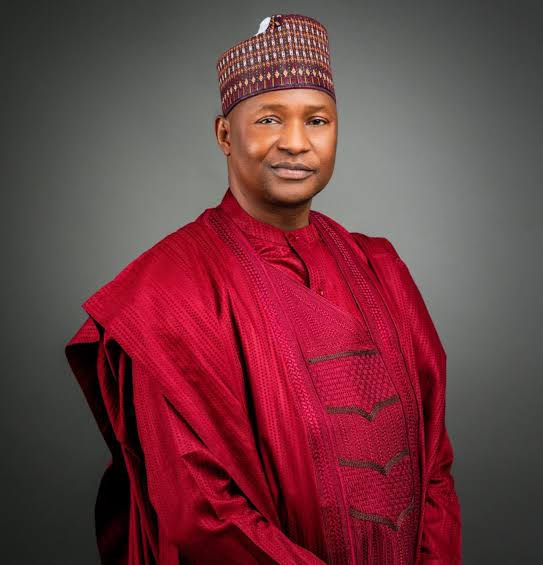
If you didn't catch it, the Lagos-Calabar coastal road project will not proceed along the coast after leaving Lagos and Ogun states. Rather, it would take a route inland through Edo State to connect with the East-West Road. Mr. Umahi refers to this as "an excellent engineering choice by Mr. President."
Nonetheless, we are all aware that this coastal route has always aimed to access lands confined near the sea in Lagos using national resources. It was never going to reach Calabar.
@real_IpobDOS@radiobiafralive
Think deep
Biafrans, exercise caution when purchasing Dangote shares; I have never witnessed wealthy individuals coming down to the streets, where people sell goods for survival, encouraging the uneducated to invest in stocks. If it’s truly going to make you wealthy, these politicians and billionaires will purchase for their families up to their fourth generation.
Dangote in all his wealth could not invest in Biafraland and today he expects Biafrans to purchase his shares , suddenly you believe him and his promoters that he is going to make you rich.
Let’s be wise
WEDNESDAY MUSINGS
AN AWARD OF GRATITUDE, A MOMENT OF REFLECTION, AND A RENEWED CALL TO SERVICE
There are moments in one’s professional journey when a simple visit, a handshake and a modest token of appreciation become far more profound than the material value of the recognition itself. They become a mirror through which one is compelled to look back, take stock and remember the sacrifices, convictions and encounters that shaped the journey.
The recent visit by ezigbo ụmụ Chineke in Abuja, who came to honour me with an award in appreciation of my modest contributions and committed legal service to the Indigenous People of Biafra (IPOB), was one such deeply reflective moment.
Given the trajectory of my professional journey, particularly with regards to the oppressed, the downtrodden and those whose only perceived offence was the peaceful and civil exercise of their inalienable right to self determination, I consider this recognition particularly significant. Not merely because an award was presented, but because it came as an unexpected reminder that some sacrifices, even when they appear forgotten, are not entirely lost to history.
There are seasons when one begins to feel that the difficult encounters, personal risks and life-threatening experiences endured in the course of offering committed legal service have simply been consigned to the dustbin of forgotten history. Yet, from time to time, individuals who benefited directly or indirectly from such counsel return, not necessarily to reopen the past, but to say, “We remember.”
That, to me, is the true value of this recognition.
The visit also afforded me an opportunity for sober stock-taking, introspection and deeper reflection on the turbulent journey we have travelled as a people. It brought with it painful revelations, regrets, gratitude to God and, above all, a renewed appreciation of the need for wisdom, focus, civility and unwavering fidelity to truth.
History has a peculiar way of eventually separating truth from pretence. There were moments when many genuinely believed they were on the right path, only to discover that what appeared to be strength had, in fact, become their greatest vulnerability. There is perhaps no greater tragedy than the desecration of sacred values by those who publicly invoke the revered names of ChukwuOkike Abiama and the gods of our ancestors, yet conduct themselves in ways completely antithetical to the very values those names represent.
Thankfully, time has a way of exposing what human beings attempt to conceal. As our people say, When the wind rises, it does not merely stir the leaves; it lifts the feathers and reveals the hidden side of the fowl.
Today, many things that were once shrouded in secrecy have become clearer. The lessons are profound, and they remind us that no cause, however noble, can ultimately survive the corruption of its principles, the abandonment of civility or the desecration of human life.
I received this award with profound gratitude, humility and every sense of appreciation. I acknowledge it not as a celebration of an individual, but as a solemn reminder of the responsibility that accompanies service to humanity.
I have always admonished that focus, discipline, wisdom and civility must remain our watchwords, particularly in times of crisis and profound provocation.
I thank God for Mazi Chika Edoziem and the Directorate of State (DOS). Whatever may be said about the difficult journey of our people, their courage, sacrifices and commitment to the cause remain significant chapters in the history of the struggle. Without doubt, there were moments when the Ala-Igbo question could have descended into an even more devastating abyss, with innocent lives becoming the ultimate casualties.
My prayer remains that Almighty God will continue to preserve and restore sanity, peace and justice in our land; and that the gods of our ancestors will continue to guide our footsteps, protect our people and restrain those who may be tempted to lead our society further down the path of destruction.
Once again, I express my profound appreciation to the ezigbo ụmụ Chineke for finding the time to visit and present this token of recognition to me. I am sincerely grateful. This gesture has not only touched me deeply; it has further strengthened my resolve to continue contributing, within the limits of my calling and conscience, to humanitarian and pro bono causes, particularly in defence of the vulnerable and those who may otherwise have no voice.
At the end of every journey, and indeed at the beginning of every new one, we must remember that the glory belongs not to man, but to God.
We therefore return all glory, honour and adoration to Almighty God, the faithful God who has preserved us through every storm, sustained us through every trial and continues to guide our footsteps.
Thank you all for this profound gesture of appreciation.
May God bless you all.
And may God continue to heal and restore our land.
Signed
Sir Ifeanyi Ejiofor, Esq. KSC
Dunu-Ezeugosinachi
7 October 2026
MIDWEEK MUSINGS
NO SACRED COWS AT THE BAR: SPI-LAW’S PETITION AGAINST FORMER AGF ABUBAKAR MALAMI AND THE IMPERATIVE OF PROFESSIONAL ACCOUNTABILITY
Following a careful study of the multiple alleged infractions, including allegations bordering on criminal conduct and clear issues of professional misconduct, attributed to Abubakar Malami, former Attorney-General of the Federation since his departure from office , for which he is still facing prosecution in respect of some of these matters, I became particularly concerned that the Nigerian Bar Association has remained unusually quiet in activating the obvious professional dimensions arising from these allegations, thereby allowing the criminal proceedings to proceed in isolation.
I do not wish to dwell, on the alleged manner in which Malami conducted himself in office, or on the various acts attributed to him which, if established, would be unbecoming of a learned Senior Advocate, much less a holder of the exalted office of Attorney-General of the Federation.
It is against this background that I most profoundly commend the resolve and initiative of SPI-LAW, which has now taken the important step of petitioning the LPDC-NBA over alleged professional misconduct by Malami, relying principally on findings contained in the ICC Tribunal’s 16 September 2026 Final Award in ICC Case No. 26260/SPN/AB/CPB: Sunrise Power and Transmission Company Limited & Anor v. Federal Government of Nigeria.
According to the petition, SPI-LAW is asking the Legal Practitioners Disciplinary Committee (LPDC) to examine whether the conduct attributed to Malami in the arbitral award amounts to professional misconduct under Rule 1 of the Rules of Professional Conduct for Legal Practitioners, 2023, and Section 11 of the Legal Practitioners Act.
SPI-LAW brought the petition in the public interest, invoking Rule 4 of the LPDC Rules, 2020, and urged the disciplinary body to determine whether there is a case to answer and, if so, invite Malami to respond to the allegations. This question, in my respectful view, deserves to be examined fully and without fear or favour.
Recall that the ICC Tribunal ultimately rejected Sunrise Power’s claims and ordered the company and Adesanya to reimburse Nigeria $11.82 million in legal fees and $414,125 in arbitration costs.
SPI-LAW has also made it clear that the disciplinary proceedings are not intended to substitute for a criminal trial, stressing that the allegations must be independently determined through the appropriate disciplinary process.
I, however, wish to add and respectfully insist that this petition should not be limited to the LPDC alone. It should, where legally appropriate, extend to the Body of Senior Advocates of Nigeria and the Body of Benchers. This is profoundly long overdue.
There has been a precedent where the NBA relied upon decisions emanating from foreign proceedings to, as a body, petition against a Senior Advocate, notwithstanding the fact that the substantive matter was already before the court. Today, even while that matter is being tried in court, the LPDC, the Body of Senior Advocates and the Body of Benchers are simultaneously seized of aspects of the same subject. What is good for the goose is good for the gander.
I further opine that the NBA, as the professional body entrusted with the protection of the integrity and reputation of the legal profession, must direct its searchlight to allegations of disgraceful and infamous conduct involving top political office holders in the country who continue to conduct themselves as though the professional obligations imposed upon members of the Bar do not apply to them. Indeed, in some instances, persons within this category are themselves members of the very high-echelon bodies earlier highlighted.
The fight against unethical conduct within the legal profession, whether involving ordinary lawyers or Senior Advocates, must be comprehensive, principled and consistent. In pursuing that objective, there must be no sacred cows.
I once again, commend SPI-LAW for this bold and timely initiative.
Signed
Sir Ifeanyi Ejiofor, Esq., KSC
Dunu-Ezeugosinachi
30 September 2026
SBM Intelligence, a consulting firm that provides analysis on West Africa in a report dated 26 May 2025 (2025 SBM Intelligence report), based on various sources, stated:
‘Apart from the more organised separatist movements, various local criminal gangs have been using the escalating conflict to their advantage. These gangs often engage in kidnappings, armed robbery, and extortion, especially in areas where the state’s security presence is weak. Many of these criminal elements, while not directly linked to IPOB or ESN, have capitalised on the fear and confusion to terrorise local populations. Some even claim to be acting on behalf of IPOB or ESN, making it harder to tell the difference between the separatist militants and regular criminals.’
SBM Intelligence report also noted:
‘The rise of unauthorised actors, such as Simon Ekpa and various criminal gangs, has fractured IPOB’s authority, turning a once-organised agitation into a splintered conflict marked by intimidation, extortion, and fear. Ultimately, the Southeast’s security and political crisis is no longer a straightforward tale of secession versus state but a multi-layered conflict driven by ideological conviction, state failure, criminal exploitation, and generational differences in political vision.’
Me - The world is aware that those agent provocateurs where raised to sabotage the Biafra struggle.
It’s really unfortunate that those who suppose to know better are the main actors behind those that have tried to sabotage the Biafra struggle.
#FreeBiafraNow
#IPOB
#DOS
@radiobiafralive@real_IpobDOS
Folorunso Gideon Ibukuntomiwa, Celestina Ekene Chukwudi and Chisom Peace Asom, of Covenant University in Ogun State, and Tmitope Damilola Oyebajo, of Lead City University in Ibadan, in a paper dated March 2025 (Ibukuntomiwa and others 2025), reported:
‘Nigeria is a multiethnic and multicultural nation with over 250 ethnic groups, and federalism was adopted as a form of administration to manage the ethnic and regional variations of the country. There are several issues with federalism in Nigeria, such as the concentration of power at the center, corruption, and unequal resource distribution. The IPOB drive for self-determination reflects the problems with federalism in Nigeria, especially in the southeast, where the group has attracted many supporters. The group maintains that Nigeria’s federal system has failed to solve systemic disparities and injustices faced by the Igbo people and that the only answer is to form an independent state of Biafra. The Nigerian government, on the other hand, sees IPOB’s call for independence as a danger to national unity and territorial integrity.
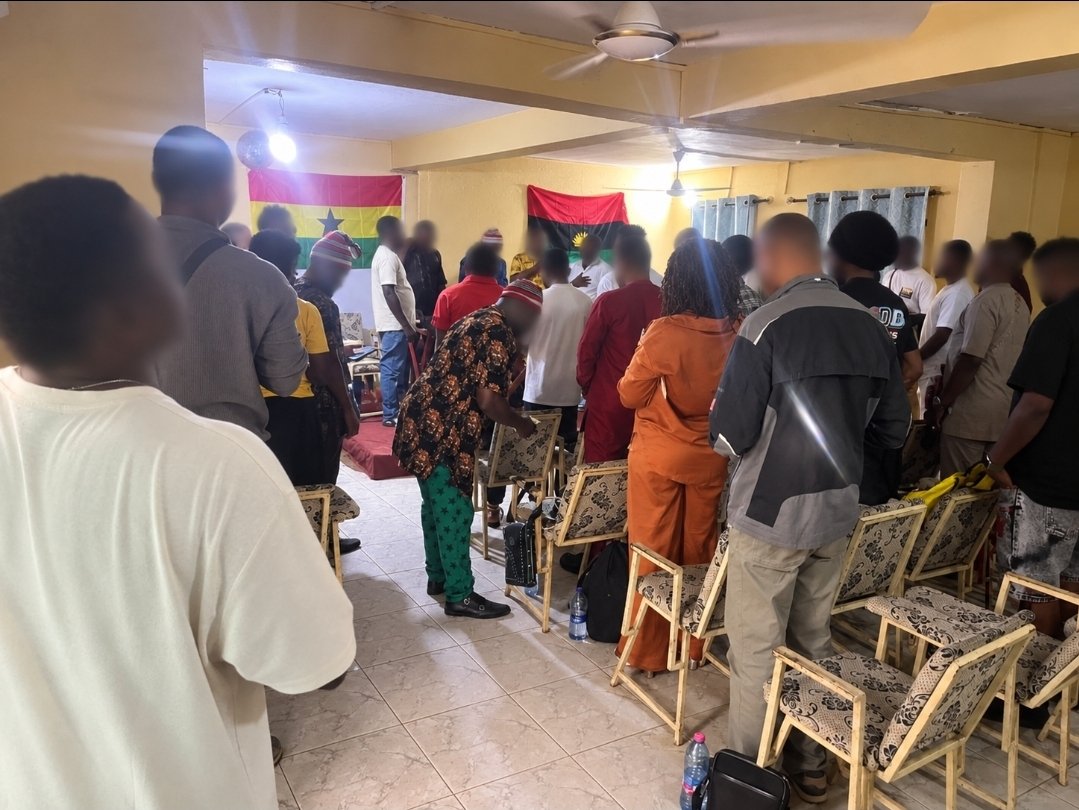
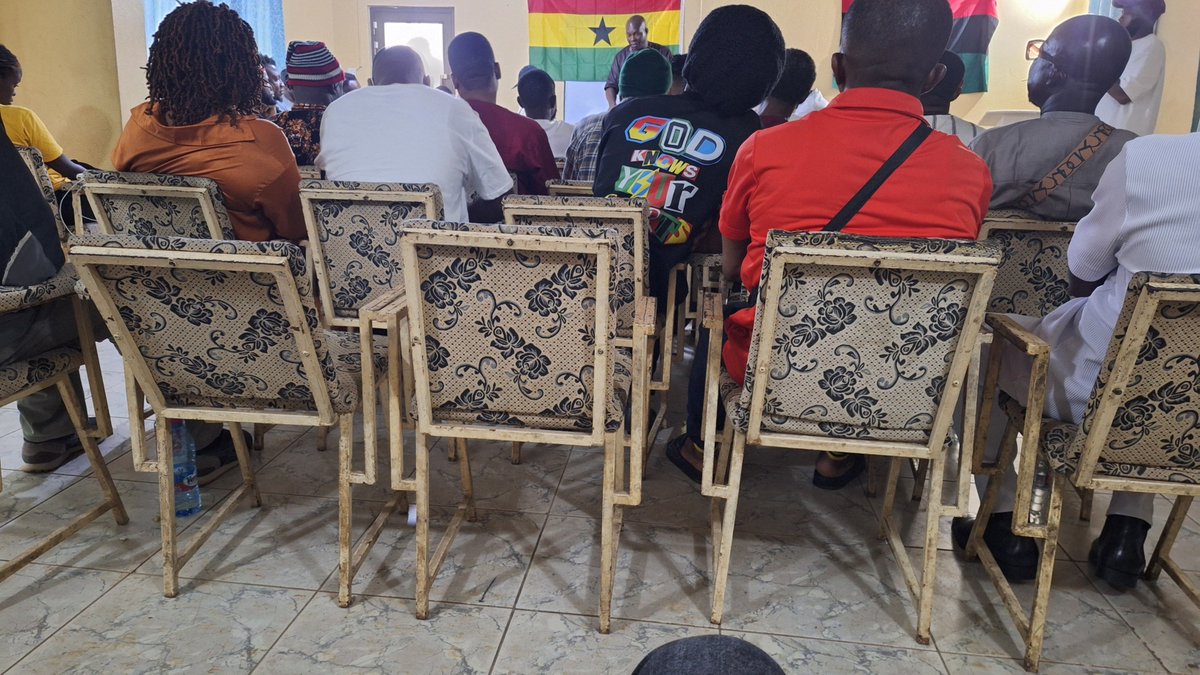
Ghana executives under the institutionalised IPOB DOS, after successful meeting, took the new IPOB oath of allegiance to Biafra and its constitutional authority, vowed that Biafra is their topmost agenda. Biafra or Biafra .
Slow and steady we are getting there .
#SupportBiafra #FreeBiafra
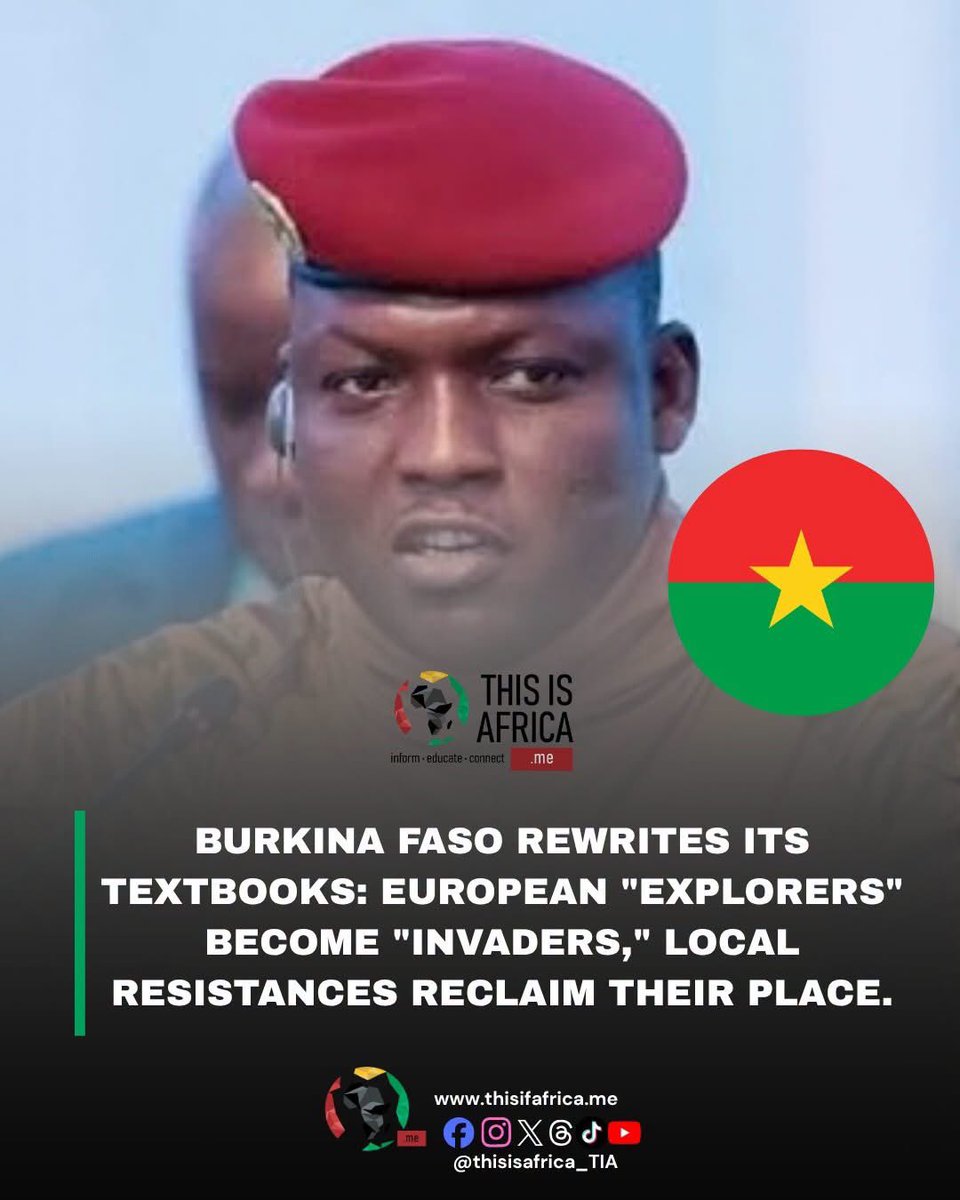
Burkina Faso is rewriting the story it teaches its children.
European “explorers” are being described through the reality of invasion and conquest, while African resistance is being restored to its rightful place in the historical record.
For generations, colonial education taught Africans to see their own history through the eyes of those who conquered them. Decolonising the curriculum means confronting that legacy and putting African voices, resistance and agency back at the centre.
Our history should not be written as though Africa began when Europe arrived.
This is more than changing words in a textbook. It is a struggle over memory, identity and who has the authority to tell Africa’s story.
Me - Decolonizing the mind is not an easy task and Toure is on a very difficult mission and I pray 🙏 he succeed.
#ThisIsAfrica
#BiafraFreedom
#BiafraRestoration
@radiobiafralive
MONDAY MUSINGS
WHEN DEMOCRACY BEGINS TO SMELL OF GUNPOWDER: THE DANGEROUS RISE OF POLITICAL VIOLENCE.
There is something profoundly disturbing about the increasingly violent undertones accompanying political mobilisation across different parts of Nigeria. What may presently appear as isolated skirmishes, billboard controversies and clashes between rival supporters could, if left unchecked, become a far more dangerous national phenomenon as the 2027 General Election approaches.
Recent events ought therefore to command the attention of every discerning citizen.
In Warri, Delta State, reports emerged of suspected thugs disrupting a mobilisation rally involving supporters of the Nigeria Democratic Congress (NDC) presidential candidate of Peter Obi and Rabiu Kwankwaso. Videos circulated showing a chaotic confrontation, while allegations were made that politically sponsored attackers targeted members of the campaign movement. These remain allegations requiring appropriate investigation, but the very occurrence of such a confrontation is disturbing enough.
From Ideato in Imo State, another troubling controversy has unfolded around the removal of political billboards belonging to Hon. Ikenga Imo Ugochinyere and other candidates. A Federal Capital Territory High Court had, in an interim order dated 20 July 2026, restrained the Imo State Government, security agencies and other defendants from destroying, dismantling, defacing or removing the billboards, as well as from interfering with certain civic activities.
The larger issue, however, transcends Warri or Ideato. It is the dangerous normalisation of political confrontation in which disagreement is increasingly treated as an invitation to hostility.
And herein lies the danger.
Political billboards are not worth human blood. Political parties are not worth the destruction of friendships, communities or lives. No candidate, however beloved, should become the reason one Nigerian raises a weapon against another Nigerian.
The tragedy is that the youths who are most frequently recruited into these confrontations are often the very citizens bearing the heaviest consequences of unemployment, insecurity and poor governance. Yet, for a token payment or the fleeting satisfaction of defending a politician, some willingly become instruments of violence.
There is an old wisdom that when two elephants fight, it is the grass that suffers. In our political ecosystem, however, there is an even more painful irony: the elephants often return to the dining table, while the grass is left to count its wounds.
The politician who sends a young man into a street fight is unlikely to stand beside him when the police arrive. He will probably be somewhere in the comfort of his home, office or convoy, discussing strategy while the young recruit explains himself before a magistrate. After the election, the same youth may discover that his political benefactor has developed the remarkable ability to forget the names of those who fought his battles.
What a curious political investment: sacrifice your life for another man’s ambition and receive neither a dividend nor a guarantee.
Security agencies, too, must remain within the boundaries of their constitutional and statutory responsibilities. Where a civil regulatory dispute arises over signage, campaigns or political activities, the resort to military or other armed personnel should not become an automatic substitute for lawful civil processes. Where a court order exists, the proper response is obedience, clarification or lawful challenge—not self-help.
The lesson for our youths is simple but profound: do not surrender your future to somebody else’s political ambition. Do not allow yourself to become a willing instrument of violence merely because another person has the resources to finance it. You have only one life, one future and one name.
If political disagreement arises, answer it with argument, organisation, lawful protest, civic engagement and, ultimately, the ballot, not with bottles, stones, machetes, guns or arson.
The time to extinguish a fire is when it is still a flame, not when the entire house is burning. A stitch in time, as the proverb reminds us, saves nine. If politically motivated violence is allowed to become normal before the 2027 elections, we may discover too late that what we dismissed today as “mere politics” was actually the first warning bell.
Let every political actor, security institution and citizen therefore understand this solemn truth: an election is temporary; the nation is permanent; political office is transient; human life is irreplaceable.
Let us disagree passionately, compete vigorously and organise courageously, but let us never make violence the language of our democracy.
#StopPoliticalViolence
#PoliticsWithoutViolence #DemocracyNotViolence #BallotsNotBattles
#ProtectOurYouth #DoNotDieForPoliticalAmbition #PoliticsMustNotCostLives
#BarEjioforWrites
Signed:
Sir Ifeanyi Ejiofor, Esq., KSC
Dunu-Ezeugosinachi
21st September, 2026
I have long known about Chinese involvement in illegal mining in Nig during my Geological field trips years ago. Often with the enabling hand of corrupt officials.
But when I started seeing Chinese families encouraging their children to learn Igbo, something immediately felt fishy to me.
Meanwhile, Ndị Igbo were clapping, celebrating & jumping up and down because Chinese children were learning Igbo language - as though we were starved of recognition and desperately waiting for validation from outsiders. Mtcheewwww!
What many people failed to ask was: why? Why would a foreign business community as culturally strict as Chinese, invest time and resources into learning the language of a particular people?
Language is not merely communication. Language gives access. Access to markets, relationships, trust, cultural codes and to networks that outsiders would otherwise struggle to penetrate.
When a commercially strategic community begins investing seriously in another people's language, that should not automatically be interpreted as admiration and love! Sometimes it is because they recognise the economic and strategic value of gaining deeper access to that community.
Once or twice this year, I also came across young Igbo women acting as influencers for Chinese phone brands. What caught my attention was that some appeared to be communicating directly with the manufacturers themselves.
Again, something did not sit right with me.
I have reached a certain level in Supply Chain Management where I can recognise the early signs of vertical integration and disintermediation when I see them.
And that is precisely what I believe we are witnessing now.
The manufacturer is no longer satisfied with manufacturing. The manufacturer now wants access to the importer, distributor, wholesaler, the retailer and to the last strata of the food chain -the customer!
And once the manufacturer establishes direct access to the customer, the indigenous trader who spent decades building that market becomes expendable. That is ‘Vertical Integration’!
And when the trader who once stood between manufacturer and customer is bypassed entirely, that is ‘Disintermediation’!
The supplier becomes the competitor, and the middleman disappears. The local trader is squeezed out of the very market he helped to build.
And does this happen in a vacuum? No! I
t happens within a regulatory environment, through policy - through government decisions, government indifference, weak protections for indigenous enterprise and, where applicable, the cooperation or negligence of both subnational (Tradefair policies…….) and federal authorities.
So when I look at what is happening now, I do not see an isolated commercial disagreement. I see something much bigger. I see the continuation of the economic strangulation of Ndị Igbo.
Initially, I wanted to say economic strangulation of Indigenous People, because there are traders from other ethnic groups within ASPMDA and within these commercial spaces. And they should not be ignored.
But sometimes, we must also have the courage to identify the principal community affected by a pattern. There will always be collateral damage. Other Nigerians will be affected. Some traders might even lose businesses and other families will suffer.
But if the overwhelming commercial structure being displaced is one built, sustained and populated substantially by Igbo traders, then we should not become so afraid of naming the people at the centre of it that we erase the pattern itself.
Let us call it what it is.
This is not merely about Chinese traders entering Nigerian markets. It is about who controls the supply chain, access to the customer, distribution. It is about who controls pricing and the networks too!
WEEKEND MUSING
WHEN EVIL CHANGES ITS COLOUR, TRUTH MUST NOT CHANGE ITS VOICE
The Necessity of Exposing Evil, No Matter the Garment It Wears
One of the enduring teachings handed down to us as we journeyed into adulthood was that he who speaks truth and exposes evil, irrespective of whose interest is offended, ultimately enjoys the protection of the gods of the land. The wisdom behind that ancient injunction is simple: a society that loses the courage to confront evil gradually becomes a society governed by it.
In contemporary society, however, evil has become remarkably sophisticated. It no longer wears only the obvious garment of wickedness. It can wear the robe of authority, the uniform of security, the language of politics, the appearance of philanthropy, the prestige of wealth, or even the respectable cloak of religion. Sometimes, it comes smiling, shaking hands and speaking the language of public interest. At other times, it hides behind institutions and powerful individuals who have mastered the art of appearing innocent while others execute their designs.
And therein lies one of the greatest dangers confronting society today: evil frequently triumphs, not because it is stronger than truth, but because those who recognise it are too frightened to expose it.
People remain silent for fear of death, intimidation, arrest, victimisation, professional consequences, economic deprivation or, even more dangerously, being deliberately set up by the very persons against whom they dare to speak. Political power-wielders, influential individuals and some soulless beneficiaries of wealth have, in some circumstances, perfected different colours and strategies of evil, confident that the machinery of government, or the silence of the uninformed and impoverished, will provide them with sufficient cover.
Niccolò Machiavelli, in his famously controversial reflections on power, understood one uncomfortable truth about political society: power is often preserved through perception, appearances and the calculated management of fear. That insight remains instructive, even where one rejects the morality of the Machiavellian method. The danger begins when those who possess power discover that institutions can be manipulated to give an appearance of legitimacy to what is fundamentally unjust.
That is why the greatest antidote to concealed evil remains illumination. What is brought into the light becomes considerably more difficult to conceal.
In the course of my career as a lawyer, and activist , I have learnt many hard and sometimes bitter lessons. I have equally learnt that one of the most effective instruments for confronting societal ills is the courageous exposure of wrongdoing, regardless of whose ox is gored. Evil flourishes best in darkness; it becomes considerably less comfortable when its identity, sponsors, methods and consequences are publicly brought into the light.
The Holy Scriptures understood this principle long before modern society discovered the vocabulary of accountability. The Bible admonishes: “Have no fellowship with the unfruitful works of darkness, but rather expose them.” — Ephesians 5:11.
That is not a counsel to recklessness, vindictiveness or trial by public opinion. It is a solemn reminder that silence must never become an accomplice of wickedness.
We have seen situations in which wealthy and influential individuals enlist the machinery of security or other institutions against their perceived adversaries, sometimes through carefully contrived allegations, orchestrated complaints or elaborate setups. The tragedy is compounded when the person at the receiving end is left wondering why the entire machinery of the State appears suddenly to have descended upon him, while the unseen architect of the ordeal comfortably watches from behind the curtain.
But there is another dimension that deserves serious interrogation.
If society is encouraged to “see evil and speak evil,” then speaking evil must not become a convenient instrument for silencing the vulnerable while the powerful perpetrators and internal enablers remain untouched. The question must therefore extend beyond who reported the evil to who created it, who enabled it, who financed it, who executed it and who benefited from it.
This is particularly important in the context of contemporary governance and security administration. How effectively are institutions identifying internal sabotage? What safeguards exist against the misuse of governmental and security machinery by private interests? What mechanisms are available to distinguish genuine intelligence from malicious information deliberately supplied to settle personal, political, commercial or land-related scores?
These are not academic questions. They are among the realities confronting the downtrodden in our society.
At every turn, wealth and political influence can create an asymmetry of power. The man with money can hire advisers, lawyers, agents and influence; the poor man may have nothing but the truth, and sometimes even the truth appears to require a lawyer before it is permitted to speak.
This is particularly evident in many of the land disputes that find their way into our courts. In my professional experience, a significant number of land disputes in court today, arise from attempts by the powerful to deploy every available colour of influence to dispossess persons who have little or nobody to speak for them. The same pattern can manifest in criminal proceedings, where allegations may be constructed, embellished or strategically deployed against individuals who lack the resources or connections to defend themselves effectively.
Indeed, anyone who has had occasion to encounter the circumstances surrounding some prison inmates would appreciate that not every person behind prison walls necessarily arrived there because the full truth of his circumstances was fairly ventilated. Allegations, institutional failures, prosecutorial excesses, false accusations and the unequal capacity of individuals to defend themselves can sometimes produce consequences that ought to trouble every conscience.
And here lies the uncomfortable truth: Government becomes the highest enabler when public institutions allow themselves to be converted into instruments for private vendettas.
The State possesses enormous powers. It can arrest, prosecute, investigate, detain, restrict movement and deploy the coercive machinery of law. Those powers are necessary for maintaining order, but precisely because they are so formidable, they must never become instruments available to the highest bidder or the most politically connected.
A government that permits its institutions to be used for intimidation, false accusations, orchestrated setups or persecution of the vulnerable at the behest of private interests does more than injure one individual. It weakens public confidence in the institution itself and teaches society the dangerous lesson that justice belongs to those who can afford to purchase proximity to power.
Consequently, I continue to advocate that activists, human-rights defenders, professionals, journalists, community leaders and all persons of conscience must not surrender the responsibility of speaking truth to power. But such courage must be accompanied by responsibility, fairness and fidelity to truth.
The more responsibly evil is exposed, the more difficult it becomes for evil to survive.
We must therefore learn to look beyond the colour of the garment and examine what lies beneath it. Evil does not become righteousness because it wears a uniform. It does not become justice because it carries an official stamp. It does not become patriotism because it invokes the name of government. It does not become holiness because it quotes Scripture. And it certainly does not become truth merely because a powerful person has repeated it often enough.
A society that is afraid to expose evil eventually becomes a society that protects it. But a society whose citizens possess the courage to illuminate wrongdoing, question abuse of power and defend the vulnerable gives itself a fighting chance of preserving justice.
For, ultimately, darkness does not disappear because we complain about it; it retreats when someone has the courage to turn on the light.
Signed
Sir Ifeanyi Ejiofor, Esq., KSC
Dunu Ezeugosinachi
19 September 2026
The Nigerian genocidal war against Biafra may have officially ended as a combatant conflict in January 1970, but in reality, it merely shifted to a new front, one fought without open arms, but with devastating structural consequences. Only a few truly understand that the war never actually ended; it simply changed its approach.
Keep a date with us, as we examine how the weapons of physical combat were replaced by systemic marginalization, economic exclusion, and forced displacement. We will explore how the lines drawn by colonial masters continue to fracture modern lives, how memory serves as our ultimate tool of resistance, and how the Biafran spirit refuses to be erased, standing resilient in the face of institutionalized, unequal citizenship.
Date: Saturday, October 3, 2026
Venue: National Yang Ming Chiao Tung University, Hsinchu Taiwan.
HC103, Humanity and Social Science Building III
Time: 2pm-5pm GMT+8
See poster for more details
@real_IpobDOS@real_DOS_Press
Biafra Briefing: Israeli MK Raises Kanu Case at UN, what matters, why it matters, and what to watch next. Biafra Briefing: Israeli MK Raises Kanu Case at UN, what matters, why it matters, and what to watch next. An Israeli Likud MK asks the UN to revisit its 2022 findings on Nnamdi Kanu, as Nigeria’s state-police, AU election and UNGA developments advance. Read the full article for the context, evidence and key takeaways. Read the full article and share your view https://t.co/7qCrJaAw9H #GeneralJournal #Biafra #NnamdiKanu #IPOB #AfefAbed #UnitedNations #UNWorkingGroupOnArbitrary #Nigeria
BIAFRA ATONEMENT PRAYER 2026
A time for reflection.
A time for repentance.
A time for prayer.
From sunset on Sunday, 20 September, to sunset on Monday, 21 September 2026, Biafrans are invited to observe a solemn period of prayer, reflection, and atonement.
The prayer calls us to examine our individual and collective actions, seek forgiveness from God, renew our commitment to peaceful conducts, and pray for healing, protection, unity, wisdom and the wellbeing of our land.
Let this be a moment to pause from the noise of everyday life and turn our hearts toward God in sincerity.
May our prayers be offered with humility.
May repentance bring renewal.
May peace and wisdom guide our commitment.
Iseeee!
SUNSET — 20 SEPTEMBER 2026
TO
SUNSET — 21 SEPTEMBER 2026
@real_IpobDOS@real_DOS_Press@radiobiafralive
During the morning session of Catalunya Independence Day on September 12, 2026, IPOB Head of Directorate Mazi Chikadibia Edoziem led a delegation of the IPOB family to the Catalunya Monument to lay a wreath in tribute to all who lost their lives in the quest for freedom, particularly the Catalans who perished in their struggle for liberation.
@ChinasaNworu@ari
MIDWEEK MUSINGS
STATE POLICE: A NECESSARY INSTRUMENT FOR EFFECTIVE LOCAL POLICING — OR A POTENTIAL WEAPON IN THE HANDS OF THE POWERFUL? ANAMBRA AS A CASE STUDY: THE UDO GA-ACHỊ EXPERIENCE @CCSoludo
The debate over the establishment of State Police has persisted for years and has assumed renewed significance as Nigeria inches towards a more decentralised policing architecture. The argument for State Police is compelling: policing is, by its very nature, more effective when those charged with maintaining security understand the communities, people, terrain and peculiar security challenges within which they operate.
But there is another side to this debate which deserves far greater attention. The greatest danger may not necessarily come from the Governors themselves. It may come from those who operate in the shadows of government, political power brokers, financiers, associates and influential individuals who consider themselves sufficiently close to the Government to be beyond scrutiny, accountability or restraint.
And therein lies the real cause for concern. The uncomfortable question is not merely: Can a Governor abuse State Police? The more disturbing question is: What happens when persons who wield enormous influence over a State Government acquire informal access to, or influence over, a security structure established with public resources?
That is where the architecture of State Police could become dangerously vulnerable.
Anambra State offers a useful illustration. The State has established the Homeland Security framework under the Anambra State Homeland Security Law 2025, with Agụnechemba and Operation Udo Ga-Achị designed to complement conventional security agencies. The official conception is undoubtedly security-driven and directed towards combating criminality and protecting communities.
But a noble law can produce disturbing consequences when its instruments are diverted from their statutory purpose.
My concern, therefore, is not directed at the legitimate objective of strengthening security. It is about what happens when a publicly funded security apparatus is converted into a private instrument for settling scores, intimidating perceived opponents, pursuing vendettas or accomplishing assignments which the ordinary machinery of law enforcement would not undertake.
A security operative who acts on the instruction of a private individual rather than within the confines of law is no longer merely performing a security function. He becomes an instrument of private power wearing the uniform of public authority.
And that is precisely where the danger lies.
A Governor may be occupied with the enormous responsibilities of governing a State. He may reasonably expect that the security architecture established under his administration will operate within the law and under appropriate supervision. Yet, if influential individuals around government begin to exercise informal command over such structures, the constitutional and legal safeguards surrounding the exercise of coercive power can become dangerously blurred.
The public may then be confronted with a peculiar phenomenon: government security without governmental accountability. That would be a frightening contradiction.
Indeed, what could be more absurd than a situation in which a citizen cannot tell whether a security operative is acting pursuant to lawful governmental authority or merely responding to the wishes of an individual who happens to have the right telephone number?
The danger is not theoretical. There have already been public concerns about abuses involving state-backed security structures in Anambra, including allegations of unlawful arrests, brutality and the use of security operatives in circumstances connected with private disputes.
If Nigeria eventually establishes State Police, the safeguards must go beyond merely preventing Governors from deploying the police against political opponents. The law must also anticipate the subtler danger of powerful individuals operating within the orbit of government and attempting to convert public security institutions into private instruments of influence.
And, most importantly, no individual, however wealthy, politically influential or close to government, should possess an unofficial security command. Public security must remain public. A security uniform must never become a badge of private authority. A government vehicle must never become a mobile instrument of personal vendetta.
Otherwise, we may wake up one morning to discover that the State Police we created to bring security closer to the people has merely brought the machinery of coercion closer to the powerful. That would be a tragic irony.
The greatest test of State Police will therefore not be how efficiently it can arrest a criminal. It will be how faithfully it can resist the instruction of a powerful person when that instruction is unlawful.
For if security personnel become more frightened of the influential individual behind them than of the law before them, then we have not decentralised policing, we have merely decentralised impunity.
And that, surely, is not the State Police Nigerians are asking for.
More specifically, I have serious concerns about what may be happening in parts of my own Anambra State, including my home community of Oraifite. I shall, in subsequent editions, examine these concerns more closely and place the issues before the public conscience, not to undermine legitimate security operations, but to insist that every security institution created with public authority and public resources must remain subject to the law. Because ultimately, the real measure of a security institution is not the fear it can inspire, but the confidence it can command.
And any security architecture that protects the powerful while frightening the powerless has already lost the very essence of public security.
Signed
Sir Ifeanyi Ejiofor, Esq. KSC
Dunu-Ezeugosinachi
September 16, 2026
Do you know IPOB has engaged Nigeria deeply more than the Biafra war period . Meaning that the IPOB has kept the Biafra separatist agitation question alive longer in peacetime than the actual duration of the civil war. Decades after 1970, the socio-political , economic, ethnic grievances and tension .
Comparing the Indigenous People of Biafra (IPOB) to the three-year Nigerian Civil War led by General Chukwuemeka Odumegwu Ojukwu involves contrasting an ongoing ideological and civil agitation with a formal, conventional military conflict
The Biafra conflict from 1967 to 1970 was a large-scale traditional war featuring recognized military forces, established frontlines, substantial artillery, global blockades, and a catastrophic humanitarian disaster that led to millions of civilian casualties. It was a blatant military attempt at secession that jeopardized the imminent geopolitical fragmentation of the Nigerian state.
IPOB, established in 2012, mainly depends on civil disobedience, localized agitation, sit-at-home directives, media campaigns, and propaganda rather than a structured conventional army, significantly affecting the economic and social aspects of the region, yet it lacks the territorial dominance or military strength of the previous Republic of Biafra.
In the end, although IPOB symbolizes an ongoing and disruptive socio-political issue that highlights historical tensions, viewing it as "engaging" Nigeria more than a civil war that claimed over a million lives depends on one's perspective—balancing the continuous, everyday struggles of current separatist movements against the devastating loss of life and existential danger posed by an official state-on-state conflict.
#IPOB
#Biafra_Recognition
#DOS
#Biafra
MONDAY MUSINGS
WHEN YOUTHS CAN STOP A POLITICAL CONVOY BUT CANNOT STOP THE KILLERS: BENUE’S SOBERING SECURITY PARADOX
The Sobering Irony of Benue’s Security Crisis
It is difficult to escape the painful irony unfolding in Benue State.
Only last week, the nation watched in disbelief as youths visibly armed with dangerous objects blocked the convoy of Peter Obi and prevented him from proceeding to Yelwata, where he had gone to commiserate with families still grieving over the horrific massacre.
But while political roadblocks appear remarkably well-organised, the real enemies of the Benue people continue to find frighteningly easy access to their vulnerable communities.
Barely days after the Yelwata controversy, Ayilamo community, in Tombo Council Ward of Logo Local Government Area, was attacked by suspected jihadist bandits. The Benue State Police Command confirmed the death of four police officers and seven civilians. The attack reportedly lasted for several hours before the attackers were reportedly repelled into the surrounding forest.
Ayilamo is not an abstraction on a map. It is an agrarian community whose people have repeatedly appealed for stronger security protection. Residents have reported that the community has endured recurring attacks, while homes and livelihoods have been destroyed and families forced to flee.
And therein lies the tragedy, and, frankly, the most uncomfortable irony.
Where were all the formidable young men who could erect a roadblock against a presidential candidate when armed assailants were descending upon Ayilamo? Where was that youthful energy when innocent farmers needed protection rather than political barricades?
This is not an argument against youthful activism. Far from it. It is an argument against the dangerous misdirection of youthful energy in a State already bleeding from insecurity. Young people who can mobilise themselves to obstruct a lawful political movement can, with proper leadership and lawful organisation, become a formidable force for community vigilance, intelligence gathering and the protection of vulnerable rural settlements.
The tragedy of Benue is that its farmers do not need political warriors at the highways; they need protectors in the hinterlands.
Governor Hyacinth Alia therefore owes the people of Benue more than condemnations after every fresh attack. His administration must demonstrate a security strategy capable of protecting communities such as Yelwata, Ayilamo, Otukpo Nobi, Ugboju and other vulnerable agrarian settlements where the ordinary farmer has increasingly become an unwilling participant in a war he never declared.
This is not to absolve the Federal Government or the security agencies of their constitutional responsibilities. The crisis clearly transcends the capacity of any single state government. Yet, where a State continues to witness repeated attacks, the legitimate question is not merely who is to blame, but what more can be done, and why has it not been done effectively enough?
Even the Federal Capital Territory has recently provided us with another curious lesson in governmental vocabulary. Minister Nyesom Wike, confronted with the persistent presence of cattle on Abuja roads, described the matter as one of “national security”, after previously apologising for the continued roaming of cattle in the capital.
One is therefore tempted to ask: if cows walking on Abuja roads can graduate into a national-security matter, what classification should we reserve for armed men invading farming communities, burning houses and killing police officers and civilians?
The time has therefore come for Governor Alia to redirect every available ounce of youthful energy away from political obstruction and towards the communities that desperately need protection. If these young men possess the courage, organisation and manpower to confront political visitors, let government deploy that energy, within the law, properly trained and under accountable security structures, to defend vulnerable communities and support legitimate security operations.
And when State Police eventually becomes a constitutional and operational reality, these same youths could potentially constitute part of a properly trained, disciplined and professionally supervised community-security architecture.
Benue does not need youths wielding weapons against fellow Nigerians exercising their lawful rights. Benue needs youths wielding courage against insecurity, intelligence against terrorism and discipline against political thuggery.
The greatest irony would be for a State to discover that it had enough young men to stop a presidential convoy, but somehow not enough to help stop the men who have been stopping farmers from returning to their ancestral homes.
That would be a tragedy far more profound than a blocked road.
The road to Yelwata may have been blocked. The road to Ayilamo was not. And therein lies the question that Benue, and indeed Nigeria, must urgently answer.
#Ayilamo
#WhereAreTheDefenders #SecurityBeforePolitics #ProtectThePeople
#Accountability
#StopTheBloodshed #ProtectOurFarmers
#BarEjioforWrites
Signed;
Sir Ifeanyi Ejiofor, Esq. (KSC)
Dunu-Ezeugosinachi
14 September 2026