Imagine a guy who had not been respected his whole life, then one day he gets to a point and everyone is shout “honorable, excellency, etc”
And you are shocked it’s getting to his/her head? You are the joker. Stop expecting things from people you clearly know will …. I rest my case 🙃
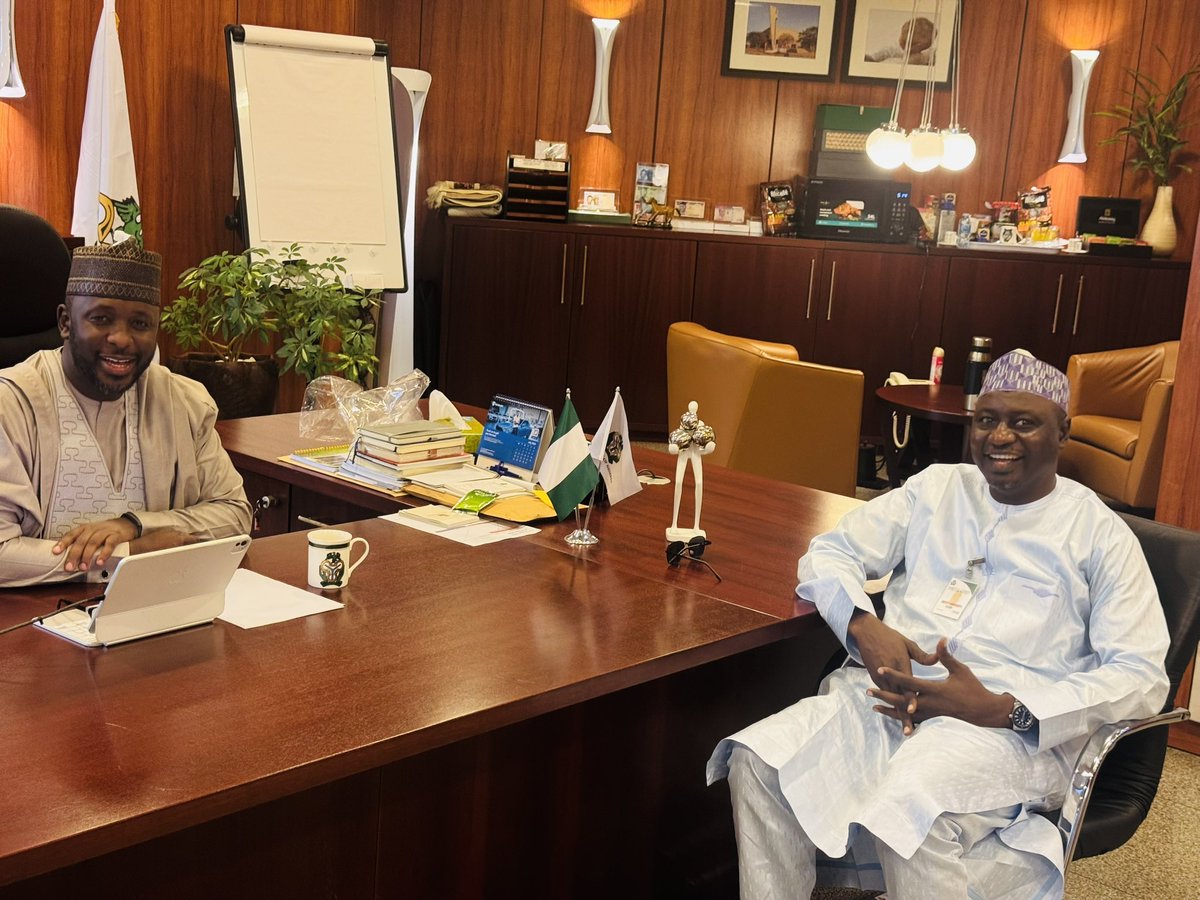
I visited my brother, Ahmed Borodo, the CEO of FlyBird, at his office in Abuja. The company specialises in aircraft management and maintenance, private jet charter and drone surveillance services.
I was particularly impressed by how the company has grown, both in the scale of its operations and the size of its workforce. It is gratifying to see an indigenous enterprise grow steadily and make its mark in a highly specialised industry.
Wishing Ahmed and his team continued growth and greater accomplishments.
Some countries truly need area boy diplomats to confront their excesses. With growing xenophobia in South Africa, there is no better pick (read pig if you like) to represent Nigeria than FFK.
I had the honour of touring the magnificent Dangote Petroleum Refinery and Petrochemicals complex today, before moderating a session with stakeholders in the Northern creative industry.
We left our hotel at about 8am and headed for the Lekki Free Zone, home to what I would describe as one of Africa’s most remarkable industrial achievements of the 21st century.
I was in awe as we turned off the famous Coastal Highway and made our way into the sprawling refinery complex. Dangote has built far more than a refinery; he has created a largely self-sustaining industrial ecosystem that, in my view, ranks among Nigeria’s most strategic national assets and is critical to the country’s energy security.
Consider, for a moment, what Nigerians might be paying for a litre of petrol today, particularly in the wake of the Iran war, without the Dangote Refinery.
Beyond the 700,000-barrel-per-day refinery sitting on 2,635 hactares, Dangote also built a polypropylene plant and a 3km deep-water jetty capable of accommodating large vessels. The facility supports the importation of crude and the export of refined petroleum products and petrochemicals to markets across Africa, Europe and beyond.
Spending over an hour sitting next to Africa’s richest man, asking questions and listening to him, was quite an experience. We may admire Alhaji Aliko Dangote’s vast industrial empire, but perhaps we should pay closer attention to his austere lifestyle and work ethic.
While I wore an embroidered Getzner outfit and a richman’s wristwatch to meet him, the billionaire was dressed in a simple, plain, Toyobo-like fabric, paired with casual suede loafers, and without a wristwatch. He works six days a week, while many of us who look up to him can hardly be persuaded to work through the weekends.
It is difficult to tour such an extraordinary facility without reflecting on the scale of ambition, discipline and long-term thinking required to build it. Kudos Alhaji!
Attending the 2026 Annual Meetings of the International Monetary Fund (IMF) and the World Bank Group (WBG) in Bangkok, Thailand.
Over 18,000 delegates from 191-member countries are attenting the event to discuss policies and partnerships needed to secure a more prosperous future.
As emerging markets grow exponentially, Africa faces stunted economic growth, debt burden, inflation, unstable exchange-rate and joblessness.
For Nigeria, the stakes are particularly high. The challenge is not just to stabilise the economy, but to translate reforms into tangible improvements in the lives of ordinary citizens. To the Tinubu administration’s credit, the economy appears buoyant at the top; to its discredit, the reality remains grim at the grassroots.
As Africa’s most populous country, Nigeria’s economic trajectory matters far beyond its borders. Its success is closely tied to the continent’s broader ambitions for trade, industrialisation and shared prosperity.
As I savor the sweet juice of Thailand’s famous ‘baby pineapples’ (so tiny they rival a golf ball in size) I look forward to a week of meetings, press briefings, and insightful conversations that will shape the global economic agenda, with a keen interest in what they mean for Nigeria.
I thought Nigerian politicians would have learnt a lesson from the 2023 election. The obvious lesson was that the opposition needed to come together, put their personal ambitions aside and form a coalition strong enough to challenge the ruling party.
But here we are again. They are divided, each pursuing his own interest, while facing a stronger ruling party and a shrewd political operator as president.
If Tinubu wins, the opposition should not turn around and blame the masses for accepting incentives to vote. They should blame themselves first. You cannot keep the opposition divided, field several candidates, split the votes and then blame ordinary Nigerians for the outcome.
The hard truth is that many of these politicians are more interested in their own ambitions than in building a serious alternative. They had the opportunity to learn from 2023, but they seem determined to repeat the same mistake.
Today’s Saturday Tribune column examines how Nuhu Ribadu’s years in American exile may have prepared him to navigate one of the sharpest recent confrontations between Abuja and Washington over Trump’s “Christian genocide” rhetoric. I also ask what that https://t.co/14U6G4lhke
Had an enriching conversation with the Deputy Governor (Corporate Services) of the CBN, Dr Muhammad Sani Abdullahi @Dattijo, on the administration’s micro and macroeconomic policies, increase in foreign reserves, forex stability, among others. Dattijo’s ability to dissect complex economic issues were truly remarkable.
The ADC’s abysmal performance in the Osun election is quite alarming. I had thought Aregbesola still wielded significant influence in Osun politics, to the extent that the ADC governorship candidate would either win or (at the very least) put up a strong fight.
The N210 trillion controversy, which appears to have arisen from a misreading of NNPCL’s 2023 audited financial statements, says a lot about our collective number-blindness. Once an eye-popping figure is thrown into the public space, many people accept it without looking critically at the numbers.
Bala Wunti’s clarification, which effectively dismantled the claim, reminded me of Rep. Gudaji Kazaure’s allegation that Godwin Emefiele stole a staggering N89 trillion (about $64 billion). Although I did not say Emefiele was not a thief, but I was crucified simply for questioning figures that never added up.
On the NNPCL N210 Trillion
When the issue of the 210trn broke the internet, I commented that its just and addition of multiple entries to obtain a vague figure for media trial.
@BalaWunti appeared before the committee to shed more light on the issue and he has done more than justice to the issue.
Based on the attached interview, here are the facts:
1. No any figure of N210 trillion appears in the NNPC 2023 Audited Financial Statements (AFS).
2. The N210 trillion figure was derived by adding N107 trillion in receivables to N103 trillion in payables.
3. The NNPCL after PIA began operating two accounts, the shareholders’ account and the commercial account with NAPIMS now NUIMS operating the stakeholders and NNPCL HQ operating the commercial account. And being NUIMS a subsidiary, both its inflows and outflows must reflect on NNPC’s main account.
Here is the full engagement:
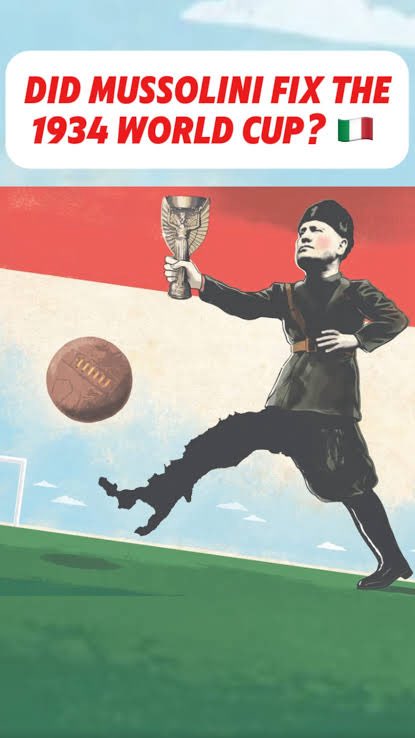
Trump’s interference in this World Cup brings to mind Benito Mussolini’s similar meddling in the 1934 World Cup in Italy.
Soccer historians say the 1934 World Cup remains one of football’s darkest chapters. Italy’s path to the title was overshadowed by allegations of favourable officiating, particularly in the quarter-final against Spain and the semi-final against Austria.
Unlike before, politics has its limits today. Talent and quality matter. USA reached the Round of 16 hurdle, but in Belgium they discovered the limits of political advantage.
Bringing a classic back to life. 🌟Before and after: The stunning transformation of @JaafarSJaafar Peugeot 505 GR, sourced directly from us at Automobil Poacher.