The shift from local to global hiring is not without friction. Employers must weigh lower costs & increased agility against the complexities of international tax frameworks, differing employment laws and the potential dilution of local workplace culture.
https://t.co/uqruGkUOoB
Remote teams risk becoming fragmented, with employees feeling disconnected not only from one another but also from the mission and identity of their organisation.
https://t.co/nTzT8Yff56
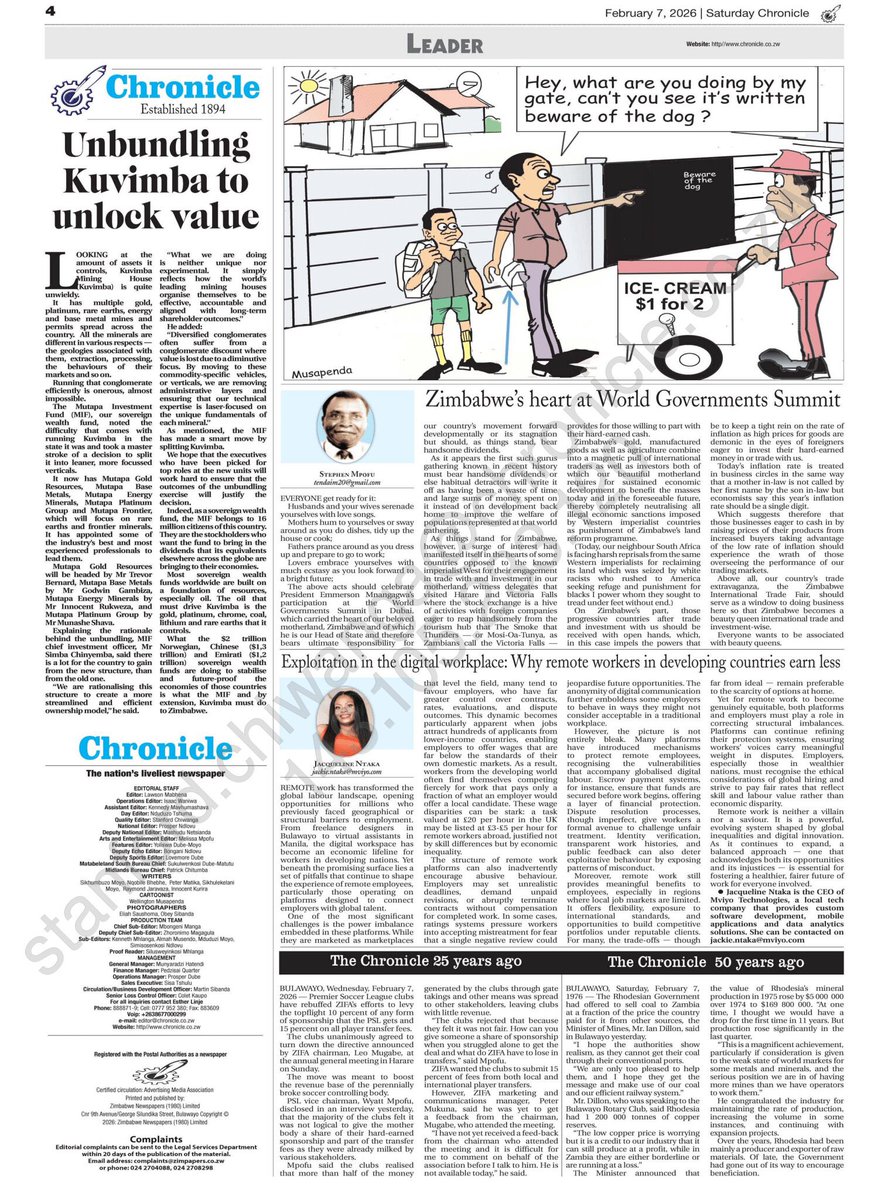
While they are marketed as marketplaces that level the field, many remote work platforms tend to favour employers, who have far greater control over contracts, rates, evaluations, and dispute outcomes.
https://t.co/Oxl4NyMnrE
REMOTE work has transformed the global labour landscape, opening opportunities for millions who previously faced geographical or structural barriers to employment. From freelance ...
https://t.co/pUpkKdTeHm
The danger lies in the seamless way these narratives integrate into the daily lives of citizens, who increasingly rely on social media as their primary source of news.
https://t.co/UPLy57RTa0
IN the contemporary digital landscape, the rapid proliferation of misinformation and the phenomenon colloquially termed “fake news” have emerged as profound challenges...
https://t.co/4WRyWkSH4o
The emergence of bio-based materials — such as biodegradable polymers derived from fungal mycelium or protein coatings sourced from agricultural waste — is offering a viable alternative to petroleum-based plastics in electronics and packaging.
https://t.co/IuzrhvnVmb
In 2025, the industry has moved beyond traditional air conditioning toward advanced liquid cooling systems and direct-to-chip technologies that dissipate heat far more efficiently.
https://t.co/IuzrhvnVmb
THE pervasive presence of digital screens has fundamentally reshaped modern life, with constant connectivity becoming the new normal, particularly for younger generations across the globe, including in parts of Africa and Zimbabwe....
https://t.co/PGFhaKSqN0
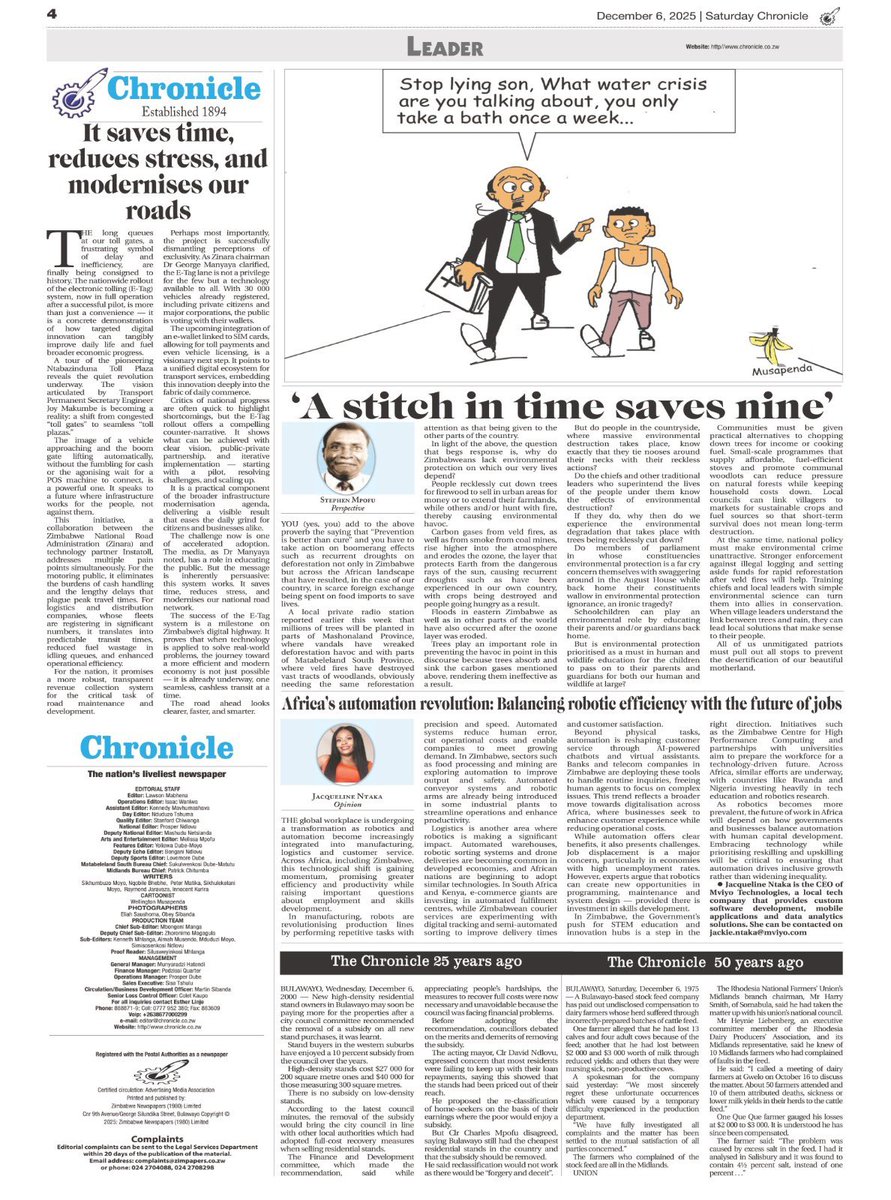
THE global workplace is undergoing a transformation as robotics and automation become increasingly integrated into manufacturing, logistics and customer service. Across Africa, including Zimbabwe, this technological shift is gaining momentum,
https://t.co/fxFnaT5q42
However, there are risks. Increased reliance on foreign-owned platforms raises concerns about data privacy, misinformation, and cultural erosion.
https://t.co/eSzra8GBWB
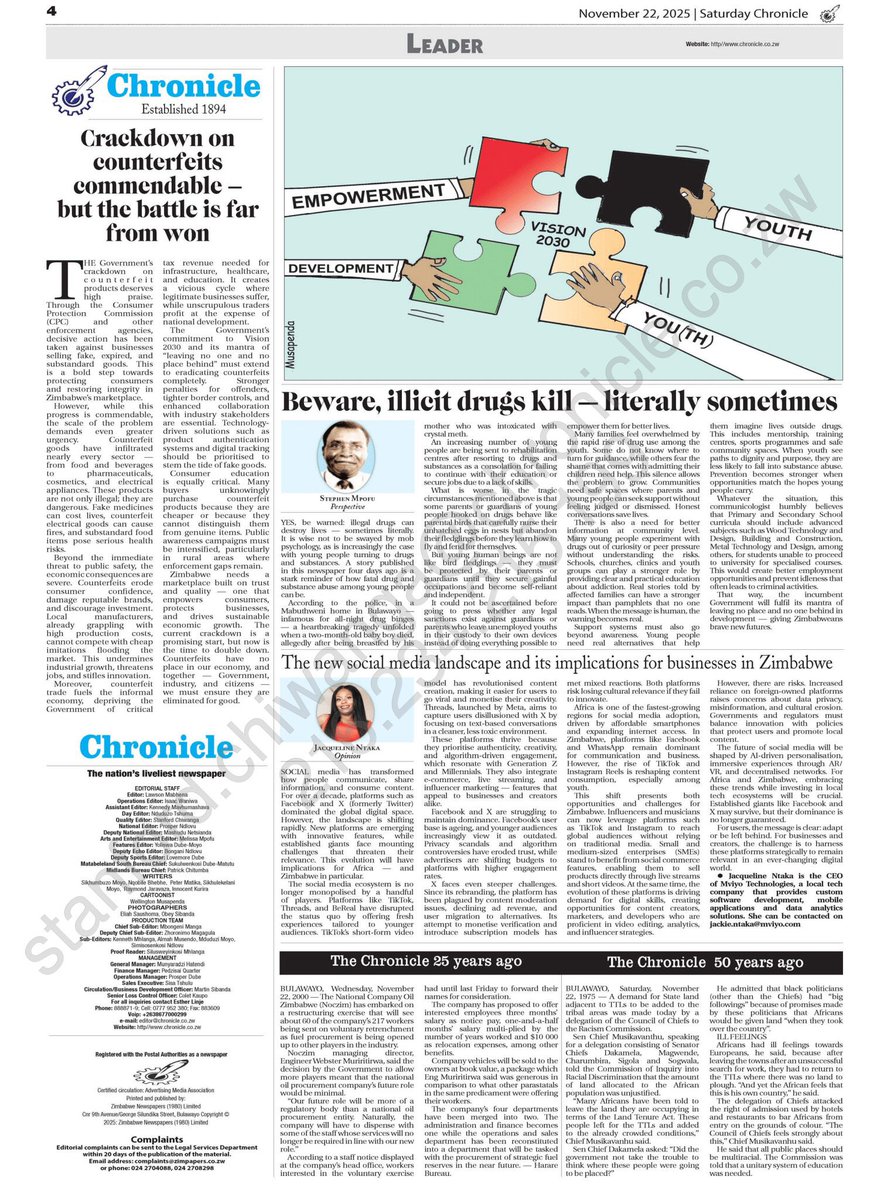
Facebook’s user base is ageing, and younger audiences increasingly view it as outdated. Privacy scandals and algorithm controversies have eroded trust, while advertisers are shifting budgets to platforms with higher engagement rates.
https://t.co/eSzra8H9M9
The social media ecosystem is no longer monopolised by a handful of players. Platforms like TikTok, Threads, and BeReal have disrupted the status quo by offering fresh experiences tailored to younger audiences.
https://t.co/eSzra8H9M9
The Metaverse is not a distant dream — it is a rapidly approaching reality. For Zimbabwe, the question is not whether to engage, but how to harness its potential to create a future that is both digitally advanced and socially equitable.
https://t.co/vg0P2ynxl1
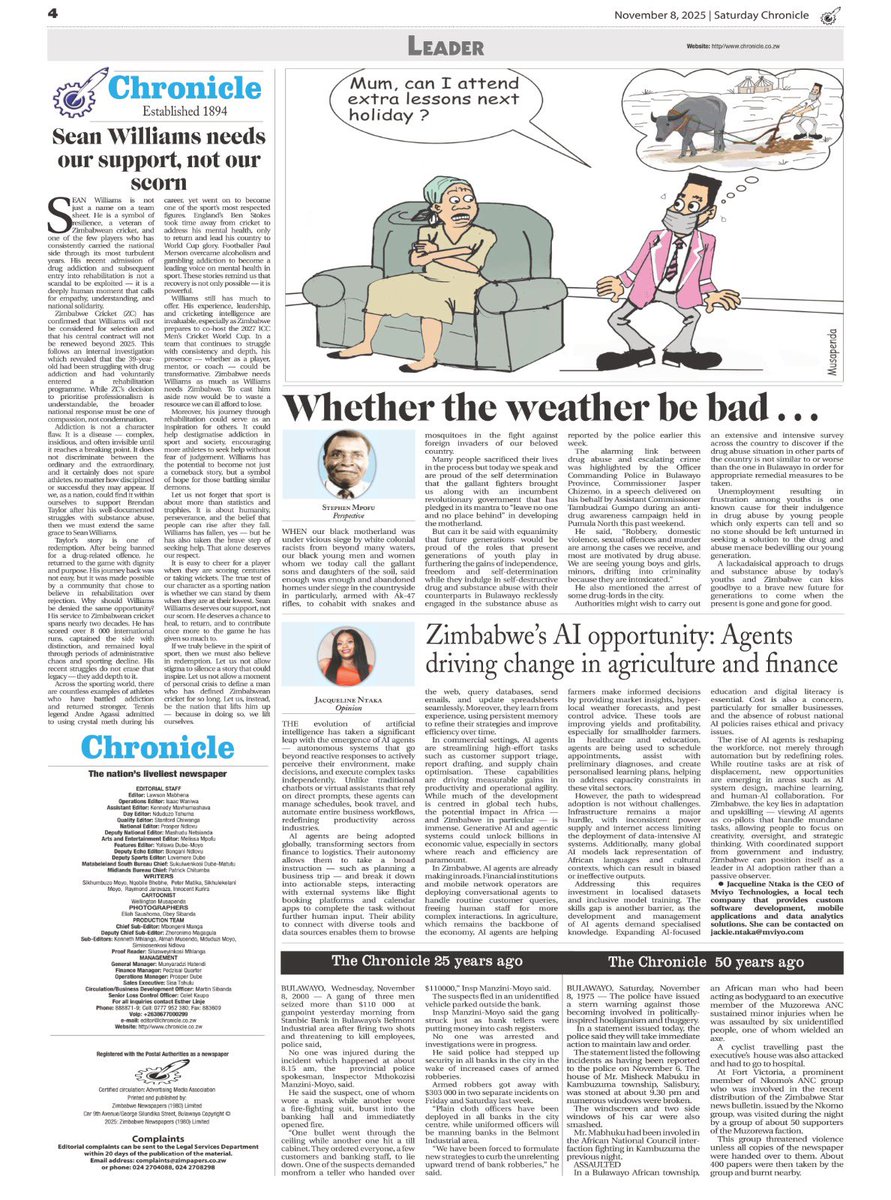
In Zimbabwe, AI agents are already making inroads. Financial institutions and mobile network operators are deploying conversational agents to handle routine customer queries, freeing human staff for more complex interactions.
https://t.co/lDmBzdDDnr
Unlike traditional chatbots or virtual assistants that rely on direct prompts, these agents can manage schedules, book travel, and automate entire business workflows, redefining productivity across industries.
https://t.co/lDmBzdDDnr
For large organisations, a ransomware attack can result in millions in financial losses, prolonged operational downtime, and a breakdown in customer trust.
https://t.co/MQGTizmKby