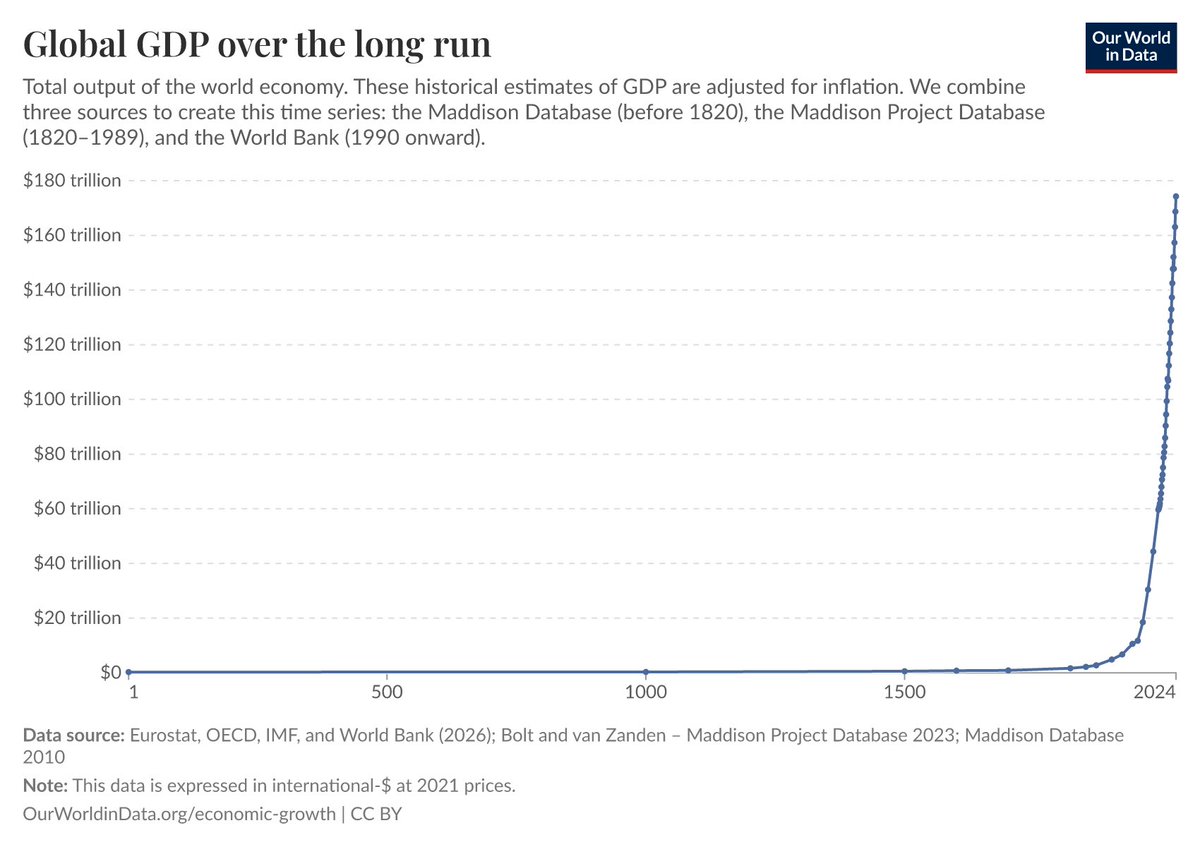
The "best inequality economist in the world" has built his entire public profile on his insistence that wealth inequality is exploding when it's demonstrably not.
And he keeps getting away with it.
‘Neo-liberalism’ and ‘trickle down’ are just buzz words of know nothing pontificators. They use them because they think it makes them sound smart. It doesn’t. And they are unbecoming someone about to become prime minister. We deserve deeper, more considered analysis.
I am having a drink this evening with a friend in a Chiswick pub. Two policemen have just come into the pub and asked me to step outside. I have stepped outside and they have threatened me because I tweeted about a councillor banning seating outside pubs in Chiswick. They admit on video (watch it!) that I did not break the law at all. They came to threaten me. To warn me off tweeting about councillors and the council. This is modern Britain. This is the police state. Please, please, please watch this video. It does involve me using very bad language, but this has got to be seen. Police coming out to threaten someone who hasn’t committed a crime. I’m fuming.
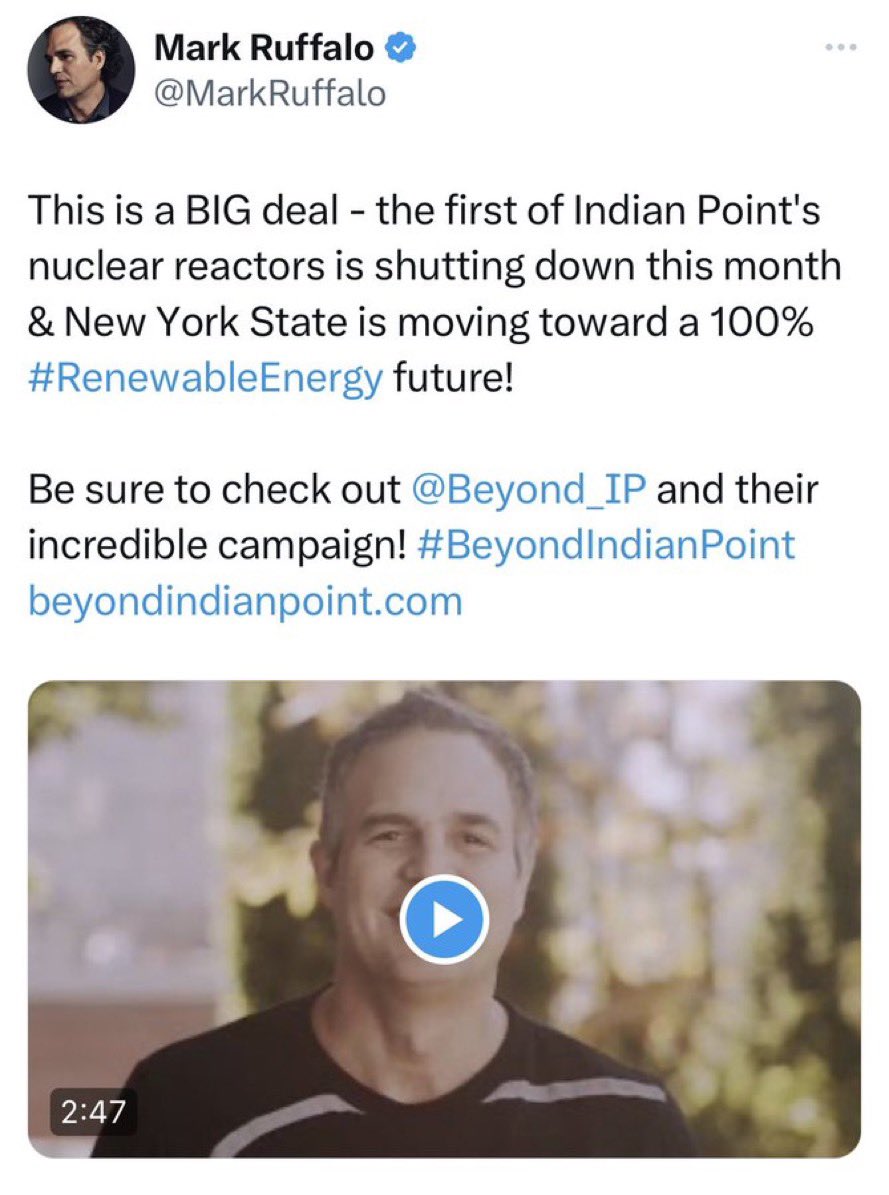
NYC had a nuclear power plant 36 miles away called Indian Point.
It supplied carbon-free safe power that would mean no one would need to turn up their thermostats.
But it was closed in 2021 by the degrowth Death Cult. Now NYC relies on fossil fuels for 90% of its power 🫠
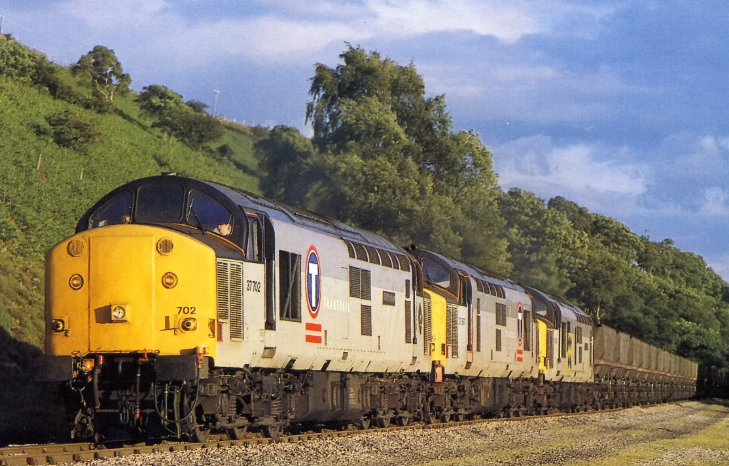
British rail services are often held up as an example of how privatisation doesn’t work. In fact, it proves the exact opposite: the parts of the railway that were genuinely exposed to market incentives have performed much better than the parts that remained under detailed government control.
British rail provides something as rare as an independent variable experiment in economics: in the early 1990s, two comparable sectors exited full state ownership but followed very different models.
The "privatisation" of the British passenger rail industry was never actual privatisation. It was a transfer of legal ownership, but not of control or of full economic interest, to the private sector. Private Train Operating Companies (TOCs) were awarded heavily regulated, fixed-term franchises which gave them monopolies over their specific routes. The state continued to dictate operations and investment obligations, assume revenue risks, specify timetables and set fares, while private entities extracted strictly regulated profits.
Contrast that with the rail freight sector, which was structured to be an open and competitive private market with operators taking full financial risk. Freight operates under pure open access model where any licensed private company can buy track space from the infrastructure provider and compete on any route. This lack of franchise protection has paved the way for many new private entrants over the decades.
Unlike the much criticized passenger rail sector, the privatisation of rail freight has been an unmitigated success. It spurred massive private capital investment in rolling stock and reversed a decades-long decline in freight volumes. Costs have dropped as productivity has improved significantly, with rail freight now carrying 70% more goods but with 30% fewer train paths than under state control.
The British rail sector tells a story of private success versus the mess of the hybrid passenger model that never was actual privatisation, but government granted monopolies to heavily regulated and subsidised franchises. Actual privatisation means not only transfer of ownership, but of control and full financial risk to the private sector. The British rail freight sector shows what can actually be achieved by proper exposure to the dynamic forces of free market incentives.
"Freedom has many difficulties and democracy is not perfect, but we have never had to put a wall up to keep our people in, to prevent them from leaving us." - John F. Kennedy
I need to repeat the following that I wrote a few months ago.
—
Classical liberalism is the enemy of all collectivists—left and right alike. It is loathed and despised by communists, Nazis, socialists, fascists, national-revolutionaries, theocrats, and militarists. The sub-families of collectivism all see each other as enemies, yet all of them see liberalism as an enemy. They share contempt for all liberal ideas and blame it for a host of social problems -- each of which is respectively defined by each group in ways that is mutually exclusive to other definitions.
The members of the great liberal family, for their part, reciprocate this contempt. The problem is that they sometimes forget that they, too, should be the enemy of everyone. Historically, in situations where they faced multiple collectivisms, they tried to choose the lesser evil or failed to grasp the nature of a new form of collectivism. At times, they therefore made the mistake of not being the enemy of everyone. Liberals in Italy looked the other way in 1922 -- fearing the communists in the wake of the Communist violence in the aftermath of WW1, they tolerated the Fascists (until they realized too late their error). Some liberals shrugged at Pinochet's authoritarianism because Allende was a radical socialist. It forever tainted the value of opening up an economy in terms of poverty eradication.
It is thanks to these errors of judgment that all enemies of liberalism can overlook the fact that even imperfect and incomplete applications of liberal ideas have led to more prosperous and more ecological societies, with people living longer, in better conditions, and so on. They can point to the errors in judgment of classical liberals to obscure the failures of their worldviews. They can use them to obscure that the imperfect applications of all collectivist ideas have led to famines, wars, impoverishment, dictatorships, unimaginable violence, and the denial of individuals’ fundamental rights—always with the thoroughly Jacobin excuse that you cannot make an omelet without breaking eggs.
Classical liberals need to be true to their calling: be the common enemy of all collectivist ideologues.
You think the Civil Rights Act was bad?
Let me introduce you to the Americans with Disabilities Act.
And something that's even worse: The Americans with Disabilities Act Amendments Act of 2008.
I explore the horrors of this law here. https://t.co/sJK69coX6H
Read the Gulag Archipelago.
Please, I'm begging you, just read how communist theory caused the deaths of 100 million people across Europe and the world.
Why does energy bring out the inner fascist in every classical liberal? The answer is not a different prescriptive mix, whether that's more or less wind, solar, biomass, nuclear, gas, batteries or whatever. As soon as you're saying we should have more or less of a tech, you are ignoring the limitations to knowledge that got us in this mess in the first place, and putting yourself in the same philosophical camp as Ed Milliband. Your prescription will be just as inflexible and market-destroying as any other.
It's really simple. We need institutional change to remove all the govt skews and inefficiencies, and let the market keep discovering the best balance under those conditions. It doesn't matter what that mix will be. No one knows what the "right" mix is. It will keep changing.
This is basic stuff, and yet many of the best classical liberals I know seem to have fallen for the most basic fallacy that we all hate: it's too important to leave it to the market.
No. It's too important not to leave it to the market.
What’s Wrong With Britain’s Railways?
Britain has the most expensive walk-up train tickets in Europe.
A system consuming billions in annual subsidy.
Here is what actually went wrong.
The historical truth nobody mentions.
Victorian railways were built entirely by private capital.
Zero government subsidy.
Genuine competition on major routes.
Real fares fell consistently as productivity improved.
Private enterprise built the finest railway network in the world.
Then the state got involved.
1921 — The First Mistake.
The Railways Act 1921 forced hundreds of competing private companies into four regional monopolies. London Midland and Scottish.
London and North Eastern.
Great Western.
Southern.
Competition — the mechanism that had driven quality and falling prices was eliminated by government diktat.
Decline began here.
Not in 1994.
Not in 1948.
Here.
1948 — Nationalisation.
British Railways.
The experiment ran for 46 years.
The verdict is unambiguous:
Chronic losses requiring continuous taxpayer subsidy.
Catastrophic industrial relations — strikes, restrictive practices, union capture.
Deteriorating service quality.
The Beeching cuts closing 5,000 miles of track.
Nationalisation did not work.
By the 1980s British Rail was a national embarrassment.
1994 — Privatisation by John Major
The solution to nationalisation’s failure.
Except it wasn’t privatisation.
It was the worst possible structural design.
Here is what they actually created:
Fatal Flaw One — They Split Track From Train.
Government via Network Rail owns and operates the infrastructure.
Train operators run the services.
Result:
No single entity accountable for the passenger experience.
Constant conflict over access, delays, and costs.
The Hatfield crash 2000 — caused by a cracked rail —
exposed catastrophic underinvestment under Railtrack.
The infrastructure was effectively renationalised by 2002.
Eight years into privatisation. The track was already back in state hands.
Fatal Flaw Two — They Created Private Monopolies.
Not competition.
One operator per route.
A private monopoly replacing a state monopoly.
Franchises awarded by government bureaucrats — not by the market.
Passengers had no alternative.
This is not capitalism.
Fatal Flaw Three — The Subsidy Paradox.
British Rail in its final years received approximately £1 billion annually in subsidy.
After privatisation — designed to reduce subsidy —
government support exceeded £6 billion annually by 2019.
Privatisation was supposed to save money.
It cost six times more.
The profits were privatised.
The losses were socialised.
Exactly what genuine free markets are supposed to prevent.
Fatal Flaw Four — Ticketing Chaos.
One state system became thousands of fare types.
Advance. Off-peak. Anytime. Super off-peak.
Different prices for identical journeys
depending on which company issued the ticket
and when you happened to buy it.
A passenger paying £12.50 sitting next to one paying £93.
Same seat. Same train. Same destination.
This is not a market.
It is price discrimination exploiting information asymmetry.
Why Are Tickets So Expensive?
Five specific reasons.
Reason One
Infrastructure costs are extraordinary.
Network Rail maintains 15,849 km of track.
Historic underinvestment requiring expensive catch-up.
Heavily unionised maintenance workforce.
Safety regulation imposing significant cost.
British infrastructure projects consistently cost multiples of equivalent European projects.
HS2 — budgeted at £33 billion — exceeded £100 billion before partial cancellation.
Every pound of that cost flows through to fares or subsidy.
Reason Two
Labour costs are extraordinary.
Train drivers averaging £60,000-£70,000 annually.
Well above comparable European levels.
ASLEF has maintained extraordinary wage levels for decades.
The 2022-2023 strike wave produced significant pay increases with no corresponding productivity improvements. This is the predictable consequence of monopoly employment.
A union facing a single employer with no competitive alternative has unlimited leverage.
The passenger pays.
Reason Three
Regulatory complexity.
Office of Rail and Road.
Department for Transport.
Competition and Markets Authority.
Safety and Standards Board.
Each franchise agreement running to thousands of pages.
Every layer of regulation has a cost.
That cost flows through to fares.
Complexity itself serves incumbent interests —
established operators navigate it.
New competitors cannot.
Reason Four
High fares AND high subsidy simultaneously.
Britain has both.
This apparent paradox reveals the dysfunction perfectly.
High infrastructure costs require high access charges.
High access charges require either high fares or high subsidy.
Political pressure limits how high fares can go.
So both are high.
The subsidy flows to infrastructure and loss-making routes.
The fares flow from commuters and intercity travellers.
Neither adequately funds the system’s genuine costs.
The passenger pays twice — as traveller and as taxpayer.
Reason Five
No genuine competition.
In a genuine market providers compete on price and quality.
Passengers choose between competing operators.
Inefficient operators lose business.
Efficient operators grow.
Prices fall. Quality rises.
Britain has never had this on its railways.
Not under British Rail.
Not under the franchise system.
Not under renationalisation.
The passenger has always had one choice — pay or don’t travel.
The Numbers That Indict The System.
Great Western Railway — Europe’s most expensive operator.
Fares two and a half times the EU average.
London’s Underground — most expensive metro in the world.
Standard single fares triple those in Seoul.
Twice those in Madrid.
What About Renationalisation?
The current government’s answer.
Great British Railways.
Full nationalisation by 2027.
Here is the problem.
British Rail 1948-1994 demonstrates conclusively that state operation:
Does not reduce costs.
Does not improve service.
Does not reduce fares.
Does increase subsidy burden.
Does worsen industrial relations.
The worst railway strikes in British history happened under nationalisation.
The Political Economy Problem.
A nationalised railway faces irresolvable political pressures.
Trade unions lobby for higher wages — ultimately taxpayer funded.
MPs lobby for uneconomic routes serving their constituencies.
Treasury demands subsidy reduction conflicting with investment needs.
Passengers demand lower fares conflicting with financial sustainability.
All mediated through politics rather than markets.
The result is guaranteed — the same institutional sclerosis as British Rail.
Not because the people involved are bad.
Because the incentive structure makes good outcomes nearly impossible.
Britain’s railway problem is not technical. It is not even primarily financial.
It is constitutional.
Britain has never decided what railways are.
A genuine market — requiring real competition, real failure, real price signals.
Or a public service — requiring honest subsidy and genuine political accountability.
Instead it created something that is neither.
Private monopolies enjoying public subsidy.
Commercial pricing without commercial discipline.
Competitive branding without competition.
The government is now renationalising a system
that was never genuinely privatised.
And presenting this as progress.
The passenger will pay.
The taxpayer will pay
Again.
End of thread.
#GreatBritishRail #GBR #GreatBritishRailways #Renationlisation #PublicOwnership #RailRefor
I have been sickened all day by the news of three boys who lured two schoolgirls, raped them, and filmed it on their phones while they laughed and egged each other on. When they finally stood before a judge this week, they were handed “rehabilitation orders” and walked out without serving a single day behind bars. Not in prison, not in custody or a young offender institution.
The judge said, “None of you need to go to prison”.
What message does that send to rapists? The crime could hardly be graver, yet the punishment was no punishment at all. It’s the collapse of consequences and the rot runs right through the justice system.
And this is only going to get worse because Labour are choosing to go soft on criminals:
❌ They have abolished short prison sentences.
❌ They have let tens of thousands of criminals out early.
❌ And now they want to raise the age of criminal responsibility, so that even MORE young offenders escape any consequence at all.
My position is common sense👇
PRISON WORKS.
✅It punishes those who do wrong, it keeps dangerous people off our streets and away from our children.
✅It tells every victim that the law is on their side.
A country that forgets this is a country where schoolgirls are raped and filmed for sport, and the boys who did it get to go home.
Conservatives stand against it and our policies on sentencing and prison are the ones that will deliver a stronger country.
POV: You’re coming home after a journey around the Moon. 🌕
Before reentering Earth’s atmosphere at the end of Artemis II, the Orion spacecraft’s crew module — carrying the astronauts — separated from the service module that provided propulsion and power throughout the mission.
Tucker: Your data center is bigger than Manhattan, but doesn’t provide as many jobs as Manhattan.
Maybe he’s just stupid?
He’s good at talking and charismatic, which makes him sound smart, but I think “he’s just dumb” is an underrated explanation.