Survival horror collection photo dump! 🤍 — the PS2 era really hits hard! 👏🏻
Your turn! Drop a photo of your own horror game collection in the replies — I wanna see them all! What was your favorite? ⚰️👀
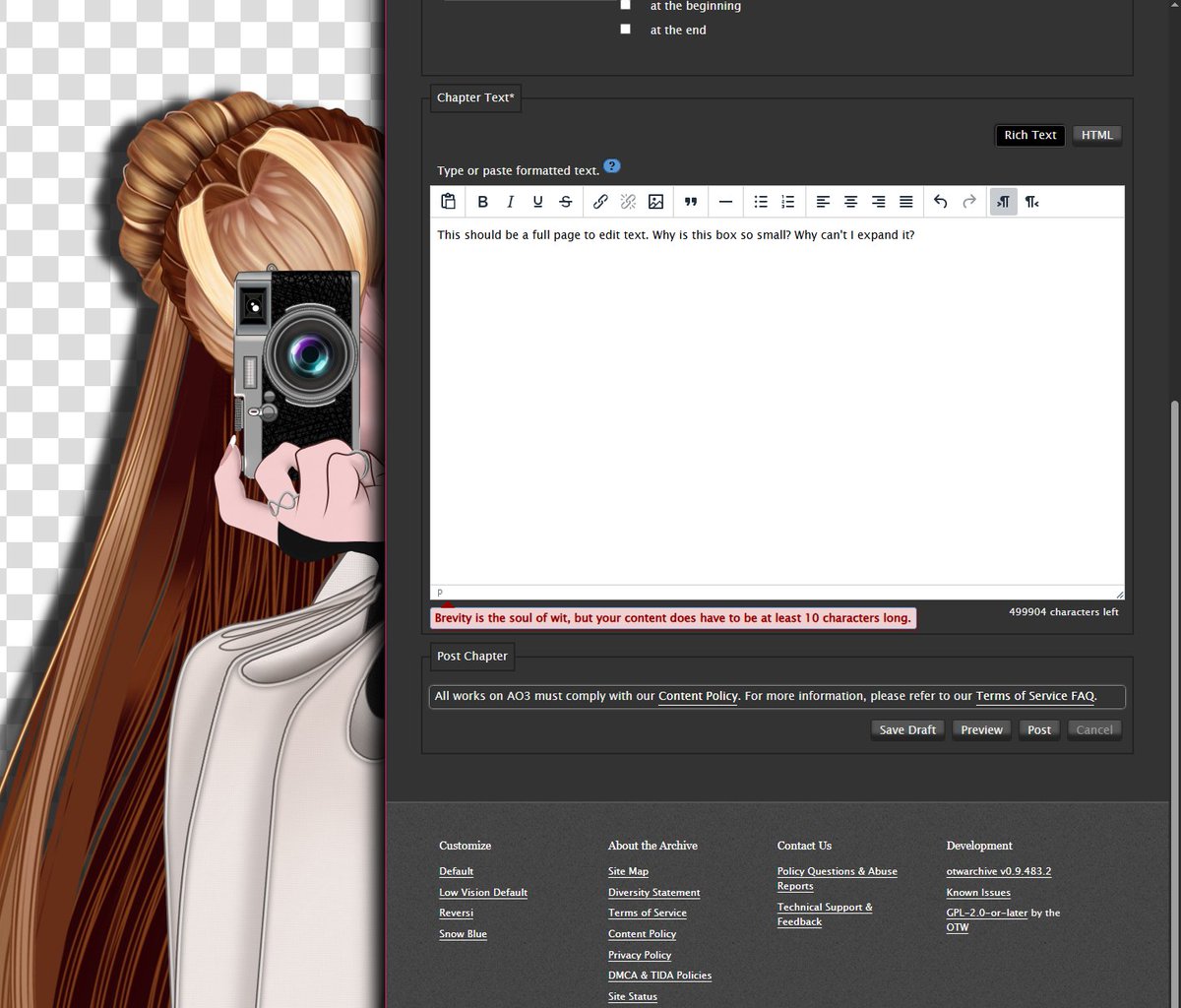
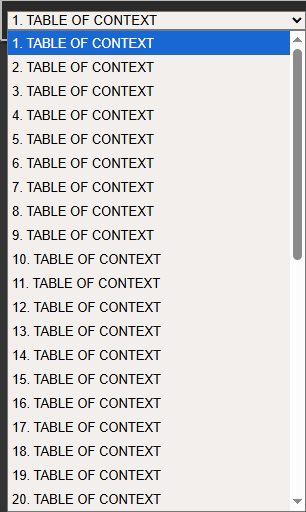
AO3 desperately needs better formatting tools. I accidentally saved 60 draft “Table of Contents” chapters while working in HTML and now have to delete them one by one with no bulk option.
Being able to schedule draft chapters for future publication would also be amazing.
So frustrating.
If you’ve been wondering where I’ve disappeared to… I’ve been rewriting my fanfic instead of animating my Vtuber model like a responsible person. Oops. 😅
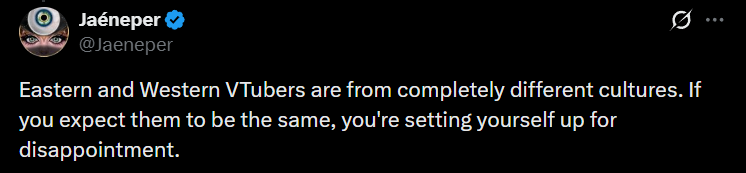
I could have been clearer. I wasn't trying to be absolute — just warning about mismatched expectations. Japanese corporate VTubers lean hard into idol/kayfabe culture, while Western ones are rooted more in streaming culture. I view them as different subgenres (or styles) of the same hobby.
What a conundrum it is to be a VTuber.
You get called hideous for choosing performance art — anonymity, puppetry, and voice acting — to represent yourself in online spaces.
But if you show the performer behind the puppet with a simple photo, like any other entertainer, you get lambasted and called a whore.
You’re damned if you play the game by the “rules” of the format, and damned if you step outside them.
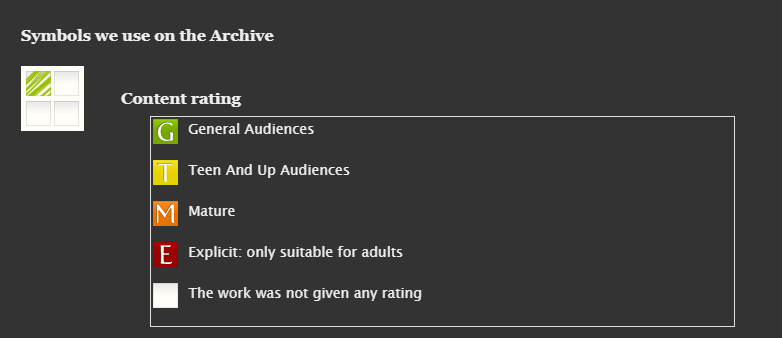
I've noticed that many people don't know how to properly tag or rate their stories. That's surprising, because the site explains each rating clearly when you click on the rating options.
I've always looked at it this way:
Mature = Rated R (17+): Suitable for ages 17 and over. May include intense or realistic depictions of violence, blood and gore, sexual content, and frequent strong language.
Explicit = NC-17 (Adults Only): Suitable for ages 18 and over only. May include graphic, prolonged scenes of violence (such as torture) or explicit sexual content (pornography).
@SDDonovan Not so much characters but...
Even though I have a draft, I get impulsive when writing my chapters. Sometimes I add things that aren’t necessary because I’m vibing with the moment. This comes back to bite me later, since I’ve introduced elements that have no clear payoff. 😭
This is semi-true, and there are dedicated spaces where this segment of the fandom can thrive. The problem starts when it breaks containment—when fanon insists on pushing its headcanons onto fans outside those spaces. That’s when the fandom begins to fracture.
Canon is important. Without the original work serving as a foundation, there would be no fandom to begin with.
My list’s of icks in fanfiction:
◦ First-person perspective, or sudden perspective swapping—especially 3rd to 1st.
◦ Chatroom fics.
◦ Heavy mischaracterization.
◦ Inconsistencies with the stories established AU.
◦ Poor formatting/walls of text. No quotation marks around dialogue.
◦ Using they/them pronouns for a single character. (It breaks my brain.)
◦ Giving a character interesting traits that are never followed up on, used in any meaningful way, or is just strait up dropped/forgotten about later on.
◦ Characters who have suffered severe abuse or trauma but show no realistic aftereffects, or where the trauma is never acknowledged or resolved at all.
◦ Characters who were neglected or tortured to the point of extreme malnourishment, yet can eat anything afterward with no issues or recovery period.
◦ Homoerotic stories where everyone is instantly and unrealistically okay/supportive of the main couple being gay and theirs no conflict about it whatsoever — especially when the story is set years or decades before the 2010s.
◦ Fics that are 10 chapters in but under 5,000 words total.
◦ Being 16 chapters deep with absolutely nothing interesting or significant having happened.
◦ Chapters 1–4 all still covering what feels like the events of a single chapter.
◦ Stories that are improperly tagged. (Looking at you, pig rape fic — that feels like something readers should definitely be warned about! Traumatized the hell out of me!)
◦ Authors popping into the middle of the story with notes (/AN: like this, lol) to explain ongoing events or make unnecessary commentary remarks.
◦ Use of the word “chappy” instead of “chapter.”
I understand it's a matter of perspective, but anonymity is only one aspect of VTubing — if you choose it to be.
To me, being a VTuber is about expressing yourself through creativity, innovation, and content creation. It’s a flexible medium that lives and dies by the artist’s vision. Showing the puppeteer behind the curtain doesn’t diminish the performance — it can even deepen our appreciation for the craft.
After all, Jim Henson was the creator, voice, and puppeteer behind Kermit the Frog. He made appearances beside Kermit on screen, and no one thought twice about it. The magic came from both the character and the creative people bringing it to life.
VTubing is digital puppetry. It’s up to each creator to decide how much of themselves they share — whether others agree with it or not.
What do you think?
Like a forgotten gravestone I stand alone,
No one beside me, no place to call home.
Once I held warmth in a lover’s embrace,
Now a cold winds whisper through an empty space.
Shadows of promises, faded and torn,
Echoes of laughter, forever forlorn.
The door hangs ajar, but no footsteps return,
In silence I wither, in darkness I burn.
A castle of memories, crumbling to dust,
Betrayed by the hearts that once held me in trust.
What am I, this specter of what used to be?
The ghost of connection, lost eternally... 🔎
Horror lost one of its defining voices recently.
Japanese author Koji Suzuki (鈴木光司) passed away on May 8 at a hospital in Tokyo. He was 68 years old.
Born in Hamamatsu, Shizuoka Prefecture, Suzuki made his literary debut in 1990 after receiving the Excellence Award at the Japan Fantasy Novel Award (日本ファンタジーノベル大賞優秀賞) for "Paradise" (楽園).
He gained wider recognition in 1991 with "Ring" (リング), which would go on to become his most influential work and establish his international reputation. Its premise, centered on a curse transmitted through a videotape, stood out at the time for its unusual concept and spread largely through word of mouth before becoming a bestseller following its 1993 paperback release.
The 1998 film adaptation of "Ring," directed by Hideo Nakata (中田秀夫), became a major phenomenon in Japan. The image of Sadako (貞子) crawling out of a television screen became strongly associated with the rise of "J-Horror" in the late 1990s. The series was later remade in countries including South Korea and the United States. Around the same period, a story from his collection "Dark Water" (仄暗い水の底から) was adapted into the 2002 film of the same name, reinforcing his role in shaping modern Japanese horror cinema.
Suzuki continued writing late into his career, including the horror novel "Ubiquitous" (ユビキタス), published in 2025. His influence on modern horror, particularly psychological horror and stories centered on cursed media, is widely regarded as significant. Even those unfamiliar with his writing are likely familiar with themes that originated or were popularized through Ring.
His influence left a lasting mark on modern horror.
May he rest in peace.