2/2 Second, on the messaging around AI. I do not agree that my messaging has been disproportionately negative. In fact it has been about equally balanced between risks and benefits: I’ve written one major essay about each, and even in interviews where I discuss the risks, I make sure to frequently mention the incredible benefits as well as proposing possible solutions to the risks (short clips from my interviews that end up on social media tend to be disproportionately negative, as that gets clicks). In fact, I wrote Machines of Loving Grace because I didn’t feel the AI industry was painting an inspiring enough picture of how the technology could radically transform the world for the better. The bulk of the essay is devoted to refuting skepticism of AI’s potential in health and biology, and showing why I think it will actually be possible to cure most human disease in ~5-10 years, as crazy as it may sound to ordinary people and frankly to biologists as well (I used to be one!). And, if you read my most recent essay (Policy on the AI Exponential), I discuss concrete proposals for how to streamline the FDA process to make sure the deluge of AI-accelerated drugs isn’t slowed down by the regulatory process. I feel the urgency here: I lost my father to Hepatitis C only a few years before the development of direct-acting antivirals (sofosbuvir), which cure 95% of patients and probably would have cured him.
I do agree that the public has a negative view of AI (and that this is a big problem), but I don’t think it is primarily caused by me or any other AI leader warning about AI’s risks. I think it is fundamentally a crisis of trust. I think that ordinary people don’t trust companies, governments, or the tech industry and always suspect that we are cooking up some new way to screw them over. The causes of this go back decades and AI is just the latest iteration of it. I don’t think that a glitzy marketing campaign with a positive spin (which some have advocated that Anthropic do) is the way to win back that trust — at this point, saying that AI will cure cancer is more a cliche than it is inspiring, and most people think it is deceptive. The thing that will work is *actually curing cancer*. I think by far the most accurate criticism of AI companies including Anthropic is that we haven’t yet delivered on our big promises to benefit the world. That is totally on us, and I think it’s the criticism you should be making, instead of all this stuff about messaging and marketing.
We are however doing our best to fix this: Anthropic is ramping up its efforts very quickly in biology and medicine, and we hope to have incredible results in the coming years and some early glimmers in the coming months. When we’ve actually accomplished something real, the whole world will hear about it, as loudly as possible, you have my word on that. But until then I don’t want to make empty promises, and in the meantime I feel compelled to speak honestly about the very real risks of AI and how to address them. Honesty is the right thing on the merits, and in terms of public credibility and trust it is no worse than, and may in fact be better than, an approach that ignores or distracts from risks which people instinctively understand are real.
Rápidamente José Ramon con Patrick Mahomes en vivo para fútbol picante, Patrick como ves a este América sorprendiendo y dejando en cero a los choriceros y recuperando la mejor versión de muchos jugadores, What's your take after seeing America leaving the red sausage scoreless in both games.
Elon Musk runs four companies, has 12 kids, managed Trump's get out the vote operation, and is now the government's official cost-cutting czar.
I replied to three emails tonight before getting distracted by Twitter memes.
We are not the same.
Terriblemente angustiante el momento en el que tenés el plato de comida listo y el algoritmo de youtube no te ofrece NADA potable para acompañar el alimento. Hagan algo por dios.
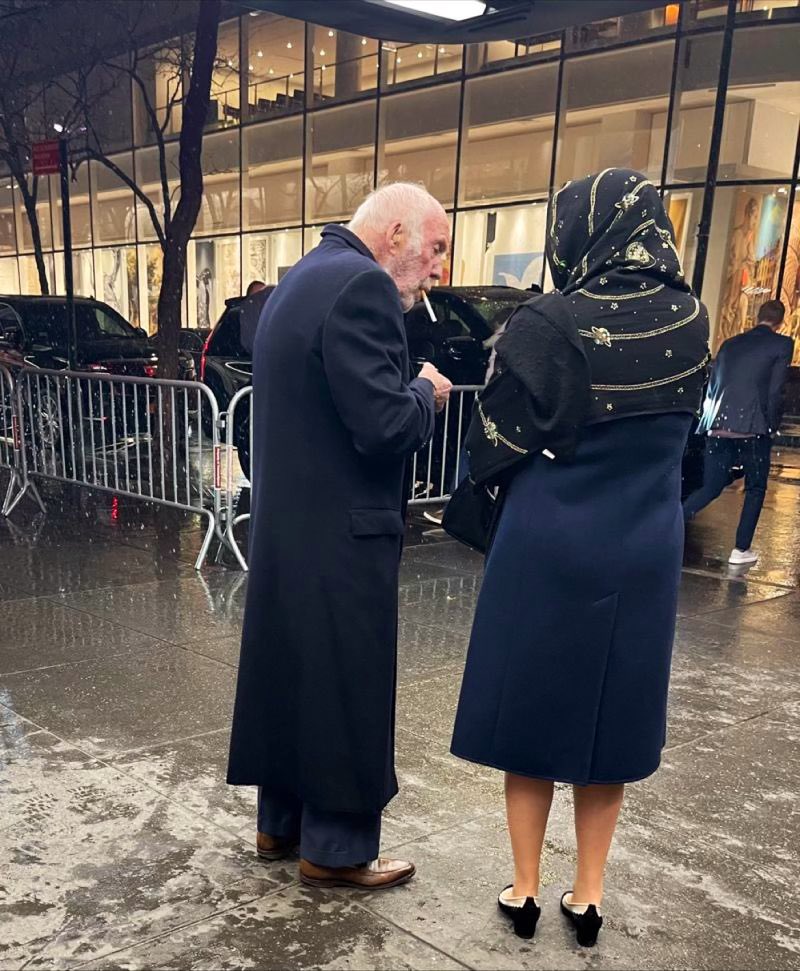
> independently discover a Zeno's paradox at age 3
> MIT at 17, grad level math in 1st year
> graduate in 3 years
> drive motor scooters from Boston to Bogotá with the boys
> start a company in Colombia
> start code breaking with the IDA for money
> solve minimal varieties in riemannian manifolds
> speak out against Vietnam War, get fired from IDA
> take over math dept. at Stonybrook, make it a top-ranked program globally
> develop Churn-Simons theory, accidentally contribute more to physics than most physicists
> get bored with math, start modeling financial markets
> return 60% for 4 decades straight
> establish one of the most effective philanthropic organizations of all time
> chain smoke cigarettes the entire time
RIP Jim 🫡
This Apple ad is what happens when you try to be “edgy” with no consideration for strategy.
Consider first principles:
1) Apple is a brand built on giving people a sense of inspiration and joy (eg, the colorful 2000s iPod ads)
2) Their target audience is consumers who are younger and lean progressive
3) Many of these consumers are uneasy about tech companies and fear their jobs/interests being eliminated
Strategically, Apple would’ve been wise to make an ad that:
1) Feels bright, hopeful, and uplifting
2) Celebrates human creativity and flourishing
3) Centers people, not a giant machine
Instead they created a vision of dystopia. The crushing of instruments is viscerally hard to watch and evokes the destruction of art during the Cultural Revolution.
One of Apple’s greatest ads was “1984,” in which color emerged from bleakness and the human spirit vanquished a dictatorial screen.
This latest ad reverses all of that and hands victory back to the screen.
¿Sabes por qué los dedos de Dios y Adán no se tocan en la famosísima obra de arte de Miguel Ángel en el techo de la capilla Sixtina del palacio apostólico de la ciudad del Vaticano?
En la obra, el dedo de Dios está extendido al máximo, pero el dedo de Adán está con las últimas falanges contraídas. El sentido del arte es explicar que Dios siempre está allí, pero la decisión es del hombre. Si el hombre quiere tocar a Dios necesitará estirar el dedo, pero al no estirar el dedo, podrá pasar toda su vida sin buscarlo. "La última falange contraída del dedo de Adán representa al libre albedrío".