THREAD: Strands of Salvation in the Synoptics
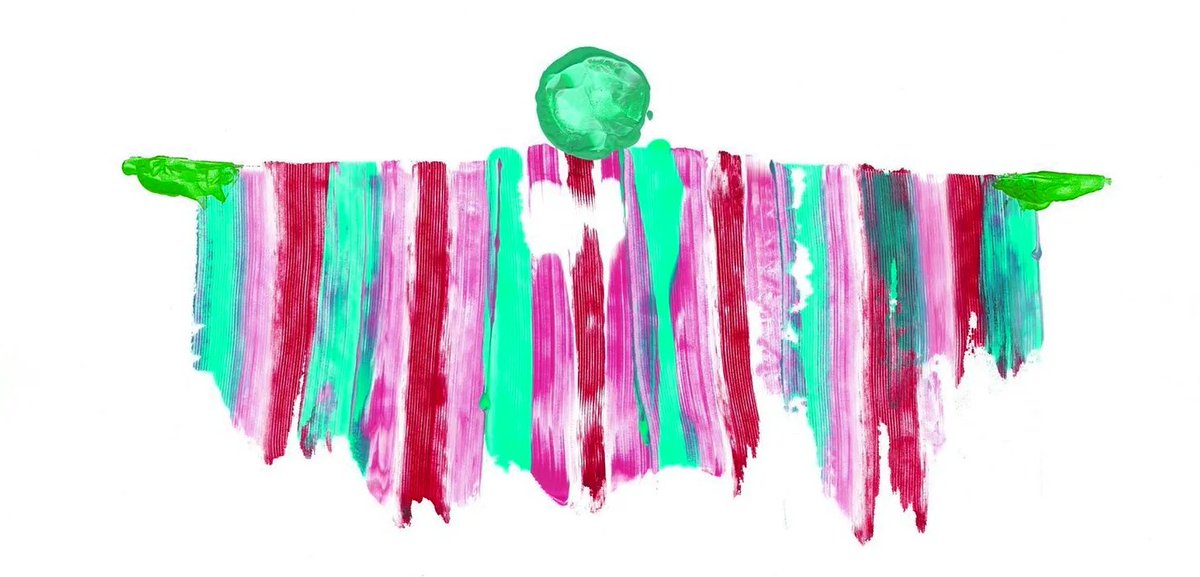
Joseph isn’t the only beloved son to be given a multi-coloured coat. Jesus is given one too, though by the hands of ungodly men.
In Matthew it’s scarlet (kokkinos); in Mark it’s purple (porphyra); …
Dear #Greek folks.
Are there any clues as to how to interpret this? Does the sign-of-the-Son-of-Man appear in heaven? Or does the sign-of-the-Son-of-Man-in-heaven appear?
@Riaannels I’m not sure how this answers my question. It seems to me that Peter is saying that he understands what’s taking place to be the fulfilment of Joel’s prophecy.
The book of Joel describes three occasions when the sun goes dark, the earth quakes, the stars fall, etc. (Joel 1.15–2.11, 2.28–32, 3.14–21). All three are referred to as days of the Lord.
These three days have an implicit order. The second takes place ‘after’ the first (2.28). And the third, which marks the book’s climax, is a reversal of the second, by which token it must postdate it: while the nations conquer Israel in Joel 2 (2.1–11, 2.28–32, Acts 2.40), the nations are judged in Joel 3 and Israel is vindicated.
Joel’s three days of the Lord thus describe the fall of three different temples. The first day describes the fall of the first temple (Solomon’s) (1.15–2.11), the second the fall of the second temple, as Peter tells us (2.28–32), and the third the fall of a cosmic temple (the world order) (3.14–21).
The funniest maths in modern environmentalism.
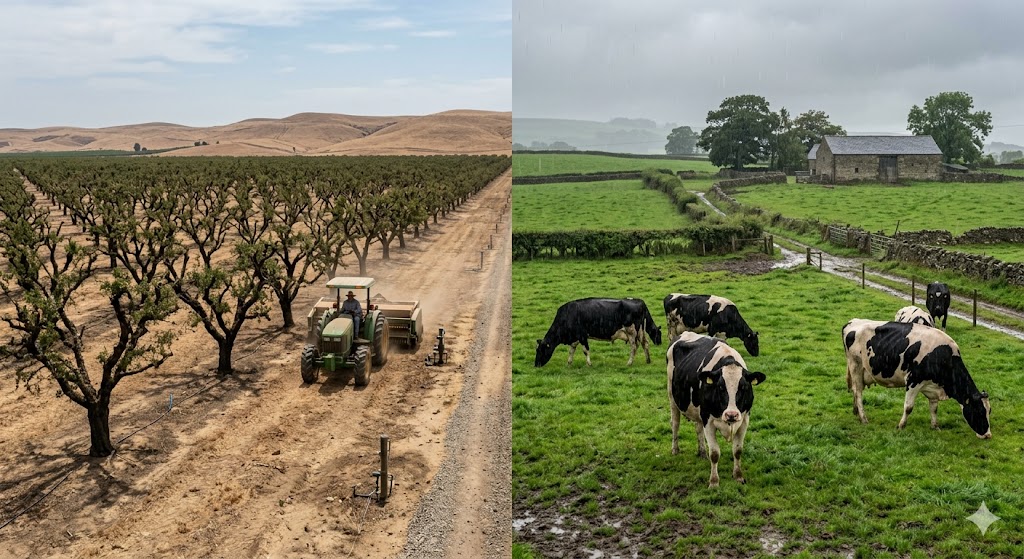
One almond requires 12 litres of irrigated water to produce. Peer-reviewed, ScienceDirect, 2017. A glass of almond milk contains roughly 50 of them. 600 litres of water before the carton is filled.
The water comes from the San Joaquin Valley in California, which sits over one of the most over-extracted aquifers on earth. The valley floor has subsided by up to nine metres in places due to groundwater depletion. The carton is then refrigerated, sailed across the Atlantic, refrigerated again, lorried to a Manchester Tesco, and bought by someone who is concerned about the environmental impact of dairy.
Meanwhile, in Cheshire.
A British dairy cow drinks roughly 70 to 100 litres of water a day and produces around 28 litres of milk. That's about 3.5 litres of water per litre of milk. The water is rainwater that fell on her field or came from a local stream fed by the same rainwater. The rain was going to fall on the field whether the cow stood in it or not. 80% of her moisture intake comes from the grass itself, which is also rain.
She converts the grass, free of charge, into a litre of milk containing seven times the protein and four times the calcium of almond milk, and shipped roughly 18 miles to the same Tesco.
To recap.
600 litres of stolen aquifer, flown halfway round the world for nutritionally worthless beige water.
Or 3.5 litres of rain that was already falling, converted by an animal you can pet, into actual food.
The shopper picks the almond.
She has been told this is the ethical position.
The aquifer would like a word.
@TimColeTachira Right, I heard it the other day, which is partly why I was curious to find out more!
I assume it goes back to Rabbinic interpretations of the Bible. I’m curious as to how far back these go.
Could some kind #Hebrew student tell me about the word mamzer?
Contextually it seems like it could refer to someone’s ethnic origins.
Why is it traditionally taken to mean ‘bastard’? And how far does this interpretation go back?
If Dan. 9.26 & 9.27 describe consecutive events, then some very particular end-times scenarios follow.
But the two verses cover similar ground (the onset of a 70th week, cessation of sacrifices, resultant ‘desolation’, etc.), and have suggestive lexical connections.
Could some kind #Hebrew student tell me about the word mamzer?
Contextually it seems like it could refer to someone’s ethnic origins.
Why is it traditionally taken to mean ‘bastard’? And how far does this interpretation go back?
If Dan. 9.26 & 9.27 describe consecutive events, then some very particular end-times scenarios follow.
But the two verses cover similar ground (the onset of a 70th week, cessation of sacrifices, resultant ‘desolation’, etc.), and have suggestive lexical connections.
When I was Muslim, I compared Muhammad’s last words to Jesus’ last words.
Not just the facts, but the spirit behind them.
And bro, the difference is staggering. It shook my devout Muslim faith.
According to Sahih al-Bukhari, Muhammad’s final words included: “May Allah curse the Jews and the Christians. They made the graves of their prophets into places of worship.”
Those are words associated with his final moments.
No forgiveness. No reconciliation. No peace.
Now compare that to Jesus.
Beaten, betrayed, tortured, hanging on a cross with nails through His wrists, Jesus says:
“Father, forgive them, for they know not what they do.”
And then: “It is finished.”
One dies speaking curses.
The other dies extending forgiveness.
One ends by drawing lines and reinforcing division.
The other tears the veil and reconciles heaven and earth.
And whether people like it or not, final words reveal something deeply personal about the heart.
That contrast shook me.
Because one man’s final moments reinforced separation, while the other’s changed eternity through mercy, sacrifice, and love.
Please sit with that honestly.
@Joshua_Meynell@Tyndale_House Thanks Josh!
I hope you produce more videos like this. There’s real value in translating technical work into short videos so that others can benefit from it.
NEW VIDEO: There has been a lot of noise about whether we've misunderstood Genesis 1:1, that it really means "when God began creating..." In this video, I try to explain evidence presented by Ben Kantor in support of the traditional view.
https://t.co/sgOnxXtuhD