At some point, every big app or game studio needs a CFO – founders can’t run finances forever.
In a recent App Talk with @peggyanne, Martin Macmillan, CEO of @PollenVC, introduced the Mobile Finance Collective – a new space for finance pros & founders to connect. #MobileApps
"Marginal gains can create a massive impact! By making small, consistent improvements, marketers can see big results." @MickRigby, CEO of @YodelMobile, highlights how focusing on multiple 1% gains can add up quickly. #MarketingStrategy
https://t.co/Fx8OrNPidr
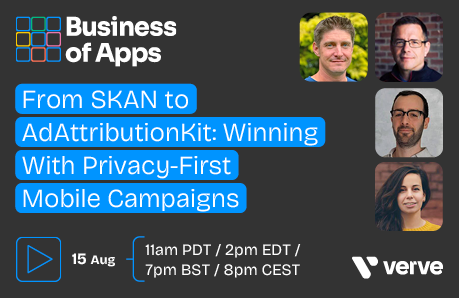
Want to get ready for #AdAttributionKit ?
We're going LIVE later today with a panel of performance marketing experts including Alexandra Klimashevich from @VerveGroupHQ Mark Menery at @dataseat, Grant Simmons from the mighty @kochavaofficial and Zach Gryphon from @WavemakerGlobal
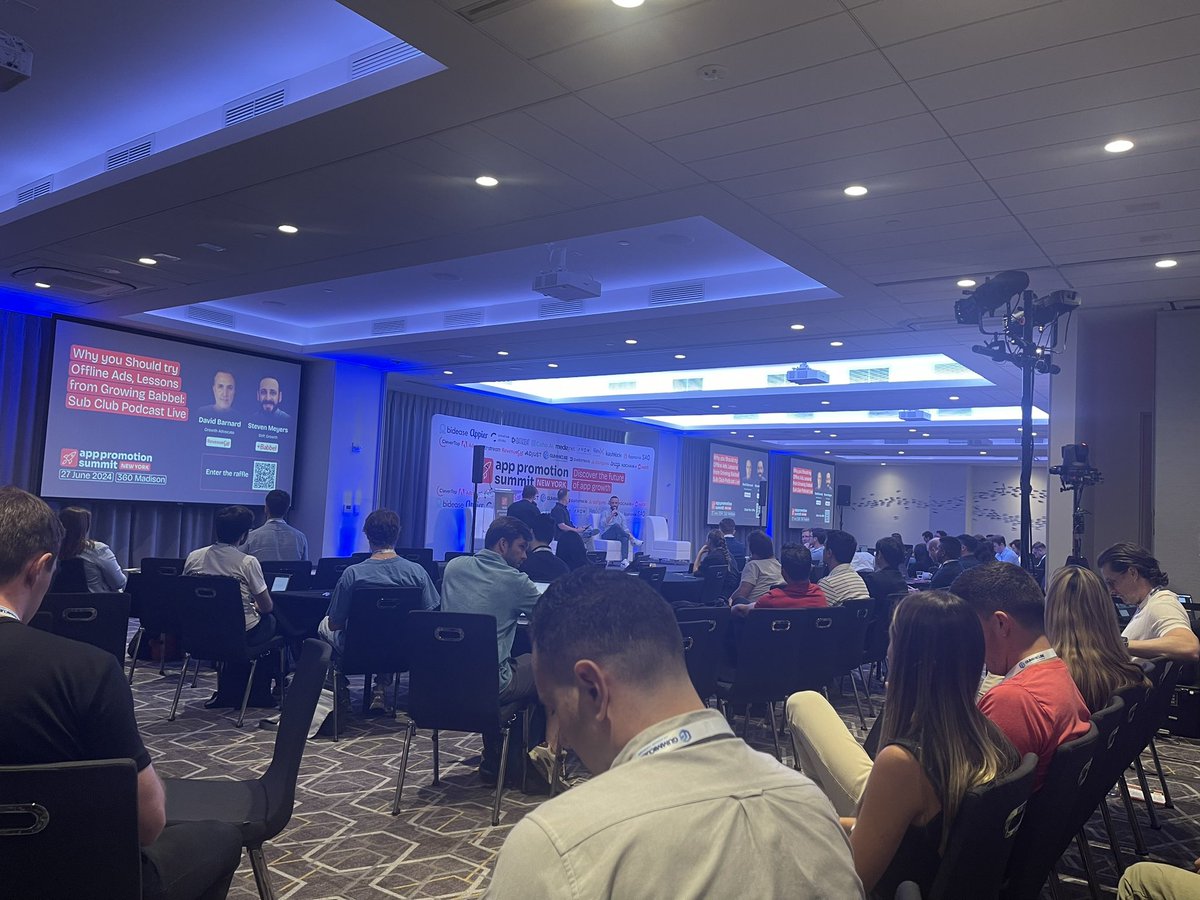
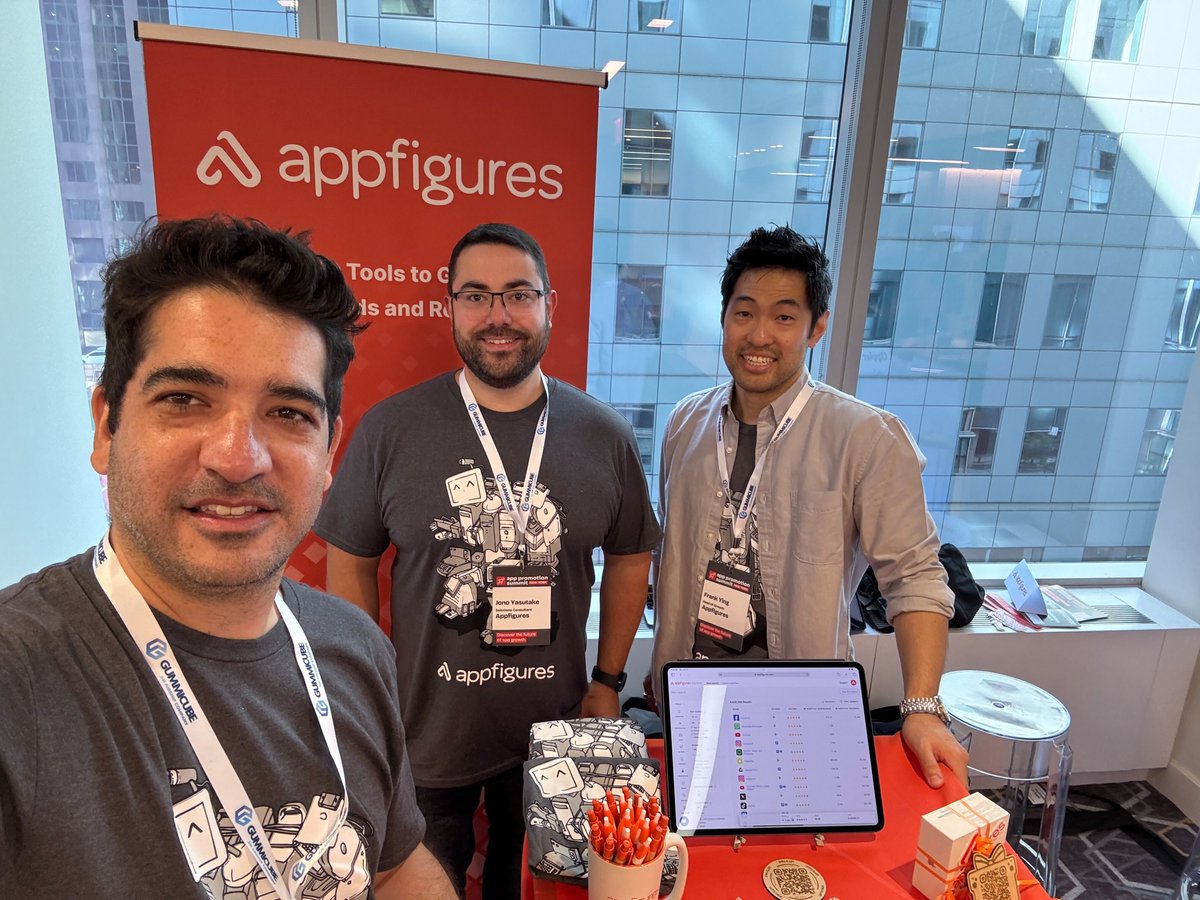
Excited to see everyone at @apppromotion summit in NYC today! Come say hi and enter our raffle to win a set of Apple Airpod Pros!
#APSNYC#appgrowth#apps
Possibly everyone else already knew this, but I just worked out tax paid by someone earning £30k (£4,878) vs. tax paid by someone earning £125k (£46,939). So salary is about 4 times higher but tax is almost 10 times higher. Really shows how much we rely on these higher earners.
Two experiments that Microsoft's @ramitarora has found success with:
1. Reordering plans so that the more expensive (family) plan was default
2. Anchoring annual plan price to monthly equivalent
Catch the full @SubClubHQ episode with @drbarnard: https://t.co/IT15mUMzqH
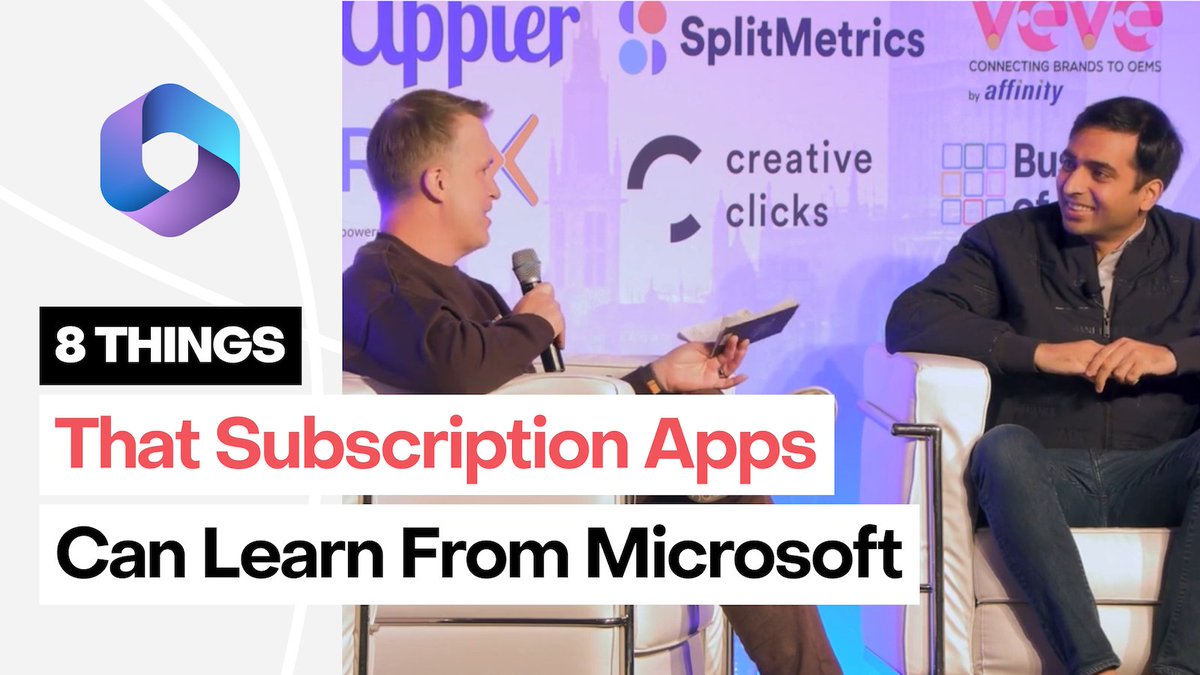
With some of the best monetized productivity apps on the App Store, what can startups learn from the biggest company in the world?
👉 8 lessons we learned from Microsoft's @ramitarora
🧵
Suno v3.5 is actually insane
I'm actually shook at how well it raps
The vocals are so much clearer and the cadence of the flow is incredible
Legitimately mind blown right now
In part two of our @SubClubHQ series with Microsoft's @ramitarora, @drbarnard explores how the Microsoft 365 team approaches ASO & experimentation for the @apppromotion London audience. 🎙️
I know your timeline is flooded now with word salads of "insane, HER, 10 features you missed, we're so back". Sit down. Chill. <gasp> Take a deep breath like Mark does in the demo </gasp>. Let's think step by step:
- Technique-wise, OpenAI has figured out a way to map audio to audio directly as first-class modality, and stream videos to a transformer in real-time. These require some new research on tokenization and architecture, but overall it's a data and system optimization problem (as most things are).
High-quality data can come from at least 2 sources:
1) Naturally occurring dialogues on YouTube, podcasts, TV series, movies, etc. Whisper can be trained to identify speaker turns in a dialogue or separate overlapping speeches for automated annotation.
2) Synthetic data. Run the slow 3-stage pipeline using the most powerful models: speech1->text1 (ASR), text1->text2 (LLM), text2->speech2 (TTS). The middle LLM can decide when to stop and also simulate how to resume from interruption. It could output additional "thought traces" that are not verbalized to help generate better reply.
Then GPT-4o distills directly from speech1->speech2, with optional auxiliary loss functions based on the 3-stage data. After distillation, these behaviors are now baked into the model without emitting intermediate texts.
On the system side: the latency would not meet real-time threshold if every video frame is decompressed into an RGB image. OpenAI has likely developed their own neural-first, streaming video codec to transmit the motion deltas as tokens. The communication protocol and NN inference must be co-optimized.
For example, there could be a small and energy-efficient NN running on the edge device that decides to transmit more tokens if the video is interesting, and fewer otherwise.
- I didn't expect GPT-4o to be closer to GPT-5, the rumored "Arrakis" model that takes multimodal in and out. In fact, it's likely an early checkpoint of GPT-5 that hasn't finished training yet.
The branding betrays a certain insecurity. Ahead of Google I/O, OpenAI would rather beat our mental projection of GPT-4.5 than disappoint by missing the sky-high expectation for GPT-5. A smart move to buy more time.
- Notably, the assistant is much more lively and even a bit flirty. GPT-4o is trying (perhaps a bit too hard) to sound like HER. OpenAI is eating Character AI's lunch, with almost 100% overlap in form factor and huge distribution channels. It's a pivot towards more emotional AI with strong personality, which OpenAI seemed to actively suppress in the past.
- Whoever wins Apple first wins big time. I see 3 levels of integration with iOS:
1) Ditch Siri. OpenAI distills a smaller-tier, purely on-device GPT-4o for iOS, with optional paid upgrade to use the cloud.
2) Native features to stream the camera or screen into the model. Chip-level support for neural audio/video codec.
3) Integrate with iOS system-level action API and smart home APIs. No one uses Siri Shortcuts, but it's time to resurrect. This could become the AI agent product with a billion users from the get-go. The FSD for smartphones with a Tesla-scale data flywheel.
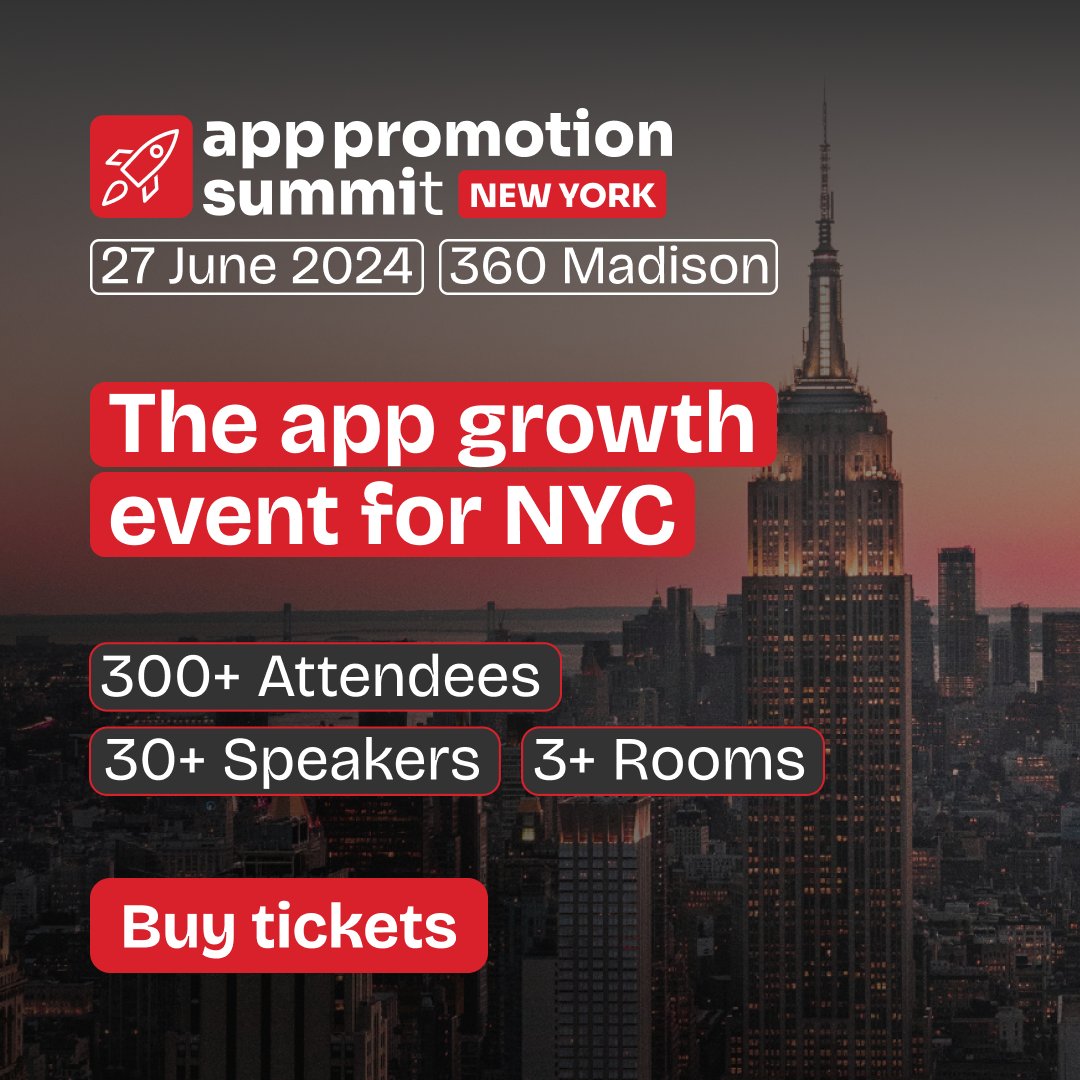
Today is the final day to grab Super Early Bird tickets for App Promotion Summit NYC.
Don't miss out on saving over $500! Join us for a day filled with insightful talks, panels, and workshops covering the latest in app growth and product strategies.
https://t.co/GGTBVK7jY6