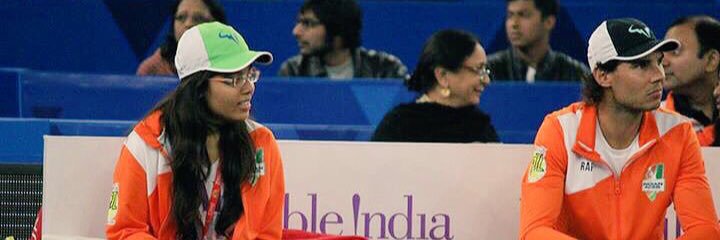
Rafael Nadal, who won 22 Grand Slam titles during his two-decade-long career, has weathered a series of intense bodily ailments, which made his everyday life and, needless to say, his tennis playing, an exercise in near-constant anguish. But this pain, especially as the years went on, became almost a belief system. “It was a philosophy. To learn how to suffer through sport,” his mother, Ana María Parera, says, in the new Netflix docuseries “Rafa.” It’s a sentiment that his longtime physical therapist, Rafael Maymó, echoes, as well: “Rafa likes to suffer, to have the feeling that he’s pushed himself to the maximum.” Read more about Nadal’s career and the new docuseries: https://t.co/BldaDmtHzV
“Rafa” on Netflix isn’t just a tennis documentary or a sports documentary, it’s cinema. One of the best nonfiction series Netflix has produced in years.
🚨 “𝙔𝙊𝙐 𝘾𝘼𝙉 𝙎𝙏𝙊𝙋 𝙏𝙃𝙀 𝙍𝘼𝙄𝙉.” 🌧️
One of the most powerful stories from Episode 2 of 𝗥𝗔𝗙𝗔.
When Rafael Nadal was a kid, Uncle Toni used to tell him:
“𝙄𝙛 𝙮𝙤𝙪𝙧 𝙤𝙥𝙥𝙤𝙣𝙚𝙣𝙩 𝙞𝙨 𝙗𝙚𝙩𝙩𝙚𝙧 𝙩𝙝𝙖𝙣 𝙮𝙤𝙪, 𝙄’𝙡𝙡 𝙢𝙖𝙠𝙚 𝙞𝙩 𝙧𝙖𝙞𝙣.”
The lesson was simple.
If you’re the weaker player, you need something to disrupt the match. Something to make life harder for the better player.
For years, Rafa grew up believing that.
Then came Wimbledon.
In 2006, Federer beat him in the final.
In 2007, Nadal came agonizingly close. He pushed Federer to five sets and had chances to win, but later admitted he lost focus at crucial moments and watched the title slip away.
That defeat stayed with him.
A year later, he returned for another shot.
𝗪𝗶𝗺𝗯𝗹𝗲𝗱𝗼𝗻 𝟮𝟬𝟬𝟴.
𝗧𝗵𝗲 𝗴𝗿𝗲𝗮𝘁𝗲𝘀𝘁 𝗺𝗮𝘁𝗰𝗵 𝗲𝘃𝗲𝗿 𝗽𝗹𝗮𝘆𝗲𝗱.
After years of chasing Federer, Nadal stormed to a two-set lead and stood on the brink of his first Wimbledon title.
But champions don’t surrender their throne easily.
Federer saved championship points, won two epic tiebreaks, and dragged the match into a fifth set.
Then the rain came.
Play was suspended.
As they walked into the locker room, Toni was convinced Rafa would be devastated. He had seen the pain of 2006. He had seen the heartbreak of 2007. Watching Federer escape from two sets down and force a deciding set, he didn't even know what to say.
Before Toni could speak, Rafa looked at him and calmly said:
“𝙔𝙤𝙪 𝙘𝙖𝙣 𝙨𝙩𝙤𝙥 𝙩𝙝𝙚 𝙧𝙖𝙞𝙣. 𝙄’𝙢 𝙣𝙤𝙩 𝙜𝙤𝙞𝙣𝙜 𝙩𝙤 𝙡𝙤𝙨𝙚.”
Think about that.
The little boy who once needed the rain because his opponents were better than him was gone.
The player who had lost two straight Wimbledon finals to Federer was gone.
The man sitting in that locker room wasn't hoping.
He wasn’t nervous.
He wasn’t looking for help from the conditions.
He wasn’t asking for the rain.
He was asking for it to stop.
Because for the first time in his life, standing across the net from Roger Federer on Centre Court, Rafael Nadal no longer believed Federer was the better player.
A few hours later, he proved it. 🐐
Rafa Nadal opens up like never before about what shaped one of the greatest tennis careers of all time.
RAFA, a new documentary series, is now on Netlfix.
My biggest takeaway from the Rafa documentary on @netflix is that in order to be an elite champion at an individual sport, you have to be 15-20% psycho.