As global temperatures continue to rise and extreme heat events become more frequent, our dependency on air conditioning is coming under scrutiny.
While air conditioning provides immediate relief from sweltering temperatures, it creates a paradox of reliance that poses significant risks.
Regions with limited access to air conditioning have developed resilience and adaptive strategies that allow them to better handle heat without an overreliance on energy-intensive cooling systems.
In contrast, North America’s heavy reliance on air conditioning exacerbates the problem, not only by contributing to environmental degradation through increased energy consumption but also by fostering a dangerous complacency toward natural climate adaptability.
By becoming overly dependent on air conditioning, we risk ignoring sustainable solutions and adaptation strategies that are crucial for long-term resilience in a warming world.
Thus, it is imperative to reevaluate our approach to managing heat, prioritizing energy-efficient buildings, urban planning innovations, and cultural shifts that focus on natural cooling techniques.
Balancing immediate comfort with sustainable practices will be essential to safeguarding both human health and the environment.
The latest from the Globe's business commentary, by John Rapley: https://t.co/aVXnPahei5
Gold has overtaken US Treasuries as the world's top reserve asset.
This is a milestone moment for the economic order, writes @jarapley 👇 https://t.co/EEdzHNiSEL
Alberta separatists should heed the cautionary tale of Brexit. Having witnessed the chaos and division that followed the UK's decision to leave the European Union, I urge those advocating for Alberta's secession to think carefully about what they might be getting into.
Canada, recognized worldwide as a bastion of stability and prosperity, offers a model of unity and cooperation. Many countries envy our political tranquility and societal cohesion, questioning why anyone would want to disrupt this equilibrium.
Brexit serves as a reminder of the economic uncertainty and social strife that can follow such separations. Alberta, with its strong regional identity, should focus on working within this great federation rather than pursuing a path fraught with risk and division.
By learning from the UK's experience, Albertans can avoid the pitfalls of unnecessary disruption. Maintaining a stable and united Canada should be our priority, fostering a future of strength and solidarity.
The latest from the Globe's business commentary, by John Rapley: https://t.co/Sg0MbKBaIQ
I am 95% done with a deal to buy a new house. The remaining 5% of negotiations are focused on the price and whether the owners are actually willing to sell
The much-anticipated summit between the U.S. and China ended with little to show in terms of concrete progress on pressing issues, particularly the significant trade imbalance that has long plagued relations between the two nations. While both President Trump and President Xi Jinping offered plenty of praise for one another and emphasized the importance of collaboration, their meeting ultimately lacked substantive solutions.
Rather than addressing the trade disparities head-on, the summit was reduced to diplomatic niceties and rhetorical commitments that failed to bring about any tangible action. The absence of meaningful agreements underscores the complexity and challenge of navigating economic relations between the world’s two largest economies.
Without a clear roadmap to rectify the trade imbalance, the summit leaves many unanswered questions about the future of U.S.-China economic relations. Despite the high expectations, the meeting served more as a symbolic gesture rather than a decisive step toward resolving the fundamental issues at hand.
The latest from the Globe's business commentary, by John Rapley: https://t.co/i9qluGorhg
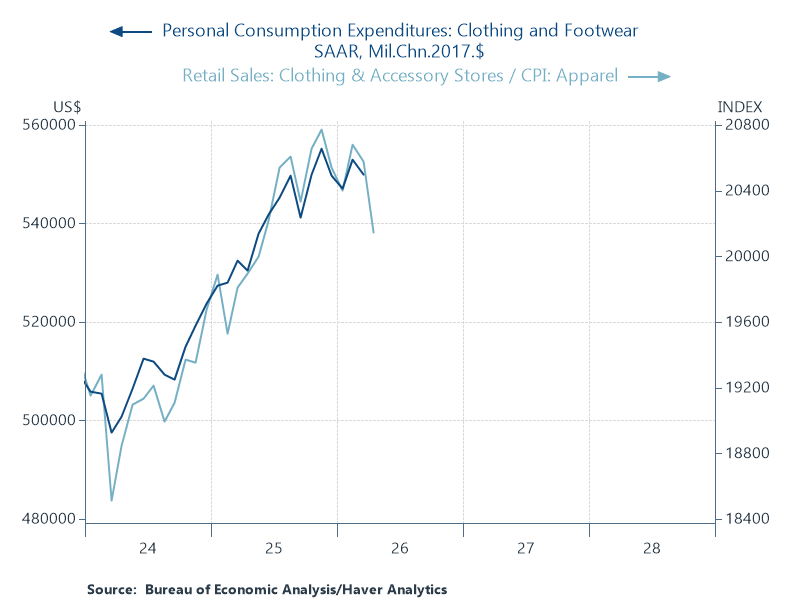
Dollars are being spent, but stuff is not really being bought. Exhibit A: Clothing & Footwear. Retail sales across clothing & accessory stores fell 1.5% in April even as apparel CPI surged 0.6% over the month. Thus, real consumption on clothing & footwear declined 2% in April.
One of the best additions to the UK media landscape of recent years: fresh and provocative perspectives from a broad cast of experts. Do consider supporting them, as the need for young and progressive views on current events is greater than ever.
We can’t do this without you.
Can you help us grow our supporter base by 2,000 people to fund truthful, independent journalism?
Set up a direct debit or use your card to back us today: https://t.co/8aE0xvZJiP
‘The US stock market has largely become a bet on the success of the AI revolution.’
This could seriously backfire, writes @jarapley 👇 https://t.co/UBLPJzvSLl
In April, the US stock market enjoyed its best month since Covid.
But unless the Iran war ends swiftly, any rebound will be short-lived. @jarapley 👇 https://t.co/UBLPJzvSLl
'For too long, Canada has taken future wealth and redistributed it to the present. Pension funds can help reverse this.' My article in today's Globe and Mail. https://t.co/IOqZ0iGvP2
In recent years, Canada has prioritized immediate wealth redistribution at the expense of long-term financial stability, a strategy which needs re-evaluation. By transforming our pension funds into sovereign wealth funds, we have an opportunity to secure our nation's economic future.
This approach may require pensioners to accept some short-term sacrifices, but the long-term benefits could far outweigh the initial discomfort.
Sovereign wealth funds have the potential to generate sustainable wealth by investing in diversified portfolios, including international markets, technology, and infrastructure.
By securing future revenue streams through such investments, Canada can reduce its dependence on current revenues and build a more sustainable financial framework.
While this change presents challenges, the need to think ahead and protect the economic future of the nation should be a national priority.
Canada must not shy away from bold steps that ensure economic resilience, even if current beneficiaries feel a slight pinch.
It's time to stop focusing solely on the present and start planning intelligently for the prosperity of future generations.
The latest from the Globe's business commentary, by John Rapley: https://t.co/Zfi9EJeozm
As the only G7 country without any fom of high-speed rail, Canada is finally getting on the right track with its Alto project. But the government is doing it in the wrong way. My column in the Globe and Mail https://t.co/3yCOCXGwlf
WHEN WILL THE HORMUZ RECESSION HIT?, by John Rapley (@jarapley)
Right now, optimism that an end to the showdown is nigh has kept oil prices from spinning out of control.
Nevertheless, the gap between the futures market, where oil is trading under $100 a barrel, and the physical market, where a barrel of oil now fetches $150, is growing huge. The first price reflects the hope the war will end soon, the second the reality that it hasn’t and the global shortage is worsening.
That divergence can’t continue forever. If the peace talks fail and hostilities resume, the future price will move upward.
Read more below ⬇️
https://t.co/j8xE4HduZl
'Could Donald Trump, the climate-denying, windmill-hating “drill, baby, drill” warrior, be the best thing to have happened to the energy transition?' My weekend Globe and Mail column offers a provocative take on Trump's Iran adventure. https://t.co/SwepwdALbL
Just got off the phone with the president. He told me a bunch of obvious lies but I’m going to post them anyway because I want everyone to know I just got off the phone with the president.