⚡️Funding Brief⚡️
ElevenLabs says it has closed a $300 million employee tender offer, valuing the company at $22 billion. The company announced the completed transaction on September 30; Reuters independently reported the terms.
ElevenLabs says the valuation is double its February 2026 Series D mark. Reuters puts that earlier valuation at $11 billion, following a $500 million raise. Wellington and T. Rowe Price led the tender, according to the company.
A tender offer lets shareholders sell shares to buyers, providing liquidity without necessarily bringing new capital into the company. The announcement does not specify how the $300 million was allocated. The $22 billion figure is the tender’s valuation, not a disclosed amount of new funding raised by ElevenLabs.
Source: ElevenLabs / Reuter
⚡️M&A Brief⚡️
World Labs is a San Francisco AI lab co-founded by Stanford professor Fei-Fei Li, Justin Johnson, Christoph Lassner and Ben Mildenhall. It builds spatial intelligence world models that turn text, images or video into 3D worlds you can walk through and edit. Its first product, Marble, became generally available in November 2025, with a free tier and paid plans from $20 to $95 a month, aimed at creators and teams in gaming, visual effects, design and robotics.
In September 2026, it introduced Atlas, a next-generation world model, in early access. The company came out of stealth in September 2024 with $230 million in funding led by Andreessen Horowitz, NEA and Radical Ventures; TechCrunch reported a valuation above $1 billion at the time. In February 2026, it raised another $1 billion from investors including AMD, Autodesk ($200 million), Nvidia and Fidelity. It did not disclose a valuation for that round; Bloomberg had reported in January that it was in talks to raise at a valuation of about $5 billion.
On Sept. 26, 2026, AMD signed a merger agreement to acquire World Labs in an all-stock deal valued at about $8.2 billion, according to AMD's press release and a Form 8-K filed Sept. 28 (ET).
The number of shares will be based on AMD's volume-weighted average price (VWAP) over the 10 consecutive trading days ending on the second trading day before closing. The deal is expected to close by the end of 2026, subject to regulatory approvals and other customary conditions. After closing, Fei-Fei Li will join AMD as executive vice president and chief scientist, reporting to chair and CEO Lisa Su.
Sources: AMD press release (AMD Newsroom / IR / GlobeNewswire), AMD Form 8-K (SEC EDGAR), World Labs website, Reuters, TechCrunch, Bloomberg; as of Sept. 28, 2026 (ET)
⚡Funding Brief⚡
Enveda is a clinical-stage biotech based in Boulder, Colorado. It uses its AI platform, PRISM, to identify drug candidates in natural chemistry from plants and microbes, then develops them into oral medicines. The company says it has produced about 17 development candidates since its 2019 founding, three of which are now in human trials. None has been approved by any regulator.
Per the company's press release and TechCrunch on 23 Sep 2026, Enveda raised $311 million in a Series E at a valuation of about $2 billion, according to TechCrunch, roughly double its valuation a year earlier. Catalio Capital Management led the round, with new investors including Durable Capital, ICONIQ, Lightspeed and Surveyor Capital (a Citadel company), and existing backers such as Baillie Gifford, True Ventures and Lux Capital also participating. Total capital raised now exceeds $845 million. The round follows positive early clinical results this year for ENV-294 (atopic dermatitis) and ENV-308 (metabolic health after stopping GLP-1 drugs). Proceeds will move both into later-stage trials, advance ENV-6946 (inflammatory bowel disease) through mid-stage trials, and scale the PRISM platform.
Source: Enveda / BioSpace press release, TechCrunch, 2026-09-23
⚡IPO Brief⚡
Oura has launched a proposed IPO of 50 million common shares at an expected $40–$44 price range. The company would offer 13.5 million shares, while existing stockholders would offer 36.5 million, roughly 73% of the base deal. Oura has applied to list on Nasdaq under the ticker OURA.
The offering also includes a potential 7.5 million-share option for underwriters, exercisable from selling stockholders. Oura would not receive proceeds from those shareholder sales. The S-1 has been filed but was not yet effective as of the announcement date, so the deal was not completed and the securities could not yet be sold.
TechCrunch, citing the updated filing, reported that Forerunner Ventures planned to sell its entire reported 9.3% stake, or about 28.7 million shares. At the $42 midpoint, that would represent approximately $1.2 billion before underwriting fees and taxes. The reported structure makes this proposed IPO largely a liquidity event for existing holders, alongside a capital raise for Oura.
Source: ŌURA/Business Wire / TechCrunch, 2026-09-21
⚡Funding Brief⚡
Morphotonics has closed a Series B financing round of more than €40 million, with the European Investment Bank confirming a signed €20 million convertible loan. The EIB says BOM and Invest-NL also contributed to the round.
The Dutch deep-tech company builds large-area nanoimprint lithography platforms. Nanoimprint lithography replicates nanoscale patterns across large surfaces, and it's used to manufacture optical components for AI glasses, augmented-reality waveguides and other photonic applications.
The financing is meant to scale those platforms and expand manufacturing capacity for advanced optical components. Morphotonics' own announcement confirms the Series B has closed, though the verified sources don't disclose a full capitalization table or the round's valuation.
What stands out about the structure is that a sizable public-sector convertible loan sits alongside contributions from other investors, tying scale-up capital directly to a manufacturing bottleneck in emerging AI optics.
Source: EIB / Morphotonics, 2026-09-22
⚡Funding Brief⚡
Comp AI has announced a $34 million Series A led by Roo Capital and Grand Ventures. The Miami-based company builds an AI-native platform for compliance and security, and the financing is confirmed in the company's own release.
Comp AI says the capital will fund its expansion beyond compliance automation into continuous cybersecurity, with planned capabilities including real-time monitoring, control validation and security testing across applications and infrastructure.
The company also plans to use the round for product and engineering development, along with hiring across product, engineering, operations, sales, customer success and marketing. TechCrunch reports $37.5 million in total funding to date, though that cumulative figure does not appear in Comp AI's official release.
The deal points to a broader shift in security software, away from preparing for periodic audits and toward ongoing monitoring and validation of controls. The release does not disclose valuation or other deal terms.
Source: Comp AI / TechCrunch, 2026-09-17
⚡Funding Brief⚡
OpenAI projects cumulative negative free cash flow of about US$278 billion from 2026–2030, according to a Financial Times report citing a company presentation.
The presentation forecasts roughly US$856 billion in compute and infrastructure spending through 2030, while annual revenue is projected to rise from US$36 billion in 2026 to US$350 billion in 2030. Cumulative revenue over the period is projected at about US$840 billion.
Separately, OpenAI closed a US$122 billion funding round in March at an US$852 billion valuation. Investors have reportedly initiated early discussions about a potential new private round that could value the company at around US$1.2 trillion; no deal has been agreed.
Source: Reuters / Financial Times, 2026-09-18
⚡Funding Brief⚡
Crusoe announced the initial closing of an anticipated $3.9 billion Series F at a $30.9 billion post-money valuation on September 17. ‘Initial closing’ means this announcement does not necessarily represent the final close of the full anticipated round.
The oversubscribed financing was co-led by Atreides Management, Mubadala Capital, and Valor Equity Partners. Crusoe also named Founders Fund, GIC, NVIDIA, Qatar Investment Authority, Radical Ventures, and TPG among the significant new and existing backers.
Crusoe said the capital will scale existing programs and support its AI factories, spanning large vertically integrated campuses and modular Crusoe Spark units. The company also plans to use the proceeds to expand Crusoe Cloud, its AI cloud platform.
The company reported more than $140 billion in total contracted value, over 6 gigawatts of contracted capacity, and 1 gigawatt already operational. The financing therefore targets expansion across power, data-center infrastructure, and cloud services rather than a single facility.
Source: Crusoe / Reuters, 2026-09-17
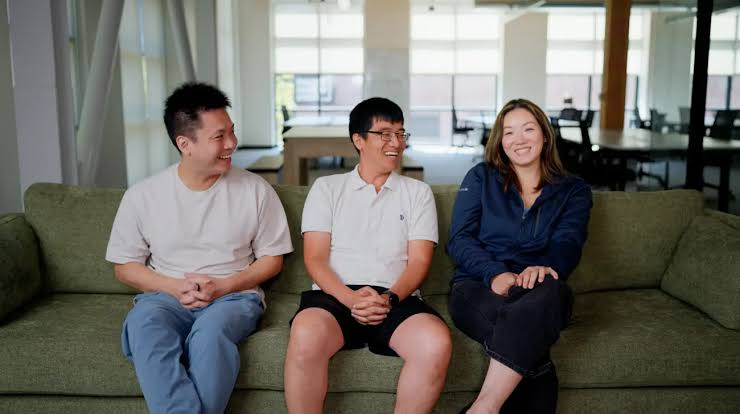
Congratulations to @nuance_ai on the $50M Series A led by @lightspeedvp, with @Accel, @spc, @nvidia, and @definevc joining the round.
What makes Nuance Labs compelling is that the team is working on a problem most AI products still avoid: human conversation is about much more than words. Tone, timing, gaze, hesitation, facial expression, and the simple act of showing that you are listening all carry meaning.
The founding team has unusually deep experience for this challenge. Fangchang Ma, Edward Zhang, and Karren Yang are former Apple researchers with PhDs spanning robotics, machine learning, computer graphics, and audiovisual synthesis. They have spent years working on how machines perceive, reconstruct, and respond to people.
Their approach is also refreshingly ambitious. Instead of stitching together transcription, an LLM, voice generation, and facial animation, Nuance Labs is building one full duplex audiovisual model that can see, hear, reason, speak, and express itself in real time.
That distinction matters. Most AI avatars still pause awkwardly, interrupt at the wrong moment, or stare blankly while someone is speaking. Nuance is treating responsiveness and active listening as part of the model itself, not as polish added later.
There is a huge opportunity here across coaching, education, sales, customer service, training, and any setting where trust and communication affect the outcome. As AI becomes more capable, raw intelligence will not be enough. The products people actually want to spend time with will also need presence, timing, and emotional awareness.
Nuance Labs has the technical depth, product conviction, and patience to take on this hard problem properly. Excited to see the public research preview later this year. This is one of the teams pushing human AI interaction in a genuinely important direction.
Nuclear is back - but the industry is placing very different bets this time.
From grid-scale SMRs to factory-built microreactors, our new industry primer explores the technologies, companies and constraints shaping the Advanced Nuclear Era.
Read the full report ↓
https://t.co/lyh59R3mA1
⚡IPO Brief⚡
Anthropic has reportedly selected Nasdaq as the listing venue for a potential initial public offering that could come as soon as October, Bloomberg reported on September 13, citing people familiar with the preparations.
This describes a possible IPO, not a completed transaction. Anthropic has not formally announced the Nasdaq selection or a final listing date, and the timing remains subject to change. Offering size, valuation, share count, and price have also not been finalized publicly.
The company confirmed on June 1 that it had confidentially submitted a draft Form S-1 registration statement to the SEC. A confidential S-1 is an IPO prospectus submitted for regulatory review before a company publicly discloses the full filing. Anthropic said at the time that the offering would depend on SEC review and market conditions.
The latest development marks reported progress in the IPO process, while the core transaction terms and launch timetable remain unresolved.
Source: Bloomberg / Anthropic, 2026-09-13
⚡Funding Brief⚡
CloudNC announced on September 9 that it has raised $20 million in new investment capital. Nimble Ventures led the round, with Calculus Venture Capital, Entrepreneur First and LM Ventures, Lockheed Martin's venture capital fund, also participating.
The company said the capital will support wider adoption of CAM Assist, expansion into existing and new markets, stronger go-to-market operations, and new products including Quote Agent. CAM Assist uses AI to help generate CNC machining strategies and toolpaths, with machinists reviewing and approving the output.
CloudNC says more than 1,000 machine shops now use CAM Assist globally. TechCrunch described the financing as a Series B extension and reported that the round brings CloudNC's lifetime funding to $128 million. Those round-label and cumulative-funding details come from the media report rather than CloudNC's own announcement.
The disclosed plan ties the financing to extending AI further across the machining workflow, from programming production jobs to quoting and estimating new work.
Source: CloudNC / TechCrunch, 2026-09-09
⚡Funding Brief⚡
TRM Labs announced a strategic Series C expansion valuing the company at USD 2 billion, led by Blockchain Capital. The company said its annual recurring revenue has quadrupled over the past three years. The amount raised was not disclosed; Fortune reported that CEO Esteban Castaño described the add-on as a "modest" amount funded by existing backers.
This compares with TRM's USD 70 million Series C at a USD 1 billion valuation, announced on February 4, 2026. The new financing valuation therefore doubled in about seven months, or 217 days. The February round was also led by Blockchain Capital.
The key distinction is between capital raised and valuation: USD 2 billion is the private financing valuation accepted in the latest transaction, not the amount invested or a public-market price. TRM positions itself as an AI investigations platform for disrupting criminal networks, expanding beyond blockchain forensics while retaining crypto intelligence as a core business.
The repricing suggests that investors are underwriting a broader crime-intelligence platform, not simply another crypto analytics product. Existing customer relationships and data may lower distribution friction as TRM adds AI-driven investigations. However, because the new-money amount and allocation details remain undisclosed, the valuation step-up should not be read as a directly measurable revenue multiple.
Source: TRM Labs / Fortune,2026-09-09
⚡Funding Brief⚡
Mistral AI has officially announced a completed €3 billion Series D at a post-money valuation above €21 billion. Samsung Electronics led the round, with EQT-managed Scaleup Europe Fund and existing investor PSG Equity as co-leads. Mistral confirmed the terms, and TechCrunch reported the same round, though Samsung's individual cheque size was not disclosed.
A post-money valuation is simply the company's implied value once the new capital is included. Mistral's Series C, announced on 2025-09-09, had valued the company at €11.7 billion post-money. About 12 months later, the new mark is at least 79% higher, which is meaningful but should not be read as an exact doubling.
The round also brought in Advent, BlackRock-managed funds and accounts, and the Grand Duchy of Luxembourg as new backers, alongside many existing investors who returned. Mistral said the capital will go toward expanding frontier research, compute capacity, infrastructure, commercial growth, and its international footprint. "Sovereign AI" here refers to deploying models and infrastructure while keeping greater control over data, compute, and production systems, not a claim that Mistral operates only within France.
The financing underscores how AI capital is increasingly backing the full stack, from models through compute to enterprise deployment. Samsung's involvement also ties Mistral's funding base more closely to advanced manufacturing and industrial infrastructure, and the mix of strategic, public-backed, financial, and existing investors gives the round a broader base of support than a conventional venture financing.
Source: Mistral AI / TechCrunch,2026-09-08
⚡IPO Brief⚡
Anthropic's IPO prospectus is now expected in late September, with formal marketing starting mid-October at the earliest and a listing potentially landing days before the US midterm elections in November, Reuters reported on September 4. Some investors have discussed a listing valuation of around $2 trillion. Anthropic has not announced timing, valuation or any terms, and the plans remain subject to change.
The delay is about sequence. Anthropic is finalising a roughly $15 billion revolving credit facility — a pre-approved bank credit line a company can draw on and repay as needed. That is borrowing capacity, not equity funding, and it does not affect the valuation. Only once it closes do analysts at the underwriting banks meet the company; only after those meetings does the prospectus go public. And under US rules, the public S-1 must be filed at least 15 days before the roadshow. Four steps, each gating the next, so a week's slip early pushes everything behind it. Morgan Stanley, Goldman Sachs, JPMorgan and Citi are underwriting the offering.
The pricing history: Anthropic was valued at $380 billion in February 2026. In late May it closed its Series H, raising $65 billion in a single round at a $965 billion post-money valuation — more than double, in three months. It then confidentially submitted a draft S-1 to the SEC on June 1, announcing the submission the same day, though the share count and price remain unset.
Behind those numbers is revenue growth. Anthropic's annualised revenue run rate has reportedly climbed from roughly $9 billion at the end of 2025 to about $47 billion in May and above $65 billion by late July. The $2 trillion conversation rests on projections of 2028 revenue, not on any completed public pricing.
The real dividing line is the day the public S-1 lands on SEC EDGAR. Until then, every figure comes from models and secondhand reporting. After it, there are audited financials to check them against.
Source: Reuters / Bloomberg / Fortune, 2026-09-04
⚡M&A Brief⚡
Stripe announced on August 19 that it agreed to acquire OpenRouter, an AI model gateway and routing platform. Stripe and OpenRouter did not disclose the price. The New York Times reported a roughly $7.5 billion purchase price, including about $1.5 billion for founders and $6 billion for investors, but those figures remain third-party reporting.
A model gateway is a service that routes one software request across multiple AI models, weighing factors such as cost, speed, and reliability. OpenRouter says it handles more than 10 trillion tokens per day across 400-plus models for more than 10 million developers and companies. The deal is subject to customary closing conditions and was expected to close in the coming weeks.
The key pricing comparison is timing: The New York Times reported that OpenRouter was valued at $1.3 billion in May, after a $113 million funding round. A reported $7.5 billion transaction value would therefore be about 5.8 times that valuation in roughly three months. This is a reported purchase price, not an official valuation or a confirmed distribution of shareholder proceeds.
The strategic logic is control of a high-volume routing and billing layer, not simply ownership of another model developer. It could connect Stripe’s payment infrastructure with AI usage metering and model selection, while OpenRouter says its product, mission, and current commitments will remain unchanged. Until closing and disclosure of final terms, the ownership transfer and economics remain conditional.
Source: Stripe newsroom / The New York Times,2026-08-19
⚡M&A Brief⚡
Anthropic has decided not to move forward with an acquisition of Israeli AI company Decart, Bloomberg reports. The two had been discussing a potential deal worth roughly $6 billion, and Anthropic completed due diligence before talks ended without an agreement. Sources said the companies may still pursue other forms of collaboration. Both declined to comment, and no reason for the outcome has been disclosed.
Decart builds software that makes chips run more efficiently, lowering the cost of training and operating AI models. Its most recent public pricing event was a $300 million round in May 2026 at a valuation approaching $4 billion, led by Radical Ventures with participation from Nvidia, Adobe Ventures, Atreides Management and Valor Equity Partners.
With the deal off, Decart's most recent public pricing event is still that May round. The $6 billion figure is not meaningless — it shows a major model company seriously evaluated that price under a specific set of terms, and the market will remember it. But it is not a transacted price, and it does not replace the verifiable $4 billion mark. Acquisition offers also tend to carry a control premium and the value of integration synergies, which makes them a different thing from what a financial investor would pay in a funding round.
Private company prices surface only at a handful of moments: a new round, a secondary transfer, a tender offer, or a completed acquisition. Between two of those events, the fundamentals may be moving constantly, but there is no public, continuous, tradable price to show it. A listed company is quoted every trading day. A private company might be priced once a year. What happens inside that gap is largely invisible — and impossible to participate in.
Source: Bloomberg, 2026-09-08
⚡Funding Brief⚡
Crusoe has reportedly raised more than $3 billion at a post-money valuation of roughly $30 billion, according to Bloomberg. Atreides Management and Valor Equity Partners co-led the round, with participation from Mubadala Capital. Sources describe the round as finalised, though Crusoe has not made an official announcement.
That mark comes just ten months after the last one. In October 2025, Crusoe closed a $1.375 billion Series E at a valuation above $10 billion. Ten months later, roughly three times that.
What drove it was a contract, not a pitch deck. Crusoe recently signed a reported five-year, $13 billion cloud agreement to supply quantitative trading firm Jane Street with GPUs and AI infrastructure. That is a commercial deal on the sell side, not financing — but a long-dated contract of that size is what made investors comfortable underwriting at $30 billion.
Crusoe started in 2018 by capturing natural gas that oil fields would otherwise have flared, and using it to power bitcoin mining. In March 2025 it sold that entire mining and flare-mitigation business to NYDIG. Today it is purely an AI infrastructure company — sourcing its own power, building its own data centres, running its own cloud — with customers including OpenAI, Microsoft and Meta.
As models scale, the scarce resource is no longer the algorithm. It is power, land and compute. Whoever controls that physical layer controls the foundation of the AI economy.
Source: Bloomberg / TechCrunch, 2026-09-03