“Wet dog shakes”—a common reflex behavior shared among many hairy mammals and designed to expel water and irritants from their coats—happens when particular mechanoreceptors are activated, researchers studying mice report in Science.
Learn more: https://t.co/aXbhnwWv54
AI should not be used as a tool to scale HE but to reinvent courses, edtech pioneer Ben Nelson has argued. @Helen_Packer reports from the THE Innovation & Impact Summit at @ShivNadarUniv
https://t.co/jqm4DM19oi
Transitions in development – an interview with Kara McKinley
In this interview, @karalmckinley talks about her transition to becoming a group leader, her insights on navigating the competitive tenure-track market in biology and her dedication to promoting gender diversity within academia.
https://t.co/dqPHOmQ6g0
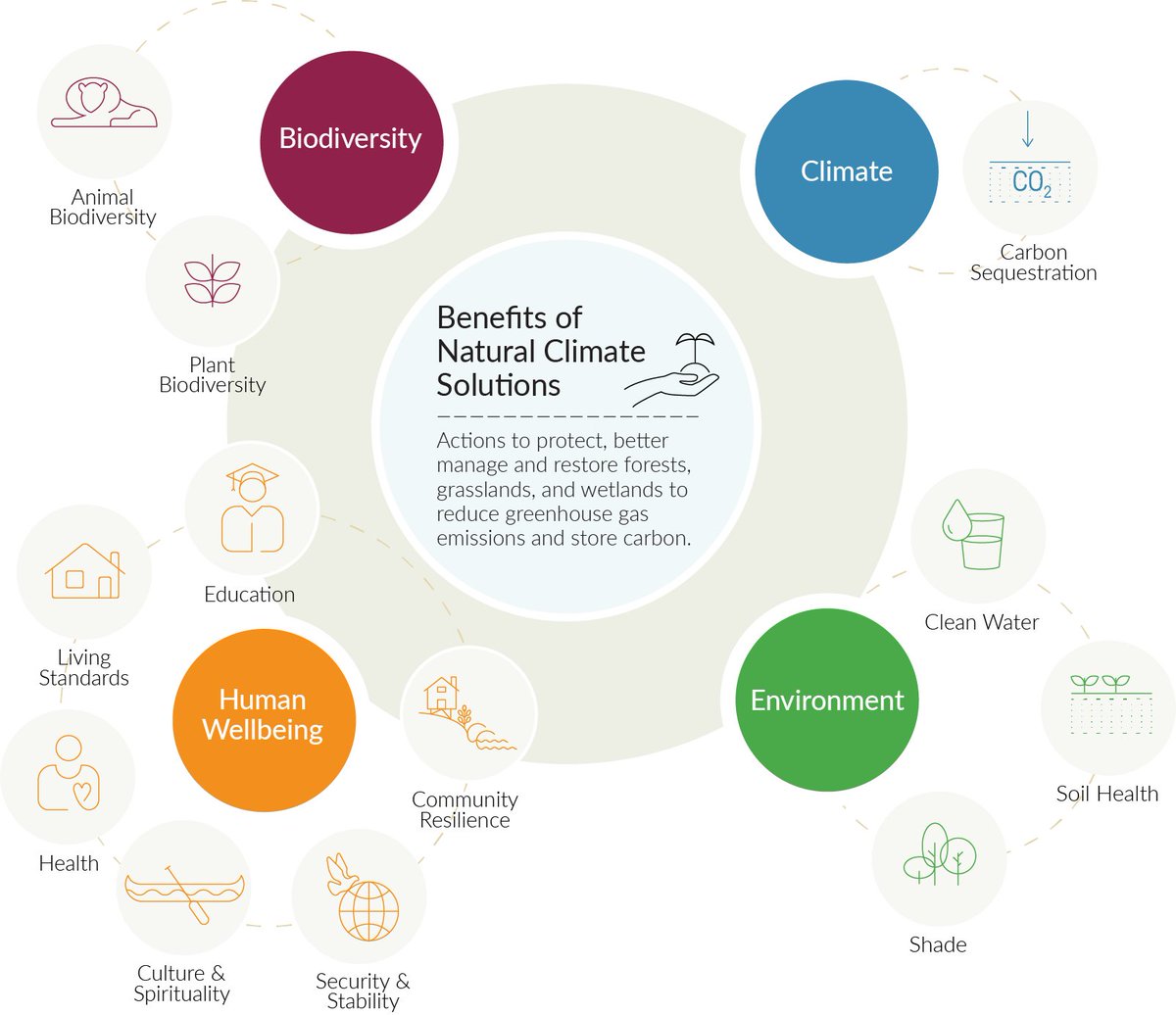
Our Director of Science Yuta Masuda has published extensively on the importance of natural climate solutions to support co-benefits for humans and nature.
Read: https://t.co/DxCHhCf0Rn
Closer to the farm gate at Day2 of the NZ ag & Climate Change Conference
Great ideas - the opp to reduce emissions AND increase productivity from Selective sheep breeding; GME ryegrass & an idea from across the ditch about how industry can help to "stack returns"
NEW CNE PAPER🚨🧬
Developmental expression patterns of gonadal hormone receptors in arcuate kisspeptin and GABA neurons of the postnatal female mouse @JNE_Editor https://t.co/gki2yW5dgN
Yugo Watanabe, Lorryn Fisher, @RECampbell_inNZ, @JasoniCL
A friend asked me to explain DNA, RNA, and epigenetics. he said that others had tried before, but it didn’t click for him.
I happen to play the piano, so I gave him a simple, albeit imperfect, analogy.
After this analogy, he finally understood! Here’s the piano analogy.
🧵
Discover our new TRISCO method, which enables 3D RNA analysis at cellular resolution in intact brains. Explore a 3D rendering that reveals the deep brain expression pattern of the Parvalbumin gene, implicated in schizophrenia.
@ScienceMagazine.
https://t.co/tqysZ36zRz
How to write a grant?
1. Write it for the reviewer, not you, the applicant.
2. Communicate in stories.
3. Make your story cohesive—leave no puzzling gaps.
4. Make your story resonate to keep the reviewer reading.
5. Accept chance and noise in peer-review.
https://t.co/wHZ065DNlm
🎉As another year heads towards its end, it's time to round up the biggest science yarns of the year
🍾Here are the AusSMC's Top 10 science stories of 2024
https://t.co/eFOCLCFkit
🔈 🌏 ACIAR is currently seeking 4 Research Program Managers to lead Crops, Fisheries, Horticulture, and Soil & Land Management portfolios in the Indo-Pacific region.
📅 Apply by 15 Dec 2024: https://t.co/7cpV5QlXKP
#Careers#Hiring#Jobs
What lives with red panda in eastern Nepal? A new @ecolincnz article looks at how we use camera traps to collect mammals that share red panda habitats. @LincolnUniNZ university research!
https://t.co/oBQ5vLl0GV
Microscopy reveals how a lipid in the cell membrane called PI(4,5)P2 controls the activity of an important receptor that relays signals in to cells.
https://t.co/flWJ0PFYoq
Would you prefer to lead a lab alone or together with a science buddy? How interesting would be a research institute where joint labs are the standard?!
We are so excited to announce our NEW Red Panda Cam!
Now, you can catch our amazing red pandas in action anytime, anywhere—straight from your phone or desktop.
Head to https://t.co/BV3sYLxPjb and click on the red panda cam. And while you're there check out our otter cam for double the fun! 🦦
Explore WVLT Wild Inside for exclusive zoo content, live animal cams, and so much more. And of course, come see us at Zoo Knoxville—we can't wait to see you!
@wvlt #RedPandaCam #ZooKnoxville #WVLTWildInside #RedPandaLove
Irrigating lucerne? Get some top tips in this Voicenote from Prof Moot, in particular why you irrigate it differently from pasture.
Listen here: https://t.co/G8ge3AQQhk