•We want our customers to love us fanatically;
•We are hungry and we challenge the status quo;
•We think and act with a sense of ownership;
•We build strong and diverse teams;
•We pursue high standards and smart efficiency.
131 million customers.
62% of Brazil’s adult population.
Revenue CAGR: 68%
Gross profit CAGR: 81%
Net income CAGR: 152%
Efficiency ratio: 20%
For context, JPMorgan’s efficiency ratio is 55%.
UBS is 70%.
The average traditional bank spends 55 cents to earn one dollar.
Nu spends 20 cents.
No branches. No legacy systems. No tellers.
Fully automated. Pure scale.
The most efficient bank on earth
is not in Switzerland.
It is in São Paulo.
Nacho Abad: "Bruselas lleva a España a los tribunales por ser el único país de la UE que no exime del IVA a los autónomos (que facturen menos de 85.000€). ¡Nos van a multar y lo vamos a pagar todos porque Pedro Sánchez no quiere aplicar la ley de Europa!"
La fal·làcia de la mitjana a la pràctica: Hi ha 3 pisos de lloguer, de 2000, 1500 i 1000 euros cadascun. El preu mitjà és de 1500 euros. El govern posa una llei que limita al preu del lloguer. El pis de 2000 euros desapareix del mercat. Queden els de 1500 i 1000 i, per tant, el preu mitjà s'ha reduït a 1250 euros. Fixeu-vos què ha passat: CAP CIUTADÀ s'ha beneficiat de la reducció de preus lloguer. El nombre total d'habitatges de lloguer s'ha reduït, cosa que perjudica la ciutadania. Però el govern celebra l'èxit de la política perquè "el preu mitjà s'ha reduït". Els nens de 5e de primària riuen dels polítics que no entenen el concepte de mitjana aritmètica.
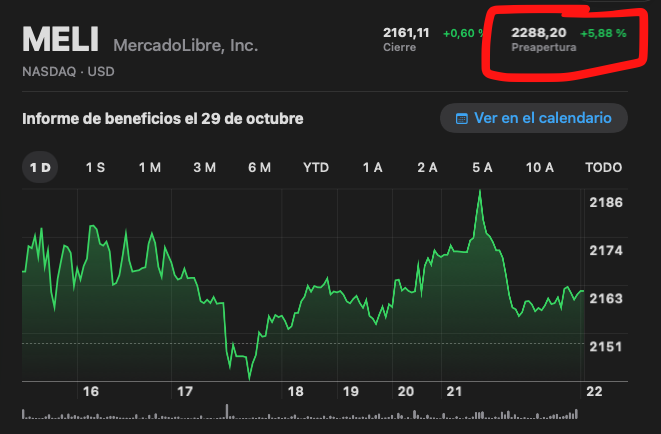
Fintech President Osvaldo pretty clear on the opportunity for $MELI.
Investors panic when they see ecom margins compress from free shipping, but they miss that MELI isn't trying to just succeed solely as a retailer. They are building the operating system for LatAm finance and using shipping costs as their CAC for the bank.
Gimenez revealed that their yielding account product is capturing massive deposits simply because traditional LatAm banks refuse to pay interest on savings in high inflation economies.
Once a user parks their money in Mercado Pago to survive inflation, they will rarely leave. Even crazier is their stealth play to disrupt SWIFT with the Meli Dollar because Gimenez noted current crossborder fees are hitting 16%. They have thousands of engineers building their own banking core from scratch while competitors rent legacy infrastructure.
Some insights after analyzing an interview with $MELI's SVP of Brazil. MELI is often misclassified as a regional retailer when it is actually a logistics backed fintech with structural antifragility that competitors like $AMZN lack in LatAm.
The market overlooks that ~90% of their GMV is 3P. This means they take minimal inventory risk, whereas 1P heavy competitors must absorb inventory depreciation and carrying costs. While MELI still depreciates its logistics assets such as warehouses/fleet, it avoids the risk of holding the merchandise itself.
Their true moat is not just delivery speed, but the resulting negative cash conversion cycle for sellers, which slower competitors cannot match. In high-inflation economies, this float is a massive financial advantage.
By driving the formalization of over 250k sellers from individuals to business entities, they have built a proprietary, near zero CAC origination engine for high yield credit that traditional banks cannot assess. Essentially, you have a deflationary infrastructure play masking itself as a marketplace.
(1/4) The ongoing market response to last week’s US tariff announcement was both predictable and preventable. Even if you agree with the premise of these tariffs, every reasonable effort should be made to give US companies sufficient time to adapt.
GeoConfirmed UKR - Misinformation by President Trump.
While we typically refrain from political commentary, President Donald Trump's recent statement regarding the war in Ukraine is so egregious that we feel compelled to respond.
Several claims made by President Trump have already been debunked. We've included responses from Grok AI for each claim, demonstrating that even Grok refutes the misinformation spread by the president.
In this thread, we will provide geolocated footage as a reminder to everyone that Russia invaded Ukraine on February 24, 2022, marking the beginning of this war.
1)
The United States has not spent $350 billion on this war, nor has it outspent Europe by $200 billion. In fact, European contributions have surpassed those of the US. Moreover, a significant portion of the American military aid (around 90% !) is spend in the US, reinvesting in the US economy.
https://t.co/ixpSYq760j
https://t.co/R43tYKS97a
https://t.co/HcD3e906Ax
https://t.co/KoDBJO691b
(Grok: https://t.co/xvtso8g5ZC)
2)
President Zelensky did not claim that half the American money sent to Ukraine is "missing". He stated that half of the promised funds had not been received, which is a crucial distinction.
https://t.co/KoDBJO691b
https://t.co/UvDRegmS2a
https://t.co/pSQBtQ8k6R
(Grok: https://t.co/TBgyaJQog8)
3)
Ukrainian constitution prohibits elections during wartime, a measure designed to protect the democratic process from foreign interference, particularly given Russia's known capabilities in this area...
https://t.co/g52JHKbxOS
https://t.co/oDp3fUd8mq
https://t.co/nn0RpBGGu6
(Grok: https://t.co/UFR5gGvlmi)
4)
President Zelensky is not a dictator, as evidenced by Ukraine's constitutional framework and his commitment to holding elections once hostilities cease. In contrast, it's worth noting that President Putin consistently wins elections in Russia with implausibly high percentages of votes, with opposition that 'falls out of windows", is poisened or jailed, raising questions about the true nature of Russia's electoral process.
https://t.co/Y7ZqMgz8QO
https://t.co/ROaxPjVHK7
https://t.co/xY73CzziHd
https://t.co/LiPrS6NWNL
https://t.co/RMMPcOwFIM
(Grok: https://t.co/8oYZ22jCDL)
5)
President Zelensky has a approval rate above 50% and not 4%. 4% is Russian disinformation.
https://t.co/QClKP7ATLz
https://t.co/0D2e4ePdJd
https://t.co/b2f6x9F3Fp
https://t.co/oj4y2Nh5mo
(Grok: https://t.co/RGglftewgL)
6)
There was no NATO expansion to the East, as NATO itself cannot expand. Instead, democratic countries independently decide whether they want to become members of the alliance. The process of joining NATO is voluntary and involves multiple steps, including meeting specific requirements and completing a formal application process.
The fact that many of Russia's former neighbors have chosen to seek NATO membership speaks volumes about their perception of Russia and their desire for collective security.
The decision of these nations to pursue NATO membership reflects their sovereign right to determine their own foreign policy and security arrangements. It also indicates a preference for the stability and security guarantees that NATO membership offers, rather than remaining under Russian influence.
Regarding the famous 'promise':
Article 103 of the UN Charter establishes a clear hierarchy in international law. It states that obligations under the UN Charter prevail over obligations under any other international agreement in case of conflict. This supremacy extends beyond just treaties, as it is generally understood to also apply to customary international law.
The hierarchy can be summarized as follows:
1) UN Charter obligations
2) Other treaties and customary international law
3) Non-treaty international texts
4) Political promises or commitments
5) Historical claims
Russia's invasion of Ukraine clearly violates fundamental principles of the UN Charter, including the prohibition on the use of force against the territorial integrity of another state. Any attempts to justify this action based on lower-ranking considerations like political promises or historical claims are legally irrelevant.
https://t.co/Izu3N1dTLv
https://t.co/BCVCGDSM2d
https://t.co/1uXijMIcDt
(Grok: https://t.co/Gh0hvwaeCN and https://t.co/xQ9Hl9zHt0 and https://t.co/xQ9Hl9zHt0)
8)
Who initiated this nearly three-year-long war? RUSSIA.
As a platform that has analyzed over 50,000 frames/videos related to the conflict, we will remind the president ,with geolocated footage, who started this war: RUSSIA.
Russia invaded Ukraine on February 24, 2022, despite repeatedly denying any plans for invasion in the preceding days.
https://t.co/bkygHVSYXk
https://t.co/pSQBtQ8k6R
(Grok: https://t.co/Ujmef6lyCF)
---
24 FEB 2022 - Russian tanks crossing the border from Belarus into Ukraine in Senkivka.
52.106063, 31.780644
4Q4J+C7C Sen'kivka, Chernihiv Oblast, Ukraine
Sources: https://t.co/4VNiYZYDbS
1/11
Buenas.
Blog actualizado.
https://t.co/aF41K2h2qB
Nevadas desde mañana a la tarde hasta la mañana del Sábado. Resto del finde nubosidad variable. Próxima semana nubosidad variable en principio con pocas precipitaciones.
El Govern espanyol no s’ha de dedicar a dir el que ha de fer o com s’ha de sentir un grup parlamentari que no és el seu, sinó que ha de complir els seus compromisos i governar. Això va al revés: són els grups parlamentaris els qui controlen el Govern, els qui li demanen explacions i els qui tenen el dret a fer servir els seus vots per exercir aquesta funció de la manera més eficaç. El parlamentarisme té aquestes coses, i presentar-ho com un problema és donar ales als discursos populistes que pregonen governs “forts” que no s’hagin de preocupar d’eleccions ni parlaments. És ferragós governar en minoria? Sí, no m’ho han pas d’explicar. Però és una bona manera de fomentar la democràcia, perquè dóna joc a les minories.
El Govern espanyol no ha d’oblidar que no disposa de majoria absoluta. Que no la té a Espanya, que no la té a Catalunya i que no la té a Barcelona. I que en dos d’aquests tres llocs ni tan sols no va guanyar les eleccions. És més: té l’alcaldia de Barcelona gràcies precisament al PP.
Quan hagi paït que un govern en minoria no pot actuar com si tingués majoria absoluta, hi sortirem guanyant tots. Perquè voldrà dir que substituirà la imposició per la negociació, i no confondrà la disposició a negociar i a arribar a acords amb una vocació de catifa on eixugar-te les sabates abans d’entrar a casa. Potser estan mal acostumats, però amb Junts no funcionen ni els xantatges ideològics ni els embuts per fer-nos empassar galàpets. Els ho vam dir des del primer dia però fa l’efecte que necessiten menjar més cues de pansa.
Perdre el respecte a qui té els vots que necessites, i no suar la camiseta intentant guanyar-te’ls a cada votació és el camí més directe al fracàs. Ho reitero: aquestes eren les regles del joc que vam exposar des del primer dia, de manera que no es poden fer els sorpresos. No es negocia un decret, una llei, un nomenament? Aleshores el nostre vot no el poden donar per descomptat. El nostre, no.
I si algú té interès a conèixer de manera honesta les raons dels nostres vots, ho té fàcil perquè les expliquem sempre.
https://t.co/EtG23uxEri
🇲🇽 T’interessa vendre online a Mèxic?
Participa en aquesta sessió per aprofundir en les característiques del mercat i coneix de primera mà l'experiència d'una empresa catalana.
📅 17/09
⏲️ 16.00h
No t'ho perdis! 👇👇
https://t.co/QhvKQzFNn6
#EENCanHelp#eTradeACCIÓ#mónACCIÓ
Mario Draghi’s report on the future of European competitiveness comes at a critical time. I’ve thought a lot about our ambitions and what’s at stake and couldn’t agree more when he describes Europe as facing “an existential challenge.” 3 things I found especially interesting and look forward to helping tackle:
1. European Tech Success: “There is no EU company with a market capitalisation over EUR 100 billion that has been set up from scratch in the last fifty years, while all six US companies with a valuation above EUR 1 trillion have been created in this period.”
2. Rising Productivity Gap: “Europe is lagging in the breakthrough digital technologies that will drive growth in the future. Around 70% of foundational AI models have been developed in the US since 2017 and just three US “hyperscalers” account for over 65% of the global as well as of the European cloud market.” (Mark Zuckerberg and I recently highlighted the challenges around this in The Economist here: https://t.co/r48I1YP1CC )
3. Brain Drain: “Between 2008 and 2021, close to 30% of the “unicorns” founded in Europe – startups that went on to be valued over USD 1 billion – relocated their headquarters abroad, with the vast majority moving to the US.”
Hope you’ll take a look at the full report: https://t.co/CTbB1Q5pyC