What didn't work:
Illustrating tools instead of showing them made my explainers harder to follow.
Chatterbox wasn't a voice I wanted to keep.
Speeding up text to fit more information made it harder to read.
How to make a motion-graphics Short every day without a video editor.
Claude Code writes mine in Remotion. My daily AI explainer series has been running since October 13.
Here's the workflow, from reusable scenes to QA:
8. Export evidence with the render.
My script saves a 12-second clip at 720p and 3 selected frames from each video. I backfilled this for 70 videos.
I use Metricool for the publishing calendar, rather than treating each render as a separate upload task.
What if a math app showed more than the answer?
SolvIQ scans a problem, explains the steps and lets you ask a follow-up.
Notes, summaries and quizzes live alongside the solutions.
The interesting part starts after x = 5.
Would you let the agent that made your demo approve it?
For one BibleNow film, a separate Claude agent checked frames, frozen moments and volume.
It took three review rounds.
Separate critic or self-review: where do you draw the line?
I submitted an App Store event for a story older than the App Store.
The Odyssey, Told in Full: MythologyNow’s next event, in 8 languages.
Sent for review on October 23.
Odysseus has another approval process to survive.
What if the stories people picked at signup weren't locked? I opened 7 more stories in BibleNow, taking the free selection from 3 to 10.
They were among the first picks in onboarding.
Less "unlock this." More "press play."
We built an app for everything a group chat keeps losing.
noi puts shared expenses, lists and plans in one place.
A calendar for the trip. A record of who paid.
The chat can keep the terrible restaurant suggestions.
https://t.co/XXNhKU5pyp
@_cgutierr
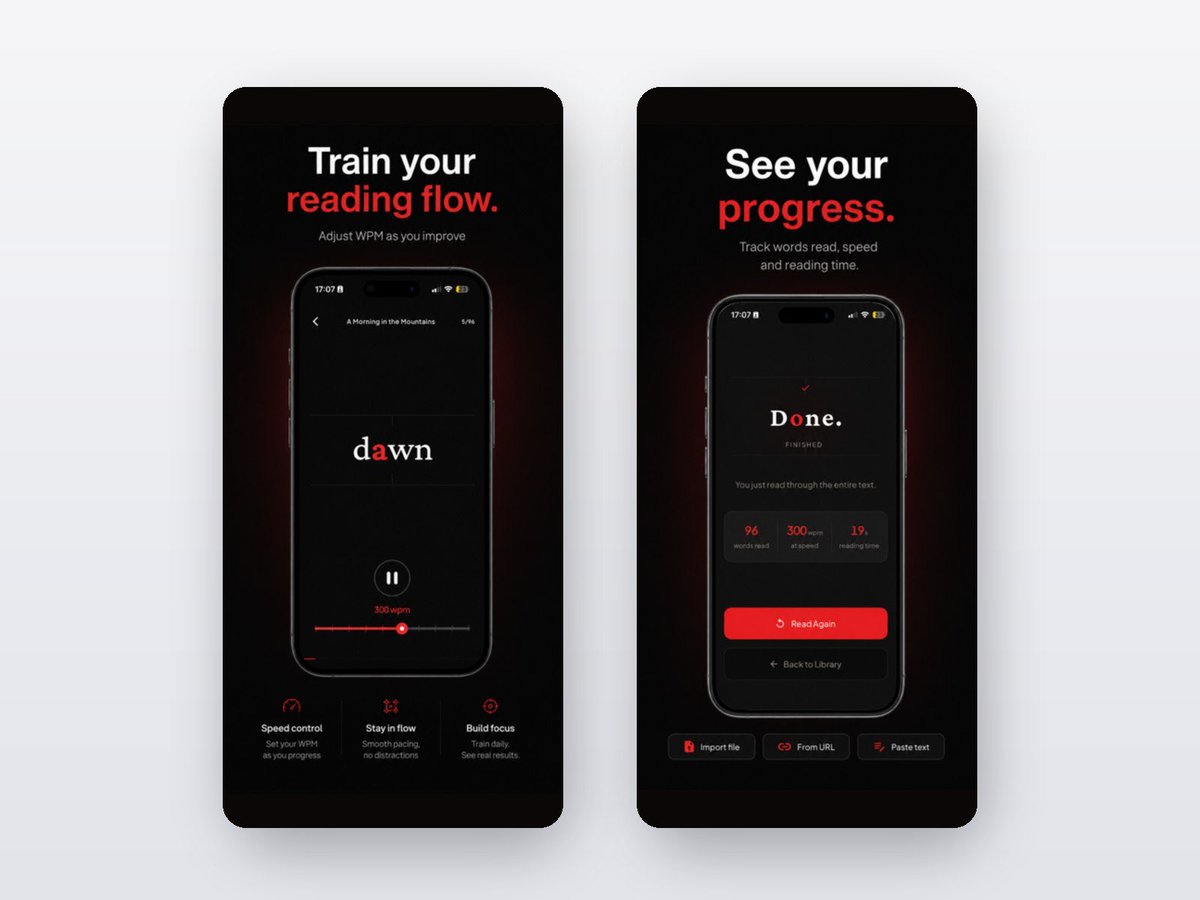
Would you put a speed slider in a reading app?
Anchor shows one word at a time.
The reader has a WPM slider; the finish screen shows speed and time.
Keep that control visible, or let the words have the screen?
What if your math scanner showed the working, not just the answer?
SolvIQ scans a problem and breaks the solution into steps.
You can ask a follow-up right below them.
The answer is the least interesting part.