Tambe marrying Lokhande is Alloying.
Lokhande marrying Pitale is brazing
Khote marrying Khare is cheating.
Kale marrying Gore is contrasting.
Hiwale marrying Unhale is Global warming.
But Wagh marrying Waghmare is pure suicide!
WHAT BIG PHARMA DOESN’T WANT YOU TO KNOW
1. Baking Soda removes 96% of pesticides from nonorganic fruits. (Surface residue)
2. Castor oil with Baking Soda made 12 age spots disappear naturally over time.
3. Black Seed Oil reduced bloating and inflammation.
4. Coconut Oil with Baking Soda noticeably whitens teeth within just 48 hours.
5. Turmeric with Black Pepper reduces chronic inflammation better than most pills.
6. Magnesium Glycinate fixes sleep, anxiety, and muscle cramps within days.
7. Zinc rebuilds your immune system faster than any supplement on the market.
8. Salt, electrolytes and water first thing in the morning before anything.
For over a thousand years, the Sarasvati was the central river of the largest civilisation on earth. The Rig Veda names her seventy-two times. Of the well over 3,000 villages, towns and cities of the Indus-Sarasvati civilisation, most stood on or near the Sarasvati. Her estuary in the Rann of Kutch fed ports trading with Sumer, Arabia and East Africa.
Around 1900 BC she ran dry.
The conventional account says the cities declined, their people scattered into villages, and civilisation was later brought in from the steppe. That account leaves out the river, and it leaves out where several million people went next.
Northwest India sits where the Indian plate pushes into Asia. Earthquakes moved the rivers. The Yamuna turned east to the Ganges and the Sutlej west to the Indus, and with her tributaries gone the Sarasvati failed. At Harappa the drains were no longer cleared. At Mohenjo-daro families buried their gold under the floor and never came back for it.
Most of the people went east, to the Ganges plain, which inherited the Sarasvati’s sanctity. Others crossed to Sri Lanka. A third group went west via the trade route to the Gulf, and within a few generations rulers with Vedic names held thrones across the Near East. The Kassites ruled Babylon for over five hundred years, and their first known king was called Gandash. Around 1380 BC a Mitanni king in northern Syria swore a treaty by Mitra, Varuna and Indra.
Later Western scholars decided the river was a myth and named the civilisation after the Indus instead. Satellites have since traced her bed from the Himalayas to the sea.
Ancient texts that do not fit a biased, artificial model should be more readily believed.
Link to the full Substack essay with sources in the comments below.
This Independence Day 🇮🇳, I asked, "What will the next century of young Indians look like?"
$0.01 Drone Deliveries. UAVs that never land. Groceries in under 10 minutes.
Meet The 22nd Century Indian. A Documentary on a New India.
Una profesora de Stanford lleva 20 años estudiando por qué unos tienen suerte y la mayoría no.
Su conclusión: la suerte es como el viento pero nadie sabe ponerle vela.
Si quisiera más suerte, haría estas 7 cosas:
1/ Micro-riesgos fuera de mi zona de confort.
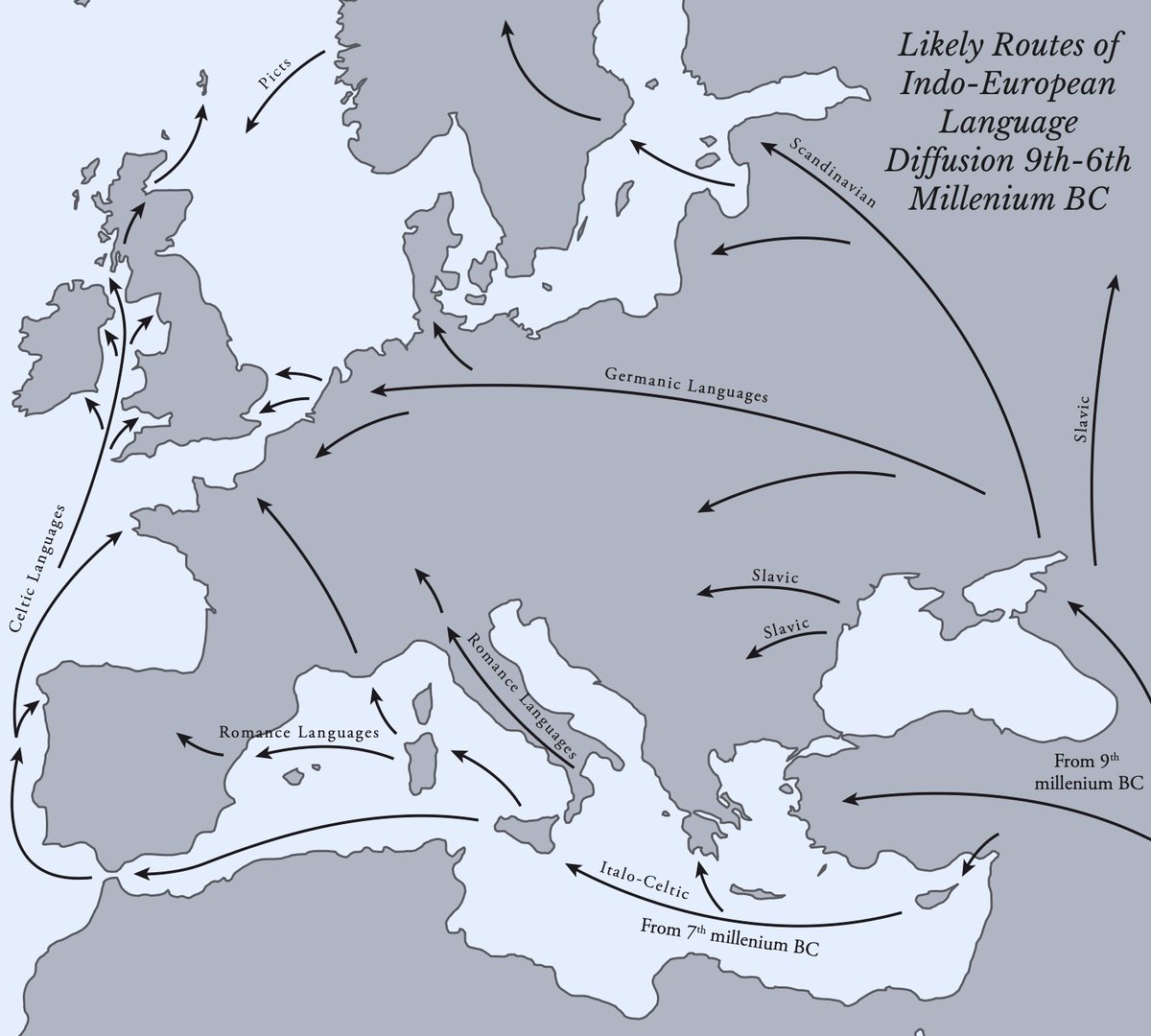
The Irish once called themselves the Tuatha de Danaan.
Children of Danu.
The same Danu appears in the Rig Veda as the mother goddess of the flowing waters. She is where the Danube gets its name. And the Dniester, the Dnieper, the Don and the Donau. And Denmark. And Greek Demeter. Northern Greeks called themselves Dannuni.
Two hills in southwest Ireland are still known as the Paps of Danu. At Beltane, fires were lit around them and cattle driven between the flames for protection and good harvest. The same ritual is described in the Vedas.
The oldest surviving Irish text, the Book of Invasions, records a tribe called Erainn, from Arya, arriving from the south by sea and making its way inland to the Hill of Tara. The Persians took the same name for themselves. Iran means the land of the Aryas.
These Vedic influences arrived in pulses. The Iranian is the oldest. A landward pulse followed the river valleys of the Dniester, the Dnieper, the Donau and on into Denmark, leaving the mother goddess's name behind at each stage.
The Celtic pulse came after 5,600 BC. The Celtic branch had by then separated from Italo-Celtic in the Mediterranean and continued up the Atlantic seaboard. The route is still readable on the map. Portugal. Galicia. Gaul. Pays de Galles. Cornwall. Galloway. Galway. The "gal" names trace the coast.
Ireland remembered its origin.
The old story of Aryan nomads riding into India from the steppe has no DNA support. Michel Danino reviewed nine large-sample genetic studies from 1999 to 2006 and found no invasion signal. The archaeological record shows no cultural break from prehistory. The outstanding character of ancient India is continuity.
The trails from Iran and from Ireland both lead back to India.
I set the full case out in "How Maritime Trade and the Indian Subcontinent Shaped the World."
This SNL skit is still hilarious today. I think it's funny because it's probably Pretty accurate. I do have to agree though. To hell with the metric system. Stick your Kilometers!!!!!!!!!!🤣🤣🤣
A Stanford neuroscientist warns high cortisol wrecks memory, enlarges your fear center, and make your brain feel broken.
If I wanted to fix it naturally, I'd do these 8 things every day:
1. Walk barefoot on grass for 5–7 minutes.