Peter Mutharika might take over from Lazarus Chakwera. We'll have to wait for the official results. It's a passing of the torch between two experienced leaders – a septuagenarian to an octogenarian!
Something amazing and frightening is happening in Tanzania. The woman President took to her heels, running from the marauding protesters who were heading to the State House.
Protests in Tanzania continue as fires blaze in the streets and citizens defying the curfew in Dar es Salaam, following a farcical election run by the Tanzanian dictator Samia Suluhu Hassan, who jailed her main opponents and shut down the internet to block the truth from coming out.
It is an embarrassing reality for a nation that once stood as the heartbeat of Southern Africa’s liberation struggle, a country that gave refuge to freedom fighters and symbolised integrity and justice across the continent.
Julius Nyerere must be turning in his grave. Heartbreaking to witness what Tanzania has become.
🇿🇼 We either mistake isikhiwa, chirungu, education, oratory & eloquence or thievery & opulence for leadership. We celebrate & make orators & thieves, leaders, when leadership requires a wider skill set than oratory or kleptomania. We'll surely learn one day, my people ... 🤦🏿♂️😢
Ahoyi Nyasaland! Ahoyi! 🤣🤣🤣
This was voting today in Malawi. Africa is a real joke. To think that the very man presiding over this chaos, Lazurus Chakwera, might actually be re-elected is beyond comprehension. It turns the whole continent into a laughing stock.
The rigging that is about to take place in Malawi will not just be blatant, it will be so sophisticated in its absurdity that it deserves to be studied at PhD level.🤣🤣
It is a tragic comedy, a reminder of how far Africa still has to go before elections can mean real accountability rather than a recycled circus.
In this episode of tête-à-tête, Comrade @cdemlambo presents a brief introduction to the conversation on what should be the character, content, and ideological direction of the democratic alternative led by President Chamisa. A theoretical contribution to the ongoing process of building a credible alternative. https://t.co/jrX43smTd7
On paper, Robert Mugabe is one of the most unlikely womanisers one can ever come across. He often presented himself as a serious intellectual, an ideologue & rabid Pan-Africanist.
In Tekere's Auto Bio, the description of Bob struggling to climb over the fence after spending the night with Abigail Kurangwa in Highfield just before they left for Mozambique still hits me very hard every time!
I can't square the public image of Bob the "revolutionary" & his regular dalliances with women.
In the case of Tonderai's mother, Bob was already married to Sally, who was in London at that time.
It's therefore a clear case of seeking sexual gratification - either humanising or exposing him to critics who highlight how the chefs often regularly abused female cadres with impunity during the liberation struggle!
This is Paul Biya, the president of Cameroon, a nation of 30 million people in West Africa. Paul Biya is 92 years old, and he has been president for 43 years, from 1982 to this day.
He was also Prime Minister of Cameroon from 1975 to 1982, so he has been in power for 49 years.
Here he is with his party supporters. It is election time again in Cameroon, and Paul Biya will be running for the umpteenth time 🤣🤣🤣
When people do not take the continent seriously and laugh at us, it is such anecdotes that make it difficult for anyone to have a rational defence for what African leaders do!
Paul Biya’s regime is firmly backed by France, the self-appointed global teacher of liberty that somehow forgets its lessons when dealing with its favourite African repressive strongmen.
France provides Cameroon with military support and remains its biggest foreign investor, cheering from the sidelines as democracy in Cameroon becomes a farce.
France doesn’t care so long as French companies keep cashing in.
He spends more time in France and Switzerland than he does in Cameroon.
He only returns to fulfil constitutional obligations, then goes back to Europe afterwards.
His favourite destination is Geneva, particularly the InterContinental Hotel, which is described as functioning almost like an “offshore presidential palace” during his stays.
Do you now understand why military juntas are popular with young Africans both at home and abroad? Their choice is between someone like Paul Biya or a leader in uniform who tries to bring change.
Meanwhile, France beams with pride as its protégé sips coffee on the shores of Lake Geneva, while back home, Cameroonians sip disappointment. It is a mess!
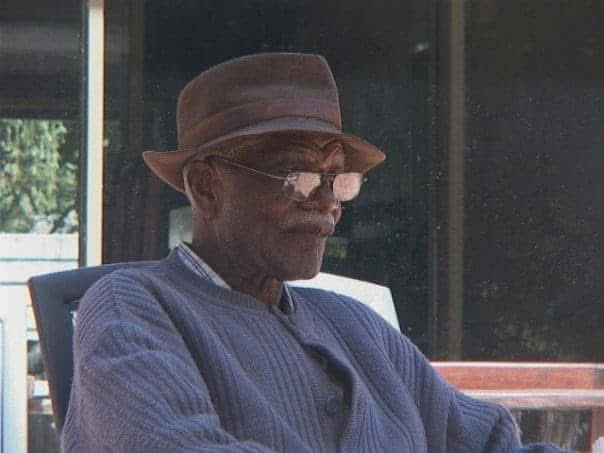
Remembering Zimbabwe’s Joshua Nkomo, who died of prostate cancer on 1 July 1999 at the age of 82 at Parirenyatwa Hospital in Harare.
Joshua Nkomo was a towering African political figure in Zimbabwe’s liberation struggle, revered as a father of the nation and a symbol of unity and resilience.
A trained social worker and nationalist leader, he co-founded the Southern Rhodesia African National Congress in the 1950s and later led the Zimbabwe African People’s Union (ZAPU), fighting for the emancipation of black Zimbabweans from colonial rule.
Nicknamed “Father Zimbabwe,” Nkomo was known for his calm demeanour, inclusive vision, and unwavering commitment to justice.
He was deeply respected for his attempts to promote peace during turbulent times, even when he was betrayed or marginalised. May his soul rest in peace!
The new Cancer Hospital in the country in the city of Ndola is almost complete. Once complete in December, it becomes the 2nd Cancer hospital in Zambia & will be fully equipped with cancer machines to offer early cancer detection & chemotherapy & return the sick to full health !!
Stop comparing broke graduates to rich thugs, rather start comparing rich graduates with rich thugs, you'll understand why education matters. You will understand whose fortunes will most likely live on to the 3rd generation. Get educated don't be deceived!!!
The positive impact of having a present father;
I was lucky because I am the last born in a family of five siblings. The age gap between me and my brother Blessing was nine years, so I grew up alone with my parents, with all their attention focused on me.
My father was a very thoughtful man, born in 1920. His father, Chin’ono, had three wives, and my grandmother, vaDhiriza, was the third wife. My father was the first and only one among my grandfather’s children to go to school, he was also the last born. He trained at Mt Selinda and became a civil servant.
He always wanted the best for me. Those who grew up in Murewa will remember that when I was in Grade Three, I would sometimes ride his Honda 70 motorcycle to school. These last-born privileges followed me into adulthood.
When I was thirty, after moving back to Zimbabwe, I bought a house in Chisipite. My mother had passed away, so I convinced my father to move in with me, and he eventually agreed.
One Saturday morning, the gardener did something that upset me, and I shouted at him. My father observed quietly and said nothing. That evening, after dinner, he called me to the dining room and we sat at the table.
“Mwanangu,” he said. “Dai mukomana webasa anga akangwara nekudzidza sewe, angadai asiri gardener.”
Translation:
“My son,” he said. “If the boy working here were as clever and educated as you, he wouldn’t be a gardener.”
He went on to remind me how I used to ride a motorcycle to school when I was just ten years old, in Grade Three. There was no real risk of accidents; we lived not far from the school and used what was essentially a private road.
He spoke of what attending top schools like Fletcher did for my development, and then gently reminded me that the gardener never had such privileges. He said his understanding of the world would naturally be different from mine.
In that moment, it hit me. I was not better than the gardener, I was just more fortunate. I had parents who believed in education, who had the means to send me to good schools, and who filled my world with structure and opportunity. He didn’t.
And so I realised that intelligence is everywhere, but opportunity is not.
Life had offered me a different lens, not because I had earned it as a child, but because others had made sacrifices for me. It taught me that before I judge anyone’s actions or capacity, I must ask myself what they were given to start with.
Every day, I miss my father. I miss my mother too, because they shaped my values in ways that contributed to my success.
And more than anything, I thank them for teaching me that kindness must always walk ahead of pride, and that we honour our privilege not by flaunting it, but by understanding those who never had it.
It also reminded me how lucky I was to have a present and thoughtful father, too many children grow up without that anchor, because far too many men abandon the very children they bring into this world.
Too many people we engage with here come from broken homes. Too many have not had the privilege I had, of having a present father who showed me love and was responsible.
Be mindful of how you react to some people here; many are hurting, carrying a lifetime of emotional baggage. Side-step when you are a victim of that misplaced anger.
Some people may have degrees, but they lack empathy—they were never taught how to be responsible adults.
Men, fatherhood is not about paying fees; it is about being present, consistent, and emotionally available.
That love which my father gave me is what helped me transition from the dusty streets of Murewa to Harvard University, and to becoming a two-time African Journalist of the Year. I would never have achieved it without my father being present.
Rest in Peace Dad.
The latest from the Middle East from @itvnews;
Israel bombed Iranian airports—it’s even bombing prisons where political prisoners are held. Why Israel would bomb a prison with political prisoners baffles me.
It also bombed one of the nuclear sites previously hit by the Americans.
Iran did not fold its hands. This morning, it bombed a power station, leaving 8,000 people without electricity.
Meanwhile, the Iranian Foreign Minister met Russian President Vladimir Putin a couple of hours ago to discuss Iran’s response to the American strikes.
Britain is worried about rising fuel prices and increased defence spending, which will force the government to cut spending on social services.