Año mundialista y de nuevo el eterno debate: ¿Uruguay tiene 2 o 4 estrellas? Le duela a quien le duela la respuesta es la siguiente: ⭐️⭐️⭐️⭐️.
Y si alguna duda cabía, Burger King la disipa con esta obra de arte.
Google's CEO "any solo developer with Claude can now outcompete a 10-person Google team"
he's right
but 90% of developers using Claude Code daily are starting from zero every session
no stack context. no memory. no behavior rules.
$975 wasted per developer every single week
Sundar is talking about the future. here's the setup that makes the present actually work:
La IA acaba de crear su primera arma real de hackeo… y casi NOS LAS METE POR EL ANO
@Google acaba de confirmar algo que parecía de película de ciencia ficción: ¡el primer exploit zero-day del mundo desarrollado 100% con inteligencia artificial ha sido detectado en la vida real!
Un grupo de cibercriminales usó IA para fabricar un script que salta la autenticación de dos factores (2FA) en una herramienta de administración web open-source super popular.
Lo más loco es que iban a usarlo en un ataque masivo gigante (querían pegar fuerte y a mucha gente).
Google lo pilló antes de que explotara.
Lo detectaron, avisaron al fabricante, lo parchó y pararon todo.
¿Sabes cómo se dieron cuenta de que lo había hecho una IA?
El script en Python tenía todas las huellas digitales de haber sido generado por un modelo grande:
- Montones de comentarios explicando todo como si fuera un profesor dando clase
- Una puntuación CVSS (lo grave que es la vulnerabilidad) ¡inventada de la nada!
- Código limpio, estructurado y "perfecto" como salido de un manual de programación, como si lo hubiera hecho el mejor dev que haya nacido en la tierra.
Esto NO es un simple "la IA ayuda a los hackers".
Es la primera vez que la IA descubrió y armó un fallo de seguridad real que los humanos no habían visto.
Un fallo lógico de alto nivel (un "confío ciegamente en esto" que estaba hardcodeado).
Estamos entrando en la era IA vs IA en ciberseguridad.
Los malos ya usan modelos potentes para encontrar vulnerabilidades que los escáneres tradicionales pasan por alto.
¿Estamos listos para esto?
The non-English tax is real.
Sutton's Bitter Lesson, translated across languages and normalized to OpenAI English token count:
Hindi: OpenAI 1.37×, Anthropic 3.24×
Arabic: OpenAI 1.31×, Anthropic 2.86×
Chinese: OpenAI 1.15×, Anthropic 1.71×
Claude’s tokenizer charges a much higher linguistic tax.
In 14 minutes, this Anthropic engineer who wrote "Building Effective Agents" will
teach you more about building them right than most developers figure out on their own
in months.
Bookmark this for the weekend. Then read the builder's guide below.
📊 Google Workspace experimented with Kotlin Multiplatform in Google Docs through large-scale A/B tests with impressive results.
“We consider Kotlin Multiplatform validated in our Google Docs experiment. We’re actually very happy with it.”
🎥 Learn more: https://t.co/bHsNnUPyWQ
Introducing Claude Managed Agents: everything you need to build and deploy agents at scale.
It pairs an agent harness tuned for performance with production infrastructure, so you can go from prototype to launch in days.
Now in public beta on the Claude Platform.
When I was consulting for @HBO Silicon Valley, zero-loss compression was the holy grail Richard Hendricks chases that perfect middle-out algo could shrink everything w/out breaking a single bit.
Google just did something even more practical for the AI era: TurboQuant compresses LLM key-value caches down to 3 bits per value using random orthogonal rotation + PolarQuant scalar quantization & optional 1-bit QJL residual correction.
=>> 6× memory reduction, up to 8× faster attention (on H100), & 0 degradation on LongBench, Needle-in-a-Haystack, and RULER for models like Gemma. No retraining, no calibration needed.
Fiction just got out-engineered by reality. 😅💚💚
We’re launching a brand new, full-stack vibe coding experience in @GoogleAIStudio, made possible by integrations with the @Antigravity coding agent and @Firebase backends.
This unlocks:
— Full-stack multiplayer experiences: Create complex, multiplayer apps with fully-featured UIs and backends directly within AI Studio
— Connection to real-world services: Build applications that connect to live data sources, databases, or payment processors and the Antigravity agent will securely store your API credentials for you
— A smarter agent that works even when you don't: By maintaining a deeper understanding of your project structure and chat history, the agent can execute multi-step code edits from simpler prompts. It also remembers where you left off and completes your tasks while you’re away, so you can seamlessly resume your builds from anywhere
— Configuration of database connections and authentication flows: Add Firebase integration to provision Cloud Firestore for databases and Firebase authentication for secure sign-in
This demo displays what can be built in the new vibe coding experience in AI Studio. Geoseeker is a full-stack application that manages real-time multiplayer states, compass-based logic, and an external API integration with @GoogleMaps 🕹️
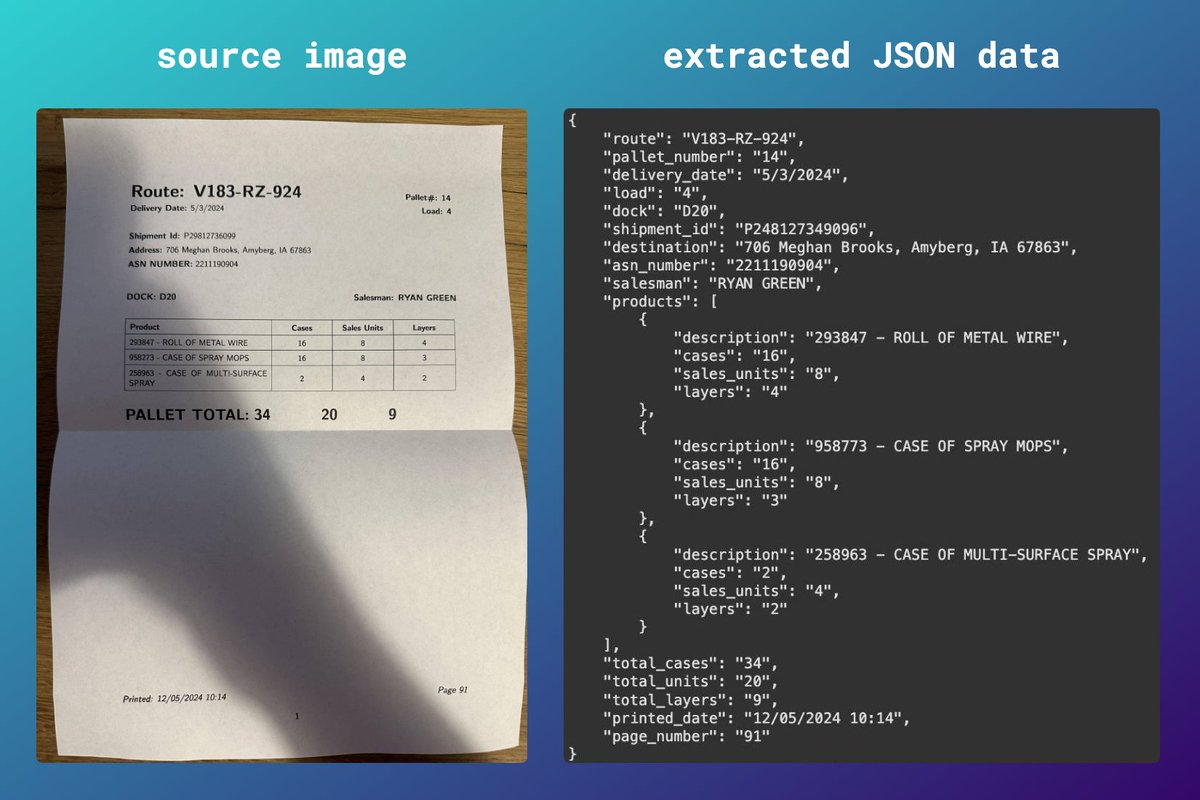
GLM-OCR
0.9B model that beats Gemini on OCR benchmarks
going live in 15 minutes to test it on real-world datasets and build some cool demos
link: https://t.co/apSKCpbaUl
"Every software company in the world, needs to have an @openclaw strategy" - Jensen at @NVIDIAAI GTC
Framing OpenClaw as one of the most important open source releases ever, they have announced NemoClaw - a reference platform for enterprise grade secure Openclaw, with OpenShell, Network boundaries, security baked in.