Why TN doesn’t like NEET ?
The reasons can be grouped as
1. Grievance core
2. Politics wrapper
It’s a mistake to assume that only DMK / Dravidian media is the reason people don’t support NEET. Politics was a wrapper, but the core grievances were real.
Grievance core :
To understand TN, it is important to know that MBBS is more of an emotional issue here than anywhere else. It’s a generational dream for many. It conveys to the relatives “I have arrived”. Engineering isn’t thought of this way.
1. Injustice - people get annoyed if a deserving candidate doesn’t get MBBS (like the movie Gentleman or the real life scenario of Anita) or if an undeserving candidate gets MBBS (like a -40 mark fellow getting seat). NEET came be seen as an attempt to dry the pond to catch the crocodile. The crocodiles survived, even thrived. The fish died. Before NEET too a rich guy could purchase seats, but at least a poor hardworking student didn’t have to jump through additional hoops to get medicine. Before NEET, Namakkal and nearby area schools were doctor factories which only the rich could afford.But a poor student could read the prescribed books cover to cover and get seat. After NEET, rich or poor, urban or rural, the only reliable way to score above 600 is to join coaching class.
2. Injustice to the weakest -before NEET the cards were stacked against CBSE kids , since it was tougher to score more in CBSE boards than state board. It was unfair, but the ones at the receiving end of unfairness were predominantly urban, upper middle class(UMC) students. They had another option - AIPMT with 15 % quota in all states. Similarly moving out of state wasn’t too onerous for an UMC student. Their total number wasn’t much higher than 15% either. So the “injustice” that existed was, insofar as we can call it that, restricted to the upper strata of the society, which had the capacity and options to withstand it.
After NEET, this changed. Everyone had to go to coaching class, which costs money. Good coaching institutes are in urban areas. NEET gave an advantage to the “stronger” section of society, while also giving disadvantage to the “weaker”. The poor were told “You can write the exam again and again. You can even travel to that college that is 1500 km from home. How cool is that?”. They were not amused - to take advantage of these “advantages”, one needs to be middle class at least. What use is petrol to a man who only owns a cycle?
3. Lack of clarity : on benefits, objectives or pros/cons of NEET. No politician could articulate these things clearly. To make matters worse, all discussions happened in a data vacuum. Even today, raw data regarding NEET isn’t available to the public.
4. Violation of autonomy: many people felt like NEET was imposed on them and no one heard their grievances or even acknowledged them.
Yes politics played a role. Private colleges/deemed universities didn’t like the new filter. Rich parents didn’t like paying white money as fee. Parties saw an opportunity to play the “center oppressed us” politics. But politics can’t be done with nothing. Even a skilled politician needs some grievance to weaponize.
Over time, people got used to the new status quo. ADMK government under EPS gave 7.5% horizontal reservation for govt school students. Without NEET, that reservation might have been harder to justify. So it is possible that more government school students become doctors today than before.(I don’t have the data, so I could be wrong).
Summary:
NEET affected poor,rural students. It didn’t stop rich guys from buying seats with laughably poor marks. It tilted the field in favour of urban UMC CBSE kids, but only if they coughed up money for coaching.
The attempts to reduce the negative fallout( 7.5% horizontal reservation) were partially successful, but the feeling of being arm twisted persists, partly due to politics.
In short, NEET was a solution in search of a problem, as far as TN was concerned.
A parasite that has been eating people for 3,500 years is about to be wiped off the planet. It infected 3.5 million people in 1986. Last year, it infected 10. And I have not seen it make a single front page.
It is called Guinea worm. You drink contaminated water from a pond in a poor village. A year later, a worm up to three feet long starts coming out of your leg through a burning blister. There is no pill that stops it and no surgery that works. You wrap the worm around a stick and pull it out slowly, over days or weeks, inch by inch. If you rush, the worm breaks inside you and causes a fresh infection.
Guinea worm is ancient. Preserved worms have been pulled out of Egyptian mummies from around 1000 BCE. The Ebers Papyrus, an Egyptian medical scroll from 1550 BCE, describes pulling the worm out with a stick. For three and a half thousand years, that was the best humans could do.
Then in 1986, public health workers decided to kill the parasite off. They had no vaccine and no drug. What they had was cheap cloth water filters and a small army of volunteers willing to walk from village to village for decades.
The plan was simple. Give everyone who drinks from a pond a cloth filter to strain out the tiny water fleas that spread the parasite. Then send volunteers walking house to house, year after year, teaching people how to use the filters and keeping anyone with an emerging worm out of the water.
It worked. From 3.5 million cases a year to 10. Four were in Chad, four in Ethiopia, two in South Sudan. The other four countries where the worm used to be common, Angola, Cameroon, the Central African Republic, and Mali, had zero human cases for the second year in a row. The World Health Organization has already certified 200 countries as Guinea worm free. Six are left.
The last hurdle is dogs. Cameroon had 445 infected animals last year and Chad had 147, so a lot of the remaining work is on animals, not humans. Strays get leashed, and crews treat ponds to kill any remaining worms. The campaign keeps watching until the number hits zero.
When Guinea worm hits zero, it becomes the second human disease ever erased from the planet. The first was smallpox. It will also be the first parasite humans have ever wiped out, and the first disease ever ended without a single dose of medicine. Volunteers walked village to village with cloth filters for 40 years. Now a plague from the age of the pharaohs is about to be gone.
Indian bosses are the worst in the world.
Indian corporates and leaders are some of the worst when it comes to fair treatment of employees.
In 2004, I worked for a Indo German JV in NCR region.
We worked hard and build the company. When we were launching the product in a 5 star hotel in Mumbai, the entire team comprising of Germans and Indian had to travel there.
The Indian bosses responsible, booked me and my colleagues (juniors) in a cheaper hotel away from the 5 star hotel while they booked the Germans and other seniors in the 5 star hotel.
When my German boss learnt about it, he got really upset. He told the admin head, you either downgrade us or upgrade everyone else.
They upgraded everyone else. But they were not happy.
When the Germans left India, it was back to the old ways.
There maybe some exceptions but Indian bosses are some of the worst, and most Indian companies give 2 flying fucks about work life balance.
In Europe, I have 45 paid leaves a yeah in addition to all other national leaves. The employee rights and interests are well represented by the employee unions.
People come to office any time between 6.30 am to 9.30 am, work their hours, take their breaks, and leave on time to spend time with their family or do what they like. Of course there are some that work longer hours but nobody questions you if you do your job, respect your hours and leave on time.
So if you are an Indian leader, don’t be the asshole in the post below that considers Saturday and Sunday as paid leaves and thinks that Indians have the best work life balance.
He has probably never traveled in a Virar local from Borivali to Churchgate, or driven after work on the western expressway between Andheri and Mira Road.
@praddy06 Boss,
Trust me, as surgeons, we also think of all the problems and possible complications before surgery. We make sure they don't happen, but warn patients beforehand. This is similar.
Those who don't get them, just stop abusing him. He's a gem for people like us who travel.
Deaf person, spent most of my life living in silence. In my 30s I adopted a chilled and sassy cat called Lady. She lays with me often & purrs. Though I could feel her purring I couldn't hear it. She's the reason I decided to get cochlear implants, because I wanted to hear her.
How much human knowledge has been lost to history?
Well, this ancient wonder was razed by the Mongols in 1258 — it's said the Tigris River ran black with ink.
Here's what was inside... (thread) 🧵
In 1731 King Frederick I of Sweden was gifted a lion, one of the first lions in Scandinavia. When the lion died shortly after, it was given to a taxidermist and this was the end product. The taxidermist and the museum keepers had never actually seen a lion before, and did not know how they were supposed to look. As a result, the resulting mount was especially anatomically inaccurate, most apparent in its face.
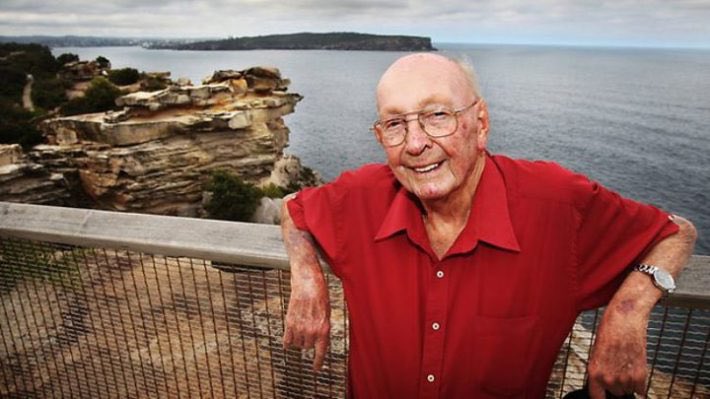
An Australian man called Don Ritchie, lived the across street from the most famous suicide hotspot in Australia known as "the gap".
He lived there for almost 50 years and during that time he saved at least 160 from committing suicide by striking up a conversation with them and then inviting them into his home for tea.
In 2006, he was awarded the Medal of the Order of Australia for his rescues, the official citation being for "service to the community through programs to prevent suicide".
Ritchie died on 13 May 2012, at the age of 85.
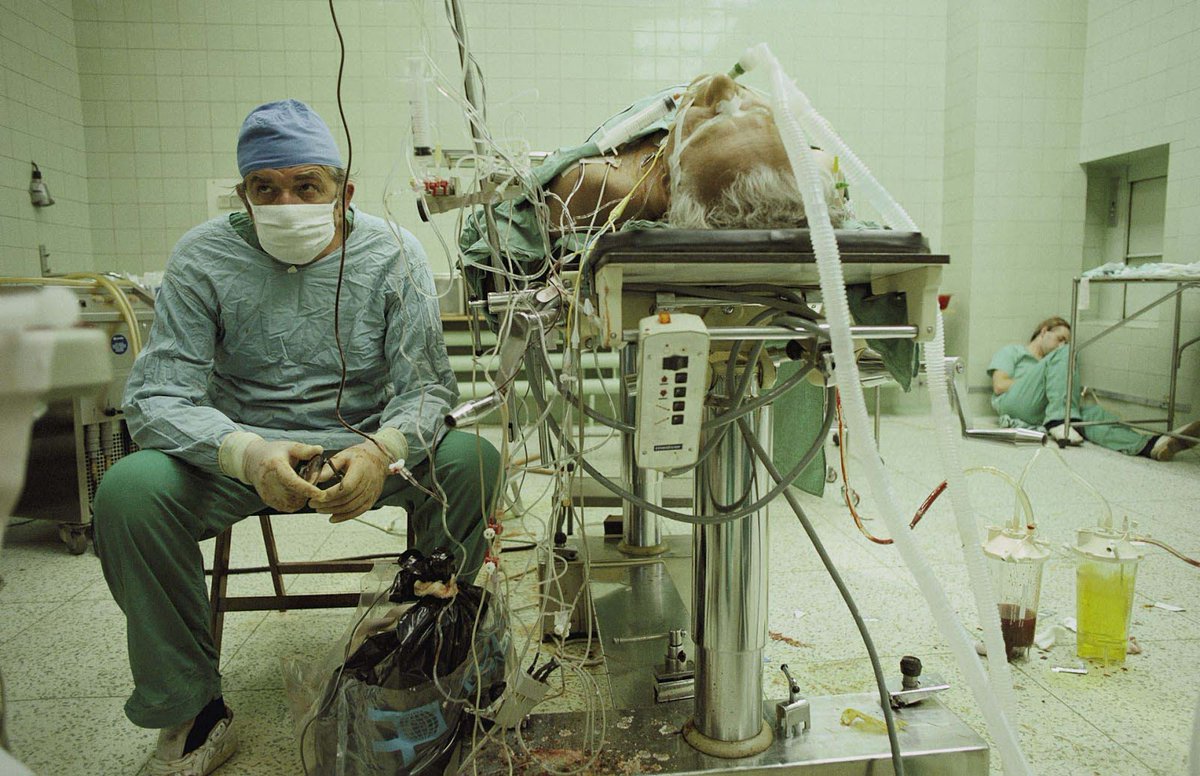
Dr. Zbigniew Religa, a Polish doctor, anxiously watched a screen to check his patient's response after a heart transplant. The surgery was complex and lasted 23 hours. In the photo, you can see one of his colleagues who helped him with the operation asleep in the corner.
Dr. Religa was a trailblazer for heart transplants in Poland. The surgery was seen as nearly impossible at the time, but he took the risk, and the operation was successful.
The patient, Tadeusz Żytkiewicz, lived for 30 years after the operation, outliving Dr. Religa.
The photo was taken by James Stanfield in 1987. He was documenting Poland's struggling and outdated free healthcare system, which was in crisis during the 1980s. The 'National Geographic' chose this picture as the photo of 1987, and it was named one of the 100 most significant photos in history.
@fesshole You should have replied, 'Yes he did, and in the return capsule home, it crashed into the sea and he was abandoned on an island on his own for ages.'
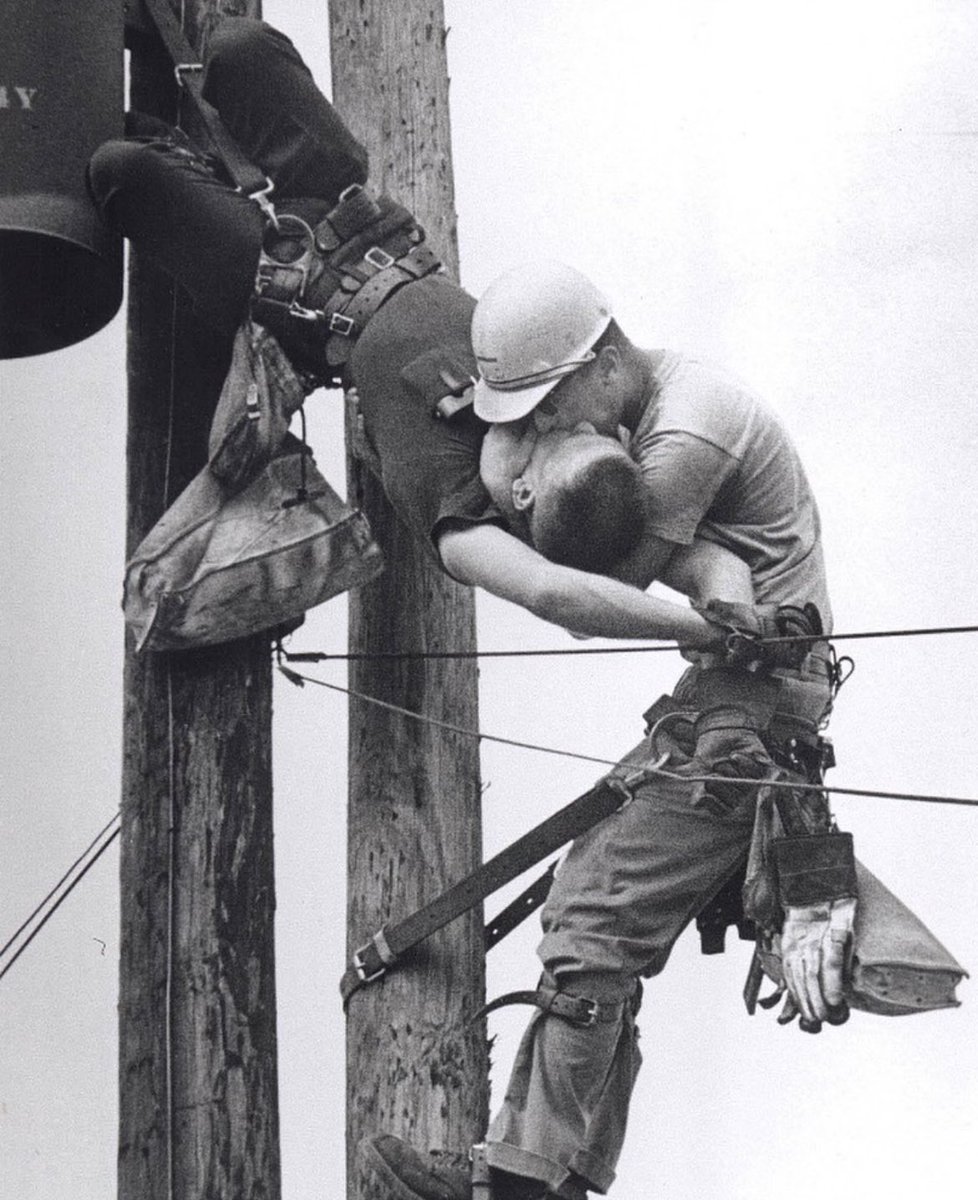
Randall Champion inadvertently made contact with a low-voltage power line, causing an electric shock that stopped his heart. J.D. Thompson, a fellow lineman, promptly administered mouth-to-mouth resuscitation until medical professionals arrived. Champion managed to survive this ordeal, and the iconic photograph capturing the moment became widely known as "The Kiss of Life" (1967).
During a routine maintenance task, Champion inadvertently brushed against one of the low-voltage power lines situated atop a utility pole. Fortunately, his safety harness prevented him from falling, and Thompson, who was climbing just below him, swiftly reached Champion and performed mouth-to-mouth resuscitation.
Given the circumstances, Thompson couldn't perform CPR, but he continued to breathe into Champion's lungs until he detected a faint pulse. He then released Champion's harness and carefully descended with him on his shoulder. On the ground, Thompson and another worker administered CPR, resulting in Champion being moderately revived by the time paramedics arrived. Eventually, Champion made a full recovery.
What's even more remarkable is that Champion not only survived this incident, thanks to Thompson's actions, but he also lived for an additional 35 years. He passed away in 2002 at the age of 64. Thompson, on the other hand, is still alive today.
Rocco Morabito was driving on West 26th Street in July 1967 on another assignment when he witnessed Champion hanging from the pole. He immediately called for an ambulance and grabbed his camera. "I passed these men working and went on to my assignment," says Morabito. "I took eight pictures at the strike. I thought I'd go back and see if I could find another picture."
However, upon returning to the linemen, Morabito recounts, "I heard screaming. I looked up and I saw this man hanging down. Oh my God. I didn't know what to do. I quickly took a picture. J.D. Thompson was running toward the pole. I went to my car and called an ambulance. I got back to the pole, and J.D. was breathing into Champion. I backed off, way off until I hit a house and I couldn't go any farther. I took another picture. Then I heard Thompson shouting down: 'He's breathing!'"
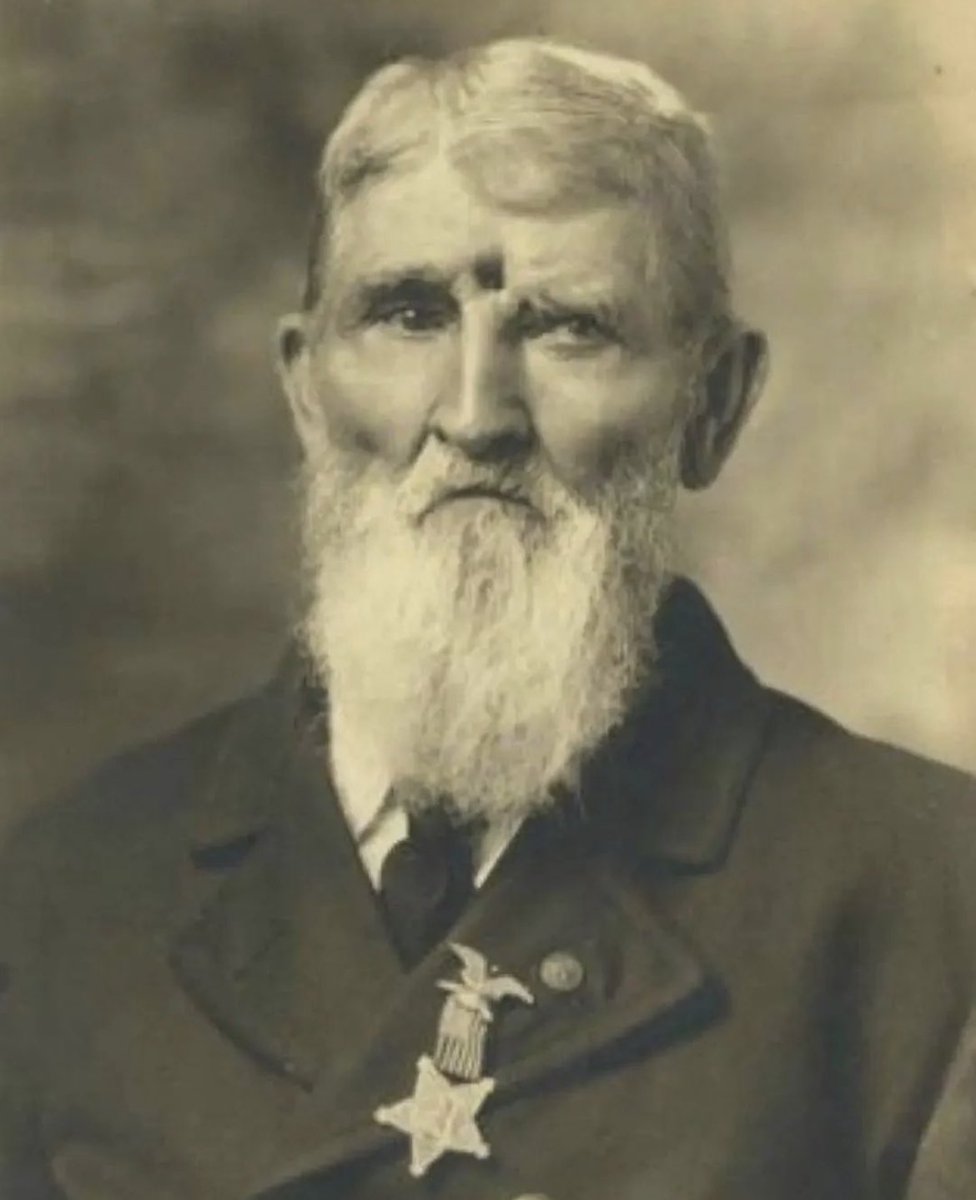
In 1863, Jacob Miller, a Union Army soldier from the 9th Indiana Infantry, miraculously survived being shot in the head during the Civil War. He participated in several battles, including Greenbriar in West Virginia, the siege of Corinth, Perryville in Kentucky, and Stones River. Despite being declared dead by his captain, Miller regained consciousness after the battle of Chickamauga and described his experience to a newspaper in 1911.
Miller vividly remembered the moment when a Confederate soldier aimed at him, pulled the trigger, and the musket ball struck his forehead between his eyes. Initially believed to have suffered a fatal wound, Miller surprised everyone by sitting up and assessing the damage. He discovered that his left eye had been dislodged from its socket, and he carefully maneuvered the crushed bone to realign it. Using his bandana as a makeshift bandage, he did his best to secure the injured eye.
Despite the severity of his condition, Miller displayed remarkable resilience. He crawled amidst the lifeless bodies and embarked on a grueling 15-mile journey to reach a field hospital. Along the way, he encountered a compassionate man on horseback who offered him a ride. At the hospital, doctors opted to remove only a third of the musket ball, fearing that a complete extraction would prove fatal. Although the remaining portion eventually fell out naturally over time, Miller's wound never fully healed.
Jacob Miller lived a long life, defying the odds stacked against him. He passed away in 1917 at the age of 88, leaving behind a captivating photograph taken in 1911, which serves as a testament to his incredible story.
@imjadeja You are always cherished Bhai. Looking forward to a masterclass performance from you on the 28th. Good luck to you and @ChennaiIPL team. God bless!
In 1956, ducklings were utilized as an integral component of medical treatment.
In the realm of medical history, there have been numerous groundbreaking advancements and innovative treatments. However, there are also some lesser-known chapters that offer a glimpse into the peculiar and unconventional approaches taken in the past. One such fascinating example dates back to 1956 when ducklings were utilized as an integral component of medical treatment. This unexpected therapeutic method aimed to provide solace and support to patients during their recovery. Let's explore this intriguing story further.
In the mid-1950s, healthcare professionals embarked on a unique experiment to incorporate ducklings into medical therapy. The rationale behind this unconventional approach stemmed from the belief that the presence of these small, endearing creatures could have a positive impact on patients' emotional well-being, aiding in their recovery process. Hospitals and clinics started introducing ducklings into various departments, particularly those caring for children and individuals experiencing emotional distress.
The therapeutic impact of ducklings was indeed remarkable. Their presence brought joy and cheer to patients, creating a welcoming and uplifting atmosphere within medical facilities. The gentle interactions between patients and ducklings helped alleviate stress, reduce anxiety, and promote a sense of companionship. Children, in particular, found solace in the company of these adorable creatures, often forming deep emotional connections.
The utilization of ducklings as a form of therapy eventually became a popular phenomenon in medical institutions worldwide during the 1950s. However, as medical science progressed and more evidence-based practices emerged, the focus shifted towards more traditional therapies. Consequently, the era of duckling therapy gradually faded away, and other interventions took center stage.
The incorporation of ducklings as an integral component of medical treatment in 1956 remains a peculiar but captivating episode in medical history. Although this unorthodox approach might seem unconventional today, it highlights the significance of emotional well-being in the healing process. The use of ducklings provided comfort, support, and a sense of joy to patients, ultimately contributing to their overall well-being. While the era of duckling therapy may have passed, its legacy serves as a reminder of the continuous search for innovative and compassionate methods to enhance the medical experience for patients of all ages.
The 4th Laddu.
These 3 laddus were given to me by the wife of my patient on his birthday, a few weeks before.
She was now happy and the family was doing good for themselves.
My patient Paul, suffered from alcohol use disorder. He had been drinking for more than 15y. Three months back, he developed severe alcohol-related hepatitis. Jaundiced, with abdominal fluid, blood infection and disoriented, he was transferred to our Unit for expert management & liver transplant.
Liver transplant was not an option from the outset. Paul owned a small provisions and bakery shop, had two girls, aged 5y and 9y and his wife worked part time errands, but quit after the girls were born. They did not have enough money to evaluate Paul for the transplant.
So we put him on antibiotics, cleared the infection and put him on a salvage stool transplant to increase his life. You can read more on it here: https://t.co/kAWFmEJJZ7
He responded to it. Alcohol-related hepatitis resolved and he went back to being a stable cirrhosis patient. We put him on a psychiatry program to prevent relapse. He did well. For 3 months. Then stopped coming to my OPD and started drinking again. Initially 300ml/d and then almost a liter/d.
Paul's cousins dragged him to my outpatient department one day and I got to know his relapse was bad. He had stopped meds and was back with his "good friends." He paid for everyone's drinks. I spoke to Paul and told him that it was a disease, he needed help, his friends were not real and his daughters needed a father. He cried a lot and told me alcohol was more an attractive option than anything else. He agreed for deaddiction again and went back in the protocol and also went back to drinking.
Hospital visits and medicines and expenses for buying alcohol for himself and friends were getting a big deal. One day his wife comes in alone and tells me not to get him better again. He gets better, he goes back to drinking and we lose a lot of money. Let him remain little sick, so that we will somehow earn enough from the store to get through. He will be home and I can work at the shop and provide for all.
After a couple months, after a severe binge, he developed severe alcohol-related hepatitis again. This time, it was worse. His kidneys were injured. The family denied admission. They had no money to spare. It would have to come from the daughters education, the mother had kept aside. They lived very far. Almost 400km from where I worked.
For the next 2 weeks, I regularly prescribed medicines, made suggestions to reduce symptoms and comforted the family over phone, while Paul was treated at home. A good physician nearby their home would administer antibiotics and fluids to Paul as he got sicker.
Paul died at home on the 18th day after I diagnosed him with recurrent alcohol-related hepatitis.
Three months after his death, his wife came all the way to visit me, on Paul's birthday, to give me sweets. Three Laddus. One from her and two from the daughters. Because I never stigmatized her or Paul. I did not make her look like a failure. I never blamed her or Paul for his disease. I never shouted at Paul for his behaviour. They were free now. The girls went to school and the wife was now running the shop well.
But all I could think about, was that fourth Laddu. The one I never received from Paul, because he died. A woman lost her husband, two bright young children lost their father. All three lives broken and a void that can never be filled.
I never advise anyone to even consume alcohol occasionally even if they are in the pink of their health. I don't advise alcohol in moderation. I don't, because I have post traumatic stress disorder from seeing families get shattered into a million little pieces due to alcohol.