Just spent two days with senior staff at Anthropic and a group of Christians deeply committed to finding redemptive paths for AI. Encouraging on many fronts. Above all I think the guests were unanimously blown away by the humility and moral seriousness of Anthropic's leadership.
We need a national day of repentance for biasing kids against working in trades. Rowe is 100% correct. We told kids that trades were “below their potential.” We’ve ruined so many lives telling kids that no college = doom & misery. From Ep 973 of Relatable w/ @mikeroweworks.
This is a great typology for culture from @tedgioia:
https://t.co/2p0Dialdmb
C.S. Lewis put it well in his Screwtape Letters:
"You no longer need a good book, which he really likes, to keep him from his prayers or his work or his sleep...
I returned to NYC from my house on Cape Cod less than a week after 9/11. The first thing I did when I got home was race downtown to see the fallen towers. Many of you know this story, but when I got there and raised my camera to my eyes, a police officer approached me, whapped me on my arm, and said, "No photos. It's a crime scene." I realized then that we'd have no historical record of this horrific event if pictures weren't allowed. I had studied a few historical archives at the Library of Congress in D.C., and I knew I had to be the one to create an archive of this seminal moment in my city's - our global - history. Over the next 9 months, I returned to Ground Zero, a.k.a, The Pile, daily (with a few travel exceptions), to photograph the wreckage, light, architecture, and the incredible group of people who were there to excavate, clean up, rake for remains, and help in any way possible. It was a community of remarkable people - a brother and sisterhood - of ironworkers, NYPD, FDNY, Captains, Chaplains, security workers, and politicians. I snuck in daily to photograph and got kicked out daily. It wasn't until I quite literally stumbled into a group of men from the Arson and Explosion Squad, who asked what an older guy like me with a big old camera was doing down there, that I found my way in without fear of being evicted. They all quickly believed in the importance of the photographic record I was attempting to make. They gave me their phone numbers and said to call them if I had any trouble, and they'd bring me back to the site. Eventually, I got an official mayoral badge that granted me easier access to the Pile. In the end, I made over 8,500 pictures. My focus was never on human remains. I wanted to capture the place, the light, the people. I owe so much of this experience and access to my band of brothers from the Arson and Explosion Squad. Here is merely a tiny selection of some of the pictures. Many can be seen, however, at the Museum of the City of N.Y., World Trade Center Memorial Museum, Smithsonian Museum of American History, Library of Congress, and about 500 in my book, Aftermath: World Trade Center Archive.
1. A Worker in a Raking Field searching for human remains, 2002
🎉 BOOK GIVEAWAY 🎉
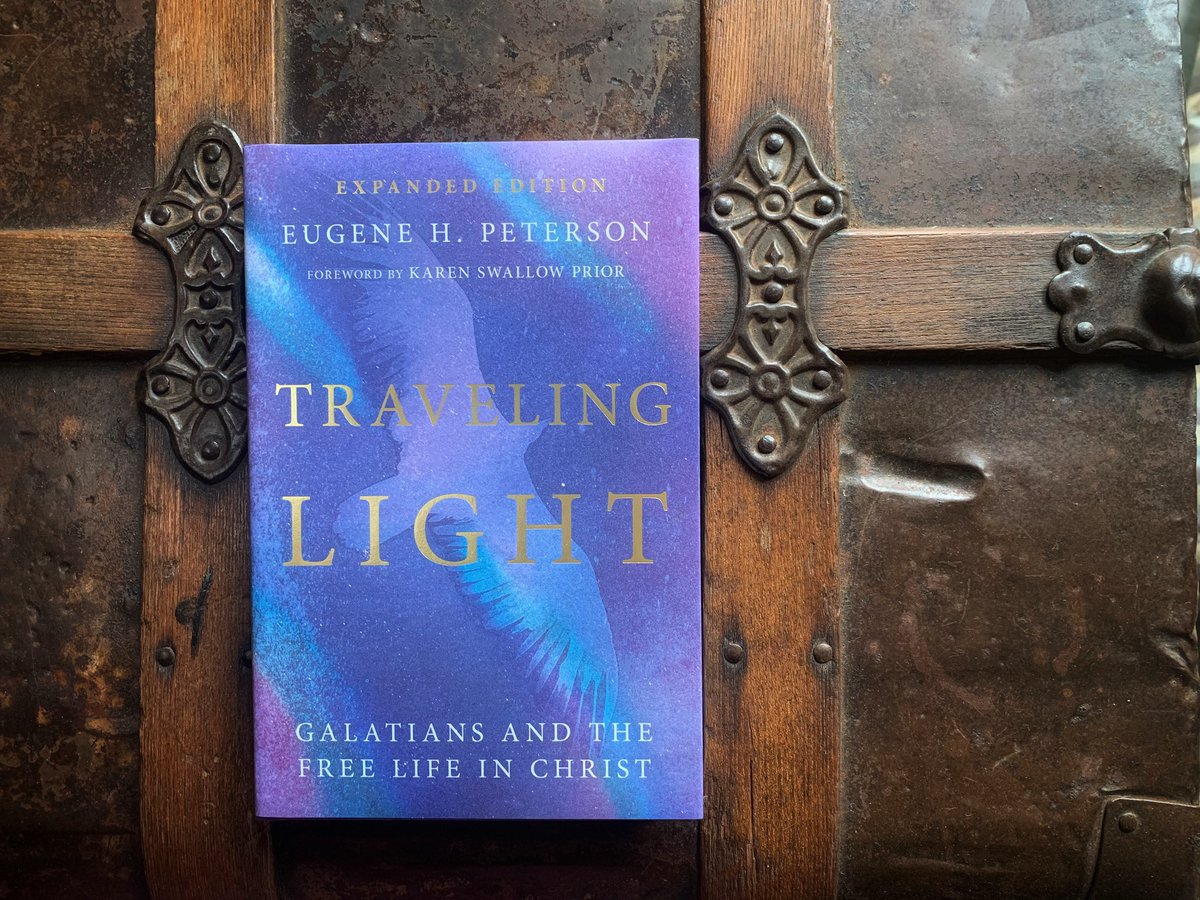
This new edition of a classic by Eugene Peterson—with a foreword by me!—releases Aug. 15 with @ivpress.
Retweet (or quote tweet) this tweet, and after 24 hours, I will randomly pick one of those to receive a copy!
@ricardomackenzi@geordinhl@alanwinde https://t.co/r7g6DLtaYJ Hey Ricardo, I found this thread, and it reminded me of our tweet exchange. Thought you'd appreciate some of these articles ✌️
‘Having 11 more trees in a city block, on average, decreases cardio-metabolic conditions in ways comparable to an increase in annual personal income of $20,000 and moving to a neighborhood with $20,000 higher median income or being 1.4 years younger’
https://t.co/UIM1mQDlLD
Wheels up at @Andrews_JBA en route to Brussels, where I’ll host the next in-person iteration of the Ukraine Defense Contact Group and attend the @NATO Defense Ministerial.
In his farewell address, 1981, Carter warned Americans to protect “our simple and our most precious possessions—the air we breathe, the water we drink and the land which sustains us….If we do not act, the world of…2000 will be much less able to sustain life than…now.”
More lives are diminished by the slow and frigid death of social closedness than by the short and glowing risk of social openness. https://t.co/9nbmXyPQ9i
Why Read The Bible In Hebrew?
Let's talk about one of the most influential stories *ever* for thinking about the nature of human progress—the Tower of Babel.
What exactly did Babel's builders do wrong?
A thread (for non-Hebrew readers too!) 🧵 1